Comparative Religion & Multicultural Literature
The E-journal (bilingual)
EISSN 3091-8510
Multiculturalism is imbued with the life stories and scripts of those living at the intersection of immigration and cosmopolitan culture. These narratives are shaped and enriched through the comparative interaction of religion and culture. The journal explores how religious traditions inform and shape social and cultural realities, using a multicultural literary framework that promotes interreligious coexistence, dialogue, and collaboration.
Multicultural public theology builds upon these insights by integrating philosophical, theological, sociological, and natural scientific perspectives into the public sphere. It engages actively with broader culture and global civil society. A comparative study of religions provides a critical foundation for public theology and multicultural literature —especially in religiously diverse, democratic, and multicultural societies—while also offering alternative pathways to modernity.
-
For submission details, please refer to the Collaboration section
Editorial Team
-
Editor-in-Chief: Paul S. Chung
-
Senior Editor: Veli-Matti Kärkkäinen, Fuller Theological Seminary
- Senior Advisor: Kristin J. Largen, President, Wartburg Theological Seminary
- Senior Advisor: Manfred L. Pirner, Director of the Research for Public Religion and Education, Friedrich-Alexander-University Erlangen-Nurnberg
- Advisor: Lai, Pan Chiu, The Chinese University of Hong Kong
- Book Review Editor:Book reviews should be between 700-750 words.
-
Assistant Editor: Nick Huseby
Comparative Religion & Multicultural Literature
Volume 1, Issue 1 (Summer 2025)
Editor’s Note
The inaugural issue of Comparative Religion and Multicultural Literature Journal is now available, formatted and curated in accordance with the online journal configuration outlined below. This issue explores the concept of recognition, a central theme in both comparative religion and social philosophy. The German philosopher Axel Honneth, rooted in the tradition of critical theory and the legacy of the Frankfurt School, developed the idea of recognition—originally central to Hegel’s philosophy—within a sociological framework, particularly in relation to Émile Durkheim. Today, the concept of recognition spans a broad spectrum, influencing areas such as public theology and sociology.
Professor Veli-Matti Kärkkäinen of Fuller Theological Seminary engages deeply with the recognition model to facilitate peaceful encounters between Christianity and Islam—one of the most pressing interfaith challenges today. In doing so, he opens a new dimension of comparative public theology.
Professor Brian Mok, based at the Chinese University of Hong Kong, expands the recognition model from a cultural perspective, informed by his experience and practice within the church context.
Paul S. Chung, Director of the Berkeley Forum Center and Distinguished Professor, reconstructs the recognition model within a comparative framework focused on public theology, drawing from Dietrich Bonhoeffer’s ethics of reconciliation. In his unfinished work Ethics, Bonhoeffer critiques modernity—particularly analyzing poverty, antisemitism, and the dual nature of modern society. Chung explores these unfinished reflections by applying recognition theory to Christian-Muslim encounters, seeking multidimensional and alternative pathways toward understanding modernity.
An epistemology of public theology incorporates a critical theory of the lifeworld as the source of meaning and immanent critique, forming an alternative path to modernity within the postcolonial context.
This approach includes conceptual clarity and discourse clarification in understanding how religious ideas and belief systems find elective affinities with material interests, the role of agency, power relations, and governmentality for the common good and the integrity of the lifeworld.
Unlike postmodern or postcolonial deconstructionism, public theology’s strategy of discourse clarification and worldview construction offers a new venue for transcending the Scylla of relativist pluralism and the Charybdis of exclusive fundamentalism.
Korean-English Bilingual Journal: http://publictheology.kr/main/bbs/board.php?bo_table=Journals2

Examining Mutual Recognition through Hong Kong’s Lens
A Practical Critique of Kärkkäinen’s Paradigm Citation Policy Bryan K.M. Mok, “Examining Mutual Recognition through Hong Kong’s Lens,” Comparative Religion &

Towards Mutual Recognition
Towards Mutual Recognition: Resources for Interfaith Engagement from the Multidisciplinary “Recognition” Paradigm Citation Policy Veli-Matti Kärkkäinen, “Towards Mutual Recognition: Resources for
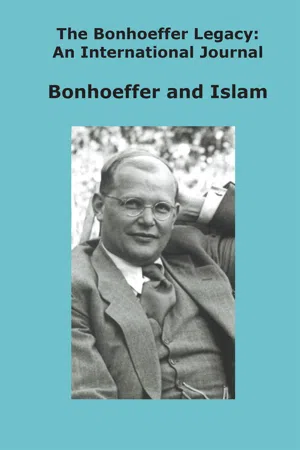
Dietrich Bonhoeffer and Comparative Religion
Dietrich Bonhoeffer and Comparative Religion:Genealogical Analyses in Christianity, Judaism, and Islam Citation Policy Paul S, Chung, “Dietrich Bonhoeffer and Comparative Religion: Genealogical Analyses in Christianity, Judaism,
Volume 1, Issue 2 (Winter, 2025)
Korean-English Bilingual Journal: http://publictheology.kr/main/bbs/board.php?bo_table=Journals2&wr_id=2
Religious Pluralism vs Comparative Theology
Ted Peters, God—The World’s Future God–The World’s Future is Ted Peters’ magnum opus, his most complete work. https://tedstimelytake.com/books/god-worlds-future-systematic-theology-postmodern-era/ These three installments appear
Islam and Public Theology amid Cultural Renaissance
Islam, Civil Society, and Modernity: Public Theology amid Cultural Narrative *[1] Paul S. Chung Abstract This essay offers a historical
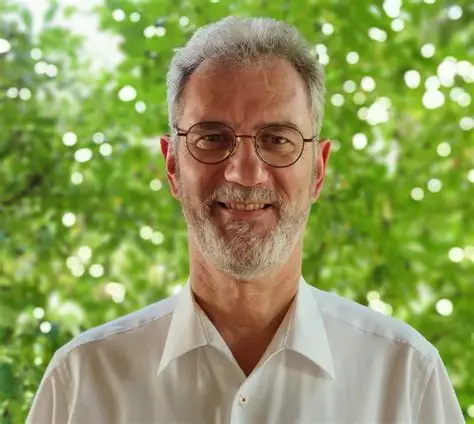
Interreligious Discourse in the Context of German Protestantism
Interreligious Discourses – A Protestant Theological Perspective[1] Manfred L. Pirner CV Manfred L. Pirner, Prof. Dr., Ordinary Professor of Religious
A Brief Review of Manfred Pirner’s Essay, “Relations to other Religions”
A Brief Review of Manfred Pirner’s Essay, “Relations to other Religions” in T&T Clark Handbook of Public Theology (Chap. 12)
Volume 2, Issue 1 (Spring, 2026)
Public Theology and Comparative Study of Buddhism:
Public Theology and Comparative Study of Buddhism: Semantic Realism through Intertextual Clarification Paul S. Chung Distinguished Professor of Public Theology

INTERRELIGIOUS DIALOGUE IN RELIGIOUSLY PLURALISTIC SOCIETIES
INTERRELIGIOUS DIALOGUE IN RELIGIOUSLY PLURALISTIC SOCIETIES THE CASE OF THE CHURCH IN NEPAL Enrico Beltramini Notre Dame de Namur University
Relation to Other Religions
The article was first published in the T&T Clark Handbook of Public Theology with the publisher’s permission. C. Alpers