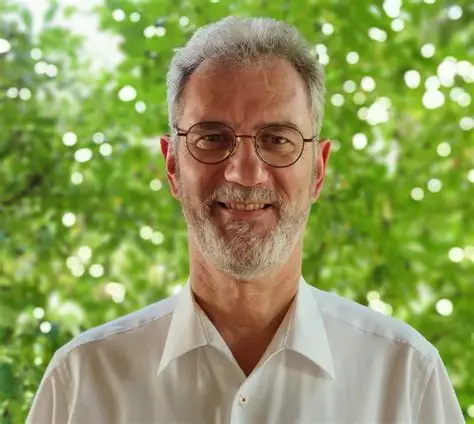
Interreligious Discourses – A Protestant Theological Perspective[1]
Manfred L. Pirner
CV
Manfred L. Pirner, Prof. Dr., Ordinary Professor of Religious Education at Friedrich-Alexander-University Erlangen-Nürnberg (FAU), Germany; Director of the Research Unit for Public Religion and Education (RUPRE; www.rupre.uni-erlangen.org); Co-Director of the Competence Centre for School Development and Evaluation (KSE; www.kse.phil.fau.de); Founding member of the Center for Human Rights Erlangen-Nürnberg (CHREN; https://www.humanrights-centre.fau.de/); Associated member of the Bavarian Research Center for Interreligious Discourses (BaFID) (https://www.bafid.fau.eu/).
Main research fields: Public theology and public education; human rights, education and religion; refugees and religion; interreligious dialogue and learning; religiosity and professionalism of teachers; popular culture, digital media and religious education; faith-based schools.
Starting with his habilitation book on TV Myths and Religious Education (“Fernsehmythen und religiöse Bildung”, Pirner, 2001) Professor Pirner has increasingly drawn on public theology as a theological framework for religious education. In dialogue with other theologians he developed the concept of “Public Religious Pedagogy” that systematically links public theology and educational issues (from 2013 onwards). Building on this theoretical work, in 2016, Pirner founded the Research Unit for Public Religion and Education (RUPRE; www.rupre.uni-erlangen.org) at the FAU in the context of the international, interdisciplinary conference “Public Theology – Religions – Education” that was documented on the RUPRE YouTube channel (https://www.youtube.com/playlist?list=PLikEp1KflIH4YaXNqRcPZwdC2-RMBDn99), in a special issue of the International Journal of Public Theology and in two book volumes. The Research Unit RUPRE is a member institution of the Global Network of Public Theology.
Recent book publications in English:
(Complete list of publications at https://www.evrel.phil.fau.de/english-pages/publications)
- Pirner, M. L., Naurath, E., Lähnemann, J., & Haußmann, W. (Eds.), Education for Sustainable Development – Spiritual Dimensions. Erlangen: FAU University Press 2026 (forthcoming; open access)
- Grümme, B., & Pirner, M. L. (Eds.), Innovative approaches to Religious Education. Stuttgart, Germany: Kohlhammer 2025.
- Pirner, M. L. et al. (Eds.), Public Theology Perspectives on Religion and Education. New York: Routledge 2019.
- Pirner M. L. et al. (Eds.), Public Theology, Religious Diversity, and Interreligious Learning: Contributing to the Common Good through Religious Education. New York: Routledge 2018.
- Pirner, M. L., J. Lähnemann & H. Bielefeldt (Eds.), Human Rights and Religion in Educational Contexts. Cham, Switzerland: Springer 2016.
[1] This article was originally published in German in the “Erlanger Jahrbuch für Interreligiöse Diskurse”, vol. 2, 2022, pp. 129–148, under the title “Interreligiöse Diskurse – eine evangelisch-theologische Perspektive”. The author wishes to extend his great thanks to Paul Chung for his diligent translation of the text into English and Korean and the publication in this journal, and to Veli-Matti Kärkkäinen and Craig Nessan for their helpful suggestions on the English version of the text. The English translation has been finally proofread by the author. Thanks also go to the editor of the “Erlanger Jahrbuch”, Georges Tamer, and the publisher, Ergon, for their reprint permission.
Abstract 1
Wie haben sich evangelische Kirche und Theologie in Deutschland seit der Reformation und besonders in der Gegenwart gegenüber anderen Religionen positioniert und inwieweit wurde der Diskurs mit ihnen gepflegt? Der Beitrag bietet eine konzentrierte Bestandsaufnahme mit einigen eigenen Akzentuierungen des Autors.
How have the Protestant church and theology in Germany positioned themselves vis-à-vis other religions since the Reformation and especially in the present? To what extent has discourse been cultivated with them? This essay takes stock of these developments along with assessment by the author.
Abstract 2
Wie haben sich evangelische Kirche und Theologie in Deutschland seit der Reformation und besonders in der Gegenwart gegenüber anderen Religionen positioniert und inwieweit wurde der Diskurs mit ihnen gepflegt? Der Beitrag bietet eine Bestandsaufnahme mit einigen eigenen Akzentuierungen des Autors. Er geht aus von dem problematischen protestantischen Erbe in den Schriften Martin Luthers zu Judentum und Islam, beleuchtet dann die Neujustierung des Verhältnisses des Protestantismus zum Judentum im Angesicht der Shoah im 20. Jahrhundert und stellt schließlich einige zentrale Kirchendokumente und theologischen Publikationen genauer dar. Es zeigt sich, dass erst seit den 1990er Jahren von einer grundlegenden Öffnung evangelischer Perspektiven gegenüber anderen Religionen gesprochen werden kann. Am Ende des Beitrags wird ein religionstheologisches Stufenmodell vorgeschlagen, das unterschiedliche Ansätze typologisch einzuordnen hilft.
How have the Protestant church and theology in Germany positioned themselves vis-à-vis other religions since the Reformation and especially in the present? To what extent has discourse been cultivated with them? This essay takes stock of these developments along with assessment by the author. The inquiry begins with the problematic Protestant legacy found in Martin Luther’s writings on Judaism and Islam. Next the essay illuminates the readjustment of Protestantism’s relationship to Judaism in the face of the Shoah in the 20th century. Finally, the author examines some key church documents and theological publications in more detail. The essay concludes that only since the 1990s are we able to speak of a fundamental opening of Protestant perspectives toward other religions. At the end of the article, the author proposes a theological model that provides a typology of different approaches.
1. The Ambivalence and Burden of the Protestant Tradition: Martin Luther’s Views on Judaism and Islam
When it comes to the effects of Protestantism on the attitudes towards religious diversity in the 16th century, they are both ambivalent and somewhat internally contradictory. On the one hand, the Reformation has often been celebrated as an act of liberation from ecclesiastical paternalism, leading to religious pluralism. Alongside the more positive attitude towards religious plurality, accompanied by the rise of individualism with its emphasis on personal freedom in faith, a multitude of Protestant churches and movements emerged.
On the other hand, however, the Reformation also intensified the uncompromising struggle for religious truth, which led to the violent conflicts of the confessional era. Tolerance toward those of different faiths was not a strength of Martin Luther; as can be seen not only in his sharp and bitter disputes with the papal church and other Protestant movements, like the Anabaptists, Zwinglians, and Calvinists, but also in his assessment of Judaism and Islam.
Luther’s attitude toward the Jews is well-known and has been critically discussed, especially in the context of the anniversary of the Reformation in 2017. A more Jewish-friendly early phase, as seen in his 1523 writing “That Jesus Christ Was Born a Jew,” stands in stark contrast to his later, utterly unacceptable, and aggressively anti-Semitic writings (particularly “On the Jews and Their Lies”from1543), which had a harmful influence that extended into the era of National Socialism.[1]
Less well-known is Luther’s attitude toward Islam and the significance of his engagement with both Judaism and Islam in the context of his time, as highlighted by the Reformation historian Thomas Kaufmann. He emphasizes:
Among the Reformation writers, Martin Luther was the most prolific author on the subjects of ‘Judaism’ and ‘Islam,’ or ‘Judaism’ and ‘Mohammedan or Turkish faith.’ This holds true both in quantitative and qualitative terms: No one produced more writings that explicitly, even in the title, referred to ‘Jews’ and ‘Turks’ than he did; no author was printed more frequently and – at least in relation to his writings on the Turks – for a longer period than Luther; the public significance of the Wittenberg reformer in shaping orientation and opinion about the two contemporary non-Christian religions is to be regarded as permanently formative and preeminent. Finally, no one made as much effort as he did to spread ‘knowledge’ about Turks and Jews in the vernacular.[2]
Kaufmann points out that the motives for Luther’s extraordinary literary engagement with the Turks and Jews were primarily due to his – to put it in modern terms – “intolerance of ambiguity,” that is, “the universal truth claim of his interpretation of Christian scriptures, which did not allow for other sources of revelation and readings, such as the Jewish interpretation of the Old Testament.”[3] Thus, Luther spread a prejudiced and polemical ‘knowledge’ about Muslims and Jews. This was particularly pointed because Luther was occasionally accused of being a friend of Jews or Turks; the former due to his early Jewish-friendly writings, and the latter because he had opposed a war against the Ottoman Empire.
Essentially, Luther used both religions in a didactic manner, contrasting them with the true Christian Protestant faith in order to highlight the latter even more. For this reason, and in the interest of Protestant popular education, he also supported the translation of the Qur’an into Latin, which was published in 1542, so that “among us Germans, it would also be known how shameful Muhammad’s faith is.”[4] For Luther, the Qur’an was full of “many public lies,” and its author was “a father of lies.” He saw the Qur’an as “full of fables and useless nonsense.” The Quran, in his view, destroyed the natural knowledge of God and the world, thus also destroying human nature. It led souls astray with “false doctrine and heresy,” where justification by works was at the center.[5]
From the center of his theology of justification, Luther uncompromisingly condemned the religion of the “Turks.” Kaufmann quotes Luther:
The Turks, in terms of external religious discipline, are infinitely superior to the Papists; however, this would lead to a more precise understanding of what the Christian religion actually is. It is not based on “good manners,” “good works,” or ceremonies, but solely on faith in Christ, the Son of God, who died for our sins, and in whose faith we are justified and freed from our sins.[6]
Nevertheless, there is also an acknowledgment in Luther’s writings, both here and elsewhere, that “the Turks” achieved notable things in their morality, order, asceticism, discipline, and care for the poor, so much so that they served Luther as a “critical standard for assessing contemporary Christianitas.”[7] However, when we look at Luther’s “excessive demonization”[8] of Judaism and Islam as a whole, we discover a negative example of interreligious discourse – or rather of what is not interreligious discourse. This is why I refer to the “burden” of the Protestant tradition for today’s interreligious dialogue.
2. Protestant Theology After the Shoah: Developments in the 20th Century[9]
2.1. Redefining the Relationship Between Christians and Jews
The interest of Protestant theology and the church in Germany in defining its relationship to other religions and their willingness for interreligious dialogue developed relatively late in the 20th century – particularly in contrast to the Roman Catholic Church. A kind of pioneering role can be seen in the Christian-Jewish dialogue, although this must be considered in its own specific context. Various groups of Protestant Christians attempted at different levels to come to terms with the shared responsibility and guilt for the Holocaust among themselves and sought to develop a new relationship with Judaism. These efforts led, among other things, to three important statements by the Evangelical Church in Germany (EKD)[10] in the years 1975, 1991, and 2000.[11] The consensus reached, now deemed valid for all member churches of the EKD, can be summarized in five points:
- A rejection of anti-Semitism,
- An admission of Christian shared responsibility and guilt for the Holocaust,
- The recognition of the inseparable connection between the Christian faith and Judaism,
- The acknowledgment of the continuing election of Israel by God, and
- The affirmation of the State of Israel[12]
It is particularly important to highlight the acknowledgment of the ongoing election of Israel by God, which is theologically supported through a reevaluation of Romans 9–11. At the same time, “the term ‘covenant’ does not mark a critical boundary between Christians and Jews. The church is not constituted as a counter-covenant to Israel.”[13] This also concedes that religious salvation can be found in a religion other than Christianity. Accordingly, the missionary effort to convert Jews is rejected as an intended church action. Instead, the church document claims, for a long time, “the encounter between Christians and Jews, as well as open dialogue, has been on the agenda of the churches.”[14] The concept of dialogue is understood in terms of an equal partnership. However, an all-encompassing embrace should also be avoided; instead, “careful friendship should take place, with as much distance as the other person needs.”[15]
2.2. Defining the Relationship with Other Non-Christian Religions
The redefinition of the relationship between Christianity and its ‘mother religion,’ Judaism, should be seen as a very particular and unique development. Regarding the relationship with other religions in general, early influential Protestant theological voices include Dietrich Bonhoeffer and Karl Barth. In his unfinished Ethics written between 1940 and 1943, Dietrich Bonhoeffer stated: “There is no part of the world, no matter how lost or godless it may be, that is not accepted by God in Jesus Christ and reconciled with God.”[16]And Karl Barth wrote in the section of his Church Dogmatics known as the “Doctrine of Light”: even outside of the Bible and the Church, there are “true” words and “other, in their way, also bright lights – other, in their way, also real revelations.”[17]
It is no coincidence that these statements are closely related to the teachings of Nostra Aetate, the important document from the Second Vatican Council. Barth closely followed Catholic theology from the late 1950s onward and engaged in dialogue with several Catholic theologians.
Only since the 1990s has Protestant theology and the church in Germany begun to systematically address the relationship with non-Christian religions. As late as 1991, the Arnoldshainer Conference (held in September 1991 at the Protestant Academy in Arnoldshain), a coalition of united and reformed regional churches of the Evangelical Church in Germany, stated: “Protestant theology has so far not succeeded in incorporating this diversity of perception of other religions through faith in a way that impulses for encounters and dialogue could emerge from it.” [18] This quote comes from the church’s official study, “Religions, Religiosity, and Christian Faith,” issued in 1991. This marked the beginning of a phase of more intensive theological engagement with religious diversity. In what follows, I briefly introduce two additional significant church statements and three important contributions from academic theology.
2.2.1. Church Statements
The EKD Document “Christian Faith and Non-Christian Religions” (2003)
In the context of the terrorist attacks of September 11, 2001, this document speaks of the dark sides of religion and emphasizes that Christian faith is also not free from such dark aspects. On the other hand, it positively highlights: “In every religion, dimensions of religious conviction and practice can be discovered that in another way also belong to the Christian faith.”[19] Theologically, the creation-theological perspective plays a special role. The Christian faith “welcomes the existence of every creature of God and thus also the existence of every person of another religion.”[20] Moreover, the non-Christian religions “contain testimonies of creation-based humanity” and can “in the light of the Christian faith” also be understood as “signs of the creative presence of God.”[21] In doing so, all perspectives that view non-Christian religions merely as a demonic phenomenon are rejected from the outset.
The EKD Document “Clarity and Good Neighbors: Christians and Muslims in Germany” (2006)
In the year 2000, the EKD had already issued an initial statement on Islam entitled “Living Together with Muslims in Germany: Shaping Christian Encounter with Muslims.” This document had remained somewhat vague theologically. The new 2006 document was more pronounced, but also sparked widespread criticism. This criticism primarily focused on certain perceived tendencies toward an unnecessarily sharp tone about the distinction and self-profiling of the Protestant Church at the expense of Islam. The document repeatedly emphasized that Muslims are “people loved by God” and should therefore be met with “respect andreverence.”[22] It highlighted that in the commonalities between both religions, there are traces and signs that “the God of the Bible has also not remained hidden to Muslims.” [23] But it strongly accentuated the Trinitarian Christian belief in God and firmly stated: “Christians will, however, hardly be able to give their hearts to a God as described in the Koran and worshipped by Muslims.”[24]
What is particularly noticeable in the text is a self-righteous attitude, which contrasts with the previous self-critical recognition of the church shortcomings and the admission of the church’s ongoing need for reform. It is postulated that Protestant Christians and their churches have “critically and publicly processed the often guilt-ridden missteps of the past” and have “turned away from former mistakes and put an end to the guilty entanglements once and for all.”[25] This creates the impression that the treatment of problematic developments in one’s own religion is being paternalistically presented to Muslims in Germany as exemplary.
Given these tendencies, the critical reaction to the EKD document is understandable, as it was gathered in an edited volume with the suggestive title “Protestant from Fundamental Grounds: How the EKD Profiles Itself Against Islam.”[26] My predecessor at the Nuremberg chair, Johannes Lähnemann, formulated in his contribution to this volume: “It is less about individual statements and arguments, many of which are hard to contradict, but rather a general tendency towards distinction and negative evaluation that is palpable in many places, and which not only leaves Muslims with an unpleasant feeling, but also those who have been working for decades toward friendly (and clear!) dialogue.”[27]
2.2.2 Contributions from Academic Theology
Sustainable Pioneer Work: Johannes Lähnemann and the Nuremberg Forums
It is no coincidence that the earliest, but also overall the most extensive engagement with interreligious questions within the Protestant context, took place in the field of religious education. It was and still is the public school system—with religious education as a regular, standard subject—that early on perceived the increasing religious diversity as especially challenging. However, it is truly a stroke of luck that Johannes Lähnemann, with his habilitation thesis, “Non-Christian Religions in Education” from 1977, laid an important foundation for interreligious learning in schools and beyond.[28]
Even more influential was the series of conference he founded, “Nuremberg Forums for Cultural Encounters,” which began in 1982 with a symposium titled “Cultural Encounter in School and University: Turks – Germans. Muslims – Christians.” Subsequent work has included twelve international, interreligious, and also interdenominational congresses, all of which have been documented in conference proceedings. The last four Nuremberg Forums were co-organized with us. The topics, discussions, and impacts of these events can now be traced in the form of a comprehensive overview in the book publication entitled “Interreligious Understanding and Education 1980-2020. An Evaluation in the Mirror of the Nuremberg Forums on Cultural Encounter.”[29]
It makes clear that the Nuremberg Forums have represented a significant, continuous framework for interreligious discourse and encounters over many years. It also documents how the struggle for a Christian theology of religions in the discourse between Protestant and Catholic theologians and religious educators has accompanied and run like a red thread through the congresses. As an example, consider the 1991 Forum, where the well-known Swiss theologian, Walter Hollenweger, described pluralism programmatically as a gift and task of Christianity. The Erlangen systematic theologian Walter Sparn also emphasized the capacity of Protestantism to learn from theology’s dialogue with other contemporary observers and creators of reality. The feminist theologian, Elisabeth Moltmann-Wendel, showed “how women themselves have rediscovered the positive defining lines of tradition in the Abrahamic religions.”[30] The most ‘theological’ forum was probably the one in 2016, which we conducted under the title “Public Theology, Religions, and Education.”[31] I will return to the significance of public theology for interreligious discourse below.
It should be added that Johannes Lähnemann also presented a programmatic approach with a book published in 1998 entitled “Protestant Religious Education in an Interreligious Perspective.” [32] Theologically, he starts from the dynamics of openness and boundary dissolution, which are characteristic of the Gospel proclamation of Jesus of Nazareth:
It is clear that the openness of the Gospel in Jesus himself, the amazement that repeatedly appears in him over the vastness of God’s goodness (who lets his sun rise over both the evil and the good, and sends rain on the righteous and the unrighteous—Matt. 5:45), while at the same time criticizing religious forms that restrict human freedom, provides a central point of approach. This approach is to be developed in encounters with the currently relevant religions and worldviews.[33]
Lähnemann unfolds this “boundary-dissolving pedagogy of the Gospel” into various interreligious learning fields in schools, congregations, and adult education.
Hans-Martin Barth: “Evangelical Faith in the Context of World Religions”
Another significant contribution of Protestant theology to the interreligious topic is the remarkable dogmatics by Hans-Martin Barth from the year 2001.[34] It represents the first attempt in Protestant systematic theology to take seriously the context of religious pluralism. In eight chapters, the main themes of dogmatics are first presented from a Christian perspective, then from the viewpoint of non-Christian religions, and finally again from a Christian perspective, but explicitly related to a non-Christian context.
Barth’s central intention is to provide Christians with “arguments that show how the Christian faith differs from other approaches and where it goes beyond or possibly falls short of them.” Barth points out that the new context provides an opportunity “for the Christian faith to be grasped even more deeply in the encounter with other religions.”[35] He sharpens this latter aspect: “The actual, dogmatically relevant question is whether, for example, through non-Christian religions, the triune God wants to speak something to Christianity itself.”[36]
Barth’s dogmatics represents a truly new approach that clearly goes beyond traditional apologetics by taking other religions seriously as dialogue partners, because it expects God to speak within and through these religions. Whether the author has succeeded in carrying out his dogmatics in this manner has been critically debated. The basic issue is that it is difficult for one author to know multiple religions well enough to do justice to them all. In this regard, such books would probably be best written as part of a dialogical-discursive process — as is the case, for example, in the “Key Concepts” books of the Bavarian Research Center for Interreligious Dialogue.[37] However, Hans-Martin Barth’s theological approach, in my opinion, remains groundbreaking and bears a certain similarity to comparative theology, as it was further developed in the German-speaking world, especially by the Catholic systematic theologian Klaus von Stosch.[38]
Theo Sundermeier: “Convivence and Difference”
The Protestant missiologist Theo Sundermeier made significant contributions to the theoretical foundation of interreligious discourses in the 1990s with his reflections on interreligious hermeneutics. Drawing on South American liberation theology and the pedagogy of Paulo Freire, Sundermeier understands “convivence” as a “learning community of those who learn with and from each other.”[39] Going beyond previous discussions, he understands, from a theological perspective, the reciprocal learning between religions not only as possible but as necessary and urgent.
There is now a certain consensus that all religions deal with the Creator God, who preserves humanity’s being through them. All religions, including Christianity, tend to pervert their mission, and instead of promoting life and helping to shape it humanely, they destroy it and disregard the dignity of humanity.[40]
For Sundermeier, the mutual critique and correction between religions, as well as between religions and secular perspectives, is seen as essential for the humane shaping of the world. The possibility and productivity of such a critical interreligious discourse is based on the conviction that the possibility of salvation exists in principle within all religions: “Anyone who denies this narrows the all-encompassing will of God’s salvation and denies the gospel of Jesus.”[41] This corresponds to a concept of dialogue that, on one hand, places mutual and honest testimony at the center, while, on the other hand, assumes fundamental openness about the conversation’s outcome, trusting that “through the conversation that God has with people, which the Spirit leads with all people, will also lead them into all truth.”[42]
Based on this, Sundermeier develops a stage model of interreligious hermeneutics, which progresses from respectful recognition of the other religion through participatory observation to an empathic adoption of perspectives. This leads to the final stage, where the relevance and potential life significance of the other religion can be understood: “The actual turning point of understanding begins only here, when the other religion, which I have engaged with sympathy and empathy, becomes a temptation for me.”[43] Only then is the point reached at which a critical questioning of one’s own truth positions becomes possible and may need to be reflected upon and re-justified.
As an illustration of the point, I can offer a personal teaching experience. After working on Buddhism with a tenth-grade class over a number of weeks, several Christian-oriented girls approached me after one lesson and asked, “Mr. Pirner, are you trying to convert us to Buddhism?!” I took this as a compliment, because it was clear that I had managed to present Buddhism in such an attractive way that the students had almost perceived it as an attempt at proselytism. I only later came to understand the theoretical framing of this episode in terms of Sundermeier’s stage model.
3. The Current State of the German Discussion: The EKD Foundational Text “Christian Faith and Religious Diversity in a Protestant Perspective” (2015)
As reported above, the last official EKD statement on the topic of religion was the relatively unsatisfactory document “Clarity and Good Neighborliness” from 2006, which was limited to addressing Islam. It is therefore understandable that many religious educators in schools and lecturers at universities felt a certain degree of uncertainty. There was a painful lack of useful, guiding principles for interreligious dialogue and learning that could be referenced as the official position of the EKD. Such guidelines were finally presented in 2015 with the EKD foundational text “Christian Faith and Religious Diversity in an Evangelical Perspective.” These guidelines were widely received with gratitude and approval. It should be noted that, unlike the Roman Catholic Church, the EKD does not have an authoritative teaching office. Therefore, such church statements must gain their authority primarily through the quality and consistency of their argumentation. They are largely written by an expert committee, in this case, the “Kammer für Theologie der EKD” (Committee for Theology of the EKD), which consisted of 14 professors—mainly, but not exclusively, from Systematic Theology—and six persons in church leadership positions.
The document understands “living together with members of other religions and worldviews as a theological task and practical challenge.” At the same time – and this is one characteristic of this foundational text – it positions itself within a social and legal-political framework. Already in the Foreword by then EKD Council Chairman Heinrich Bedford-Strohm, central foundational lines are programmatically named that are later elaborated in the text. The first foundational line directly addresses the relationship with other religions:
A positive understanding of religious diversity becomes possible precisely by passionately standing up for our own beliefs and experiencing the inner freedom that accompanies them, rather than deriving identity from distinctions. The certainty of faith in Christ also entails the awareness that God’s ways of revealing the divine self to humanity are without limits. This points the way from mere tolerance of other belief systems to a tolerance shaped by respect. Differences between religions are not downplayed. Christian faith respects the strangeness of the other; at the same time, it is aware of its own particularity. It cannot forgo the confession of Christ, but it would be wrong to derive from this a principled devaluation of other religions. What is needed is an attitude characterized by mutual listening and respect. This sharpens the sensitivity for a closeness that can combine a sense of belonging with an awareness of difference.[44]
In this sense, the text itself states:
Wherever people face the truth, the promise applies to them that God’s Spirit blows where it wills. Christians hope for this not only for themselves, but across all church walls and religious boundaries. They encounter people of other confessions or religious affiliations not only as equal citizens but also in the hope that God’s creative Spirit is not far from any of them.[45]
A second key principle relates to the significance of religious diversity for a human rights-based, democratic society:
From this conviction, the Evangelical Church affirms the freedom framework guaranteed by the Basic Law [the Constitution of the Federal Republic of Germany]. The Basic Law assigns a neutral role to the state in religious matters. At the same time, it brings religious communities into the public sphere and invites them to take on shared responsibility. As a church, we encourage all those who wish to contribute the peace potential of their religion to democratic civil society. In this context, our protest against violations of religious freedom in many regions of the world is strengthened by the way we, as Christians, engage with other religions.[46]
Two central motives for interreligious discourse are evident here: on the one hand, the shared commitment to the common good, and, on the other, the peaceful and fair interaction of religions with each other as an important contribution to the common good. It is emphasized that the existence of strong, heterogeneous religious beliefs does not, in themselves, call into question peaceful coexistence, as is often assumed.
It is […] not a contradiction to legal and societal religious pluralism when multiple religions understand their respective insight as the only path corresponding to God. In fact, religious pluralism consists precisely in this. Whoever neutralizes the sense of truth and the existential passion of religion by assuming intolerance in every creed undermines religious freedom. He does not strengthen pluralism but seeks to dissuade the public from religion.[47]
That one’s own confession and respect for other religious or non-religious beliefs can coexist is exemplified by Protestant Christians who work in public charitable or educational church institutions.
It is to be expected of professionals in the Protestant daycare center, the staff of a church retreat, the hospital chaplain, or the Christian nurse that they speak of the hope “that is within you” (cf. 1 Pet 3:15). But no one should fear that they or their loved ones will be deprived of their own religion in such encounters.… Enabling such trust is part of the respect that adherents of other religions deserve. However, this respect is not concretized merely by hiding one’s own religion to avoid offending the other.[48]
Regarding the significance of religions in a pluralistic society, it ultimately depends on “whether they develop a publicly responsible theology that enables attempts at understanding and translations between confessions, religions, and different worldviews.”[49] This clearly echoes insights from the discussion on “Public Theology,” as prominently represented in the German context by Wolfgang Huber and Bedford-Strohm.[50] The quote makes clear that the foundational text does not understand religious diversity in a narrow sense, but in a broad sense that also includes secular worldviews:
Invited to this dialogue are also citizens who do not belong to any religious community, who have remained unfamiliar with experiences of faith, but who, together with the churches, want to take on a shared responsibility for peace between the religions and for the future of the common good.[51]
4. Conclusion and Outlook: The Necessity and Framing of Interreligious Discourses
It is obvious that interreligious discourse and interreligious learning are meaningful and necessary, indeed urgent, in pluralistic societies to: a) promote peaceful coexistence between people with different religious orientations, and b) foster joint efforts toward a more humane world.
This insight is found consistently in the Protestant theological contributions presented here. It is based on reasonable understanding and is simultaneously supported, deepened, and expanded by specific Christian ethical perspectives, such as love for the neighbor, stranger, and enemy. That alone is significant.
The meaningfulness and necessity of interreligious discourse gains theological depth when it is explored from the center of the Christian faith. Analogous to Theo Sundermeier, I suggest distinguishing various theological thought patterns in a kind of stage model:
- First stage: It is recognized that through engagement with other religions, one’s own faith can be better understood. This stage could also be granted to Luther, who believed that through engagement with what he diagnosed as the distorted forms of Judaism and Islam, the true Christian faith could be more clearly delineated, much like the classical apologists of late antiquity.
- Second stage: The possibility is considered that God also works in other religions and speaks to us through them. This perspective can also be applied if other religions are generally denied the possibility of salvation or are critically assessed.
- Third stage: The possibility of salvation in other religions is fundamentally granted, and thus the effectiveness of God’s work in them is further appreciated, leading to a greater willingness to learn from them.
- Fourth and final stage: This would be reached not only when the potential enrichment of one’s own faith through encountering divine action in another religion is considered. Rather, the criticism, supplementation, and correction from outside one’s own religion are seen by necessity as preordained or at least permitted by God, and part of God’s salvation history with humanity.
This latter perspective can be substantiated by a theological epistemology that is aware of the general limitations of human knowledge, and particularly the limitations of human knowledge of God. This accords with the insight of St. Paul in 1 Corinthians 13:12: “Now we see but a poor reflection as in a mirror; then we shall see face to face. Now I know in part; then I shall know fully, even as I am fully known.” This perspective can also be justified by the historical missteps within Christianity; it is a reminder that often external impulses were necessary for the churches and Christians to find greater humanity.
If I am not mistaken, this fourth stage has so far been explicitly developed only in the argumentation of Theo Sundermeier and, internationally, in a pluralistic theology of religion (for example, John Hick or Perry Schmidt-Leukel). In the 2015 EKD document, it remains more an implicit possibility of thought and theological horizon that appears mainly in the discourse of public theology. The thought pattern of this fourth stage can certainly be seen as a direct counterpart to Jürgen Habermas’ philosophical model. Just as Enlightenment philosophical reason becomes aware of its limits and dialectics in the post-secular society, so Christian thought and belief become aware of their limits. Both secular reason and Christian (or, more generally, religious) faith recognize that they are interdependent and should critically and constructively complement each other.[52] What Habermas fails to consider adequately, however, is that religion itself should be thought of as plural; reason-guided discourses are also necessary and meaningful between them.
What is rightfully emphasized in the social philosophy discourse—also in the discourse of public theology—and that also is addressed in the EKD foundational text is how interreligious discourse should include non-religious conversation partners. Furthermore, this interreligious discourse in a pluralistic, free, and democratic society does not take place in a vacuum or in a value-neutral space; they are always carried and framed by the fundamental human rights values of this society. In my view, this framing should be considered more fundamentally and consciously in interreligious dialogue and learning. The fact that the “Key Concepts” conferences, as precursors of the Bavarian Research Center for Interreligious Discourse, have already addressed themes such as human rights, freedom, justice, and tolerance is pioneering.
References
Barth, Hans-Martin, Evangelischer Glaube im Kontext der Weltreligionen. Ein Lehrbuch, Gütersloh 32008.
Barth, Karl, Kirchliche Dogmatik, Bd. IV/3, Zürich 1959.
Bonhoeffer, Dietrich, Ethik (Werke, Bd. 6), Gütersloh 2015.
Habermas, Jürgen, Between Naturalism and Religion. Philosophical Essays, Cambridge 2008.
Kaufmann, Thomas, Luthers Juden, Ditzingen 2014.
Kaufmann, Thomas, “Luthers Sicht auf Judentum und Islam“, in Heinz Schilling (Hg.), Der Reformator Martin Luther 2017. Eine wissenschaftliche und gedenkpolitische Bestandsaufnahme, Berlin 2015, S. 53–84.
Kirchenamt der EKD (Ed.), Christen und Juden I – III: Die Studien der Evangelischen Kirche in Deutschland 1975 – 2000, Gütersloh 2002.
Kirchenamt der EKD (Ed.), Christen und Juden III, Gütersloh 2000.
Kirchenamt der EKD (Ed.), Klarheit und gute Nachbarschaft. Christen und Muslime in Deutschland, Hannover 2006.
Kirchenamt der EKD (Ed.), Christlicher Glaube und religiöse Vielfalt in evangelischer Perspektive. Ein Grundlagentext des Rates der Evangelischen Kirche in Deutschland (EKD), Gütersloh 2015.
Lähnemann, Johannes, Nichtchristliche Religionen im Unterricht. Beiträge zu einer theologischen Didaktik der Weltreligionen, Schwerpunkt Islam, Gütersloh 1977.
Lähnemann, Johannes, Weltreligionen im Unterricht, Teil 1: Fernöstliche Religionen / Teil 2: Islam, Gütersloh 1986 (2. Aufl. Teil 1: 1994; 2. Aufl. Teil 2: 1996).
Lähnemann, Johannes, Evangelische Religionspädagogik in interreligiöser Perspektive, Göttingen 1998.
Lähnemann, Johannes, “Mehr Klarheit und Offenheit im Gottesbild“, in Jürgen Micksch (Hg.), Evangelisch aus fundamentalem Grund. Wie sich die EKD gegen den Islam profiliert, Frankfurt a. M. 2007, S. 103–114.
Lähnemann, Johannes, in cooperation with Manfred L. Pirner und Werner Haußmann, Interreligiöse Verständigung und Bildung 1980-2020. Eine Bilanz im Spiegel der Nürnberger Foren zur Kulturbegegnung, Berlin 2021.
Lähnemann, Johannes, Peace Education in Times of Crisis. A History of Religions for Peace, Berlin 2025.
Micksch, Jürgen (Ed.), Evangelisch aus fundamentalem Grund. Wie sich die EKD gegen den Islam profiliert, Frankfurt a. M. 2007.
Pangritz, Andreas, Theologie und Antisemitismus. Das Beispiel Martin Luthers, Frankfurt a.M. 2017.
Pirner, Manfred L., “Human Rights, Religion, and Education. A Theoretical Framework.” In M. L. Pirner, J. Lähnemann & H. Bielefeldt (Eds.), Human Rights and Religion in Educational Contexts, Cham, Switzerland 2016, pp. 11–27.
Pirner, Manfred L., “Religion, Human Rights and Education in Pluralistic Societies. Re-visiting John Rawls and Jürgen Habermas.” In J. Marko et al. (Eds.), Religious Diversity, State, and Law: National, Transnational and International Challenges, Leiden, NL 2022, pp. 267–288.
Pirner, Manfred L., “Relation to other religions.” In C. Alpers and C. Hübenthal (Eds.), T & T Clark Handbook of Public Theology, London 2022, pp. 221–243.
Pirner, Manfred L. and Johannes Lähnemann (Eds.), Media Power and Religions. The challenge facing intercultural learning. Oxford 2013.
Pirner, Manfred L., Johannes Lähnemann and Heiner Bielefeldt (Eds.), Human Rights and Religion in Educational Contexts, Cham, Switzerland 2016
Pirner, Manfred L., Johannes Lähnemann, Werner Haussmann and Susanne Schwarz (Eds.), Public Theology, Religious Diversity, and Interreligious Learning. Contributing to the Common Good through Religious Education, New York 2018.
Pirner, Manfred L., Johannes Lähnemann, Werner Haussmann and Susanne Schwarz (Eds.), Public Theology Perspectives on Religion and Education, New York 2019.
Schweitzer, Friedrich, Interreligiöse Bildung. Religiöse Vielfalt als religionspädagogische Herausforderung und Chance, Gütersloh 2014.
Stosch, Klaus von, Komparative Theologie als Wegweiser in der Welt der Religionen, Paderborn 2012.
Sundermeier, Theo, Konvivenz und Differenz. Studien zu einer verstehenden Missionswissenschaft, Erlangen 1995.
Sundermeier, Theo, Was ist Religion? Religionswissenschaft im theologischen Kontext. Ein Studienbuch, Gütersloh 1999.
Tamer, Georges (Ed.), book series Key Concepts in Interreligious Discourses, Berlin 2019ff.
VELKD (Vereinigte Evangelisch-Lutherische Kirche Deutschlands) (Ed.), Religionen, Religiosität und christlicher Glaube. Eine Studie, Gütersloh 1991.
[1] See e.g. Andreas Pangritz, Theologie und Antisemitismus. Das Beispiel Martin Luthers, Frankfurt a.M. 2017; Thomas Kaufmann, Luthers Juden, Ditzingen 2014.
[2] Thomas Kaufmann, “Luthers Sicht auf Judentum und Islam“, in Heinz Schilling (Ed.), Der Reformator Martin Luther 2017. Eine wissenschaftliche und gedenkpolitische Bestandsaufnahme, Berlin 2015, pp. 53–84, quotation: 53–54.
[3] Kaufmann, “Luthers Sicht”, p. 54.
{4} WA 53, 272, 31, cited in Kaufmann, “Luthers Sicht”, p. 67. Luther became acquainted with the Qur’an in 1542 through Robert of Ketten’s Latin translation and succeeded in having it printed with the approval of the Basel council.
[5] Cited in Kaufmann, “Luthers Sicht”, p. 68.
[6] Kaufmann, “Luthers Sicht”, p. 59.
[7] Kaufmann, “Luthers Sicht”, p. 66.
[8] Kaufmann, “Luthers Sicht”, p. 61.
[9] In what follows, I will in part be guided by the helpful reflections of Friedrich Schweitzer, Interreligiöse Bildung. Religiöse Vielfalt als religionspäd agogische Herausforderung und Chance, Gütersloh 2014, chapter 3.
[10] Although “Evangelical Church in Germany” is the official translation, it should be noted that “evangelical” in this context does not refer to the movement within Protestantism that is characterized by conversionism, biblicism and personal piety, but rather is derived from the original Greek term “euangelion” (good news, gospel). In German “evangelisch” is widely synonymous with “protestantisch” (Protestant).
[11] Kirchenamt der EKD (Ed.), Christen und Juden I – III: Die Studien der Evangelischen Kirche in Deutschland 1975 – 2000, Gütersloh 2002.
[12] Kirchenamt der EKD (Ed.), Christen und Juden III, Gütersloh 2000, p. 9.
[13] Kirchenamt der EKD, Christen und Juden III, p. 45.
[14] Kirchenamt der EKD, Christen und Juden III, p. 47.
[15] Kirchenamt der EKD, Christen und Juden III, p. 62.
[16] Dietrich Bonhoeffer, Ethik (Werke, Bd. 6), Gütersloh 2015, p. 52.
[17] Karl Barth, Kirchliche Dogmatik, Bd. IV/3, Zürich 1959, p. 133.
[18] VELKD (Ed.), Religionen, Religiosität und christlicher Glaube. Eine Studie, Gütersloh 1991, p. 9.
[19] VELKD, Religionen, p. 5.
[20] VELKD, Religionen, p. 12.
[21] VELKD, Religionen, p. 13.
[22] Kirchenamt der EKD (Ed.), Klarheit und gute Nachbarschaft. Christen und Muslime in Deutschland, Hannover 2006, p. 15.
[23] Kirchenamt der EKD, Klarheit und gute Nachbarschaft, p. 19.
[24] Kirchenamt der EKD, Klarheit und gute Nachbarschaft, p. 19.
[25] Kirchenamt der EKD, Klarheit und gute Nachbarschaft, S. 24.
[26] Jürgen Micksch (Ed.), Evangelisch aus fundamentalem Grund. Wie sich die EKD gegen den Islam profiliert, Frankfurt a. M. 2007.
[27] Johannes Lähnemann, “Mehr Klarheit und Offenheit im Gottesbild“, in Micksch, Evangelisch aus fundamentalem Grund, pp. 103–114, quotation: pp. 104f.
[28] Johannes Lähnemann, Nichtchristliche Religionen im Unterricht. Beiträge zu einer theologischen Didaktik der Weltreligionen, Schwerpunkt Islam, Gütersloh 1977; almost ten years later, the two-volume book publication followed: Weltreligionen im Unterricht, Teil 1: Fernöstliche Religionen (2. Aufl. 1994) / Teil 2: Islam (2. Aufl. 1996), Gütersloh 1986.
[29] Johannes Lähnemann, in cooperation with Manfred L. Pirner and Werner Haußmann, Interreligiöse Verständigung und Bildung 1980-2020. Eine Bilanz im Spie gel der Nürnberger Foren zur Kulturbegegnung, Berlin 2021. See also: Johannes Lähnemann, Interreligious and Peace Education in Times of Crisis. A History of Religions for Peace. Berlin 2024.
[30] Lähnemann, Interreligiöse Verständigung, p. 56.
[31] See the conference proceedings documented in two volumes: Manfred L. Pirner et al. (Eds.), Public Theology, Religious Diversity and Interreligious Learning: Contributing to the Common Good through Religious Education. New York 2018; Manfred L. Pirner et al. (Eds.), Public Theology Perspectives on Religion and Education. New York 2019.
[32] Johannes Lähnemann, Evangelische Religionspädagogik in interreligiöser Perspektive, Göttingen 1998.
[33] Lähnemann, Evangelische Religionspädagogik in interreligiöser Perspektive, p. 48.
[34] Hans-Martin Barth, Evangelischer Glaube im Kontext der Weltreligionen. Ein Lehrbuch, Gütersloh 32008.
[35] Barth, Evangelischer Glaube, p. 39.
[36] Barth, Evangelischer Glaube, p. 49.
[37] See the book series Key Concepts in Interreligious Discourses, edited by Georges Tamer, Berlin 2019ff.
[38] See Klaus von Stosch, Komparative Theologie als Wegweiser in der Welt der Religionen, Paderborn 2012.
[39] Theo Sundermeier, Konvivenz und Differenz. Studien zu einer verstehenden Missions wissenschaft, Erlangen 1995, p. 48.
[40] Sundermeier, Konvivenz und Differenz, p. 35.
[41] Sundermeier, Konvivenz und Differenz, p. 36.
[42] Sundermeier, Konvivenz und Differenz, p. 39.
[43] Theo Sundermeier, Was ist Religion? Religionswissenschaft im theologischen Kontext. Ein Studienbuch, Gütersloh 1999, p. 200.
[44] Kirchenamt der EKD (Ed.), Christlicher Glaube und religiöse Vielfalt in evangelischer Perspektive. Ein Grundlagentext des Rates der Evangelischen Kirche in Deutschland (EKD), Gütersloh 2015, pp. 9f.
[45] Kirchenamt der EKD, Christlicher Glaube und religiöse Vielfalt, p. 30.
[46] Kirchenamt der EKD, Christlicher Glaube und religiöse Vielfalt, p. 10.
[47] Kirchenamt der EKD, Christlicher Glaube und religiöse Vielfalt, p. 29.
[48] Kirchenamt der EKD, Christlicher Glaube und religiöse Vielfalt, pp. 56f.
[49] Kirchenamt der EKD, Christlicher Glaube und religiöse Vielfalt, p. 76.
[50] See on interreligious dialogue in the context of public theology Manfred L. Pirner, “Relation to other religions.” In C. Alpers & C. Hübenthal (Eds.), T & T Clark Handbook of Public Theology, London: 2022, pp. 221–243.
[51] Kirchenamt der EKD, Christlicher Glaube und religiöse Vielfalt, p. 76.
[52] Something along the lines of argument in Jürgen Habermas, Between Naturalism and Religion. Philosophical Essays, Cambridge 2008; see for more details on Habermas, Rawls and religion Manfred L. Pirner, “Human Rights, Religion, and Education. A Theoretical Framework.” In M. L. Pirner, J. Lähnemann & H. Bielefeldt (Eds.), Human Rights and Religion in Educational Contexts, Cham, Switzerland 2016, pp. 11–27; Manfred L. Pirner, “Religion, Human Rights and Education in Pluralistic Societies. Re-visiting John Rawls and Jürgen Habermas.” In J. Marko et al. (Eds.), Religious Diversity, State, and Law: National, Transnational and International Challenges, Leiden, NL 2022, pp. 267–288.