Islam, Civil Society, and Modernity:
Public Theology amid Cultural Narrative
*[1] Paul S. Chung
Abstract
This essay offers a historical and sociological analysis of the Islamic Renaissance in Baghdad and Córdoba, highlighting their significant contributions to the Enlightenment, civilization, and civil society. Using a world-system approach, I explore a post-Eurocentric perspective on the Islamic contribution to the commercial revolution and global capitalism, particularly during the thirteenth century in Egypt. This historical-sociological framework emphasizes the need for a post-Eurocentric stance when acknowledging Islam’s pivotal role in the European Renaissance. I employ the sociology of Islam and its study of modernity, focusing on the Nahda (Islamic Renaissance) and reform movements through an Islamic narrative, rooted in religious sources and intellectual achievements. The intellectual legacy of the debate between Al-Ghazali and Averroes remains a classic example of shaping public theology and its direction. A Muslim public theology marks a significant approach to contemporary issues such as popular sovereignty, religious pluralism, and emancipation, all within the framework of Tawhid (God’s oneness).
Keywords: Islamdom, Orientalism, Nahda, Muslim Public Theology, Tawhid
INTRODUCTION
Religion is rooted in cultural narratives, shaping the lifeworld of social and cultural reality. It serves as a repository for cultural formation, individual identity, social structures, and political governance. This framework fosters public theology—whether Christian or Islamic—by analyzing sociocultural issues related to civil society, economic justice, and inclusive democracy.
In the Quran, religion is defined as al-din, which is closely associated with yom al-din, the Day of Judgment, emphasizing both obligation and law. God imparts the same religion (din) to the Prophet Muhammad that was revealed to Noah, Abraham, Moses, and Jesus: “Steadfastly uphold the [true] faith, and do not break up your unity therein” (Asad 1980. Q 42:12).
This unified approach addresses the covenantal dimensions within the Abrahamic faiths, rooted in the religious principles and practices of the Muslim community. This includes the Five Pillars: the declaration of faith, prayer, almsgiving, fasting, and pilgrimage. The covenantal framework allows me, as a Christian public theologian specializing in the sociology of comparative religion, to bridge the familiar “we” (Christians) with the unfamiliar “they” (Muslims) by conducting a social scientific analysis of cultural narratives within the Islamic context.
First, a historical and sociological analysis explores Samir Amin’s economic theory in relation to Edward Said’s Orientalism, while critically engaging the Eurocentric perspective. It is crucial to adopt a systems view of the global economy, particularly emphasizing the role of commercial capitalism in thirteenth-century Cairo. This perspective also revisits the concept of the Arab Nahda (rebirth), examining its connection to the Islamic cultural renaissance and the development of civil society, with a focus on Baghdad and Córdoba.
Second, the world-system approach helps integrate the sociological study of Islam as a religious resource and cultural practice within the framework of Islamic civilization and its history of enlightenment. It is important to evaluate the Islamic contribution to civil society and the European Renaissance through the civilizations and scholarship of Baghdad and Córdoba.
Third, the discourse between philosophy and theology, exemplified in the debate between al-Ghazali and Averroes, serves as a key illustration of public theology. This debate seeks to integrate reason and revelation in a harmonious, non-contradictory manner.
Finally, a model of cultural narrative underpins the practice of public theology, reinforcing the religious construction of reality. In this context, the Islamic concept of Enlightenment can be compared with Kant’s ideas of enlightenment. This includes a critical variant of Protestantism that emphasizes the link between the prophetic message and al-nas (the people), particularly through the notions of popular sovereignty and emancipation from tyrannical governance.
Historical Trajectory: Eurocentrism and Orientalism
In 1453, Sultan Mehmed II of the Ottoman Empire orchestrated the fall of Christian Constantinople, the capital city of the Byzantine Empire, while Spain’s Reconquista culminated in the conquest of Muslim Granada in 1492. That same year, Christopher Columbus (1451-1506), an Italian explorer, “discovered” or colonized the New World under the patronage of Catholic monarchs Isabella and Ferdinand of Spain. Over several decades, European powers emerged as dominant forces in science, technology, trade, and culture, asserting their primacy within the global system.
European capitalism can be traced to the Enlightenment, which, alongside the rise of scientific rationality, formed the foundation of European modernity during the seventeenth and nineteenth centuries (e.g., Descartes’s Discourse on the Method in 1637). The Christian character of capital accumulation in Catholic Spain, Protestant Netherlands, Britain, and Puritan America is evident in this development.
When examining the intersection of Islam and capitalism, it is important to recognize that the world-system extends beyond the mere aggregation of its local regions. At times, individual components of this system can significantly influence the whole, leading to social transformation and disruption. A correlation of the systemic whole and local variables helps us understand how similar actions can yield different outcomes depending on timing and the structural context in which they occur.
Marshall Hodgson, a renowned American scholar of Islam, introduces the term Islamdom, by analogy to Christendom, referring to “the society in which Muslims and their faith are recognized as prevalent and socially dominant.” In other words, it denotes “a society in which non-Muslims have always formed an integral, if subordinate, element” (Hodgson 1974, 58).
Samir Amin, an influential Egyptian economist, advocates for a tributary world-system to challenge the Eurocentric perspective. Amin argues that all tributary cultures are reflected in the achievements of ancient Egypt, Hellenistic civilization, Eastern Christianity, Islam, and Western Christianity (Amin 2009, 221).
Greek philosophy is not opposed to Oriental thought, nor does it exclude Greece. Alexandria, for example, was a significant center of civilization, particularly regarding the Greek translation of the Hebrew Bible and its intellectual engagement with Greek philosophy and worldview—an engagement that profoundly impacted the early development of Judeo-Christian thought. A Eurocentric binary opposition was later constructed between Greece (the West) and Egypt (the East).
Amin contends that Said’s thesis on Orientalism is flawed and problematic because it lacks an alternative framework to address the complex realities of Eurocentric research within political and social contexts. Said, according to Amin, remains ensnared by his provincialism, leading his analysis to become a form of “inverted Orientalism” (Amin 2009, 176).
Said’s project on Orientalism focuses on how unqualified European scholarship and a Western style of thought misrepresent and restructure the Orient as a cultural and political fact. Orientalism, as a social discourse, is generated and shaped by diverse power relations. This refers to a literary and critical approach to the position of the author in an orientalist text (strategic location), while analyzing the relationships between texts and the referential power within the culture (strategic formation) (Said 2000, 78-79, 86).
However, Said tends to endorse Western scholarship in literary criticism without sufficiently considering that it is predicated on the binary antagonism between a civilizing Europe and an Islamized Orient. Said also lacks specialized knowledge in Islamic studies and in the scholarly examination of the socio-cultural realities and civilization he seeks to protect.
System Analysis: World Economy in the Thirteenth Century
The notion of inverted Orientalism can be transcended by reconstructing the effective history of the colonized present to semantically retrieve Islam. A system analysis of the world economy challenges the concept of inverted Orientalism, which emerges as a defining feature of the postcolonial style of deconstruction.
In contrast to Marx’s conception of capitalism and the Industrial Revolution, Europe’s economic expansion is better understood through the lens of the commercial revolution, which was closely tied to the Crusades (1095–1291), the Byzantine Empire, the Muslim world, the Mongol Empire (1206–1368), and the Hanseatic League (1356). These events established the connection between the medieval period and modern capitalism through a millennium of nearly continuous expansion.
In the early stages of monetary development, we observe that commercial capitalism was established between 1250 and 1350, predating the contemporary capitalist world-system from 1450 to 1640. Commercial capitalism within the Afro-Eurasian world-system can be analyzed in contrast to the feudal interpretation of medieval history, especially when viewed through a post-Eurocentric framework.
When examining Islam and capitalism, it is crucial to consider Janet L. Abu-Lughod’s study, Before European Hegemony. She contributes significantly to the creation and consolidation of post-Eurocentric viewpoints on global economic history, while fundamentally reinterpreting the origins and historical evolution of the world-system economy.
The examination of Cairo’s millennial history reveals that the Eurocentric perspective of the Dark Ages is deeply misguided. While Europe experienced a period of stagnation, the Middle East remained a center of intellectual and economic vitality. Cairo, in particular, stood as one pinnacle in a sophisticated network of urban civilization, representing only one apex in a highly developed system of interconnected cities. It was a period marked by an “efflorescence of cultural and artistic achievement,” accompanied by global economic convergence in various regions (Abu-Lughod 1991, x).
In the mid-fifteenth century, western Genoa can be seen as a precursor to modern financial capitalism due to its role in the burgeoning colonial enterprises of Portugal and Spain in the New World. These colonial empires further reinforced Genoa’s systemic cycle of capital accumulation, extending into the late sixteenth century (Arrighi 1994, 118-9).
Consequently, it is appropriate to situate the rise of capitalism within the thirteenth century, characterized by the commercial revolution in global systems. This era was marked by advancements in merchant banking, the textile industry, and international trade—key precursors to the industrial era that would emerge in the sixteenth century.
In the thirteenth century, Cairo’s economic development thrived under a state-managed system and religious perspectives that were largely independent of Western laissez-faire capitalism. The state subordinated the freewheeling Karimi (wholesale) merchants by imposing restrictions on their trade with foreigners and monopolizing the markets for profitable goods (Lopez 1976, 4).
A theory of state monopoly in the thirteenth century challenges Karl Marx’s analysis of capital and labor only within the context of the Industrial Revolution, as well as Max Weber’s characterization of Calvinist inner-worldly psychology and the capitalist spirit as distinctive traits of Western civilization. The state monopoly model counters the traditional dichotomy that positions Occidental (Western) cities as superior to Oriental (Eastern) ones.
This model also challenges Samir Amin’s generalization of the tributary system, which overlooks the reality of the commercial revolution and the centrality of Cairo within the world economy. The ascendancy of the West was not the result of a fundamentally different economic or social system, but rather an outcome of the preexisting global economy that the West reconfigured to its own interests and dominance. This reconfiguration was achieved through European trade, plunder, and the appropriation of existing structures, resulting in a fundamental alteration of a world system that had evolved and endured for roughly five centuries.
Islam and the Arab Renaissance (Nahda)
The world-system approach allows us to better understand the relationship between state power, capital accumulation, and the universal history of the correlation between Islam and the West. In exploring Islamic interaction with European culture, the concept of Orientalism and its Eurocentric framework should be reconsidered through the lens of Islamic achievements, such as the Arab Renaissance (Nahda), Islamic philosophical enlightenment, and its contributions to the European shaping of the Renaissance.
A colonial understanding of Nahda should be revisited through a historical and sociological analysis of the Islamic renaissance and its philosophical enlightenment in Baghdad and Córdoba, which could form an alternative path to modernity.
Napoleon Bonaparte significantly influenced modern Orientalism through his campaign in Egypt and Syria (1798–1801), within the Ottoman Empire. This expedition organized a team of scientists who effectively supported the colonial endeavor. Through its institutions of Oriental studies, France gained global recognition in the field of Orientalism. Napoleon argued that his campaign served as an ideological justification for Islam to restore its order in Egypt, countering the preceding Mamluk regime.
The Mamluks originated from Salah al-Din’s autonomous Ayyubid dynasty in Egypt (1171–1250), which sustained a devoted military by enlisting mamluks (derived from the Arabic word for slave). By the mid-thirteenth century, the Mamluks established control over Egypt, between 1250 and 1260, evolving into the Mamluk dynasty and asserting dominance over the Egyptian empire. Cairo became the most important capital of the Muslim world, surpassing the diminished state of Baghdad.
In the comparative study of the thirteenth-century world economy, we observe that economic integration and cultural efflorescence grew into a vast commercial network of exchange and production, accompanied by technological and social innovations. Cairo and Baghdad were dual imperial centers, linked through overland and sea routes. Cairo, the “mother city” of the world, was connected to the Mediterranean through Alexandria and the Red Sea. The Alexandria-Cairo-Red Sea complex linked with the Arabian Sea and the Indian Ocean, with these routes becoming increasingly interconnected during the twelfth and thirteenth centuries. Egypt held power from the thirteenth century until the beginning of the sixteenth century (Abu-Lughod 1991, 139-140, 149).
The Islamic world cannot be viewed as occupying a secondary position in relation to Europe until 1869. However, following the opening of the Suez Canal to navigation in 1869, European politicians, journalists, and scientists began to assert their authority in defining Europe as the bastion of modern civilization, in contrast to the rest of the globe, particularly Islamic nations.
Given that 1869 marked a pivotal moment in Europe-Islam relations, Oriental nations were subsequently evaluated solely from a Eurocentric perspective within the framework of imperial powers and colonial discourse. This became the historical foundation for reinforcing an inverted Orientalism in its intellectual and political dimensions (Schulze 2000, 15).
Following Napoleon Bonaparte’s campaign in Egypt and its subsequent brief occupation, Muhammad Ali (1769–1849), the Albanian Ottoman governor, was appointed governor-general and ruled Egypt from 1805 to 1848. In contrast to the Ottoman sultans, Ali, despite his brutal suppressive politics, reformed Egyptian society to align with European legal and economic standards.
In 1826, Ali sent a commission to Paris to acquire knowledge of scientific and technical advancements and to showcase France’s cultural and intellectual achievements to Egypt. Rifa’a al-Tahtawi (1801–1873), the head of this commission, is considered a precursor of the Arab Renaissance. After a five-year residence in France, al-Tahtawi authored “Travel Diary of My Stay in Paris,” which included a translation of the French Constitution of 1814.
The Arabs refer to their Renaissance as the Nahda, which translates to the “Arab rebirth.” A colonial renaissance, mirroring the European phenomenon, began in Egypt in the late 19th and early 20th centuries and eventually spread to Lebanon, Syria, and other regions.
The Nahda adopted aspects of Western society while asserting that progress should be rooted in the principles of Islamic culture. The fusion of a self-assured cultural identity with progressive modernism is central to the principles of al-Nahda. Europe was both revered and reviled for its hubris in conquest (Amin 2009, 66).
Jamal ad-Din al-Afghani (1839–1897), raised in Iran, is often referred to as the Islamic “Martin Luther.” He positioned himself between traditionalists who adhere to the Quran and the model of Medina, and secularists advocating for European-style education. Al-Afghani championed representational governance against authoritarian monarchies and recognized that European progress was facilitated by the Reformation and the rise of the natural sciences. European power and conquest, he argued, were rooted in advancements in natural science and technology. Ignorance of natural science, he believed, left no alternative to overcoming colonial submission (Keddie 1993, 102).
Al-Afghani contested the traditionalism of ancestral adherence, or taqlid, among legal scholars and advocated for ijtihad—independent reasoning and innovative interpretation. He also questioned the dismissal of modern education by certain religious experts. To achieve liberation from colonial oppression, he emphasized the importance of a global coalition of Muslims committed to modernization.
Sociology of Islam, Modernity, and Elective Affinities
In the comparative study of Islam within the universal history of correlation, we observe that the Muslim reform movement sought to reclaim its critical intellectual tradition and democratic reasoning, reshaping the concept of Nahda in response to European colonial domination.
Religious sources and cultural practices, as components of lifeworld, can provide an intellectual foundation for reinterpreting and strengthening the Islamic notion of modernity in relation to the Nahda. This perspective leads us to a sociological study of Islam and its historical civilization, particularly when compared to the West.
The sociology of Islam explores the historical development of Islamic civilization in relation to European civilization. This includes the translation of Greek classics, the transculturation of Islamic creativity, and the processes of adaptation and semantic innovation. Armando Salvatore, a renowned scholar in the field, highlights that Weber’s theory provides a crucial framework for understanding the connection between Islam and modernity, using sociological categories to explore this relationship (Rippin 1995, 148–72).
To develop a sociological study of Islam, civil society, and modernity, I focus on the religious construction of sociocultural reality, which positions Islam as a public religion. In this context, the religious-secular domain undergoes rationalization, segmentation, and specialization within the broader framework of historical social evolution and its scientific and technical paradigms. However, the religious sphere is not simply diminished or reduced by the process of modernization.
A theory of the religious construction of reality diverges from the secularization thesis, which argues that the differentiation of secular and religious realms inevitably leads to the gradual erosion, decline, and eventual disappearance of religion (Casanova 1994). Rather than diminishing religion, Islam manifests in diverse forms of Muslim practice globally, serving as an undercurrent in the politics of meaning, particularly in anti-colonial movements. These movements often occur outside established governmental processes.
The politics of meaning operate in informal domains of communal awareness and cultural vibrancy, driven by sudden disruptions from inherent energies and suppressed political trajectories (Geertz 1973, 316). Here, it is critical to analyze the sociological significance of cultural themes, material interests, and political development. How the agency of influential social groups or statuses shapes their defining social impacts on various ideas—whether religious, moral, practical, pedagogical, or aesthetic—is essential to understanding the dynamics of cultural change.
Elective affinities between religious ideas and material interests are institutionalized through social discourse, power dynamics, and bureaucratic systems. These systems are stratified by access to power, wealth, education, and employment.
In contrast, narrative discourse incorporates a critical perspective—encompassing immanent critique, lifeworld, and emancipation—about assumptions which are taken for granted. This discourse is linked to moral solidarity, individual authenticity, and a cultural system of meaning. Discourse that represents or authorizes is constructed within a social episteme characterized by dominance, power relations, discipline, and exclusion. To fully comprehend the cosmic or general order of existence within the religious construction of reality, it is necessary to consider two distinct forms of discourse (Asad 1993, 34–5).
Civilization of Symbiosis and Cultural Renaissance
Systems analysis of the global economy and the sociology of Islam provide a rich framework for exploring the connection between the Islamic cultural renaissance and Enlightenment. This trajectory notably diverges from the European dialectic of Enlightenment, capitalist modernity, and colonialism.
The origins of Islamic philosophy and the cultural renaissance can be traced back to the golden era of the Abbasid Empire, established in 750. Cosmopolitan Baghdad, during the eighth to tenth centuries, emerged as an unrivaled global commercial and intellectual hub. Arab and Persian knowledge from the East continues to inform our understanding of the world economy’s interlinkages, which were fundamental to its prosperity, especially through the Gulf trade routes. These trade routes later facilitated European expansion, even after the Crusades.
Baghdad served as the cradle of Islamic philosophy and the nucleus of a cultural renaissance, marked notably by the translation of Greek philosophical texts. Islamic philosophical humanism absorbed Greek scientific and technical knowledge across a range of domains, including medicine, mathematics, astronomy, agronomy, and weaponry (Küng 2008, 257).
During the so-called Dark Ages (the 5th to the 10th centuries) in Latin Christianity, Islam made tremendous strides in intellectual and cultural development. The court of Caliph al-Mansur (754–775) attracted a wide array of scholars, including Muslim theologians and traditionalists, as well as Christian and Jewish thinkers.
In the theological realm, the Mu‘tazilah school played a significant role in integrating Greek philosophy and other intellectual traditions, achieving the first systematic reconciliation of Aristotelian thought with Quranic exegesis. Mu‘tazilite thinkers, such as Abu l-Hudhayl (752–842) and an-Nazzam, considered the Quran as the foundation for their rational theology, known as kalam.
During the reign of Caliph al-Ma’mun (813–833), the Mu‘tazilites rose to prominence, and their doctrine became the dominant orthodoxy in Islamic thought. They emphasized the transcendence, unity, and oneness of God, as well as the belief in the created nature of the Quran. Central to their philosophy was the primacy of human reason and moral autonomy (Küng 2008, 292).
However, the theological tide shifted with the advent of Abu al-Ash‘ari (873/4–935/6), who replaced the Mu‘tazilites with a more traditionalist school. According to al-Ash‘ari’s doctrine, the Quran is not a created entity but rather the eternal speech of God. His theological perspective ultimately influenced the work of Al-Ghazali, whose ideas became central to the dominant dogmatic school of thought in Islamic philosophy.
During the caliphate of al-Ma’mun, the House of Wisdom (Bayt al-Hikma) emerged as the first true institution of higher learning in the Islamic world, and arguably in the Western world as well. While Nestorian (Church of the East) and Jacobite (Syriac Orthodox) Christian intellectuals had already contributed significantly to the Academy of Gundeshapur, a major center of learning under the Sasanian Empire, it was in the House of Wisdom that cross-cultural intellectual exchange flourished. These scholars translated Greek medical, philosophical, and theological texts into Syriac and later into Arabic, making a lasting impact on the intellectual legacy of both the Islamic world and Europe.
It is important to recognize that many non-Muslims—Christians, Jews, and Hindus—should not merely be seen as passive participants within the Muslim cultural sphere. Rather, they were active and valued contributors to the flourishing of Islamic civilization. Arabic functioned as a lingua franca, facilitating intellectual and cultural exchanges across diverse communities. This collaborative intellectual environment characterizes Islam as a civilization of symbiosis, underpinning its intellectual enlightenment and cultural renaissance.
Islam and the European Renaissance
In the European context, the Renaissance derives from an intellectual framework that emphasizes a return to Greco-Roman antiquity—an era perceived as foundational to the principles of modernity. European thinkers, grounded in humanism and modernist ideals, advocated a revival of the classical past to rediscover the philosophical legacy of ancient Greece. This retroactive pursuit of knowledge and cultural revitalization gave birth to the Renaissance. The humanist movement, alongside its focus on the classical world, was also instrumental in shaping the emergence of the Reformation. While European modernism was forward-looking, the Renaissance often took a backward gaze, drawing inspiration from the cultural and intellectual achievements of Greco-Roman antiquity (Küng 2007, 406, 408).
However, Islamic contributions to the European Renaissance are often overlooked but are crucial. These contributions can be traced back to the translation of Greek philosophical works into Arabic in Baghdad between 750 and 850 during the Abbasid Caliphate. As the intellectual and cultural center of the Muslim world, Córdoba in Spain reached its zenith in the tenth and eleventh centuries. It was a beacon of economic prosperity, as well as a hub of intellectual and cultural achievement. One caliph’s library alone—among seventy in the city—was said to contain 400,000 volumes (Küng 2007, 376).
The profound influence of Islam on European intellectual life extended well beyond the caliphates of Baghdad and Córdoba. In 1143, the Quran was finally translated into a Western language. Pioneering thinkers such as Roger Bacon (1219/20–1292) showed great interest in living Oriental languages, and Thomas Aquinas (1225–1274) was profoundly indebted to Arabic translations of Aristotle’s works. A small group of translators in Toledo during the twelfth century worked diligently to bring the works of Islamic philosophers such as Al-Farabi, Avicenna, and Averroes into the Latin West, sparking intellectual transformation.
This historical narrative provides a framework for understanding the politics of meaning that underpin the symbiotic relationship between Islam and European intellectual movements. The dynamic interplay between religious vision and associated practices within the Islamic world profoundly shaped the sociocultural foundations of life, ethics, and global politics. These contributions enriched the unique fabric of civilization, transcending regional boundaries and echoing through the broader intellectual tradition.
In stark contrast to these intellectual and cultural contributions, the French Orientalist Ernest Renan (1823–1892) portrayed Islam as inherently antagonistic to science, reason, and human progress. He argued that the faith was synonymous with extremism and backwardness, a view that still resonates within Eurocentric narratives of cultural superiority (Ramadan 2012, 17). This perspective, however, is at odds with the insights of scholars such as Marshall Hodgson, who emphasized the critical role of religion in shaping civilization, particularly through the intellectual and cultural advancements nurtured by Islam.
Hodgson contended that the carriers of religious vision in the Islamic world played a key role in defining high culture and articulating the civilization at its core. The religious intellectuals of Islam were not mere passive participants in their societies, but active agents who shaped the larger worldview and contributed significantly to the development of civilization (Hodgson 1974, 90).
Islamic law, or sharia, was central to the organization of social life in the Muslim world. Nearly all aspects of daily life, from religious observance to civic governance, were governed by Islamic law, with legal scholars—ulama—operating largely autonomously from the central government. This decentralized system, which emphasized charitable foundations (waqf) to preserve autonomy and independence, was foundational to the governance structure within the Islamic world. The relationship between charismatic authority (the religious scholars) and legalauthority (the state) in Islam helped maintain a unique form of civil society.
At the heart of this system lay the concept of zakat, or charity taxes, which were central to the Islamic model of governance. Zakat not only served as a form of wealth redistribution but also reinforced the interdependence of civil society and state power. Within the Muslim polity, there was a shared moral responsibility—compelling both state institutions and citizens to work toward the collective welfare and social justice.
This model of governance and civil society held significance well beyond its immediate historical context. It continues to resonate in the modern Muslim world, where the balance between state power, religious authority, and civil society remains a fundamental issue. The dynamic integration of these elements within Islamic civilization offers an alternative model of social and political organization, one that is based on collective moral responsibility, charity, and governance for the common good (Sajoo 2004, x).
Philosophy and Theology in Dispute
The intellectual landscape of the Islamic world has long been marked by the interplay between philosophy and theology, particularly as these domains intersected with issues of reason and revelation. The framework of religious freedom in Islam, the autonomy of legal scholars (ulama), and administrative adaptability facilitated the growth and prosperity of Muslim societies, while contributing to an era of cosmopolitan cultural flourishing in key centers like Baghdad and Muslim Spain. These cities fostered the development of the sciences, arts, and philosophy, and served as hubs of intellectual exchange between various cultures, nationalities, and multireligious groups.
Falsafa and its Dual Relationship with Greek Thought
Islamic philosophy, known as falsafa, established a unique relationship between Islamic high culture and the Greek philosophical tradition. Between the ninth and twelfth centuries, Arabic philosophy reached its intellectual zenith, largely shaped by scholars such as Avicenna (Ali Ibn Sina) (980–1037), a Persian philosopher who became one of the foremost figures in the Islamic Golden Age.
His logical elucidation of Islamic doctrine, which integrated Neo-Platonism and Aristotelian philosophy, profoundly influenced both Islamic thought and the broader intellectual tradition. Avicenna harmonized revelation and law as aspects of God’s objective will, interpreting the Quran and hadith through reason. His Neo-Platonic Aristotelian philosophy framed reason as being fully compatible with revelation (McGinnis 2010).
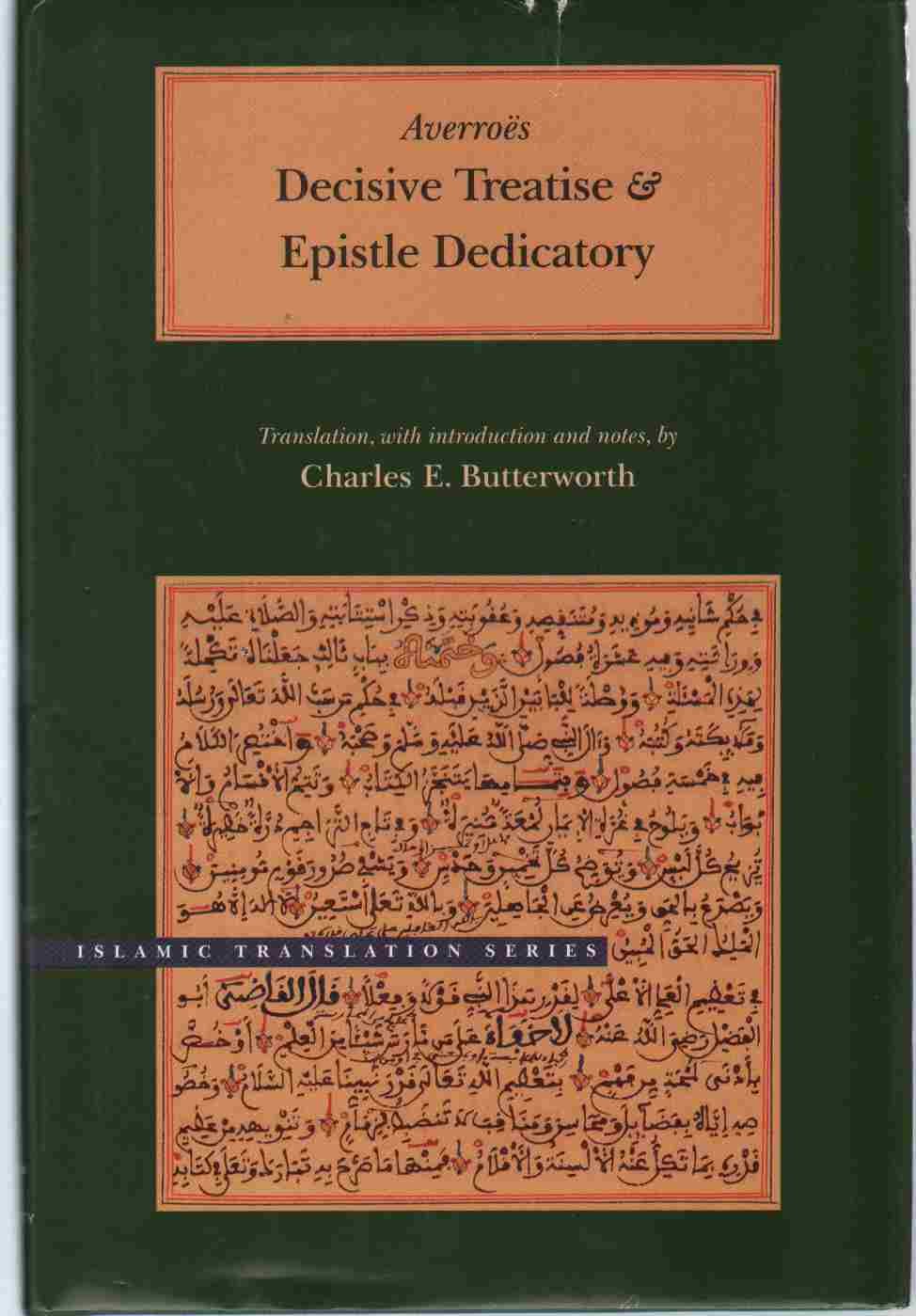
In Islamic Spain, Ibn Rushd (1126–1198), known as Averroes, emerged as the preeminent philosopher of the era. Born in Córdoba, the cultural and intellectual hub of the Umayyad Caliphate of Córdoba (929–1031), Averroes wrote extensive commentaries on the works of Aristotle, offering a more accurate interpretation than the Neo-Platonist philosophies of earlier Islamic thinkers like Al-Farabi and Avicenna. Averroes’s commentaries on Aristotle were so significant that they were included in the Latin edition of Aristotle’s complete works in the thirteenth century. His intellectual influence spread to Europe, particularly in Paris and Padua, which became centers of Latin Averroism and helped lay the intellectual foundations for the early European Renaissance (Küng 2007, 382).
Al-Ghazali’s Mysticism vs. Philosophy
While falsafa flourished in the Islamic world, theological debate also thrived, especially as Islamic philosophers like Avicenna attempted to reconcile reason with faith. The tensions between these two domains came to a head in the works of Al-Ghazali (c. 1058–1111), a Persian theologian and philosopher who critiqued the philosophers of his time, including Avicenna and Al-Farabi. Al-Ghazali’s intellectual journey took him from rational philosophy to a mystical embrace of Sufism, which he argued provided the necessary spiritual illumination for true knowledge of God. His most famous work, Tahafut al-Falasifa (The Incoherence of the Philosophers), critiqued the metaphysics and natural sciences of the philosophers, particularly their doctrines on the eternity of the universe and the nature of causality.
Al-Ghazali challenged the Aristotelian view that the universe was eternal and self-sustaining, arguing that only God could initiate creation and sustain the cosmos. In contrast to the Neo-Platonic Aristotelianism that sought to align reason with revelation, Al-Ghazali argued that philosophy was inadequate for understanding the nature of God and the universe. Instead, he turned to mysticism, proposing that faith and revelation—not reason alone—were the true paths to knowledge of the divine (Griffel 2009).
Averroes’ Defense: Reason and Revelation
In response to Al-Ghazali, Averroes—born fifteen years after Al-Ghazali’s death—defended the Aristotelian worldview and its compatibility with Islamic theology. Averroes argued that the philosophers had been misinterpreted by Al-Ghazali and that philosophy and theology were not inherently in conflict. For Averroes, reason and revelation were two complementary paths to truth. Philosophy, when properly interpreted, did not contradict Islamic theology; rather, it was a means of enhancing understanding of divine truths. Averroes believed that religious ideas—like those found in the Quran—must be interpreted and analyzed by those deeply knowledgeable in both philosophy and theology, as per the Quranic command: “none save God knows its final meaning” (Q 3:7). Thus, Averroes posited that reason was not in opposition to revelation; both played a critical role in the pursuit of knowledge (Q 3:7).
The Mu‘tazilite Tradition and Modernity
The Al-Ghazali–Averroes dispute exemplifies the long-standing dialectic between theology and philosophy within Islamic intellectual history. This debate continues to resonate in contemporary discussions on Islamic public theology, especially when it comes to integrating contemporary social values, secular logic, and scientific rationality with traditional Islamic teachings. The Mu‘tazilite theological school, which placed a heavy emphasis on reason and rationalism, also contributed to this ongoing discussion.
The Mu‘tazilites argued that reason and revelation were inherently compatible, a view that has influenced modern Islamic reformists such as Jamal al-Din al-Afghani and Muhammad Abduh. Al-Afghani called for a revival of ijtihad (independent reasoning) and a democratic consensus in line with the teachings of the Quran and the Prophet Muhammad. Al-Afghani and his disciples sought to reconcile Islamic tradition with modernity, emphasizing the use of reason in addressing contemporary issues (Rahman 1984, 35).
Islamic Public Theology and the Quest for Modernity
In the context of Islamic modernism, thinkers like Abduh sought to integrate reason, science, and faith in a way that responded to the challenges of modernity, colonialism, and secularism. Abduh’s approach to consultation (shura) emphasized the need for democratic governance while remaining rooted in Islamic tradition. He argued that modern democratic systems could find a model in Islamic teachings, specifically in the practice of consultation and community consensus.
Abduh and his intellectual successors, like Rashid Rida, drew inspiration from the rationalist Mu‘tazilite school and the philosophical enlightenment of Averroes, advocating for the integration of reason and faith to build a more just and enlightened society. They believed that Islamic principles of justice, freedom, and moral responsibility were fully compatible with modern democratic ideals (Rahnama 1994, 32).
The intellectual contributions of thinkers like Mohamed al-Talbi (1921–2017), a Tunisian intellectual and proponent of Quranic Islam, provide a contemporary framework for Islamic public theology. Al-Talbi emphasized the principle of “no compulsion in religion” (Q 2:256) and affirmed the plurality of paths to salvation, advocating for justice, mercy, and love as central to Islamic theology. This perspective encourages a global dialogue of mutual respect and coexistence among people of diverse beliefs and backgrounds, extending beyond religious boundaries to include all those who lead exemplary lives (Goddard 2000, 164).
In the Arab Awakening of 2003 across the MENA (Middle East and North Africa) region, democracy aligned fundamentally with the Islamic concept of Shura (consultation). Democratic principles—such as the rule of law, equality for all citizens, universal suffrage, accountability, and the separation of powers (executive, legislative, and judiciary)—must be realized within the context of a civil state, popular sovereignty, and deliberative democracy (Ramadan 2012).
Islam and the Transformation of Intellectual Tradition
The Al-Ghazali–Averroes dispute, coupled with the intellectual legacies of Mu‘tazilitetheology, Averroes, and Abduh, illustrates the dynamic interplay between reason and revelation in Islamic thought. Islamic public theology continues to evolve, integrating classical principles with contemporary challenges and seeking to reconcile religious teachings with the demands of modernity. This dialectical approach continues to shape discussions on Islamic modernism, democratic governance, and social justice, offering a model for contemporary engagement.
When comparing Islamic thought during the Renaissance with Kant’s philosophy of the Enlightenment, Kant argues that individuals must emerge from a self-imposed tutelage and a self-incurred minority. Within the Islamic framework of modernity, one can discern a resonance of sapere aude! (“dare to know”)—“Have the audacity to employ your own reason,” as articulated in Kant’s famous essay, What is Enlightenment? (1784) (Kant 2001, 135).
Kant posits that the fundamental prerequisite for enlightenment is the freedom of individuals to publicly employ their reason in discourse on both religious and secular matters, while still adhering to established authority.
Talal Asad, a Saudi-born cultural anthropologist, argues that a genealogy of the establishment of strong state power in the contemporary Middle East reveals that powerful nations predominantly inherit colonial structures. This inheritance complicates the public exercise of reason in the Kantian sense. However, this does not imply that Islamic countries are unfamiliar with reasoned criticism; rather, organized forms of critique are available to anonymous audiences and are integral, even in Saudi Arabia.
A contemporary Islamic approach must be grounded in the hermeneutical reinterpretation of holy texts and practices, alongside an Islamic cultural renaissance and intellectual enlightenment from the 8th to the 13th centuries.
The Islamic intellectual heritage and the nineteenth-century reform movement incorporated Western value systems—such as human rights, the common good, deliberative democracy, and freedom—into a critical and constructive framework. This remains a Neo-modernist endeavor to synthesize contemporary societal values with an in-depth exploration of ancient sources and research. It is exemplified by Fazlur Rahman’s contributions to the discourse on Islam and modernity in the transformation of intellectual traditions.
Consequently, Islamic public theology emphasizes the preservation of Islamic culture and traditions within the context of a modern world characterized by industrialization, globalization, and digitization. The goal is to establish a living religion that offers ethical and spiritual guidance in addressing contemporary concerns, the global economic crisis, and public discourse. This public methodology requires cooperation among religious leaders and intellectuals from relevant fields through collective ijtihad, fostering consultation (Shura) (Q 3:159, 42:38) (Hosen, 2012).
According to Tariq Ramadan in Muslims in France (1999), radical secularism (laïcité) is not necessarily an obstacle. Muslims living in France are still able to observe key Islamic practices, even though their population in France is not particularly religious.
Given the republican ideals and Muslim citizens in France, Islamic public theology must clarify the relationship between republican democratic norms and the Muslim culture of justice, civil society, and equality. In addressing the 2015 Paris attacks, such a public perspective helps to reconcile the apparent contradiction between the French republican model and the Muslim way of life (Tonneau 2016).
According to Johann P. Arnason, a prominent scholar in Islamic civilization studies, “The belief that Islamic traditions excluded any differentiation between religion and politics has not completely disappeared from public discourse, but scholarly debates have effectively debunked it. It is now widely accepted that Islamic history is characterized by specific forms and trajectories of differentiation, which are neither identical to those of other civilizations nor reducible to a lesser degree of the same dynamic” (Arnason 2001).
EPILOGUE
The cultural narrative strengthens public theology, necessitating a paradigm shift toward the radical reform of Islam, as urged by Ali Shariati (1933–1978) for Protestantism. Shariati argues that the intelligentsia in modern Islamic nations must initiate reforms within religion itself.
Shariati emphasizes the people as a fundamental element for social transformation and democratic advancement, since the Prophet was sent to al-nas (the masses), who bear the entire responsibility for history and society. His critique targets power structures marked by political tyranny, material inequity, religious estrangement, and clerical authoritarianism.
His audacious assertion is that the term ‘God’ should be substituted with ‘the people’ in all Quranic texts, particularly in covenantal dimensions and socio-cultural-political matters. Shariati advocated for an Islamic Renaissance and Reformation in opposition to clerical authority. His sociology of Islam forms a critical, emancipatory framework for Islamic public theology, considering democracy, civil society, and solidarity with the subaltern in a postcolonial context (Shariati 1979, 49).
However, Shariati undermines the religious construction of reality by placing excessive emphasis on the centrality of the people, thereby substituting a divine ultimate reality. The concept of Tawhid is not reducible to a socialist metanarrative of religious humanism.
According to Seyyed H. Nasr, an Iranian-American scholar, modern tendencies have not made any appreciable impact on Islamic religious thought, nor have they brought about a Protestant movement within Islam. The modernist impact has been more evident through the introduction of modern modes of everyday living and thinking, facilitated by modern educational institutions and media, including films (Nasr 2003, 185).
Modernist thinking and education, along with lifestyle and culture, provide an important platform for Muslim public theology to engage with the modern Western tradition, human dignity, and the common good.
It is essential to interpret the fundamental principle of Tawhid (divine oneness) in relation to unity, equality, and popular sovereignty in critical dialogue with the Western tradition of John Locke, Jean-Jacques Rousseau, and Immanuel Kant.
Given this framework of encounter, public theology is both feasible and constructive, engaging in ongoing dialogue with initiatives in civil society, justice for the common good, communicative freedom, and emancipation. Public theology is a promising initiative within both Christianity and Islam, emphasizing the mutual understanding of religion as a covenantal connection between God and humanity. This universality should not be overlooked in the comparative study of religion, while still acknowledging the distinctions in anthropological experiences and interpretations of God’s covenantal relationship with humanity, society, and the natural world within the broader history of religion. Postcolonial public theology gains its significance through sustained dialogue and interaction with Muslim public theology, particularly in its post‑Eurocentric orientation.
Conflicts of Interest
The author declares no conflicts of interest regarding the publication of this paper.
Acknowledgment
I acknowledge that studying Islam’s intellectual enlightenment and its contribution to the European Renaissance remains crucial for guiding Muslim public theology within a post-Eurocentric framework.
REFERENCES
Abu-Lughod, Janet L. (1991). Before European Hegemony: The World System A.D. 1250-1350. Oxford: Oxford University Press.
Amin, Samir (2009). Eurocentrism: Modernity, Religion, and Democracy, trans. Russell Moore and James Membrez. New York: Monthly Review Press.
Arnason, Johann P. (2001). “Civilizational Patterns and Civilizing Processes,” International Sociology, 16/3: 399, pp. 387–405.
Arrighi, Giovanni (1994). The Long Twentieth Century: Money, Power and the Origins of Our Times. London: Verso.
Asad, Muhammad (1980). Trans., The Message of the Quran. Dar al-Andalus: Gibraltar.
Asad, Talal (1993). Genealogies of Religion: Discipline and Reasons of Powers in Christianity and Islam. Baltimore and London: The Johns Hopkins University Press.
Averroes (Ibn Rushd). TAHAFUT AL-TAHAFUT (The Incoherence of the Incoherence), e-text conversion by Muhammad Hozien. Introduction by Simon van den Bergh.
Braudel, Fernand (1982). The Wheels of Commerce: Civilization and Capitalism: 15th-18th Century, Vol. II, trans. Sian Reynolds. New York: Harper & Row.
Casanova, José (1994). Public Religions in the Modern World. Chicago: University of Chicago Press.
Geertz, Clifford (1993). The Interpretation of Cultures. New York: Basic Books.
Goddard, Hugh (2000). A History of Christian-Muslim Relations. Chicago: New Amsterdam Books.
Griffel, Frank (2009). Al-Ghazali’s Philosophical Theology. Oxford and New York: Oxford University Press.
Hodgson, Marshall G. S. (1974). The Venture of Islam: Conscience and History in a World Civilization, vol. 1: The Classical Age of Islam. Chicago and London: The University of Chicago Press.
Hosen, N. (2012). “Public Theology in Islam: A New Approach?” 59-72. Interface: A Forum for Theology in the World, vol. 15, no. 1 & 2.
Kant, I. (2001). Ed. Allen W. Wood. Basic Writings of Kant. New York: The Modern Library.
Keddie, Nikki R. (1993). An Islamic Response to Imperialism: Political and Religious Writings of Sayyid Jamal ad-Din “al-Afghani.” Berkeley: University of California Press.
Küng, Hans (2007). Islam: Past, Present and Future, trans. John Bowden. Oxford: Oneworld.
Lopez, Robert S. (1976). The Commercial Revolution of the Middle Ages, 950-1350. Cambridge: Cambridge University Press.
McGinnis, Jon (2010). Avicenna. Oxford: Oxford University Press.
Nasr Seyyed H. (2002). Islam: Religion, History, and Civilization. New York: HarperOne.
Rahman, Fazlur (1984). Islam & Modernity: Transformation of an Intellectual Tradition. Chicago: The University of Chicago Press.
Rahnama, Ali (1994). Ed. Pioneers of Islamic Revival. London: Zed Books.
Ramadan, Tariq (2012). Islam and the Arab Awakening. Oxford: Oxford University Press.
Rippin, Andrew (1995). Ed. Defining Islam: A Reader. London: Equinox, pp. 148–172.
Sajoo, Amyn B. (2004). Ed. Civil Society in the Muslim World: Contemporary Perspectives. London and New York: I.B. Tauris.
Said, Edward (2000). The Edward Said Reader, eds. Moustafa Bayoumi and Andrew Rubin. New York: A Vintage Book.
Schulze, Reinhard (2000). A Modern History of the Islamic World, trans. Azizeh Azod. London and New York: I.B. Tauris Publishers.
Seltzer, Robert M. (1980). Jewish People, Jewish Thought: The Jewish Experience in History. New York, N.Y.: Macmillan.
Shariati, Ali (1981). On the Sociology of Islam, trans. Hamid Algar. Berkeley: Mizan Press, 1979.
Sonn, T. (2009). A Brief History of Islam. New Jersey: Wiley-Blackwell.
Tonneau, O. (2016). “Muslim Citizens! After the January 2015 Paris Attacks: France’s Republicanism,” International Journal of Public Theology, 10/3, pp. 280-301.
*Paul S. Chung,
Distinguished Full Professor in International Public Theology and Director of Forum-Center, Berkeley, CA
Email:pchung1106@gmail.com