It is essential to conceptualize the dialectical relationship between the church and the state in light of the global rise of far-right Christian movements and the shifting dynamics of world politics. Karl Barth articulated the role of the Christian community within the state in terms of co-responsibility for political engagement, emphasizing democracy and social justice, particularly in solidarity with the poor. For Barth, Jesus Christ is the partisan of the poor, and a critique of bureaucratic domination becomes essential in light of God’s act of reconciliation with the world through Christ. At the same time, Barth acknowledges the reality of impersonal forces (Herrenlose Gewalten)—an unreconciled realm that resists divine order.
Scholars associated with Barth’s prophetic theology have expanded this vision by offering a socially critical analysis of the public sphere, which remains hierarchically stratified and shaped by multiple, intersecting power structures. Therefore, I seek to advance a public theology grounded in conceptual clarity and sociological analysis, particularly by exploring the elective affinity between religious discourse, material interests, and power relations within civil society.
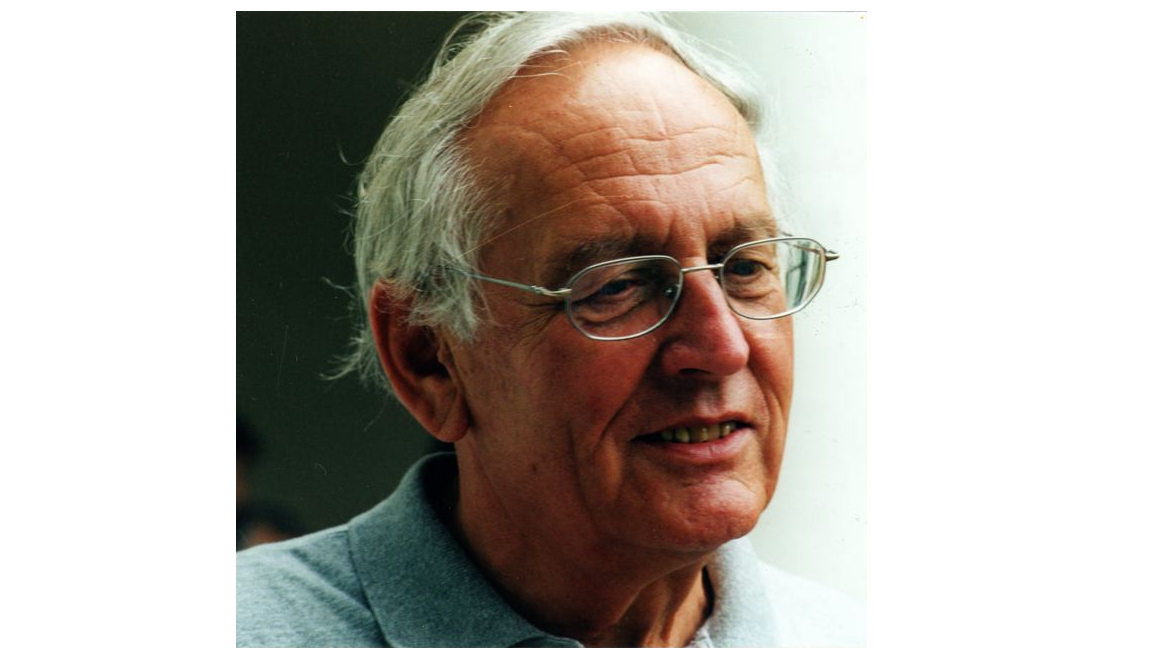
Professor F. W. Marquardt, a former student of Karl Barth, emphasizes the connection between the first and fifth theses of the Barmen Theological Declaration, the latter offering a strong critique of authoritarian dictatorship. His analysis helps me contextualize the significance of the Barmen Declaration in today’s U.S. context, as well as in global politics. In this light, I articulate the church’s attitude toward the political Leviathan.
Moreover, I explore the concept of public healing and the formation of a global society oriented toward the justice of the common good, with reference to the Barmen Theological Declaration.
F. W. Marquardt and Barth’s Theology-Politics
According to F. W. Marquardt’s interpretation, Karl Barth’s theological and political engagement was deeply rooted in the religious-socialist movement, particularly through his involvement with the Swiss Social Democratic Party between 1911 and 1914. This commitment is most clearly expressed in his lecture Jesus Christ and the Social Movement, delivered on December 17, 1911. The socio-historical context of this period is crucial for understanding Barth’s Epistle to the Romans, especially the first edition (1919), which remains untranslated into English. The better-known second edition (1922), which brought Barth international recognition, cannot be fully grasped apart from this earlier version.
The political upheavals of the time—World War I (1914), the Russian October Revolution (1917), the Swiss General Strike (1918), the German Revolution (1919), and the failed communist uprising in Germany led by Rosa Luxemburg and others—formed the turbulent backdrop against which Barth’s early theological development took place, particularly during his pastoral ministry in Safenwil.
Barth’s theological axiom, “God is God,” and his concept of the Wholly Other (ganz anders) permeate his entire Church Dogmatics. The phrase ganz anders implies ganz ändernde—the radically transforming nature of God—which is foundational to his doctrine of God: alles in allem real verändernde Tatsache Gott ist (“God is the all-in-all, the truly transforming reality”). For Barth, this is not an abstract principle but a socially grounded reality in which God’s being transforms all categories—metaphysical, epistemological, and political.
Accordingly, Barth’s understanding of theological objectivity is not primarily metaphysical or epistemological, but social. He begins with a left-Hegelian impulse, taking Feuerbach’s critique of religion seriously—not to dismiss theology, but to reconstruct it within a framework responsive to the crises of the modern world.
The foundations of Barth’s political theology are not confined to his crisis writings of 1938—such as Rechtfertigung und Recht—nor to his later work, The Christian Community and the Civil Community (1946). Rather, its roots lie in the first edition of The Epistle to the Romans, written during his time as a religious-socialist pastor in Safenwil. In this work, Barth articulates a theology that is socially relevant, politically engaged, and deeply embedded in the horizon of global events, society, and culture. He rethinks Christian teaching, theological concepts, and structures in light of political and social realities.
This perspective continued to shape Barth’s leadership in the Confessing Church and his contributions to the drafting of the Barmen Theological Declaration during the Church Struggle. On June 24–25, 1933, as National Socialism rose to power, Barth wrote Theologische Existenz heute! (Theological Existence Today!). Later, on October 30, 1933, he delivered the address Reformation als Entscheidung (Reformation as Decision) at the Singakademie in Berlin, stating, “Whoever would want to say something unambiguous about the problems facing us would need to be a prophet.” Resistance, he argued, must be offered joyfully—because the enemies’ spears are hollow. Theological Existence To-day! called the church to embody its identity through acts of political decision.
For Barth, Jesus Christ represents the principle of political radicalism and theological reality—standing in direct opposition to National Socialist authoritarianism and the collaborationist position of the “German Christians.” The Barmen Declaration was, fundamentally, a liberation movement of the Christian church from its Babylonian captivity to a distorted form of natural theology. It called for a renewed theology of creation grounded in God’s covenant—a theology that resists political idolatry and reaffirms God’s sovereign freedom.
(Source: Theological Audacities: Selected Essays by Friedrich-Wilhelm Marquardt, eds. Andreas Pangritz and Paul S. Chung, Wipf & Stock, pp. 196–198.)
Theological Existence To-day!
Most German Christians accepted the union of Christianity, nationalism, and militarism without question, equating patriotic sentiment with Christian truth. In contrast, the Old Professors Association (OPA) issued a declaration titled “We Belong, Not to Ourselves, but to Christ”, challenging Christian nationalism and its alliance with movements like MAGA as deeply troubling and destructive. The OPA criticized these movements for their autocratic tendencies, admiration for authoritarian political leaders, and the plutocratic domination of U.S. political life, which disregards the integrity of constitutional democracy.
The first thesis of the Barmen Declaration emphasizes a Christological concentration, rejecting false doctrines that allow the Church to forsake its message and mission in pursuit of self-interest and ideological conformity. It states:
“We reject the false doctrine, as though the State, over and beyond its special commission, should and could become the single and totalitarian order of human life, thus fulfilling the church’s vocation as well.” (Thesis 5)
This stance clarifies the Church’s vocation—to take a stand against the marginalization of women and racial and religious minorities, including under the current U.S. administration. From this prophetic legacy, I learn the importance of truth-telling, especially at a time when it is being undermined by postmodern individualism and moral relativism.
Public theology functions as a bridge for translating the gospel of reconciliation and justice into a form intelligible to both civil society and the wider world. This translation occurs in a bilingual manner—speaking both the language of faith and the language of public reason. It is undertaken within a social-scientific frame of reference, especially when engaging with concepts such as elective affinity, the role of agency, and power structures. Public theology is particularly concerned with advocacy for those on the margins—the subaltern publics and the innocent victims caught within the logic of the scapegoat mechanism, or massa perditionis—today’s Lazarus figures.