Islam and Public Theology: A Constructive Proposal
As a Christian public theologian and sociologist of comparative religion, I have explored Islam’s contribution to cultural renaissance within a historical and comparative framework, while critically addressing the dangerous extremist forms of Islam within this broader context. This chapter presents a constructive proposal for public theology, whether Christian or Muslim, as they engage with one another as “People of the Book.” It offers an intellectual foundation for public theology by examining contemporary Islamic thought and practices, highlighting areas for constructive dialogue, mutual benefit, and collaboration.
Intellectual Source for Public Theology
The framework of religious freedom in Islam, the autonomy of legal scholars, and administrative adaptability fostered significant stability, growth, prosperity, and peace. The sciences, arts, and philosophy flourished in a cosmopolitan cultural environment, intertwined with other cultures, nationalities, and multireligious groups in Baghdad and Muslim Spain.
Islamic philosophy, known as falsafa, established a dual relationship between Islamic high culture and the Greek philosophical tradition. Between the ninth and twelfth centuries, Arabic philosophy emerged and reached its zenith with the contributions of Avicenna (Ali Ibn Sina) (980–1037), a Persian scholar of the Islamic Golden Age. His logical elucidation of Islamic doctrine was profoundly influenced by Neo-Platonism and Aristotle. Avicenna harmonized revelation and law as God’s objective, interpreting the Quran and hadith through the lens of reason. In his Neo-Platonic Aristotelian philosophy, reason and revelation are aligned.[1]
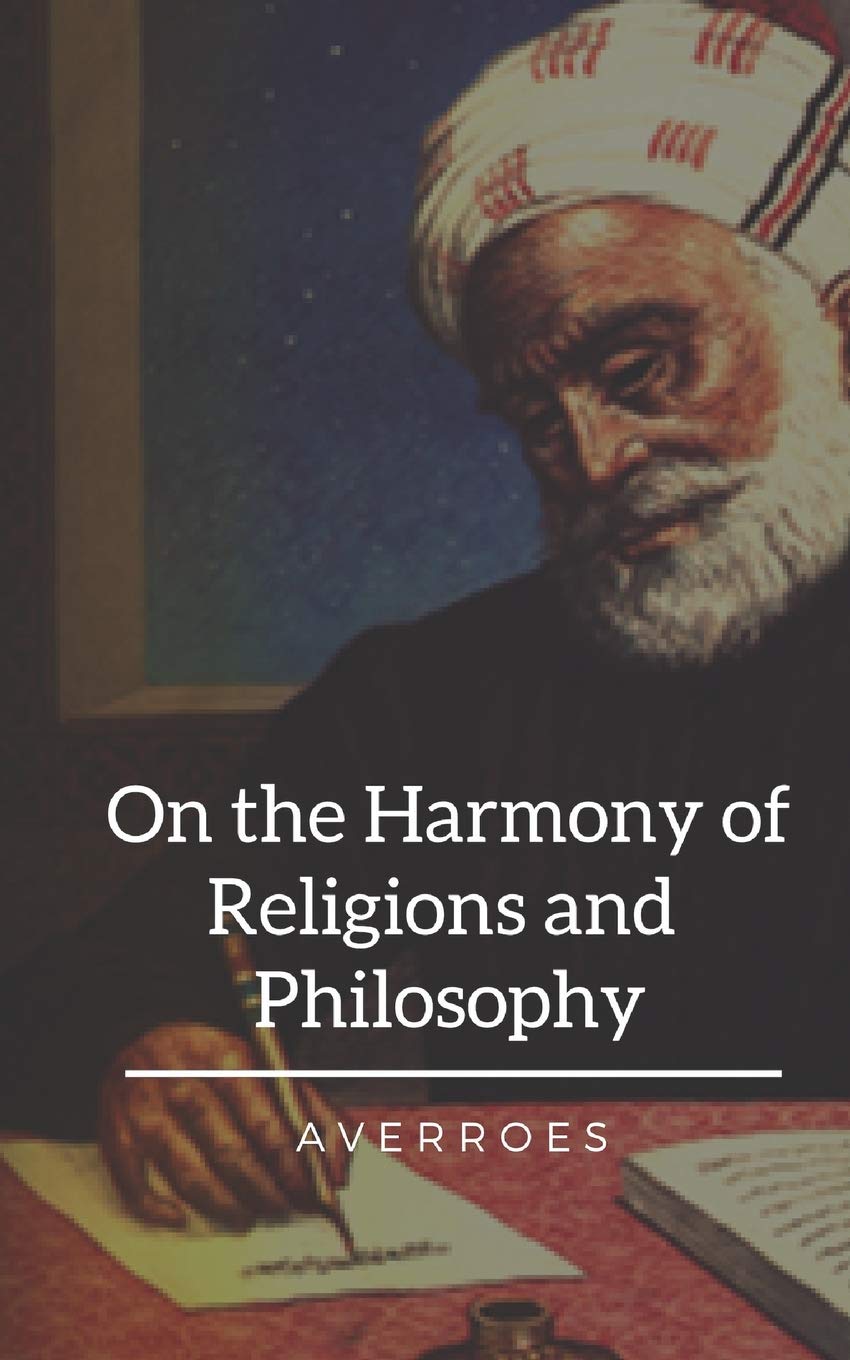
The preeminent philosopher in Islamic Spain was Ibn Rushd (1126–1198), known in Latin as Averroes, who was born in Córdoba. The Caliphate of Córdoba, established by the Umayyad dynasty (929–1031), served as the cultural and intellectual hub of al-Andalus (present-day Portugal and Spain).
From 1169 to 1195, Averroes authored a series of commentaries on most of Aristotle’s works, demonstrating greater precision than the Neo-Platonist inclinations of earlier Muslim philosophers such as Al-Farabi and Avicenna. Averroes’s commentaries, which earned him the title “The Commentator”, were included in the Latin edition of Aristotle’s complete works in the thirteenth century. Paris, France, and Padua, Italy, became significant centers of Latin Averroism. In Padua, the bastion of Averroism, rational philosophy—along with a resurgent Neo-Platonism—emerged as a major influence in the early European Renaissance.[2]
Averroes had a profound impact on both Christian scholasticism and the Jewish philosophy of Moses Maimonides (1135 or 1138–1204). By the eleventh century, Islamic Spain had become a model of fruitful coexistence between Muslims and Jews. The prominent symbolic figure of Spanish Judaism was Moshe ben Maimon, known in the West as Moses Maimonides.
Maimonides’ intellectual foundation was deeply rooted in the philosophers of Muslim Spain, including Al-Farabi, Avicenna, and Averroes, who sought to integrate revealed religion with the philosophy of ancient Greece within an Aristotelian framework. This approach allowed Judaism to maintain intellectual coherence with reason.[3]
Theology and Philosophy in Dispute: Al-Ghazali and Averroes
In the theological discourse with Arabic philosophy, al-Ghazali (c. 1058–1111), a Persian theologian, found intellectual stability through mystical illumination and a mystical lifestyle during a period of crisis. This ultimately provided him with assurance and confidence.
Al-Ghazali, who focused on Sufism, developed a novel philosophical approach to theology that centered on faith and revelation. He engaged in intellectual discourse with philosophers by challenging them on the grounds of “incoherence” (Tahafut al-Falasifa, The Incoherence of the Philosophers). Al-Ghazali attacked twenty doctrines of the falsafa, a loosely defined group of Islamic philosophers active from the 8th to the 11th centuries, which included prominent figures like Al-Farabi and Avicenna. He critiqued the metaphysics and natural sciences of the falsafa in order to make room for the epistemic assertions of revelation.[4]
Al-Ghazali argued that philosophers believed the cosmos to be everlasting, based on Aristotle’s concept of the Prime Mover (or Unmoved Mover), from which all motion, change, and causality in the universe emanate. Aristotle’s teleology, emphasizing the transition from potentiality to actuality, suggests a co-eternity between God and the universe. In contrast, Al-Ghazali distinguished between the initiator of the action (God’s eternal will) and the deed itself, which pertains to God’s temporal will in creation.[5]
Ibn Rushd (Averroes) was born fifteen years after Al-Ghazali’s death. He defended Aristotelian philosophy in response to Al-Ghazali’s scathing critique of Ibn Sina (Avicenna), arguing that Al-Ghazali failed to distinguish between the intention to act and the deed itself. A decision to act is made long before its actual execution, but the willingness to pursue something is only fully realized once the decision is translated into action. Averroes contended that Al-Ghazali’s distinction between eternal will and temporal will is contradictory, as it renders the creation of the world in time by an eternal will problematic.[6]
In the dialectical interplay between potentiality and actuality, the philosophical assertion suggests that the world is eternal, as God is the Unmoved Mover; otherwise, God would lack perfection. Theologians and philosophers, however, diverged on this issue.
This inconsistency need not hinder critical analytical thinking. Al-Ghazali’s mysticism was indeed influenced by Avicenna, and in several writings, he engages with the Neo-Platonic philosophy that he critiques. However, he does not categorically reject Aristotle’s theory of causality.
Averroes posited that religious ideas are not bound by theological orthodoxy. Rather, religious symbols pertain to a superior intellectual reality, similar to the views of G.W.F. Hegel. Philosophy, in Islam, is not opposed to revelation; rather, they represent two distinct approaches to attaining truth. Revelation must be analyzed and interpreted to eliminate contradictions.
This interpretation must be conducted by individuals “deeply rooted in knowledge” (Quran 3:7), who employ the most advanced means of understanding. Studying and contemplating nature would enhance an individual’s understanding of God, the Creator. Averroes’s stance on the non-contradiction between theological truth and philosophical truth is evident in his assertion that “none save God knows its final meaning” (Quran 3:7).
Theology and philosophy are distinctive, yet unified under the umbrella of God. Their truths are not opposed to one another, but instead serve to witness the ultimate reality of God.
The Principle of Non-Contradiction and Muʿtazilite Theology
The al-Ghazali–Averroes dispute exemplifies the enduring dialectic between theology and philosophy, continuing to inspire contemporary Islamic public theology. According to Mehdi Golshani, al-Ghazali was both an Ashʿarite and a mystic scholar, who placed philosophers under increased pressure. The carriers of rational sciences faced growing challenges, and the teachings in formal schools became more narrowly focused on religious instruction. As a result, al-Ghazali made the following remarks about the natural sciences: “In natural sciences, truth is polluted by falsehood, and right is similar to wrong.” This opposition to rational sciences has continued in some of the Islamic lands.[7]
Against the anti-rational trend, Golshani argues that science itself requires a metaphysical justification for its presuppositions. Western science, too, has led to some disastrous results. To overcome scientific positivism or scientism, “science and religion could be brought under the same umbrella, and that science has no justification without metaphysics. They should also clarify the fact that empirical science cannot solve all of our problems.”[8]
If Islamic public theology aims to integrate contemporary social values, secular logic, and scientific rationality within its cultural narrative, then a correlational approach to faith and reason—rooted in the Quran—can be enriched through the legacies of the cultural renaissance, the Enlightenment, and the evolving politics of religious pluralism.
“Learn a lesson, then, O you who are endowed with insight!” (Qur’an 59:1) serves as a textual foundation for public theology’s pursuit of understanding God, creation, the self, law, and natural science through intellectual reasoning.
The Qur’an emphasizes seeking the truth and encourages Muslims to pursue it, even if it goes against their interests. Thus, the Qur’an condemns those who fail to seek the truth: “We certainly brought you the truth, but most of you were averse to the truth” (surah Az-Zukhruf: 78).
Averroes’s principle of non-contradiction is crucial and can serve as an epistemological framework for grounding the relationship between science and religion. It underlines the public theology of Tawhid (divine oneness), emphasizing the complementarity for mutual benefit between theological discourse (kalam) and philosophical or scientific reasoning (falsafa) within an epistemological framework rooted in dialectical inquiry.
As Fazlur Rahman (1919–1988), the modernist scholar who taught at the University of Chicago, argued: “To say that all philosophy must of necessity contradict theology or its suppositions is to play not only a naïve game but a dangerous one. I can say without fear of contradiction that, for the Qur’an, knowledge—that is, the creation of ideas—is an activity of the highest possible value.”[9]
The idea of non-contradiction among truths, as articulated by Averroes, continues to influence contemporary Islamic reformists and modernists who seek to advance democracy, promote independent intellectual reasoning, reform education. It upholds the dignity of women. Islamic public theology aspires to integrate the liberal intellectual tradition through a critical engagement with Western modernity and the legacy of colonialism. Respecting religious worldviews, pursuing scientific truth, and upholding legal rationality are key tasks of public theology in bearing witness to the ultimate reality of God.
Within the framework of Islamic modernism that emerged in the 1870s, Jamal al-Din al-Afghani (1838/39–1897) argued that Muslims must rise against the long-standing suspension of ijtihad (independent reasoning) and instead exercise unrestrained rationality and democratic consensus (ijma) in accordance with the teachings of the Prophet and the Quran. However, the practice of ijtihad is ineffective without the institutional support of councils or forums composed of ulama, secular intellectuals, and specialists from diverse academic fields.
The Muʿtazilite theological position on the relationship between reason and revelation—championing practical morality and social justice—had a significant influence on al-Afghani, his disciple Muhammad Abduh (1849–1905), and Rashid Rida (1865–1935), who chronicled Abduh’s legacy as a leading figure of Islamic modernism.
Muhammad Abduh identified the Islamic roots of modernity in the writings of the rationalist Muʿtazila school and the philosophical enlightenment of Averroes. His theology of God’s unity (Tawhid) sought to integrate foundational Islamic tradition with contemporary scientific advancements. This integration formed the cornerstone of Abduh’s educational philosophy, which focused on reforming the al-Azhar curriculum. According to Abduh, the Islamic concept of consultation (shura) should not remain confined to its traditional institutional forms; rather, it can and should evolve to align with contemporary parliamentary systems.
The core Muʿtazilite principle of human free will and its pronounced emphasis on reason were further developed in Shiʿite theology during the thirteenth century. After the twelfth and thirteenth centuries, this advanced intellectual tradition continued almost exclusively in Iran, where it has remained uninterrupted to the present day.[10]
Consequently, Islamic public theology is both rooted in its cultural narrative and oriented toward modernity. It maintains a dynamic relationship with scriptural sources, continuing to emphasize the creative use of reason in interpreting religious and philosophical texts. Public theology seeks to respond to contemporary issues and engage with the social, economic, and political evolution of societies.
This viewpoint is further articulated by Mohamed al-Talbi (1921–2017), a Tunisian intellectual who identified as a Quranic Muslim and emphasized the principle of “no compulsion in religion” (Qur’an 2:256). He made significant contributions to Christian-Muslim relations, standing firmly against political radicalism and religious obscurantism.
Al-Talbi elaborates a theology that allows for plural paths to salvation, affirming that Divine Goodness cannot be constrained. This goodness is expressed through acts of justice, mercy, and love—extending beyond the strict boundaries of any single Church and embracing all people of goodwill who lead exemplary lives.[11]
Two Narratives of Enlightenment in Mutual Learning
Muslim scholars in the history of Baghdad under the Abbasid Caliphate and in Muslim Spain, particularly in Córdoba, coexisted in a spirit of collaboration and convivencia, fostering the exchange of ideas between scholars from different schools of thought. This interaction was encouraged by the Qur’anic directive to engage in constructive dialogue and embrace the best of what others offer: “Do not dispute with the people of the book except in a manner which is best. “ (Suhra al—Ankabut: 46)
When comparing Islamic thought during the Renaissance with Kant’s philosophy of the Enlightenment, Kant argues that individuals must emerge from self-imposed tutelage and self-incurred minority. In the context of Islamic modernity, one can discern a resonance of sapere aude! (‘dare to know’)—“Have the audacity to employ your own reason,” as articulated in Kant’s famous essay, What is Enlightenment? (1784).[12]
Kant posits that the fundamental prerequisite for enlightenment is the freedom of individuals to publicly employ their reason in discourse on both religious and secular matters, all while adhering to established authority. In contrast, Golshani argues that Kant believed valid knowledge is derived through human senses. According to Kant, the origin of religion lies within the bounds of practical reason rather than a metaphysical foundation. He viewed God as a principle within the ethical system. For Kant, science and religion are distinct domains, with no inherent conflict between them. Science is granted full freedom in its discoveries, while religion provides ethical guidance.[13]
Golshani’s brief evaluation of Kant is somewhat cursory, requiring further explanation regarding the relationship between philosophy and natural science in fostering mutual learning. It is crucial to reevaluate Kant’s contribution to natural science within a theistic framework, particularly with regard to his ideas of organism and the science of epigenesis.
In fact, Kant distinguished between critical theoretical reason and practical moral reason, rather than treating them as entirely separate domains. Human scientific reasoning is limited in its ability to access the reality of God, or the Things-in-themselves. However, the existence of God may be sensed even in the aesthetic dimension, particularly through the sublime feeling evoked by nature. God is not reducible to scientific reasoning, but Kant acknowledges scientific development, discussing physics in his Metaphysical Foundations of Natural Science (1786).
He was particularly interested in living organisms. A living entity is self-caused, an ensemble of parts working in unity. Organisms cannot be explained merely by reducing them to the structure and functions of their individual organs.
In Critique of Judgment (§ 81), Kant adopts the teleological principle of the production of organized beings, which is grounded in the pre-establishment of the cause, in contrast to occasionalism. The latter implies that God directly supplies the organic formation at each instance of impregnation, to the point of commingling substances in the generative process. This view eliminates any cooperation from nature, leaving no room for the exercise of reason in judging the possibility of such products.
Kant initially adopted a science of epigenesis in terms of a formative impulse (Bildungstrieb) according to Blumenbach. Just as biological forms emerge through epigenesis, nature itself operates with a causality of purposes (epigenesis) and through gradual development from an original predisposition. After the first beginning, propagation does not rely on the supernatural; everything is left to nature, imbued with formative impulse and an original predisposition, which includes a purposeful structure. This is the theory of evolution, combined with the concept of generic preformation.
An organic being is generated by another of its kind and is considered the product of that being. This epigenesis views nature as at least productive in continuing the process, driven by formative impulse under higher guidance and direction. Similarly, the structure of our knowledge arises from the inherent capacities of the mind. Reason is a self-organizing and self-forming capacity, embodying autonomy. Thus, it implies the epigenesis of pure reason, in contrast to empiricism and innatism. Life could have emerged from the lifeless, taking the form of self-preserving purposiveness and ongoing creation, in opposition to occasionalism (Kant, Critique of Judgment, 5:424).
Stewart Kauffman, a medical doctor and theoretical biologist, engages with Kant’s philosophy of a priori knowledge and the structure of experience to develop his own theories on the emergence of complexity in the natural world, including biological systems in organisms. According to Kauffman, Kant viewed organisms as wholes: “The whole existed by means of the parts; the parts existed both because of and in order to sustain the whole.” Kantian holism can be applied to Kauffman’s theory of an autocatalytic set of molecules, which exhibit the emergent property of holism. In catalytic closure, the whole exists by means of the parts, and they are present both because of and in order to sustain the whole.[14]
This perspective aligns with Kant’s science of epigenesis, which articulates an inherent purpose or directionality in the continuation of the process, accounting for all steps following the original beginning. The very structure of biological systems would thus be the product of self-organization. The science of epigenesis offers a framework for understanding the creative and self-organizing nature of the universe. For Kant, natural history is akin to the archaeology of nature, because “nature itself invites and summons.”[15]
According to Kauffman, the creativity of the universe can serve as a source of meaning and wonder, bridging the gap between science, religion, and spirituality. He advocates for viewing biological systems as entities that cannot be fully explained by reducing them to their physical and chemical components.
In this context, God is defined as the natural creativity of the universe, allowing Kauffman to make space for both spirituality and a Creator God. God is conceived as our most powerful symbol, one that orients our lives and civilizations, while reinventing the sacred and a global ethic.
“If we must live our lives forward, only partially knowing, with faith and courage as an injunction, this God may call to us as we step into mystery. The long history of life has given us tools to live in the face of mystery, tools that we only partially know we have, gifts of the creativity that we can now call God.” [16]
Kant’s philosophy of organism and the science of epigenesis are revived to the point of redefining God as the personal Creator, bridging the original act of creation with ongoing creation through the scientific principle of epigenesis. Kant’s archaeology of nature refers to the organism’s view of life development and its emergence in the continuation of the biological process. The Kantian concept of the whole and the idea of a personal Creator may open a new chapter for dialogue with Islamic science, fostering mutual learning and convivencia.
Rationality and Modern Values
Talal Asad, a Saudi-born cultural anthropologist, argues that the genealogy of state power in the contemporary Middle East reveals that powerful nations predominantly inherit colonial structures. This inheritance complicates the public exercise of reason in the Kantian sense. However, this does not mean that Islamic countries are unfamiliar with reasoned criticism. Rather, organized forms of critique are available to anonymous audiences and are integral, even in Saudi Arabia.[17]
A contemporary Islamic approach must be grounded in the hermeneutical reinterpretation of holy texts (the Qur’an) and practices, alongside an Islamic cultural renaissance and intellectual enlightenment that flourished from the 8th to the 13th centuries.
The Islamic intellectual heritage, combined with the nineteenth-century reform movement, integrated Western value systems—such as human rights, the common good, deliberative democracy, and freedom—into a critical and constructive framework. This remains a Neo-modernist endeavor to synthesize contemporary societal values with a deep exploration of ancient sources and scholarship. This synthesis is exemplified by Fazlur Rahman’s contributions to the discourse on Islam and modernity, which helped transform intellectual traditions.
At this point, I challenge the European “mismatch theory,” which contrasts Islam with modernity, accusing Islamic civilization of lacking cultural creativity and the democratic ways of thinking necessary for constituting a civil society, economy, and polity.
Islamic public theology emphasizes the preservation of Islamic culture and traditions within the context of a modern world shaped by industrialization, globalization, and digitization. The goal is to establish a living religion that provides ethical and spiritual guidance in addressing contemporary concerns, including the global economic crisis and public discourse. This public methodology requires cooperation among religious leaders and intellectuals from various fields through collective ijtihad, fostering consultation (Shura) (Q 3:159, 42:38).[18]
According to Tariq Ramadan in Muslims in France (1999), radical secularism (laïcité) is not necessarily an obstacle. Muslims living in France are still able to observe key Islamic practices, even though the Muslim population in France is not particularly religious.
Given the republican ideals and the presence of Muslim citizens in France, Islamic public theology must clarify the relationship between republican democratic norms and the Muslim culture of justice, civil society, and equality. In addressing the 2015 Paris attacks, such a public perspective can help reconcile the apparent contradiction between the French republican model and the Muslim way of life.[19]
Sociological Clarification: Tawhid and People
Johann P. Arnason, a prominent scholar in Islamic civilization studies argues: “The belief that Islamic traditions excluded any differentiation between religion and politics has not completely disappeared from public discourse, but scholarly debates have effectively debunked it. It is now widely accepted that Islamic history is characterized by specific forms and trajectories of differentiation, which are neither identical to those of other civilizations nor reducible to a lesser degree of the same dynamic.” [20]
This perspective is further explored and advanced through the concept of Islamic Protestantism, introduced by Ali Shariati (1933-1978). His vision of Islamic Protestantism advocates for the liberation of both Islam and Muslims from the bondage of reactionary hierarchies and the supremacy of clericalism.
Shari’ati occupies a special place in the history of modern Iran. He was trained in both the traditional teachings of Islam and Western social sciences, striving to integrate modern social theories with the core beliefs of Islam. He completed his Ph.D. at the Faculté des Lettres et Sciences Humaines of Sorbonne University in 1964, specializing in sociology. Through his work, Shari’ati unfolded a new paradigm of religion and political spirituality, centered around the idea of popular sovereignty. He articulated this vision in a series of lectures, which he later compiled into two influential books.[21]
Shari’ati argues that the intelligentsia in contemporary Islamic societies should begin by reforming religion. “The intelligentsia should begin by an ‘Islamic Protestantism’ similar to that of Christianity in the late Middle Ages, destroying all the degenerating factors which, in the name of Islam, have stymied and stupefied the process of thinking and the fate of the society, and giving birth to new thoughts and new movements.”[22]
Shari’ati contends that “the Messiah—the promised Savior—came to deliver humanity from the bonds of materialism and rabbinical ritualism, to free religion from servitude to the merchants and racists of Israel, and to establish peace, love, and the salvation of the spirit.” [23]
Jesus, the Messiah, sought to liberate the people from the superstitions of the rabbis and Pharisees, condemning slavery under the crushing imperialism of Rome. However, Christianity itself ultimately ascended to the throne of the Roman Empire, perpetuating the imperial order.
In the course of its historical development, Islam emerged under the banner of Tawhid and salvation, becoming a powerful cultural force. Yet, it has often strayed from its revolutionary ideals and commitment to social justice. The principle of Tawhid emphasizes a transition from the oppression of previous religions to the justice of Islam, calling Muslims to the service of the Lord of the Universe. The road to salvation was no longer charted through Tawhid, pious acts, and knowledge. Instead, it became shaped by an inherited tradition of blind conformity, often leading to a retreat from reality, society, and life into astral worlds.[24]
Shari’ati’s sociology of Islam emphasizes the “people” as the fundamental agent for social change and democratic development, arguing that the Prophet was sent to al-nas (the masses), who bear the full responsibility for history and society. It critiques systems of power that are entrenched in political dictatorship, material injustice, religious alienation, and clerical despotism.[25]
Sociologists examine the structure of religious institutions and the groups within them, focusing on their impact on individual behavior in society or the conflicts between groups in terms of agency.
For Durkheim, society is sui generis (i.e., a reality in itself) and is grounded in religion. The concept of sui generis expresses the idea that something exists as a reality in and of itself, not reducible to its subparts or components. Durkheim’s identity thesis between religion and society can be useful in explaining the religious construction of reality.
On the other hand, Weber focuses on the elective affinity between religious ideas or discourses and material interests, analyzing how religious belief systems influence adherents, particularly in the economic field. This influence shapes religious economic ethics, which remains an undercurrent in Weber’s sociology of rationalization and his exploration of the capitalist ethos.
Weber also addresses the significance of religious ethics of conviction or acosmic love, which embody value rationality. This acosmic attitude is not value-neutral; rather, it embraces the lives of people on the margins and complements ethics of responsibility. Weber sharply criticized the inner-worldly asceticism of the Puritan work ethic as an aristocratic attitude, proposing instead a socialist ethics of conviction paired with responsibility. This perspective offers a new point of intersection between Weber’s sociology of religion and Shari’ati’s sociology of religion, which is rooted in the sovereignty of the people.
Shari’ati emphasizes the people as a fundamental element—an ideal type—for social transformation and democratic advancement. His critique targets power structures marked by political tyranny, economic inequity, and clerical authoritarianism.
Shari’ati boldly argues that the very term “God” should be replaced with “the people” in all Qur’anic verses, particularly those dealing with the covenantal dimension and socio-political issues. Against clerical authority, Shari’ati called for an Islamic Renaissance and Reformation, asserting that “God” should be substituted with “the people” in all Qur’anic texts. His sociology of religion is exegetical in nature, engaging with religious texts and developing the covenantal relationship between God and the people in terms of identification and solidarity.
In Shari’ati’s study of Islam, Tawḥīd occupies both an intellectual and spiritual foundation for understanding society, emphasizing faith and revelation as reliable sources of knowledge. This epistemic stance sets him apart from the Marxist concept of historical materialism, which heavily relies on an economic mode of production.
Tawḥīd refers to the belief in the oneness of God. Shari’ati elaborates on his interpretation of Tawḥīd in his sociological analysis. “Tawḥīd may be said to descend from heavens to earth, and leaving circles of philosophical, theological and scientific discussion, interpretation and debate, it enters the affairs of the society. It poses the various questions that involve in social relationships – class relations, the orientation of individuals, the various dimensions of the social structure, the social superstructure, the social institutions, the family, politics, economy, culture, ownership, social ethics, the responsibility of individuals and society. Tawḥīd thus provides the intellectual foundation for all the affairs of society.”[26]
His sociology of Islam forms a significant foundation for Islamic liberative public theology, one that takes into account democracy, civil society, and solidarity with the subaltern in postcolonial conditions. Shari’ati’s epistemology of Tawḥīd is not limited to the oneness of God; it also refers to the unity of all things with God in this world, in contrast to shirk, which denotes polytheism and multiplicity.
For him, Tawḥīd as a worldview implies that Islam embodies this unity. Shirk, on the other hand, represents a worldview that views the universe as a discordant assemblage, full of disunity, contradiction, and heterogeneity. It consists of independent and clashing poles, conflicting tendencies, variegated desires, contrasting reckonings, customs, purposes, and wills.[27]
Shari’ati’s theory of Tawḥīd is grounded in the confession of faith (shahāda; “There is no god but God”). In the ninth century, the Mu’tazilites placed Tawḥīd alongside divine justice as the central focus of theological reflection.
Shari’ati expands on Muhammad Abdhu’s theology of Tawhid, and develops a dialectical relationship between Tawḥīd and society, viewing them as unified in equality and justice, which corresponds to the affirmation of the one God. This perspective embodies political spirituality imbued with liberation, distinct from Islamic Marxism. A society based on Tawḥīd is bound together by public virtue, united in the common struggle for justice, equality, and solidarity—ultimately working toward a classless society.[28]
However, Shari’ati’s Quranic vision of political spirituality and revolution for a classless society faces an existential shortcut, as the one God is not equated with the people or with a “classless” society through absolute freedom. Without status and class, society would risk disappearing, and the reality of absolute freedom could become ensnared by an autocratic dictatorship, which totalizes difference into a homogeneous singularity.
His political spirituality, grounded in Tawḥīd, transforms the self into mystical unity with God and nature in an organismic way—similar to the relationship between the light and the lamp that emits it. It advocates for a spiritual monism in which the self integrates and becomes closer to God, holding sacred value in the Gnostic desire for social change.
Shari’ati’s sociology of religion is rooted in Quranic exegesis, applying it to history, sociology, and social sciences. However, it fails to scrutinize the structures of stratification in access to wealth, power, education, and occupation. The history of revolution, as seen in Khomeini’s clerical dictatorship, brings disillusionment and brutal violence, which contradicts the democratic principle of recognizing diversity and pluralism.
Tariq Ramadan has critically reviewed the decline of political Islam, turning it into a problematic regime. The Muslim Brotherhood in Egypt has undergone significant development in areas such as democracy, women’s rights, political pluralism, and the role of civil society. In its conflict with Gamal Abdel Nasser’s socialism, political Islam within the Muslim Brotherhood can be seen as aligned with the principles of Christian liberation theology, particularly since Nasser dismantled the alternative banks and firms that Hassan al-Banna had established in his large-scale agrarian reform movement.
In the early twentieth century, al-Afghani’s modernism and pan-Islamism were considered extremely dangerous due to their anti-colonial resistance, which called for political and economic unity in the Muslim world. Sayyid Qutb launched a fundamental critique of capitalism, much like the Iranian Ali Shariati, who defended the Islamic revolution. However, their positions have been largely overlooked. While leaders of Islamist movements may share a concept of socialism, the dominant trend among contemporary Islamists seems to focus on political reform, while largely accepting the prevailing economic order.[29]
[1] Jon McGinnis, Avicenna (Oxford: Oxford University Press, 2010).
[2] Kűng, Islam, 382.
[3] Robert M. Seltzer, Jewish People, Jewish Thought: The Jewish Experience in History (New York, N.Y.: Macmillan, 1980), 395.
[4] Frank Griffel, Al-Ghazali’s Philosophical Theology (Oxford and New York: Oxford University Press, 2009), 97. 99.
[5] Averroes (Ibn Rushd), TAHAFUT AL-TAHAFUT (The Incoherence of the Incoherence)
E-text conversion Muhammad Hozien. Introduction by Simon VAN Den Bergh, 13.
[6] Ibid., 35.
[7] Golshani, Science and Religion,19.
[8] Ibid., 24.
[9] Rahman, Islam & Modernity, 158.
[10] Ibid., 35.
[11] Cited in Hugh Goddard, A History of Christian-Muslim Relations (Chicago: New Amsterdam Books, 2000), 164.
[12] “What is Enlightenment? [1784],” in Basic Writings of Kant (New York: The Modern Library, 2001), 135.
[13] Golshani, Science and Religion, 39.
[14] Stuart Kauffman, At Home in the Universe: The Search for Laws of Self-Organization and Complexity (Oxford: Oxford University Press, 1995), 37.
[15] Kant, Critique of Judgment 5: 428.
[16] Kauffman, Reinventing the Sacred: A New View of Science, Reason, and Religion (New York: Basic Books, 2008), 285-6.
[17] Talal Asad, Genealogies of Religion (Baltimore: John Hopkins University Press, 1993), 207-8.
[18] N. Hosen, “Public Theology in Islam: A New Approach?”59-72. Interface: A Forum for Theology in the World, vol.15. Nr.1 & 2, 2012.
[19] O. Tonneau, “Muslim Citizens! After the January 2015 Paris Attacks: France’s Republicanism,” in: International Journal of Public Theology 10/3, 2016, pp. 280-301.
[20] Johann P. Arnason (2001), “Civilizational Patterns and Civilizing Processes,” International Sociology, 16/3: 399 [387–405].
[21] Ali Shariati. On the Sociology of Islam, trans. Hamid Algar (Berkely: Mizan Press, 1979).
Shari’ati, Marxism and Other Western Fallacies: An Islamic Critique, trans. R Campbell (Berkeley: Mizan Press, 1980).
[22] Cited in Mojtaba Mahdavi, “Max Weber in Iran: Does Islamic Protestantism Matter?” 9-10. https://www.cpsa-acsp.ca/papers-2005/Mahdavi.pdf Pp. 1-21.
[23] Ibid., 23.
[24] Ibid.
[25] Shariati, On the Sociology of Islam, 47. 49.
[26] Ibid., 32.
[27] Ibid., 82.
[28] Ali Shariati, Islamology, 101. Ervand Abrahamian, “Ali Shariati: Ideologue of the Iranian Revolution,” Middle East Report 102 (January/February 1982).
[29] Ramadan, Islam and the Arab Awakening, 100-102.