Sociology of Predestination and Capitalism
Abstract
Despite considerable critique of Weber’s views on Islam, my focus is on the constructive aspects of his study, though with critical engagement. For Weber, both Calvin and Muhammad believed that the certainty of their mission derived from their situation in the world and from God’s will, rather than from their personal perfection. In the comparative study of predestination between Calvinism and Islam, I propose a global definition of capitalism, emphasizing that capitalism is not merely economic activity or an ideal type but is also deeply embedded within state power and governance.
A Comparative Study of Predestination
According to Weber, the key characteristics of Islam in its historical development are its religious and political nature, with its central dogma grounded in the recognition of Allah as the one God and Muhammad as His prophet. This, Weber argues, is based on the asceticism of a military caste, rather than the monastic or middle-class asceticism found in other religious traditions.
Weber’s portrayal of Islam as a “warrior religion” has been criticized for its association with violent propagation, as well as for being shaped by his Christian biases. His comparative, historical, and sociological approach to Islam has been comprehensively challenged, especially in relation to its framing and methodology.[1]
An accusation of Weber as a sociological orientalist does not necessarily undermine his comparative sociological framework, especially in terms of elective affinities between religious ideas (the role of religious virtuosos) and material interests (carriers of religious ideas and status groups). This framework is particularly relevant in his political sociology of domination, which examines the structure of social stratification.
The historical development of Islam cannot be explained solely by military coercion. For instance, the appeal of Islam in Bengal was driven by charismatic individuals, leading to the peaceful evolution of a pious ideal among the peasantry. Similarly, the spread of Islam in Southeast Asia was propelled by itinerant traders and preachers, demonstrating the peaceful, grassroots nature of its expansion.[2]
Islamic predestination does not support the concept of a double decree from God, particularly in the sense that it does not attribute the predestination of hell to Allah. Instead, it holds that Allah may withdraw His grace from those who persist in inadequacy and transgression.[3]
In the first generation of Islam, the belief in predestination helped Muslim warriors to become entirely oblivious to themselves, as it served as an undercurrent in their faith and their commitment to the holy war for the conquest of the world.[4]
However, the Puritans developed ethical rigorism, legalism, and a rational patterning of life through their belief in predestination. Their inner-worldly asceticism, grounded in the vocation of pleasing God, became the source of the virtuosity characteristic of acquisitiveness. [5]
In contrast, Islam’s concept of predestination was primarily concerned with extraordinary events in this world, particularly in the context of battles. It was less about determining an individual’s fate in the afterlife, as in the Puritan psychological sense. In Islam, an individual’s religious destiny depended on their belief in Allah and the prophets, rather than on ethical or economic conduct, as emphasized in the Puritan model of practical syllogism. A rational system of ascetic life was foreign to Islam; instead, the doctrine of predestination and its influence were most apparent in the wars of faith and the figure of the Mahdi (the eschatological redeemer in Islam). As Islam became more urbanized, however, the significance of this doctrine began to diminish.[6]
Unlike Weber’s assumption, the belief in the Mahdi is especially significant in Shiite Islam and is also influential among Sunnis. While the concept of the Mahdi is not found in the Quran, it appears in the Hadith, where it is said that the Mahdi will return alongside Isa (Jesus) to defeat the Antichrist. According to Sunni tradition, the Mahdi is a future figure who has not yet been born.
In contrast, Twelver Shiites believe that the Mahdi is the son of the eleventh Imam, a belief central to their tradition. This concept of the Mahdi is reflected in the idea of representation by the Ayatollahs in Persia during the Safavid period in the sixteenth century and later in the Iranian Revolution of the twentieth century. The Shiite view of the Mahdi’s occultation—his hidden existence until his return—stands in contrast to the Sunni belief that the Mahdi has not yet been born but is destined to appear in the future.[7]
It is true that members of the Ummah adhered to the belief in predestination, hoping to establish their dominion by legitimizing the predestined will of Allah. However, they were often denounced for their secularism. In the early Islamic period, belief in predestination had an ascetic effect on the warriors, guiding their commitment to the cause of faith. Yet, this belief was not rationally integrated into their everyday life. It even took on fatalistic characteristics among the masses, leading to the concept of kismet (fate). As a result, it did not fully dispel the influence of magical thinking in popular religion.[8]
What distinguished the Muslim tradition from the Puritan tradition is that the former “depicts with pleasure the luxurious raiment, perfume, and meticulous beard-coiffure of the pious.”[9] As Muhammad says, “when god blesses a man with prosperity he likes to see the signs thereof visible upon him.”[10] This statement implies that a wealthy person is obligated to live in accordance with their status, aligning with the feudal concept of social hierarchy. This idea contrasts sharply with the Puritan economic ethic, which emphasizes personal responsibility, hard work, and the moral justification of wealth.[11]
Islam and Ethical Prophecy
Weber’s major argument is seen in his insistence that capitalism existed among world religions, but there was no development toward modern capitalism. “Above all, there evolved no capitalist spirit,”[12] in the sense of ascetic Protestantism.
Furthermore, Weber argues that ethical prophecies break through magical or ritual forms, especially in the economic realm; religious ethics penetrate social institutions through their theoretical attitude toward the world. As a religious ethic organizes the world based on a religious orientation toward a systematic, rational order and cosmos, ethical tensions arise with social institutions in a sharper and more principled manner.[13]
Actually, Weber understands the role of Muhammad as an ethical prophet with charismatic authority, challenging the traditional values of Arab society through the new revelation in the Quran. Weber’s study of the Prophet can be compared with his sympathetic analysis of the Old Testament prophets in Ancient Judaism (1952).
In discussing the relationship between religious and secular power, the prophetic Abrahamic religions of revelation, in principle, adopt a stance of promulgating an ethic of charity and solidarity with the needy. They stand in contrast to the empirical world, which is beset by violence, injustice, and cruelty.
This perspective implies a dynamic factor underlying the tension in human relationships with the world in terms of social evolution. The ethical tension characterizes the axial inquiry into the critical reflection of religion as an alternative to the prevailing model of that time.
Weber is convinced that there was a principled struggle in Islam between ethical rationalization and the process of rationalization in the economic realm. However, capitalism does not support any charitable orientation or activity, since the Puritan economic ethic, in its rationally ascetic character, led to the accumulation of wealth. We see this in Weber’s provocative statement: “One of the most notable economic effects of Calvinism was its destruction of the traditional forms of charity….Calvinism put an end to…any benevolent attitude toward the beggar…Consequently, begging was explicitly stigmatized as a violation of the injunction to love one’s neighbor, in this case the person from whom the beggar solicits ”[14]
In his comparative study of the doctrine of predestination in Islam and Puritan Calvinism, Weber argues that the giving of alms in Islam is one of the five pillars, forming a universal and primary component of its religious ethics. The universal communism of love that Weber articulates, in contrast to the Puritan ethics of unbrotherliness, can be seen in Islam, which promotes the principle of solidarity among brothers and sisters in the faith.[15]
This ethical perspective leads Weber’s concept of an ethic of conviction or reciprocity to intersect with Calvinist purpose-rationality and the aristocratic notion of predestination, which has been trapped in the “iron cage” of technological progress, bureaucracy, and social reification. Weber may find an insight into an ethics of conviction in the Islamic community of brotherly love and charity. Such a religious ethic becomes a principal force in undergirding social change in society.
We can see the meaning of predestination as connected to human responsibility for action, which would be framed in terms of Islamic donation; this aspect is overlooked in Weber’s analysis. However, he still observes that a protectorate for the weak is created in the case of Mosaic and Islamic prophetic religions. These prophetic religions (Christianity included) extended protection even to relationships between classes, including women, children, and slaves. The prohibition against usury in Islam and ancient Christianity initially applied only to fellow believers, later becoming unconditional and universal.[16]
World System and Capitalism in Egypt
Weber did not examine the economic development of Islam in Baghdad and Cairo during the thirteenth century. After the Abbasids came to power in 750, capitalism flourished because wealthy businessmen financed the bourgeois revolution to overthrow the Umayyads, using the state for their own interests; this had a strong religious foundation.
Janet Abu-Lughod investigated the thirteenth-century world system, in which Cairo reached its apex during the reign of al-Nasir Muhammad (1294-1340). It was one of the largest cities in the world, with a population of around half a million. During the thirteenth and fourteenth centuries, the Venetians and the Mamluk state sought to establish a monopoly on trade, and the Mamluk state subordinated the free-wheeling karimi (wholesale merchants) to state control in order to monopolize profitable products.[17]
They were a prominent group of Muslim traders active in the Middle East and Far East, favored by the victory of Saladin in the Red Sea against the Crusaders. They were especially prominent from the 11th to the 15th centuries and were known for their dominance in the Red Sea spice trade and the Indian Ocean, assuming central importance in the economy of Egypt. Furthermore, the most important industry in medieval Egypt was textiles, which played a dominant role in European economics.[18]
During the late fourteenth and fifteenth centuries, the sea route between Europe and Asia was connected to the Mediterranean and the Indian Ocean, sustained by the alliance between Venice and Egypt.[19]
As Robert Lopez analyzes the economic situation in the thirteenth century, basic contracts appear to have been available throughout the Mediterranean world, showcasing close cooperation among merchants. These contracts were first mentioned in Muslim law and occasionally found in the earliest Venetian sources under the name of rogadia (“by prayer”). Maritime trade called for closer collaboration than that of a simple loan.
This need was met by another contract, the collegantia (“colleagueship”) or commenda (“recommendation”), which combined the advantages of the sea loan. The commenda was a medieval innovation of the highest importance and contributed greatly to the rapid growth of maritime trade. Its place of origin is still debated, with arguments for both Islamic and Byzantine countries. The commenda was the closest medieval antecedent to joint-stock companies, attracting investments from all kinds of people.[20]
Weber and Capitalism in Debate
Weber’s thesis on the Protestant ethic and the spirit of capitalism faces challenges when applied to state-managed capitalism and its commercial trade within the global economic system, particularly in thirteenth-century Cairo. While Weber identifies an ideal type of capitalist ethics and rationality within Calvinism and its Puritan sects, a world-systems approach considers the broader global structure, focusing not only on individual components but also on the development and interconnected function of these parts within the global system.
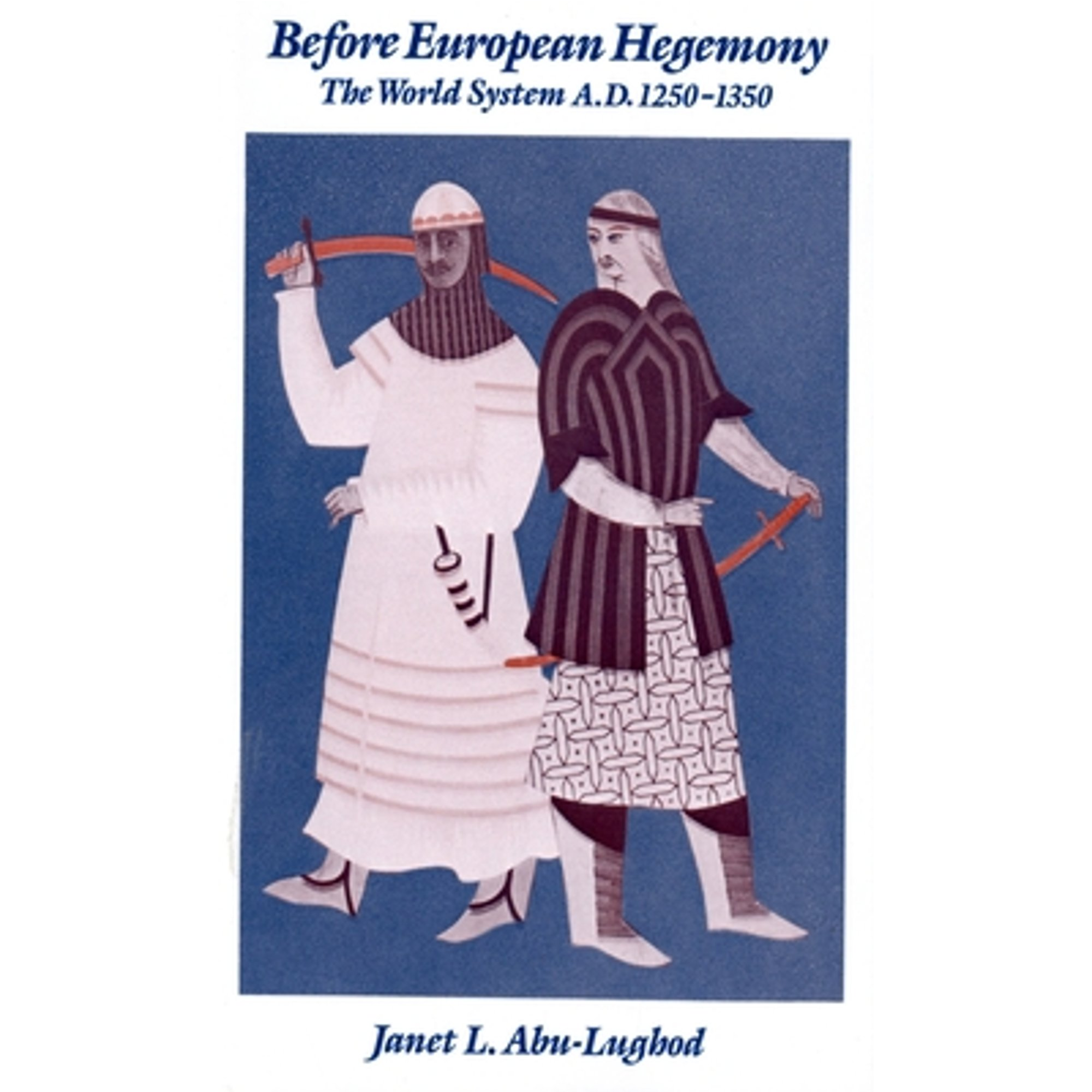
Janet Abu-Lughod focuses on the world system from 1250 to 1350 AD, before European hegemony, illuminating the world system of the thirteenth century. Her work explores the historical cycle of capital accumulation and its structural dynamics, examining how religious ideas or discourses intersect with material interests, power relations, and global trade.
A form of purposive rationality in meaningful action must be complemented by state power, technological rationality, and the monopoly over sea routes and trade, all of which contribute to capital accumulation. Rethinking the history of capitalist development requires a systems-based approach, one that considers both structure and function, addressing the historical cycle of capital accumulation in relation to the role of state power.
The Chinese Ming and Qing, Indian Mughal, Persian Safavid, and Turkish Ottoman empires were far more advanced in the world economy and held significantly greater political and military influence before 1800. This stands in stark contrast to the Eurocentric narrative, which marginalizes the rest of the world and perpetuates a historical myth that prioritizes and distinguishes European exceptionalism.
As the world historian Marshall Hodgson writes, “All attempts I have yet seen to invoke pre-modern seminal traits in the Occident fail under close historical analysis, once other societies are known as intimately as the Occident. This also applies to the great master, Max Weber, who attempted to show that the Occident inherited a unique combination of rationality and activism.”[21]
Capitalism within State and Global Networks
The Occident is not separate from the broader global whole but is an integral part of the cumulative history of the Afro-Eurasian Oikoumene. A theory of class struggle—whether Marxist or Social Darwinian—has never been the primary driving force. Instead, it requires a more nuanced analysis, taking into account the dependency on state and culture, and considering the role of merchants and the structure and dynamics of the world economy.
In fact, class struggles have always existed globally in various forms, such as creditors versus debtors, landowners versus the propertyless, or commercial interests versus consumers or landowners.
Given this framework, I reinterpret Weber’s insights through the lens of state and world economy, adopting a systems approach to the elective affinity between religious discourse, material interests, and power relations. The historical and social process of capital accumulation is a complex reality, not reducible to religious and psychological innerworldly ascetic attitudes.
Capital accumulation remains crucial in stratifying the global networks, as exemplified by the image of the archipelago, which characterizes globalization and the uneven exchange and development of global trade, along with the geographical division between central and peripheral zones. Like islands in the sea, the world economy is shaped by geographical structures and the network of religions, where the central zone connects with the peripheral one, and the peripheral zone is embedded within the central zone, unevenly distributed across the globe in terms of global stratification and archipelago capitalism.
In his analysis of power structures, Weber argues that political organizations differ based on the external manifestation of prestige, bureaucracy, and power structures. The bearers of power and prestige typically emerge as “Great Powers” during a phase of territorial expansion, as exemplified by the Hellenic world, the Persian Empire, and the Roman polity.
In the overseas empires of Athens, Carthage, and Rome, export trade was a key driver of territorial expansion, facilitating the formation of vast overseas dominions. These empires sought to control territories from which goods or raw materials could be extracted. While Rome’s continental expansion was motivated by a desire for political unification, it was also influenced by tax farmers, office seekers, and land speculators. However, it was not solely determined by capitalist interests.[22]
In Weber’s provocative assertion, he suggests that in the late Roman Empire, “the evolution of capitalism may be stifled by the manner in which a unified political structure is administered.”[23]
The Evolution of Capitalism
The evolution of capitalism is based on the network of markets with states, especially in Rome. However, the market economy in Rome was stifled by imperial bureaucracy, global governance, and its neglect of the public sector of the market economy.
In fact, the characteristics of Roman capitalism are specific to a particular type of capitalist relation—state-based imperialist capitalism, or colonial capitalism. This system relied on the direct exploitation of weaker regions through executive power and territorial expansion. It was marked by a range of opportunities, including tax-farming contracts and the acquisition of slaves and land as war booty.[24]
This form of state capitalism created substantial opportunities for profit among capitalist interest groups, enabling the forceful monopolization of trade through military means. Similar patterns were later observed with the Spanish in South America, the English in the Southern States of the U.S., and the Dutch in Indonesia, among others.
In this imperialist capitalist system, the economic structure often co-determines the extent and nature of political expansion. However, trade itself is not the primary driver of political expansion. In his analysis of social structures in the ancient world, Weber emphasizes the role of the ancient city-state in relation to the medieval city.
In the ancient world, industry could play a significant role in the development of the city-state, though it was primarily governed by political and military motives, particularly through slave works. Capitalism, in this context, was dependent on politics, with economics playing a secondary, indirect role.
Agricultural townships resembled the small cities of antiquity in many ways, whereas industrial cities marked a distinct departure from the ancient city-state and its slave economy. For example, Florence played a crucial role in the legal innovations that pertained to industrial capital, as well as in the early organization of free labor—achievements that were emblematic of the industrial city. In contrast, the Latin cities of the early Middle Ages derived some of their wealth from overseas trade, often through systems like the commenda, which was similar to practices seen in the ancient East.[25]
Unlike Weber, however, the commenda in the context of the archipelago economy was original as a capitalist instrument with the Arabs, who could invest capital in commerce or industrial production, unlike in Europe. It had both industrial and commercial functions. It was also a flexible device that facilitated long-distance trade, extending and transferring credit.[26]
Both commercial partnerships (for joint exploitation of capital and joint participation in profits and losses) and the commenda were commonly used as the dominant forms of business enterprise in the medieval Muslim world, as fully codified in the eighth and ninth centuries. Hanafi law favored the limited investment partnership, despite permitting the unlimited investment partnership. In the commenda, one party provides the capital, while the other provides labor. The capital in the partnership consists of labor from both parties. This partnership could potentially put capitalists, workers, and wholesalers on more equal footing.[27]
Commercial Capitalism and Ideal Type
Unlike Weber’s definition, a legal and institutional system was a prerequisite for financing and administering capitalist production and exchange in the Islamic world, long before the Europeans.[28]
By the early fourteenth century, Genoa and Florence were distinctly ahead of other Italian towns in the evolution of commercial and banking accounting, ultimately leading to the rigorous development of double-entry bookkeeping in Italy during the 13th and 14th centuries (later documented by Luca Pacioli in 1494). These tools greatly helped merchants keep track of their business dealings and monitor the operations of their partners and agents.[29] However, Islamic merchants in major trading hubs like Baghdad and Cairo employed credit, structured bookkeeping, accounts, and banking systems.
Weber’s ideal type of modern capitalism is fundamentally anchored in the Western model of state and economy, which is characterized by a rationally formulated constitution and administration. In this system, bureaucracy plays a pivotal role, with trained specialists at the helm and a clear structure of status through rational capitalist enterprises. This model is notably devoid of coercive force, especially in its monopolistic practices, in contrast to earlier systems.
Weber argues that the commenda—a medieval partnership in which one party provided capital and the other managed it—does not fit within his framework of rationalized capitalism. The commenda system is based on a more informal structure, where goods were handed over to a traveling merchant in their natural form, and the division of profit or loss was determined by the final balance at the end of the contract. Since there was no systematic organization of labor or rational planning akin to modern capitalist structures, Weber dismisses the commenda as an irrelevant precursor to his ideal-type model of capitalist enterprise.[30]
In this regard, Weber argues that “merchants have existed in all parts of the world, and… sea loans, the commenda, and companies and associations of the limited liability type have been widespread…’”[31]
Be that as it may, in commercial capitalism, credit organization and the banking system were additional tools supporting commercial and financial competition and development, as was already known to both deposit bankers and merchants in late thirteenth-century Italy. However, maritime trade relied on the short-term commenda contract, which met many of its needs in an unimpeachable way.[32]
According to Weber, however, capitalist undertakings came to terms with some rationalization of capital calculation, which existed universally in all civilized countries, including Greece, Rome, China, India, Babylon, Egypt, the ancient Mediterranean, and the Middle Ages. Capitalist adventurers acquired plantations and worked them with slaves or imposed labor, as well as engaging in irrational speculation or acquisition by violence.[33]
Weber applies his theory of politically determined capitalism (common in patrimonial states) in terms of sources of capital accumulation to the period of the Warring States in China. China’s political unification into a world empire had the obvious consequence of rooting this form of capitalism in the state and its competition with other states. As is typical in primordial states, the accumulation of wealth was dominated by trade. This form of capitalism was founded upon the exploitation of internal political opportunities (speculation in taxes) rather than rational economic acquisition.
Chinese administrative history is filled with recurrent attempts by the imperial administration to extend its authority beyond urban districts. Its patrimonial bureaucracy has little to do with rational administration or modern democracy of the Western type. In fact, the rise of modern capitalism should not downplay the importance of the commercial foundations for the development of capitalism, even though these very foundations ultimately contributed to its gradual decline.[34]
According to Weber, a completely different form of capitalism existed in the West, based on “the rational capitalist organization of (formally) free labor” and its corresponding market, alongside an imperialist form of capitalism. Outside the West, well-documented evidence of genuine domestic industries is scarce, with most examples being state monopolies that rarely employed free labor. Commercial development, even in its global connections, has been far less significant without the rational capitalist organization of labor.[35]
For Weber, the foundation of social life in the modern West is a bureaucratic organization of trained specialists, which underpins the political, technical, and economic spheres. State officials, categorized by status groups, are trained in technical, commercial, and legal disciplines.
This refers to a distinctly Western type of state, based on status (the rex et regum), [36] and involving a political institution characterized by a rationally formulated constitution and administration carried out by specialist officials. This is also the hallmark of Western capitalism, along with a status group of burghers. The pursuit of profit, in and of itself, does not define capitalism in its true sense.
Capitalism, according to Weber, is the pursuit of profit through the continuous rational operation of capitalistic enterprise. It involves the constant renewal of profit or profitability by utilizing opportunities for exchange and a rational organization of capital calculation—all conducted in a formally peaceful manner, without resorting to force.[37]
It is undertaken with reference to the state as a political institution, along with a rationally formulated constitution and administration carried out by specialist officials. This is characteristic of the Western type of capitalism, along with a status group of burghers, because acquisitiveness or the pursuit of profit in itself has nothing to do with capitalism sui generis.
Given Weber’s arguments, one might sense an ambivalent, even paradoxical, attitude toward both the state and the capitalist spirit. In his lecture Politics as a Vocation, Weber accepts the Marxist thesis that ‘every state is founded on force’ (as Trotsky argued at Brest-Litovsk), acknowledging that ‘force is a means specific to the state.'”[38]
The state claims a monopoly on the legitimate use of physical force, asserting its exclusive right to exercise violence within a given territory. [39] In contrast to Hobbes’ Leviathan, Weber, in his analysis of industrial capitalism in Europe, defines the state as a rationally formulated institution characterized by a constitution and laws that are systematically administered by specialist officials who adhere to rationally formulated rules and principles.
This liberal definition of the state, understood as constitutional democracy, aligns with an ideal type of modern capitalism, which is less concerned with state monopoly over power and violence. Rather, it refers to the European tradition of juristic rationalism and the lawyer as an independent status group—seen in Italy, the French Parliament, the Dutch teachers of natural law and monarchomachs, parliamentary jurists, and finally the lawyers of the French Revolutionary era. “Since the French Revolution, the modern lawyer and modern democracy absolutely belong together.”[40]
At this juncture, I distinguish Weber’s definition of the ‘ideal type’ from the colonial form of political capitalism, integrating this distinction within the broader economic framework of the world system, while also addressing his underestimation of the commercial revolution. In fact, Weber sidesteps a type of industrial capitalism that is deeply tied to the historical phase of capital accumulation that began with Columbus’ ‘discovery’ of the New World and was further propelled by British colonialism in India and China.
Weber does, however, acknowledge the unique features of Western natural science, particularly its foundation in mathematics and experimental exactness. He recognizes how these rational foundations, combined with capitalist opportunities, played a decisive role in the development of technology and its economic applications.
The technological application of scientific knowledge has profoundly impacted the lives of the great mass of people, particularly in the West, where it has been shaped by the economic rewards offered. This influence can be traced to the unique character of Western social order, which is underpinned by a rational, calculable legal system. The system’s structure aligns with formal laws and is administered by a specialized status group of jurists trained in rational law.[41]
Rethinking Rationalization, Capitalism, and State Power
While Max Weber’s work on rationalization, capitalism, and state power has shaped the foundations of modern sociological thought, his approach presents both limitations and opportunities for further inquiry. A technological-legal rationality should be integrated into the discussion of the economy as a ‘rational’ type of capitalism, alongside other types of rationality (purpose, value, affective, traditional).
Unlike Weber, I am more interested in examining the historical reality of the Commercial Revolution within its institutional and commercial framework, laying the groundwork for its successive capitalist development through colonialism and mercantilism, leading to the Industrial Revolution.
It is not necessary to regard the Crusades as the main turning point in the European economy, transitioning from inertia to aggressiveness and from poverty to wealth through war, plundering, and trade. The shift occurred earlier through internal changes: the growth of the population, the increase in agricultural production, and the emergence of a self-confident merchant elite.
By the thirteenth century, the center of gravity had definitively moved to northern and central Italy (Venice, Milan, Genoa, and Florence), where powerful merchants had a firm grip on the trade routes toward the fertile and industrious European hinterland and sought to expand far beyond the declining Islamic façade, reaching deep into Asia and Africa.[42]
By the end of the thirteenth century, the Muslims had reconquered all of the Crusaders’ holdings. The Commercial Revolution, which occurred between 850 and 1350, laid the groundwork for the rise of capitalism, witnessing the emergence of merchants, trade, and skilled craftsmen, all of which set the stage for the Industrial Revolution.
The Commercial Revolution stands in contrast to the common assumption that the Renaissance and early modern periods were the true age of economic progress. The transformation was initially rooted in the Italo-Byzantine eastern Mediterranean and later spread to the Italian city-states and beyond.
Between the tenth and fourteenth centuries, commerce became the most dynamic sector of the economy, with merchants acting as the main promoters of change, serving as agents of economic exchange and development. Just as industrialization shifted economic leadership to the industrialist, the Commercial Revolution transferred it from the landowner to the merchant. Throughout this period, no other group concentrated its efforts on trade as thoroughly as the Jews and the Italians.[43]
Commercial activity and aspects of a capitalist spirit existed within the institutional and commercial innovations of the medieval period, even prior to the Reformation. These innovations complement Weber’s cultural and religious model, which shaped the mindset of modern capitalism.
The formation of the Hanseatic League was instrumental in Germany’s urban success, serving as a defensive confederation of merchant guilds and market towns in Northern Europe, focused on trade and mutual protection. Hansa was a term commonly used in northern Europe, primarily, but not exclusively, to designate associations of merchants in the Baltic and North Sea regions. Its original meaning was likely “armed convoy,” which aptly describes the military underpinning of trade. Long before the thirteenth century, several hansas appeared and disappeared at various points along or near the southern coast of the North Sea.
However, the Hanseatic League par excellence was founded in 1369, when Cologne and other Rhinish towns joined a preexisting, informal alliance of German seaports in the “northern Mediterranean.” This alliance was the crowning achievement of the relentless commercial and military expansion of the Germanic peoples from the ninth century onward. It began to decline by the 16th century, with its formal end in 1862, due to the rise of state-sponsored trading companies, shifts in trade patterns, and the growing significance of nation-states.
The formation of the Hanseatic League was instrumental in Germany’s urban success, serving as a defensive confederation of merchant guilds and market towns in Northern Europe, focused on trade and mutual protection. Hansa was a term commonly used in northern Europe, primarily but not exclusively, to designate associations of merchants in the Baltic and North sea religions. Its original meaning was likely “armed convoy,” which aptly describes the military underpinning of trade. Long before the thirteenth century, several hansas appeared and disappeared at various points along or near the southern coast of the North Sea.[44]
In the development of commercial capitalism and the historical cycle of capital accumulation the role of the state was essential in areas such as trade, colonialism, mercantilism, and the Industrial Revolution. Furthermore, it is crucial to examine the role of state power in regulating economic rational activity and its infrastructure, particularly within the context of world systems and their diverse networks.
The specific type of rationalism unique to Western civilization is not necessarily the only path that non-Western societies must follow. In all civilizations, different domains of life and economic rationality have been established in diverse ways, shaped by their distinct lifeworlds. These offer alternative paths to modernity that contrast with the Western form, often depicted as being trapped in an “iron cage.”
Weber acknowledges that one of the fundamental elements of the spirit of modern capitalism lies in Puritan worldly asceticism. However, he anticipated that the care for external goods, according to figures like Richard Baxter, should rest lightly on the shoulders of the saint—like a light cloak. But as time passed, that cloak, which could be discarded at any moment, became an iron cage.[45]
Weber’s anticipation highlights a potential pitfall of the capitalist spirit, which arises from the innerworldly asceticism tied to aristocratic, unbrotherly ethics. It remains uncertain who will be trapped in this iron cage in the future. Alternatively, at the end of this immense developmental process, entirely new prophets may emerge, or there could be a great revival of old ideas and ideals—though likely with a convulsive sense of self-importance. In the final stage of Western cultural development, Weber envisions a scenario where “specialists without spirit” or “sensualists without heart” prevail—people who, despite their emptiness, believe they have reached a level of civilization never before attained.[46]
In Weber’s conception of the “disenchantment of the world,” the pervasive development of rationality through intellectualization, scientific progress, and calculation has led to a heartless, bureaucratized, and ultimately meaningless cul-de-sac. Today, we face a techno-paradigm within the framework of Artificial Intelligence, the potential for regional and global atomic wars, the extinction of biodiversity, and the catastrophic consequences of climate change. A shift is needed—from the disenchantment of the world toward a new dialogue with nature and an innovative understanding of life and meaning, rooted in symbiosis, compassion, and the common good, in harmony with both human culture and ecological integrity.
Meanwhile, the various value spheres of the world remain in irreconcilable conflict with one another. Like the ancients, we still live in a world that has not fully disenchanted itself of its gods and demons—though in a different sense. While the grandiose rationalism of Christianity, with its ethical and methodical approach to life, dethroned polytheism, Weber observes that many of the old gods rise again from their graves. Though now disenchanted, they take the form of impersonal forces, striving to regain power over our lives and resuming their eternal struggle with one another.[47]
In light of competing worldviews and the reality of religious pluralism, I wonder whether Weber was an Orientalist or a Eurocentric advocate of capitalistic ascetic rationalism. It would be unfair to accuse him of being a forerunner of Orientalism or of holding a purely Eurocentric view of capitalist progress, despite his limited knowledge of Islam at the time. His views seem to align, to some extent, with Nietzsche’s critique of Western modernity, particularly in his exploration of religious ethics of conviction and acosmic love, which could be linked to a political ethics of responsibility.
However, beyond Weber’s pessimism, I aim to push this discussion further by developing a sociological study of alternative modernities—undertaken in a postcolonial direction—without dismissing the distinctiveness of Western technological-legal rationalism or the Christian practice of value rationality and ethics of conviction. A world-systems approach concerns a global reality of archipelagos and social-cultural stratification, rendering binary oppositions and self-righteous metadiscourses rooted in collective emotivism inadequate.
In this context, I find it crucial to critically reconstruct Weber’s sociology of the state, rationalization, and capitalism, particularly through an analysis of the elective affinity between religious discourse, material interests, power relations, disciplined bureaucracy, and biopolitics across a wider spectrum of social and historical contexts.
This includes a deeper consideration of the role of status and its agency in social stratification, as well as the importance of technological rationality and natural science—within the dynamic systems networks that Weber left underexplored. Furthermore, I seek to incorporate key concepts such as immanent critique, organic solidarity, and emancipation—ideas that Weber’s analysis, despite its brilliance, leaves aside.
Islamic Modernity, Religious Humanism, and Sharia
In his study of Modern Islam in India, Wilfred Cantwell Smith argues that Islamic modernism was carried forward through a liberal Islam aligned with British bourgeois values. However, in its historical development, the Islamic movement has not only repudiated Western liberalism but has also transcended it by creating a new and creative vision. This vision harkens back to the early period of Islam (Khilafat al-Rashidah), referring to the last ten years of the Prophet Muhammad’s lifetime and the first thirty years following his death.[48]
W.C. Smith discusses Sir Sayyid Ahmad Khan and his Aligarh movement, in which Islam is made compatible with modernity. In this framework, Islam is presented as a respectable religion for the new lifestyle, judged by Western-modern standards. For Sir Ahmad Khan, reason and nature serve as the criteria for evaluating the authority of tradition, the Sharia (Islamic sacred law), and the Qur’an. Among all these sources, he recognized only the Qur’an as determinative of Islam, because “he began afresh with the Qur’an and brought out its relevance to the new society of his own day.”[49]
This perspective facilitates a contextual understanding of Sharia, as Weber recognized that a comprehensive account of Islamic law could make a significant contribution to elucidating the dynamic relationship between revelation and the rationalization of Muslim orthodoxy within the tradition (Sunna) of the Prophet. Weber argued that the closure of interpretation in Islamic religion (ijtihad) became a major ideological barrier to social change.[50]
For the task of legal rationality, it is crucial to elaborate on the formation of the Shura in the modern struggle for social and democratic change. The Shura can play a key role in advancing the resumption of ijtihad (independent reasoning) and consensus (ijma). It involves the rational clarification, systematization, and formation of free opinion, as well as analogical derivation or argument (ijtihad) in matters pertaining to theological and legal issues.
According to Bryan Turner, a prominent sociologist, Sharia-mindedness requires discipline to cultivate a specific type of personality, thus Sharia-consciousness involves a technology of self-understanding. Particularly in modern reformist Islam, a biopolitical inquiry draws attention to the subjugated bodies of women and gender differences, as well as their role in transmitting religious piety from generation to generation.
Weber’s concept of the religious personality of piety and life orders can be interpreted in alignment with Foucault’s idea of the technology of the self. A biopolitical theory engages with discourse, the technology of the self, and the interplay of knowledge and power. It focuses on the culture of patriarchy and gender in the social stratification and differentiation throughout the history of Islam and its societies.[51]
If traditional Islam takes its religious sources seriously by reinterpreting them in a fresh manner, aligning them with the challenges of the contemporary world, it need not be an obstacle to synthesizing new meanings.
According to the Sudanese Muslim legal scholar Abdullahi Ahmed an-Naim, “This process of abrogation should be reversed in order to develop a modern version of the Sharia which guarantees the equal rights of women and non-Muslims.” He argues that we must openly acknowledge and address the discrimination inherent in the historical formulations of the Sharia. Additionally, he stresses that the Sunnah and other sources of the Sharia must be integrated, as it is within this broader context that the Qur’an is understood and applied by Muslims.[52]
This constructive circle of intentionality and its immanent critique draw from the teachings of an-Naim’s mentor, the Sudanese Mahmud Taha, who was executed by the dictator Numeiri in 1985. Taha and his followers, the Republican Brothers, sought to modernize Islamic teachings and the Sharia. Taha distinguished between the Meccan and Medina periods of the Prophet Muhammad’s preaching. He argued that the Meccan surahs should be understood in their historical context and that their application to society must differ from the Medina surahs, which were revealed under different conditions. Taha thus challenged the fundamentalist and literal exegesis of Islamic law.[53]
According to Taha, Muhammad’s preaching in Mecca implies the abolition of slavery and all forms of social oppression, particularly those that victimized women. However, the preaching in Medina was quite different. In this period, the Prophet formed alliances with the ruling classes who rallied to Islam, which led to a shift in the social and political dynamics. As a result, the progressive ideals of the Meccan period of revelation were undermined.[54]
However, in Quranic sources “we have honored [karramna] the children of Adam” (17:70). The modern Arabic term for human dignity or rights is derived from the verb ‘honored.’ Human beings are defined to serve as God’s representative on earth (khalifa) (2:30), because they are offered God’s trust (amna) (33:72). Dignity and responsibility are conferred on all human beings.
The Islamic source of religious humanism runs counter to political Islam or Western secularism. Rather it affirms that human rights are not really an expression of Western cultural monopoly. The Western concept of human rights does not necessarily represent a comprehensive view of a way of life in judging the different cultures or moral ideals. There are multiple meanings in a religious moral lexicon, which resist to reducing all different positions to one single concept.
Hans Küng promotes “A Call to Our Leading Institutions” (from the 1999 Parliament of the World’s Religions in Cape Town), which reaffirmed the 1993 Declaration. The key principles outlined were: (1) a culture of non-violence and respect for life; (2) a culture of solidarity and a just economic order; (3) a culture of tolerance and a life of trust; and (4) a culture of equal rights and partnership between men and women.[55]
Insofar as this affirmation is accepted as the common heritage of the three Abrahamic religions, Islam provides a foundation for a global ethic and a global civil society, paving the way for alternative modernities. This becomes feasible when human rights are incorporated into diverse philosophical or religious systems, ideas, and values.
Reopening the door to ijtihad and consensus highlights their relevance to the issues of democracy and the modernist reform of Sharia. Certainly, questioning religious sources does not imply a nostalgic return to an origin or lost power. Rather, it is a critical re-engagement with Islam’s history, undertaken to reshape the present in alignment with the Islamic teachings of democracy, emancipation, symbiosis, and solidarity for the future. “Theirs is an abode of peace from their Lord. He is their friend because of what they have done” (Q 6: 127).
[1] Max Weber and Islam, eds. Toby E. Huff and Wolfgang Schluchter (London and New York: Routledge, 1999).
[2] Bryan S. Turner, “Revisiting Weber and Islam,” The British Journal of Sociology (2010), 162. [161-165]
[3] Weber, The Sociology of Religion, 203.
[4] Ibid.
[5] Ibid.
[6] Ibid., 204.
[7] Kűng, Islam, 200.
[8] Weber, The Sociology of Religion, 205.
[9] Ibid., 263.
[10] Ibid.
[11] Ibid.
[12] Ibid., 269.
[13] Ibid., 209.
[14] Ibid., 220-1.
[15] Ibid., 212.
[16] Ibid., 214-5.
[17] Janet Abu-Lughod, Before European Hegemony, 215. 231.
[18] Ibid., 228.
[19] Lopez, The Commercial Revolution of the Middle Ages, 950-1350, 360.
[20] Ibid., 76-7.
[21] Marshall Hodgson, Rethinking World History, ed. E. Burke III (Cambridge: Cambridge University Press, 1993), 86.
[22] “Structures of Power,” From Max Weber, 163-4.
[23] Ibid., 165.
[24] Weber, “Urbanization and Social Structure in the Ancient World,” Weber Selections in Translation, 307.
[25] Ibid., 296.
[26] Janet Abu-Lughod, Before European Hegemony, 220-1.
[27] Ibid., 218-9.
[28] Ibid., 224.
[29] Ibid., 107.
[30] “Origins of Industrial Capitalism in Europe,” Weber Selections in Translation,335.
[31] Ibid.
[32] Lopez, The Commercial Revolution of the Middle Ages, 950-1350, 104.
[33] Weber, “Origins of Industrial Capitalism in Europe,” 335-6.
[34] “Urbanization and Social Structure in the Ancient World,” ibid, 302.
[35] Weber, “The Origins of Industrial Capitalism in Europe,” Ibid., 336-7.
[36] Ibid., 333.
[37] Ibid., 333-4.
[38] “Politics as a Vocation,” From Max Weber, 78.
[39] Ibid.
[40] Ibid., 94.
[41] Weber, “The Origins of Industrial Capitalism in Europe,” 339.
[42] Ibid., 99.
[43] Ibid., 86.
[44] Ibid., 104-5.
[45] Weber, The Protestant Ethic and the Spirit of Capitalism (New York, Mineola: Dover Publications, 2003),181.
[46] Ibid., 182.
[47] “Science as a Vocation,” from Marx Weber, 148-9.
[48] W. C. Smith, Modern Islam in India (London: Victor Gollancz Ltd., 1946), 12.
[49] Ibid. 20.
[50] Ibid.,163.
[51] Bryan S. Turner, “Revisiting Weber and Islam,”164.
[52] A.A. an-Naim (1990), “Quran, Sharia and Human Rights: Foundations, Deficiencies and Prospects,” Concilium 2, 61-69.
[53] M.M. Taha, The Second Message of Islam (New York, NY: Syracuse, 1987).
[54] Nasr, Islam, 185.
[55] Kung, Islam, 657.