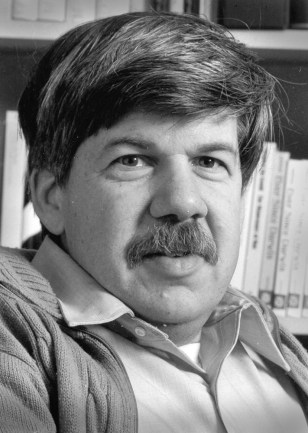
Stephen Jay Gould, Punctuated Equilibrium, and NOMA:
A Public Theology Appraisal
By Paul S. Chung
Distinguished full professor and director of Forum Center, Berkeley, CA
Abstract
In this essay, I engage critically with the work of Stephen Jay Gould, particularly his theory of punctuated equilibrium and his principle of non-overlapping magisteria (NOMA). While acknowledging the value of his structural theory of evolution, I move beyond his framework to propose an overlapping regime between science and religion—one that creates space for a public theology of science grounded in epigenetic ontology and prolepsis.
Drawing on the Kantian philosophy of organism, especially the notion of epigenesis and the role of reflective judgment in constituting a cosmopolitan whole, I introduce the concept of reflective prolepsis—or proleptic rationality—as essential to bridging ethical responsibility with religious conviction. This complementarity, I argue, is foundational for articulating a public theology of science that is both intellectually coherent and socially engaged.
Introduction
Stephen Jay Gould, together with Niles Eldredge, is well known for developing the theory of punctuated equilibrium. This theory challenged traditional Darwinian evolution, especially by questioning the central dogma of molecular biology—the one-way flow of genetic information from DNA to RNA to protein—and its broader implications. Gould’s critique continues to resonate as a counterpoint to Edward O. Wilson’s Sociobiology and Richard Dawkins’s The Selfish Gene.
According to the theory of punctuated equilibrium, long periods of evolutionary stasis (equilibrium) are interrupted—or punctuated—by brief episodes of rapid change. The fossil record supports this view, showing the sudden appearance of new species without clear ancestral forms. This is in sharp contrast to the gradualism expected in classical Darwinism.
The Darwinian principle is well articulated in the phrase “Natura non facit saltum”[1] (Nature does not make jumps), which reflects the idea of gradual change through natural selection underlying common descent with modification. Charles Darwin was aware that the lack of transitional fossils predating the Silurian period—more accurately, the Cambrian period—posed a significant challenge to his theory of gradual evolution. The Cambrian period, in particular, reveals an apparent “explosion” of diverse and complex life forms with no clear ancestral precursors in the fossil record, including in the Silurian strata.
For Darwin, “the difficulty of assigning any good reason for the absence of vast piles of strata rich in fossils beneath the Cambrian system is very great.”[2]
Darwin had no satisfactory answer to this question, except for the suggestion that the geological record, as a history of the world, is imperfectly preserved.[3] Darwin defended his theory of gradual evolutionary change, emphasizing that natural selection operates slowly over long periods of time as it gradually shapes species through incremental changes. Yet, Darwin acknowledged that, “If it could be demonstrated that any complex organ existed, which could not possibly have been formed by numerous, successive, slight modifications, my theory would absolutely break down.”[4]
Responding to this, Gould’s theory of punctuated equilibrium suggests that species undergo long periods of little or no evolutionary change (stasis), which are then interrupted or punctuated by short, rapid bursts of speciation.
Gould also developed a model of the relationship between science and religion known as the principle of non-overlapping magisteria (NOMA). In this model, science and religion operate within distinct domains: Science concerns itself with the empirical understanding of the natural world, while religion addresses questions of morality, meaning, and ethics.[5]
For Gould, religion and science “do not overlap, nor do they encompass all inquiry. To cite the old clichés, science gets the age of rocks, and religion the rock of ages; science studies how the heavens go, religion how to go to heaven.”[6]
This epistemic stance embodies the principle of respectful noninterference, framing the relationship between science and religion as a harmonious and mutually respectful concordat. Within this framework of noninterference, religion seeks to explore the spiritual meaning of life and the foundations of ethical values, while science is primarily concerned with the empirical investigation and understanding of the natural world.
An Agnostic Position and Independence
Evolution is not inherently hostile to religion. As an agnostic scientist, Gould refers to a letter written by Darwin in May 1860 to the Harvard botanist Asa Gray, which Gould considers one of the finest comments on the proper relationship between science and religion. The letter was written nine years after the death of Darwin’s daughter Annie and six months after the publication of On the Origin of Species.
Darwin, in fact, did not intend to present himself as an atheist in the letter. While he acknowledged the overwhelming presence of misery in the world, he was reluctant to conclude that the wonderful universe — and especially the nature of man — is the result of mere brute force or chance. Instead, he would suggest that “contingency” (a more precise term than “chance”) could be the driving force in the universe, whether for good or ill. Regarding the reality of evolution, Darwin famously remarked, “A dog might as well speculate on the mind of Newton.”[7] Thus, Darwin allowed for the possibility of an external factor in the ordering of the universe.
Conversely, some may argue that Gould’s NOMA principle exemplifies what Ian Barbour refers to as the independence position, where religion and science are regarded as completely independent, each occupying its own distinct domain with characteristic methods, in contrast to one another.[8]
However, it seems to me that Gould would align more closely with Aristotle’s Golden Mean, seeking a balanced approach to avoid extremes, particularly in contrast to Christian modern creationism, which he views as a distinctly American violation of the NOMA principle.
Two Fronts: Science-Creation and Integration
Philip Johnson, Professor Emeritus of Law at the University of California, Berkeley, is a prominent opponent of evolution. He cites the theory of punctuated equilibrium to support his anti-evolutionary stance, arguing that there is no evidence of gradual transformation, only substantial, sudden changes. Johnson uses the theory of punctuated equilibrium to challenge the validity of evolution itself, claiming it is fundamentally flawed. “Science knows of no natural mechanism capable of accomplishing the enormous changes in form and function required to complete the Darwinist scenario.”[9]
Johnson does not consider himself a defender of creation-science but instead advocates for intelligent design as an alternative to Darwin’s theory of natural selection. However, the theory of Intelligent Design does not reject Darwinian evolution outright, as Johnson does.
Gould places Barbour’s model of integration within a broader metaphysical synthesis. Rather than advocating for complete separation, Gould seeks to maintain a distinction between science and religion while encouraging collaboration for mutual benefit and the common good. But how feasible is this approach?
According to Barbour, the integration model is pursued through systematic synthesis, with process philosophy serving as a promising candidate for this dialogical exchange. This philosophy, influenced by both scientific and religious thought, adopts a view of reality as a dynamic web of interconnected events, offering a way to bridge the two domains of religion and science.[10]
In challenging the model of integration, however, Gould warns against a syncretism of science and religion. This syncretism “continues to embrace the oldest fallacy of all as a central premise: the claim that science and religion should fuse to one big, happy family, or rather one big pod of peas, where the facts of science reinforce and validate the precepts of religion, and where God shows his hand (and mind) in the workings of nature.”[11]
In Gould’s view, a bridge between the two “rocks of ages” — science and religion — requires a careful integration that avoids a syncretic approach. Science, or scientific principles and findings, should not be forced to conform to religious frameworks or yield religious conclusions.
Reinventing the Sacred in the Natural World
In response to Gould’s critique of syncretism, I argue that the dialogue between science and religion is not about creating a “religious” science or subordinating science to serve religious interests. Rather, it involves mutual engagement that respects the integrity of both domains while seeking deeper insight into shared existential and ethical questions through co-constitution via interaction.
This is possible because even Kantian philosophy has been employed to explore concepts such as self-organization and the emergence of life at higher levels of complexity. For example, Stuart Kauffman, a leading theoretical biologist, advances the science of complexity by examining self-organizing chemical reaction networks and the origins of life at the edge of chaos in conditions far from equilibrium. In doing so, he argues for “reinventing the sacred” by introducing religious language to articulate a new vision of the relationship between science, reason, and spirituality.
As Kauffman argues, “God, a fully natural God, is the very creativity of the universe.”[12] God the Creator may call upon both religion and science as we step into the mystery of life and its creativity. In the face of this mystery, the gifts of creativity are bestowed upon us, helping to reconcile reason and faith and laying the foundation for a new global ethic.[13]
Exaptation and Order for Free
Gould finds Kauffman’s concept of “order for free” problematic, arguing that complexity and self-organization do not spontaneously lead to the emergence of order and structure near the boundary of chaos in biological systems and networks. While acknowledging the significance of self-organization, Gould instead emphasizes the importance of a series of contingent events and historical circumstances that are crucial in shaping the unfolding of life-history.[14]
In Gould’s view, Kauffmann’s phrase, “adaptation to the edge of chaos,” becomes questionable because it lacks a clear scientific definition and operational utility. It tends to operate as a reductionist mode of thought, which cannot go beyond a basic conceptual tool.[15]
In other words, Gould tends to limit biological laws to the life of living systems, rather than generalizing a theory of dissipative structures in nonequilibrium conditions that is applied to punctuated equilibrium.
Gould presents himself as a structural channeler of exaptive possibilities, which define the internal contributions that organisms make to their own evolutionary future. For example, in evolutionary biology, exaptation refers to a trait that has acquired a new function, even though it did not initially evolve for that purpose.
To support an idea of exaptation, Gould is convinced that Nietzsche’s dictum is “the essence of life, its will to power.”[16] Nietzsche highlights the implications for adaptationist analysis by emphasizing the need to distinguish historical origin from current utility, which he labels as “the major point of historical method.”
In Gould’s account, Nietzsche’s genealogy is not primarily concerned with reasons for origin; rather, it aims to analyze the source and strength of life’s underlying motivations through power relations. If an organ undergoes unexpected shifts in function during its historical development, we cannot predict its future use based on its current value. Similarly, we cannot easily trace back to the reasons behind the origin of the trait. In his genealogical analysis, the development of a thing, a tradition, or an organ is not seen as progress toward a goal. Instead, life returns and recurs eternally.[17]
Gould’s theory of exaptation differs from Kauffman’s concept of “order for free,” which is based on complexity and self-organization that leads to spontaneous order without the need for an intelligent designer at the molecular level. In his theory of natural self-organization, Kauffman introduces the idea of the “Kantian Whole,” which describes living organisms as integrated wholes, where the parts exist for and by means of the whole, and the whole exists for and by means of the parts.
Despite the use of Nietzsche, however, Gould follows the Kantian dictum that percepts without concepts are blind, but concepts without percepts are empty. These two categories interpenetrate as novel ideas.[18] However, there is a crucial relationship between sensory experience and intellectual understanding in forming knowledge.
At this juncture, I find it essential to explore Kant’s contribution to the public theology of science, particularly in how science and religion can be related in a more responsible and interrelated manner.
Excursus: Kant Revitus—Epigenesis and Prolepsis
It is important to clarify Kant’s ideas in relation to Nietzsche—not with an apologetic aim, but from a phenomenological perspective. While Kant is not easily reconciled with Nietzsche, both thinkers share a critical attitude and an ethical concern at the heart of their respective projects. In recognizing Nietzsche’s genealogical method and his critique of progress, I seek to defend Kant’s vision of a cosmopolitan whole—a dimension that has been largely overlooked by thinkers such as Stephen Jay Gould and Stuart Kauffman.
Within the framework of a universal-historical project shaped by cosmopolitan intentionality, I focus on Kant’s insight into epigenesis, a concept he develops in dialogue with Hofrat Blumenbach (1752-1840), a German physician and physiologist. Kant’s epigenetic system addresses the origin and development of life not merely through mechanical causality, but through a causality of ends oriented toward the future.
His philosophy of epigenesis becomes crucial for understanding the organism in relational terms—as life shaped by internal purposiveness. “An organized natural product is one in which every part is reciprocally both end and means.”[19]
This self-organizing aspect of nature does not bypass historical contingency, especially in evolutionary analyses of the shift from barbarism to a civilized condition. In this context, Kant calls for reflective judgment in the teleological investigation of nature—an inquiry grounded in empirical observation and research.[20]
In contrast to determinant judgment—which applies a universal law to a particular case—reflective judgment refers to the proleptic capacity to discover or formulate a universal principle that fits a specific situation. It requires the suspension of immediate judgments and an openness to learning from diverse perspectives. Thus, reflective judgment allows for the exercise of proleptic reason, enabling individuals to anticipate new possibilities and emerging meanings.
This attitude parallels the phenomenological epoché, which suspends the “natural attitude”—that is, the uncritical acceptance of taken-for-granted realities—while engaging in epistemological procedures that explore intentionalities, their diverse spectra, and syntheses within the lifeworld.
This redefinition takes shape in proleptic reflective judgment—a praxis of hope and transformation—while aligning with the creative capacities of organisms, particularly as understood through the epigenetic model of development.
Notably, reflective judgment is central to Kant’s philosophy of universal history with cosmopolitan intent (1784), in which he articulates a theory of gradual evolution grounded in the original predispositions of the human species. His notion of the archeology of nature does not dismiss the role of reason, but rather presents it as embedded in nature’s unfolding, rooted in a system of desire and fulfillment that facilitates transformation over time.
For example, in the Fourth Proposition of his Idea for a Universal History, Kant insists that the means employed by nature to develop human capacities is the antagonism of men in society—what he calls the “unsociable sociability” of the human being. Human faculties remain mere latent potentials unless drawn out by the competitive tension of social life. This antagonism, based on vanity, egoistic pretension, and the insatiable desire to possess or dominate, paradoxically becomes the engine of lawful societal order. It implicitly includes Nietzsche’s emphasis on power relations, while also acknowledging the unpredictability and historical contingency of human development.
According to the archeology of nature, nature does nothing in vain. Yet, it also contains within itself the realities of pathology and antagonism, demonstrated in the “glittering misery” that accompanies the achievements of civilization when they occur without moralization.
Therefore, in the course of time, “a pathologically enforced co-ordination of society finally transforms it into a moral whole” for the achievement of a civil society.[21] Meanwhile, “this glittering misery is bound up with the development of the natural predispositions in the human race, and the end of nature itself, even if it is not our end, is hereby attained…to make us receptive to higher ends than nature itself can afford.”[22]
The universal-historical hope recognizes power relations as an ugly story of glittering misery and brutal reality, anticipating Walter Benjamin’s view of civilization as a monument to barbarity. For Kant, regions like America, the lands of the Negroes, the Spice Islands, the Cape of South Africa, and East India are strongholds of the cruelest forms of slavery and wars of power. These, he argues, are all the work of powers “which make much ado about their piety and who want themselves to be considered among the morally elect, while in fact they consume [the fruits of] injustice like water.”[23]
Kant offers a proleptic realist vision of the cosmopolitan condition and a global ethics of hospitality in the evolution of human history. Fundamentally, Kant is wary of arrogantly embracing providence, as if by doing so, we put the wings of Icarus on our shoulders and fly too close to the sun.
Yet, exaptation and “order for free” are not the whole story of evolution. Kant introduces the concept of epigenesis, realistically reflecting the reality of glittering misery and the regime of effective history, which has often been sacrificed to the metanarrative of European progress and colonialism.
A universal history contains a historical type of reflective prolepsis, which is underlined in his philosophy of the enlightenment for Sapere Aude! Here, the public use of reason is endorsed in all matters. “Have the courage to use your own intelligence! is therefore the motto of the enlightenment,”[24] along with cosmopolitan intentionality.
This signals a new chapter of the Enlightenment situated withina post-metaphysical and postcolonialcontext. Not only has exaptationinfluenced evolutionary narratives, but so too hasan effective history of glittering misery—a legacy marked by sacrificial regimes and systemic violence, buried beneath the triumphalist metanarrative of global Enlightenment.
However, an anticipatory consciousness of the future carries retroactive power, reshaping how we interpret natural selection and the drama of evolution. It resists resignation to the “ugly story” of glittering misery and instead imagines a future grounded in justice and moral reflection. Therefore, Kant offers a radical alternative to the Social Darwinian discourse of progress, white supremacy, and its ideological offspring in laissez-faire capitalism.[25]
Gould and Critical Realism
If Stephen Jay Gould insists on the independence of the magisteria (NOMA), one may ask, how would he respond to a theological account of divine action that enters the domain of science? The doctrine of concursus—the belief in God’s cooperative involvement with natural processes—challenges Gould’s limited view of divine action. Instead, a theology grounded in concursus seeks to integrate the evolutionary–ecological constellation within a broader theological understanding of creation.
Although NOMA aspires to a kind of Aristotelian golden mean—a balanced dialogue between science and religion marked by mutual respect—it remains constrained by its own boundaries. Gould’s Goldilocks solution may appear to find a balanced middle ground. Yet, in practice, he rejects natural theology outright and remains suspicious of any theology of nature.
However, a theology of nature does not begin with science but is rooted in religious experience and historical revelation within a particular tradition. While it acknowledges the importance of scientific insights, it does not subordinate theology to science. Rather, it recognizes that some traditional doctrines may need to be reformulated in light of contemporary scientific understanding. It is especially important for this to be accomplished in a spirit of critical realism that seeks coherence between faith and reason without collapsing one into the other. “Here science and religion are considered to be relatively independent sources of ideas,” while some areas overlap in their respective concerns.[26]
This position is situated within the framework of critical realism, which offers a creative methodology for bridging the structure of scientific method with the theological structure of religious experience, concepts, and beliefs. It affirms that there are parallels and resonances between science and religion, not in their content or aims, but in the epistemological processes they employ.
Both disciplines rely on the development of theories or models, which are shaped by acts of creative imagination and are characterized by their analogical, intelligible, and revisable nature. This applies even to scientific models like punctuated equilibrium, which—though rooted in empirical observation—emerge through interpretive frameworks that bear resemblance to theological reasoning.
Different language games between science and religion are not isolated. Rather, they require a creative translation based on different forms of life that pursue analogous resemblances for co-construction through discourse clarification and a shared lifeworld.
According to Gould, if science calls the tune, religion dances to its music according to the results from the magisterium of natural knowledge. In Gould’s argument, “The first commandment of all versions of NOMA might be summarized by stating: Thou shalt not mix the magisteria by claiming that God directly ordains important events in the history of nature by special interference knowable only through revelation and not accessible to science.”[27] .
Should Gould exclude the possibility of divine action operating within nature? While the NOMA principle insists on the separation of science and religion into non-overlapping domains, it ultimately gestures—perhaps unintentionally—toward the wisdom that can emerge when moral reflection (religion) and empirical investigation (science) are integrated—not fused—into a coherent vision of life.[28]
In fact, a punctuational style of change also encompasses Ilya Prigogine’s concept of bifurcation.[29] Near-bifurcation systems exhibit large fluctuations, seemingly “hesitating” among various possible directions of evolution. This phenomenon aligns with aspects of punctuated equilibrium, where a minor fluctuation can trigger an entirely new evolutionary path, drastically altering the behavior of the macroscopic system. This epistemic framework does not oppose “chance” (contingency) and “necessity” (selective design in the emergence of life at a higher level). Rather, both elements are essential for describing nonlinear systems that are far from equilibrium.[30]
This perspective points toward a new scientific view of life, one that emerges from disorder and dissipative structures, as seen in the work of Prigogine and others. It calls for a collaborative dialogue between religion and science, fostering a renewed relationship with nature and a vision of a shared world. Such a view finds resonance even within Gould’s theory of punctuated equilibrium and his broader structural understanding of evolution.
Religious and Scientific Discourse: Interface
God and nature fall within the domain of specific religious authorities. For instance, the historical case of the Lisbon earthquake (1755) profoundly challenged theologians of the time to reconsider the idea of God’s good creation in light of its darker, more catastrophic realities. The theme of “creation and nature” highlights the interface between religion and science and underscores the significance of the theologia crucis in grappling with the realities of theodicy and natural disasters.
The theologia crucis, through its assumption of human flesh, implies an embodied narrative of the gospel—revealing the aletheia (truth) of God’s self-manifestation under the appearance of its opposite (revelatio sub contrario specie). This perspective offers a radical alternative to Leibniz’s philosophical concept of “the best of all possible worlds,” as well as to Voltaire’s novella Candide, in which the Lisbon earthquake is portrayed as emblematic of the world’s absurdity.
Given the problem of theodicy, science has its limits and does not claim a victory over religion through contingency; this would be self-contradictory to NOMA. Therefore, religion, and thus a public theology, matter in this regard.
In a Christian public theology, Jesus’s death removes the power of death, since “death is the condemnation and destruction of the creature.” It implies “God’s own reconciling and liberating act against nothingness, in all its scope and dimensions.”[31]
God’s participation in creaturely suffering—within both nature and history—is a prelude to its ultimate overcoming through the goodness of creation. This divine solidarity not only affirms the value of creation but also opens the way to resurrection, hope, and eternal life. God stands with the victims of suffering. Meanwhile, creation itself waits in hope and eager expectation for liberation from its bondage to decay to be brought into the freedom and glory of the children of God (Rom. 8:19–21).
When scientists confront the reality of natural disasters or the mystery of life’s creativity, their public discourse cannot always remain separate from religious interpretation—unless they adopt a strictly nihilistic stance. For example, does not Stephen Jay Gould employ religious language through overlapping or analogical references in support of his principle of Non-Overlapping Magisteria (NOMA)? If, in the opening chapter of Wonderful Life, Gould cites the biblical vision of the resurrection of the dry bones from Ezekiel, does this not risk violating his own NOMA principle?
Ezekiel recounts, “And I will lay sinews upon you, and will bring up flesh upon you, and cover you with skin, and put breath in you, and ye shall live”—Ezekiel 37:6. This refers to God’s creation, as portrayed in Genesis 2:7.
The NOMA principle entails elective affinities, family resemblances, or even partial overlaps with biblical saga narratives. The independence model, understood through the lens of a cultural narrative framework, embraces a form of life shaped by communicative rules that enable contextual and creative translation of the private into the public sphere—particularly within democratic, pluralistic societies.
For instance, the Burgess Shale in British Columbia preserves a remarkable collection of animal fossils from the Cambrian period, dating back roughly 530 million years. In his groundbreaking interpretation of these fossils, Gould argues against the traditional Darwinian view of gradual progress driven by competitive struggle. Instead, he highlights an explosion of biological diversity—resembling an upside-down Christmas tree—that lacks a clear pattern of linear development from a common ancestor. Evolution, in Gould’s view, proceeds in unforeseeable ways. If we could “replay the tape of life,” the outcome of evolutionary history would likely diverge radically from the path it actually took.[32]
Therefore, contingency or change dominates, rather than natural selection. Punctuated equilibrium is presented as a radical and non-Darwinian alternative based on an instantaneous burst of rapid and horizontal genetic change. Fundamentally, this theory reacts against the more traditional gradualism and progress taken as the evolutionary norm.
However, could not the punctuated narrative of equilibrium in the epic of evolution interface meaningfully with the biblical narrative of deep time and human origins—from the earth and by the breath of God?
Organism and Epigenetic Science
As Gould insists, “the organisms that were in the beginning, are now, and probably ever shall be (until the sun runs out of fuel) the dominant creatures on earth by any standard evolutionary criterion.”[33]
The organism (phenotype) plays a central role in directing its own evolution through conservation of adaptation and facilitated variation. Mutations that significantly impact genetic change and regulation are often influenced by the reorganized conditions of the phenotype itself. Within this framework, the phenotype—expressed through the structure and function of proteins—precedes and shapes the genotype. This organism-centered view of evolution challenges the gene-centric selectionist paradigm, which has often functioned as a successor ideology to social Darwinism, eugenics, racism, and sexism.
As Richard Lewontin, the American evolutionary biologist, observed, even if we possessed the complete molecular specification of every gene in an organism, we still could not predict what that organism would become.[34]
It is difficult to attribute the development of complex organisms solely to random mutation or chance. Instead, this complexity suggests a mode of selected interaction for co-constitution between the organism and its environment. In fact, conserved core processes are intricately linked to mechanisms that facilitate variation—through diverse molecular linkages and metabolic pathways—highlighting the living system in terms of autopoiesis (self-creation).
An analysis of evolvability, or life’s inherent capacity for intentionality, reveals a dynamic interplay between conservation and innovation within living systems. According to prominent systems biologists such as Marc Kirschner at Harvard Medical School and John Gerhart at UC Berkeley, a structural theory of conserved core processes and facilitated variation at the cellular level (as well as the organism’s conservation of adaptation) provides insight for the sociological study of axial religions, as proposed by Robert Bellah in his masterpiece Religion in Human Evolution.[35]
In a dialogue between evolution and religion, I find it essential to define evolution as a structural coupling or co-constitution, in terms of an autopoietic approach to living systems. Natural selection or genetic determinism fails to account for the history of interaction between organisms and their environment in terms of symbiosis and co-construction. This history is better understood through the punctuated dialectics between conservation and facilitated variation via structural coupling.
The discourse of conservation and facilitated variation evokes metaphors that stand in stark contrast to the Social Darwinian ideology of survival of the fittest. History is not merely the outcome of natural selection, environmental pressures, or competition. It is also the intrinsic biological creativity and cooperative processes that shape life from within. Instead, history is shaped by the deep structures and historical trajectories of societies themselves: “It includes their organizations, their capacity to adapt, their capacity to innovate, perhaps even their capacity to harbor cryptic variation and diversity.”[36]
Given this, an argument for science’s victory over religion in the form of modern scientism remains questionable, even immature.
A structural theory of evolution, as explored through conserved core processes, facilitates variation and conservation of somatic adaptation. This implies that evolution is characterized by structural coupling and irritation, leading to co-constitution in the history of interactions between living systems (organisms) and their environmental paradigm.
This paradigm offers a meaningful framework for understanding evolvability, endowing life with intentionality and embodiment that extend into human society and culture in distinct and innovative ways despite a reality of antagonism as well as glittering misery. I integrate this theory through the lenses of epigenetic ontology and reflective prolepsis, drawing on the concept of dissipative structures in non-equilibrium states, along with the irreversibility implied by the arrow of time. Creativity emerges through the formation of new wholes, suggesting bursts of novelty and anticipation. Life unfolds as an open system—marked by innovation, variation, and diversity—an ensemble of relations that becomes more than the sum of its parts, moving toward a vision of cosmopolitan holism.
Within human culture, new fields emerge where ethical standards, embodied empathy, and creativity take root. This innovative position enables a synthesis between prolepsis and epigenetic ontology, envisioned as God’s liberating gift of an open future.
Therefore, I also seek to reinvigorate the classical concept of epigenesis through the lens of contemporary epigenetics at the molecular level. Here, an interface between socio-ecological factors and the biological mechanisms of chromatin regulation provides a compelling counterpoint to sociobiological models of gene–culture coevolution.
The Epigenetic Rules or Chromatin Remodeling Mechanism
According to E.O. Wilson, the author of Sociobiology, epigenetic rules operate at two levels. Primary epigenetic rules regulate automatic biological processes—from organ development to the brain’s perception of stimuli. Secondary epigenetic rules govern regularities in the integration of large volumes of information, drawing selectively from perception, memory, and emotional associations. These secondary rules predispose the mind toward certain decisions by favoring particular memes and behavioral responses over others. Genes influence these epigenetic rules, which in turn interact with culture through observable regularities.
Wilson emphasizes the genetic basis of epigenetic rules within the framework of gene–culture coevolution. His approach is grounded in the central dogma of molecular biology, which posits a unidirectional flow of information: from DNA to RNA, from RNA to proteins, and upward through the hierarchical levels of biological organization to the whole organism. In this model, information flow is strictly one-way, with no feedback from higher levels to the genome.
In contrast, an organism-centered view introduces the concept of downward causation, which challenges the genetic determinism at the heart of sociobiological models. Rather than reducing development to fixed genetic programming, the science of epigenetics emphasizes the regulation of gene expression within the dynamic context of chromatin architecture—where epigenetic markers convey regulatory signals along the DNA sequence without altering the genetic code itself.
From this perspective, British physiologist and biologist Denis Noble argues that biological systems function as integrated wholes, capable of influencing gene expression through top-down regulatory mechanisms. This view foregrounds the agency of the organism in shaping its own development and evolution, pushing beyond the limits of gene-centric models. Therefore, “genes as DNA molecules are… captured entities, no longer having a life of their own independent of the organism.”[37]
From this, it is possible to conclude that “your DNA isn’t your destiny” (Time Magazine, January 2010). As a result, the science of epigenetics is emerging as a promising field within the biosciences, investigating how organisms exert control over gene expression and genotype regulation at the cellular level. In this view, the phenotype precedes the genotype, as downward causation suggests that cells and tissues direct genes—determining which genes are activated, how frequently they are transcribed, and when transcription should cease, all through complex cellular networks.
Central to this process is the regulation of chromatin, which plays a key role in either activating or repressing individual gene expression. The study of chromatin-based transcriptional regulation reveals how histone modifications affect gene accessibility. Each of the eight core histones in a nucleosome possesses a short “tail” that interacts with DNA, enzymes, and other non-histone proteins. These tails are highly susceptible to various modifications—such as acetylation, methylation, and phosphorylation—which are influenced by environmental conditions and cellular metabolism.
Histone-modifying enzymes catalyze chemical changes that have distinct effects on histones. These enzymes, which are a subset of non-histone proteins, act as biological catalysts that accelerate chemical reactions in living organisms, including processes such as digestion, cellular regulation, and respiration.
The modifications they introduce—such as methylation or acetylation—alter the chromatin structure, making it more relaxed and accessible to other non-histone proteins, a diverse group of nuclear proteins involved in essential cellular functions. For example, DNA polymerase, a non-histone enzyme, plays a crucial role in DNA replication.
By regulating histone modifications, these enzymes influence whether specific genes in a given region of DNA are accessible for transcription. Acetylation, in particular, can loosen DNA packaging, thereby enhancing gene accessibility and promoting transcriptional activity.
In a more specific sense, epigenetic research focuses on DNA methylation, a chemical modification that can either increase or decrease the regulation of gene expression. This methylation pattern is responsive to a range of environmental factors—including diet, disease, exposure to toxic pollutants, and lifestyle—demonstrating how external stimuli can shape gene activity without altering the DNA sequence itself.
Chromatin-remodeling complexes play a crucial role in unwrapping DNA from its condensed state around histone to make it accessible for transcription, by interacting with nucleosomes through mechanisms such as nucleosome sliding, nucleosome eviction or alteration, and histone exchange or replacement of histone proteins with variant forms. Several types of histone modifications have been closely linked to the activation or repression of gene transcription, including DNA damage repair.
Among various epigenetic mechanisms, DNA methylation stands out as a key epigenetic mark influenced by environmental factors—and one that can be stably inherited across multiple generations. When a gene undergoes methylation, it is typically “turned off,” meaning its transcription is suppressed, which in turn affects protein production. Notably, this process has been implicated in the development of various diseases. DNA methylation thus exemplifies the dynamic interplay between the genome and its environment, mediated by intricate regulatory networks at the chromatin level.
“Histone modifications, DNA methylation, and other chromatin associated factors are reestablished to maintain the epigenetic landscape.” [38]
Epigenetic research on DNA methylation increasingly serves as a regime of interface for interdisciplinary collaboration between science and religion. Within this framework, epigenetics facilitates a public theology of science, committed to ethical responsibility, social biomedical justice, and ecological integrity, especially in the current age of epigenetic awareness.
Epigenetic marks—such as changes in DNA methylation or histone modifications—serve as indicators of how lived experience, particularly within stratified social contexts, becomes biologically embedded. This line of inquiry has opened a sociological field of epigenetic research that explores how the social environment shapes the epigenome, and how the epigenome, in turn, influences human behavior, public health, and disease outcomes. In this way, social epigenetics blurs the boundaries between natural and social inequalities, emerging as a crucial point of intersection among public theology, systems biology, sociocultural stratification, and the ecological landscape.
In exploring the effects of extreme social adversity, environmental pollutants, and political power on the human body—what can be called biopolitics—a social-ecological constellation emerges. This constellation reveals both retroactive effects (where past exposures leave lasting epigenetic imprints) and proactive possibilities (where preventative measures can optimize health and reduce disease risk for current and future generations).
Epigenetic Ontology and Prolepsis
Indeed, we are living in a biopolitical age of epigenetics, shaped by both retroactive and proactive forces, marked by the imprint of past environmental conditions, and oriented toward future possibilities. This condition defines epigenetic ontology in terms of prolepsis and anticipatory praxis grounded in hope. The science of epigenetics not only reflects the ongoing creative processes of biological development but also signals a broader cultural and epistemological shift—from the glittering misery of a “civilized” state toward a more inclusive cosmopolitan vision with postcolonial implications.
A reflective judgment—especially in its sociological and phenomenological dimensions—involves suspending what is taken for granted, attending to one’s embodied social location, and cultivating a proleptic intentionality across diverse worldviews and forms of life. This anticipatory perspective aims toward a cosmopolitan condition and a global ethic of hospitality, where diverse human experiences are held together in mutual recognition and responsibility.
The epigenetic body exists as both a product of retroactive imprint and a site of proactive transformation—moving beyond a genetically determined view of the body toward a new life of the whole, conceived as an ensemble of social-ecological relations. In a theological context, this understanding is illuminated by the apocalyptic narrative of the death and resurrection of Jesus Christ. Jesus becomes the prolepsis of God’s final future—the new creation, the new heavens, and the new earth (cf. Rev. 21:1).
Within this framework, reconciliation and prolepsis converge into a theological-sociological paradigm, advancing the dialogue between science and religion. This dialogue is especially vital in the epigenetic problematic—the intersection of socio-ecological factors with biological systems, particularly the chromatin mechanisms that regulate genetic expression and cellular activity.
Such work belongs to a new chapter in a public theology of science, one that reclaims God’s plan for the fullness of time in Christ (Eph. 1:10). It calls forth a proleptic consciousness and praxis, framing humanity as both creative collaborators and created co-creators, who anticipate the kairos—the irruption of God’s qualified time into history.
As Psalm 90:1–2 proclaims, “God is our dwelling place (Makom) in all generations.” This indwelling presence awakens us as co-creators, enabling us to uphold our proleptic longing and praxis for the new creation—with a retroactive power to challenge the present status quo through postmodern or postcolonial holism. In the ongoing emergence of life, variation and novelty at higher orders of complexity affirm God’s original declaration that creation is good—while also pointing us toward a future yet to be realized in the openness of kairos time.[39]
Coda
Science is never undertaken in a vacuum; it is always embedded within historical influences and social contexts. Scientific consciousness unfolds under competing research programs within scientific communities, often driven by material interests, power relations, and even ideological biases—such as those found in sociobiology and its genetic determinism.
However, there is no longer a clear boundary between science and religion. Here, public theology has much to contribute. Public theology is bilingual in character, tasked with translating scientific knowledge—especially life sciences with medical benefits—into the public sphere. It must address the significant achievements of science and evaluate them, especially in light of biomedical justice and the biopolitics that govern public health and human bodies.
Did not Gould, along with his colleague Richard Lewontin, passionately react against the resurgence of biological determinism and the revival of social Darwinism? The narrative of science is not the end of value neutrality or the separation of spheres, but rather it should aim at a life of the common good, human dignity, and the integrity of the ecological web of life.
In the preamble to Rocks of Ages, Gould is intellectually honest, stating that he does not see how science and religion could ever be unified or synthesized under any common scheme of explanation. This non-unified position is intended to avoid conflict between the two realms. Science aims to document the factual nature of the natural world through empirical data and observation. Religion, on the other hand, operates in the equally important but completely different domain of human purposes, meanings, and values. These are areas that science might illuminate, but can never fully resolve.
Science can never resolve the concerns of the religious realm, which is imbued with human purposes, meanings, and values, despite its ability to shed light on these subjects. This addresses limit questions, where science reaches its boundaries. In this preamble, we better understand Gould’s argument that scientific conclusions must be accepted a priori, while religious interpretations of scientific findings must adjust to align with the unimpeachable results of natural knowledge.[40]
However, the religious interpretation, at least in my view, does not necessarily accept the scientific conclusion a priori as the unimpeachable result of natural knowledge, since research programs continue to challenge each other in rivalry and competition. A critical realist within a phenomenological emergent framework maintains that there is an approximate approach to the truth itself, while acknowledging the theory of correspondence in a semantic sense that is open to the realm of ultimate reality.
Limit questions imply a regime of dialogue and mutual learning—at least for an agnostic scientist. That science and religion are non-overlapping does not necessarily mean they are incommensurable. Rather, it requires bilingual competence. This means it requires the ability to creatively translate scientific knowledge, benefits, and wisdom into forms that advocate for distinctive modes of life, communication, rationality, and democracy. This occurs especially in solidarity with those marginalized or living in non-safe zones within public spheres. While science and religion maintain their respective methodological distinctiveness, they share a world—one that they mutually address in terms of ultimate reality, truth, and meaning.
In fact, Gould still holds hope for such collaboration, as evidenced in his Non-Overlapping Magisteria (NOMA) framework: “I believe, with all my heart, in a respectful, even loving concordat between our magisteria—the NOMA solution. NOMA represents a principled position on moral and intellectual grounds, not a mere diplomatic stance. NOMA also cuts both ways. If religion can no longer dictate the nature of factual conclusions properly under the magisterium of science, then scientists cannot claim higher insight into moral truth from any superior knowledge of the world’s empirical constitution. This mutual humility has important practical consequences in a world of such diverse passions.“[41]
[1] Charles Darwin, The Origin of Species, 2nd ed. (New York: P. F. Collier & Son, 1909), 334.
[2] Ibid., 361.
[3] Ibid., 363.
[4] Cited in Kenneth R. Miller, Finding Darwin’s God: A Scientist’s Search for Common Ground Between God and Evolution (New York: Harper Perennial, 2002), 83.
[5] S. J. Gould, Rocks of Ages: Science and Religion in the Fullness of Life (New York: The Ballantine Publishing Group, 1999), 22.
[6] Ibid., 6.
[7] Ibid., 22.
[8] Ian Barbour, Religion and Science: Historical and Contemporary Issues, rev. exp. (New York: HarperSanFrancisco, 1990), 84.
[9] Johnson, Darwin on Trial (Washington, DC: Regnery Gateway, 1991), 98.
[10] Barbour, Religion and Science,104.
[11] Gould, Rocks of Ages, 212.
[12] Stuart Kauffman, Reinventing the Sacred: A New View of Science, Reason, and Religion (New York: Basic Books, 2008), 6.
[13] Ibid., 288. 273.
[14] Gould, The Structure of Evolutionary Theory (Cambridge, Mass.: Harvard University Press, 2002), 1212.
[15] Ibid., 1214.
[16] Ibid., 1215.
[17] Ibid., 1216,
[18] Ibid., 26.
[19] “Critique of Judgment & 82,” in Basic Writings of Kant, ed. Allen W. Wood (New York: The Modern Library, 2001), § 66.
[20] Ibid., § 61.
[21] “Idea for a universal History with Cosmopolitan Intent (1784),” ibid., 119-132.
[22] Kant, Critique of the Power of Judgment, trans. P. Guyer and E. Matthews (Cambridge: Cambridge University Press, 2000), 299-300.
[23] “To Eternal Peace [1795],” in Basic Writings of Kant, 450.
[24] “What is Enlightenment?” Ibid.,133.
[25] Thomas McCarthy, Race, Empire, and the Idea of Human Development (Cambridge: Cambridge University Press, 2010), 69-95.
[26] Barbour, Religion and Science, 100.
[27] Gould, Rocks of Ages, 85.
[28] Ibid., 58.
[29] Gould, The Structure of Evolutionary Theory, 922.
[30] llya Prigogine and Isabelle Stengers, Order out of Chaos (New York: Bantam, 1984),14.
[31] Karl Barth, Church Dogmatics III/3: 312.
[32] Gould, Wonderful Life (New York: W.W. Norton, 1989), 51.
[33] Gould, The Structure of Evolutionary Theory, 898.
[34] Lewontin, Biology as Ideology: The Doctrine of DNA (New York: Harper Collins, 1002), 25-26.
[35] Robert Bellah, Religion in Human Evolution: From the Paleolithic to the Axial Age (Cambridge: Belknap Press of Harvard University Press, 2012), 60-65.
[36] Marx Kirschner and John C. Gerhart The Plausibility of Life: Resolving Darwin’s Dilemma (New Haven: Yale University Press, 2005), 264.
[37] Denis Noble, The Music of Life: Biology Beyond Genes (Oxford: Oxford University Press, 2008), 18.
[38] Renato Paro, et al. Introduction to Epigenetics (Cham, Switzerland: Springer, 2021), 31.
[39] Ted Peters and Martinez Hewlett, Evolution from Creation to New Creation (Nashville: Abingdon Press, 2003), 164-166.
[40] Gould, Rocks of Ages, 213.
[41] Gould, “Nonoverlapping Magisteria,” Natural History 106 (March 1997), 20 [16-22].