The Biosocial Challenge to Public Theology: Embodied Critical Realism for the Reconstruction of the Human in the Wake of Wilson and Dawkins in the East Asian Public Sphere
Jacob Chengwei Feng (Fuller Theological Seminary)
Fifty years after the publication of E. O. Wilson’s Sociobiology: The New Synthesis (1975)and Richard Dawkins’ The Selfish Gene (1976), their impact has now become constitutive of the contemporary landscape of public theology, especially in the East Asian context. Wilson and Dawkins do not merely offer biological descriptions but propose a comprehensive worldview that seeks to absorb the humanities, social sciences, and theology into the domain of biology. In South Korea, these narratives have been uniquely appropriated by diverse social sectors, including younger “far-right” groups and “manosphere” communities, to justify competitive social structures, gender essentialism, and a rejection of traditional religious moralities. In mainland China, the theories of Dawkins and Wilson have converged with the official Marxist materialist education system. China boasts the world’s largest population of atheists, with most individuals receiving an education in state schools that interprets evolutionary theory through the lens of atheism as advocated by Marxism.
This proposal takes up Wilson and Dawkins’ biosocial challenge to public theology and contends that Embodied Critical Realism (ECR), as a theological method for theology-science-religion “trialogue” and an enhanced form of Critical Realism in the lineage of Ian Barbour, Arthur Peacocke, and John Polkinghorne, has the potential of dismantling Wilson’s biological determinism and Dawkins’ “Selfish Gene” paradox on the one hand, and is conducive to constructing a theological anthropology for the third millennium in the “trialogue” of theology-science-religion.
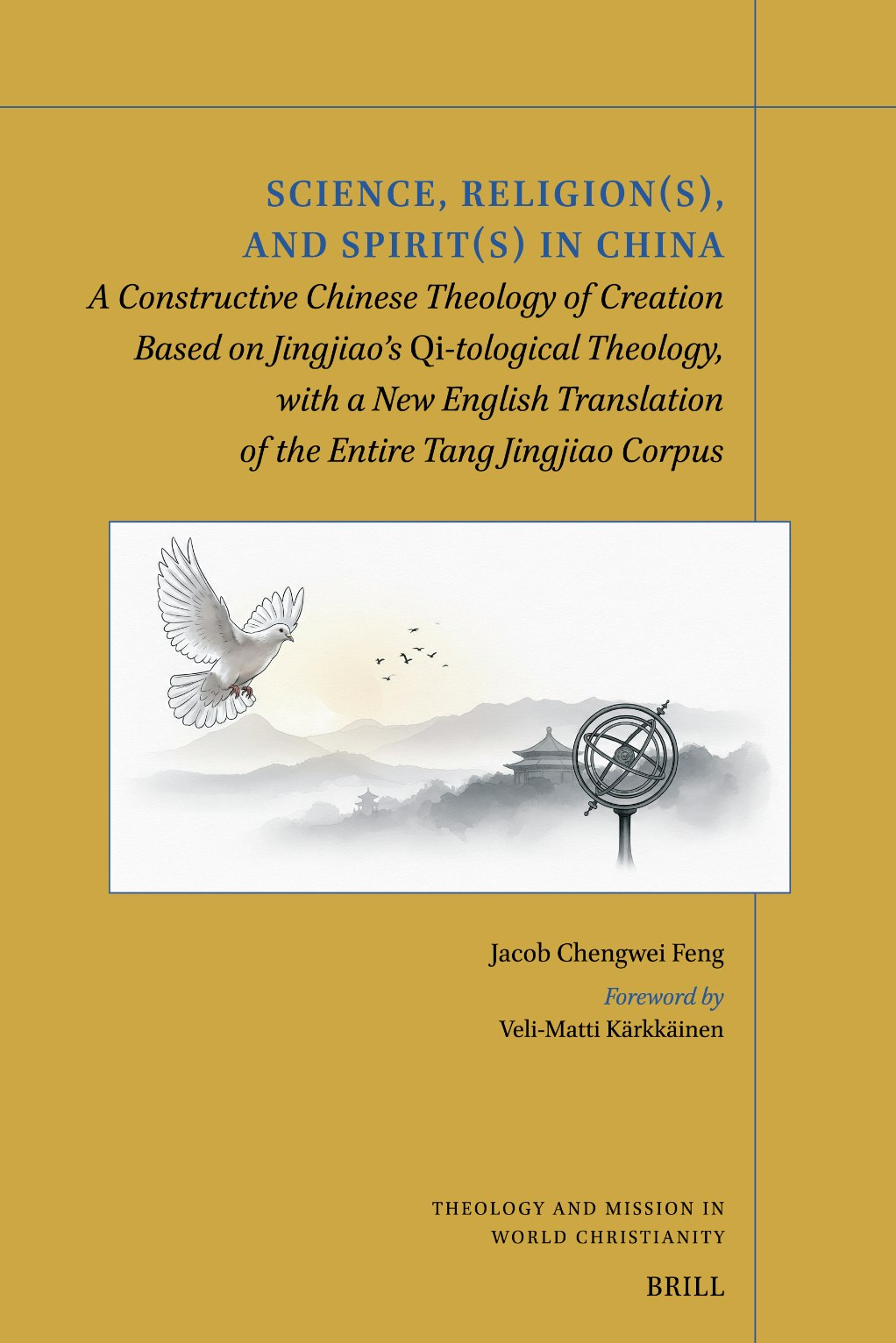
To achieve the goal, the paper will first analyze the metaphysical framework established by Wilson and Dawkins and their impact in East Asia in general, South Korea and mainland China in particular. Then, I will present Embodied Critical Realism, first proposed in my Science, Religion(s), and Spirit(s) in China, and highlight its strengths and advantages when countering sociobiological reductionism. ECR can serve as a bold new method for the “trialogue” among theology, science, and religion that moves beyond the “disembodied mind” toward a situated, historical understanding of personhood. While standard critical realism emphasizes “ontological depth,” ECR focuses on the occurrent and potential relations of the body, whose sensations and sensorimotor abilities serve as a “causal anchor” for action, thereby preventing the reduction of human behavior to “blindly programmed” genetic dictates. ECR also delivers a powerful critique of Wilson’s claim in On Human Nature that the brain exists solely to promote the “multiplication of genes,” because his “Ice-Age adaptation” narrative suffers the oversight of body — an indispensable conceptual component in ECR — as a quintessential example of an emergent phenomenon recognized by higher-level sciences. As a prevailing concept in East Asia, qi (pneuma, air, breath), argued as the metaphor for Spirit(s) in my Science, Religion(s), and Spirit(s) in China, is not merely biological description but “occurrent relation” that mediate the Holy Spirit’s action in the material world, countering Wilson’s “consilience,” which seeks to shrink the humanities into a “specialized branch of biology.” Finally, the paper will highlight some important contours of constructing a public theology of human nature in the East Asian context for the third millennium, countering the Far-Right/Manosphere in South Korea and the convergence of Wilson/Dawkins with atheistic ideology in mainland China.
The significance of the proposal lies first in its methodological novelty. The proposal moves beyond the “warfare model” between science and religion, which is deeply embedded in Wilson/Dawkins’ framework, by integrating cognitive science and the East Asian concept of qi. Second, by restoring an embodied, stratified view of truth, public theology can provide the “moral capital” needed to address the challenges posed by Wilson and Dawkins.
The Biosocial Challenge to Public Theology: Embodied Critical Realism for the Reconstruction of the Human in the Wake of Wilson and Dawkins in the East Asian Public Sphere
Jacob Chengwei Feng (Fuller Theological Seminary)
ABSTRACT This paper explores the biosocial influence of E. O. Wilson (Sociobiology: A New Synthesis and Consilience: The Unity of Knowledge) and Richard Dawkins (The Selfish Gene) on East Asia. I argue that public theology responds by implementing Embodied Critical Realism (ECR) and drawing on the rich resources of the prevailing East Asian concept of qi and Jingjiao’s qi-tological theology of creation. This constructive approach to public theology of human nature has the potential to challenge biological determinism and to address the hostile “manosphere” atmosphere in South Korea, as well as the ethos of resentment among young professionals in mainland China driven by atheistic ideology.
Fifty years after the publication of E. O. Wilson’s Sociobiology: The New Synthesis (1975)[1]and Richard Dawkins’ The Selfish Gene (1976),[2] their impact has now become constitutive of the contemporary landscape of public theology, especially in the East Asian context. Wilson and Dawkins do not merely offer biological descriptions but propose a comprehensive worldview that seeks to absorb the humanities, social sciences—to which I will add theology—into the domain of biology.
This paper takes up Wilson and Dawkins’ biosocial challenge to public theology and contends that Embodied Critical Realism (ECR),[3] as a theological method for theology-science-religion “trialogue,” has the potential of dismantling Wilson’s biological determinism and Dawkins’ “Selfish Gene” paradox on the one hand, and is conducive to constructing a theological anthropology for the third millennium in the “trialogue” of theology-science-religion.
To achieve the goal, the paper will first analyze the metaphysical framework established by Wilson and Dawkins and their impact in East Asia in general, South Korea and mainland China in particular. Then, I will present Embodied Critical Realism (ECR), first proposed in my Science, Religion(s), and Spirit(s) in China, and highlight its strengths when countering sociobiological reductionism. Finally, the paper will highlight some important contours of constructing a public theology of human nature in the East Asian context for the third millennium, countering the Far-Right/Manosphere in South Korea and the convergence of Wilson/Dawkins with atheistic ideology in mainland China.
- Wilson and Dawkins in East Asia
Only months after the publication of Wilson’s Sociobiology: The New Synthesis, the sociobiology debate entered the public sphere in the United States, with Wilson first being accused of being part of the political legacy of biological determinism and reviving social Darwinism and Nazi racial science,[4] and then defending himself by accusing the critics of academic vigilantism and unduly mixing their science and politics.[5] Joseph Graves Jr. argues that fifty years since Sociobiology scientists still know little about the complicated interactions of genetics, epigenetics, and the environment. The results generated by the booming field of genome-wide association studies are limited, preliminary, and non-replicated at best, and none finds the genetic basis for the behaviors that Wilson speculated to be humanity’s “basic primate traits.”[6]
In Korea, the easy applicability of competition-centered evolutionism to a wide spectrum of social and political agendas partly explains the perplexing long-term popularity of the “struggle for survival” gospel among so many thinkers and groups.[7] For Vladimir Tikhonov, “pervasiveness” is perhaps not even a strong enough word to describe the meaning of the Social Darwinist gospel for Korea’s early modern intelligentsia; the impact was truly overwhelming.[8] Religion was no barrier, and Social Darwinism was indeed seen as the scientific truth beyond any religion—a truth which religions simply had to accommodate. Yun Ch’iho (1865–1945), a pioneering Social Darwinist and one of Korea’s earliest Protestant converts, understood the violence of the “fittest” against the “unfit” as simultaneously a providential punishment and blessing for the latter in the last judgment.[9] Despite his Sociobiology not yet being translated into Korean, Wilson’s Consilience[10] was a big hit.[11]
Now, let’s shift our attention to mainland China.[12] Dawkins’ The Selfish Gene was translated into simplified Chinese as early as 1981.[13] At least three more translations were produced afterward.[14] In 2018, when its 40th anniversary edition was put to print, a question was rhetorically asked:
Why has a popular science bestseller written 42 years ago by a British science writer continued to receive widespread acclaim in China and gone through multiple printings? The Selfish Gene was recently released by CITIC Press as a “40th Anniversary Expanded Edition,” marking the book’s fourth simplified Chinese edition. Just over a month after its release, the new edition has already climbed to third place on Jingdong’s social sciences bestseller list.[15]
Therefore, it is hard to overestimate Dawkins’s profound impact on Chinese society.
In his book, Dawkins coined the term “meme,” a monosyllable derived from the Greek “Mimeme” (imitation), to convey the idea of a unit of cultural transmission.[16] This word led to the creation of a new Chinese term, wenhua jiyin 文化基因 (cultural gene), and spawned a new field of study: cultural gene studies. Two distinct approaches to the study of cultural genes have emerged in China. First, scholars in the Chinese philosophical community explored the existence of something akin to genes within human culture from the perspective of human thought processes. In other words, research on cultural genes in China was pioneered by a group of philosophers, and the most influential theories in the field to date were also developed by them. The other approach lacks the framework and metaphors of memes; it is a form of cultural gene research that emerged organically under the influence of developments in genetic science, primarily driven by ethnologists and cultural anthropologists. The former approach carries greater weight and serves as the primary source of influence in China’s current cultural gene research; many prevailing descriptions of cultural genes stem from this tradition.[17]
In mainland China, the theories of Dawkins and Wilson have converged with the official Marxist materialist education system.[18] China boasts the world’s largest population of atheists,[19] with most individuals receiving an education in state schools that interprets evolutionary theory through the lens of atheism as advocated by Marxism.[20]
In South Korea, these narratives have been directly or indirectly appropriated by diverse social sectors, including younger “far-right” groups and “manosphere” communities,[21] to justify competitive social structures, gender essentialism, and a rejection of traditional religious moralities.[22] Anti-feminist male supremacist communities on Ilbe and adjacent platforms deploy arguments about women as biologically “inherently picky,” “shallow,” and genetically defective as partners[23]—rhetoric that strongly echoes—though not explicitly citing—Wilson or Dawkins’s narratives.
In sum, this section suggests that sociobiology and gene‑centered evolution (Wilson and Dawkins) exert a powerful yet problematic influence, especially in Korea and China. In the US, Wilson is accused of reviving biological determinism, while Graves shows that contemporary genetic studies still cannot support his strong claims about “basic primate traits.” In Korea, Social Darwinism and its re-entry in the form of sociobiology become pervasive, embraced as scientific truth beyond religion and used theologically by figures like Yun Ch’iho to read the violence of the “fit” against the “unfit” as providential judgment and blessing. Wilson’s Consilience also enjoys popular success. In China, Dawkins’s The Selfish Gene becomes a long‑term bestseller, spawning the concept of “cultural genes” and a major philosophical research tradition, while dovetailing with Marxist atheist education and an evolutionist worldview. Finally, these narratives underpin Korean “manosphere” and far‑right discourses that naturalize competition, gender essentialism, and misogyny.
- Embodied Critical Realism for Critically Assessing Wilson and Dawkins
Elsewhere, I have offered Embodied Critical Realism (ECR) as an enhanced theological method to engage theology-science-religion “trialogue.”[24] Critically appropriating Critical Realism in the lineage of Ian Barbour, Arthur Peacocke, and John Polkinghorne,[25] ECR can serve as a bold new method for the “trialogue” among theology, science, and religion, moving beyond the “disembodied mind”[26] toward a situated, historical understanding of personhood.
While standard critical realism emphasizes “ontological depth,”[27] ECR focuses on the occurrent and potential relations of the body, which provides the anchoring structure that prevents the reduction of human behavior to either neural determinism or genetic programming. One such kind of genetic programming is highlighted in The Selfish Gene, in which Dawkins proposes that one way for genes to solve the problem of making predictions in rather unpredictable environments is to build in a capacity for learning: “The advantage of this sort of [genetic] programming is that it greatly cuts down the number of detailed rules that have to be built into the original program; and it is also capable of coping with changes in the environment that could not have been predicted in detail.”[28] However, according to Thomas Fuchs, the view that leads to the concept of genetic programs “eliminates everything that is experienced and intentionally directed—feeling, desiring, wanting, wishing, perceiving, and acting. On the contrary, the term ‘capacity’ implies that these aspects cannot be severed from acts of life, lest we identify the behavior of a living being with that of pre-programmed machines such as torpedoes.”[29] In other words, Dawkins loses sight of the importance of body; in the eyes of Merleau-Ponty, “[a] living body, seen at too close quarters, and divorced from any background against which it can stand out, is no longer a living body, but a mass of matter as outlandish as a lunar landscape, as can be appreciated by inspecting a segment of skin through a magnifying glass.”[30] Similarly, “[a]cts of life such as perceiving, feeling, or acting are based on the condition of complex and integral macro-structures that are organisms. Below a certain scale, they vanish from view and can no longer be identified in physical micro-processes.”[31] Here, Fuchs’s insight pinpoints Dawkins’s “blind spots.”
In addition, ECR delivers a powerful critique of Wilson’s claim in On Human Nature that the brain exists solely to promote the “multiplication of genes,”[32] because his “Ice-Age adaptation” narrative[33] suffers the oversight of body—an indispensable conceptual component in ECR—as a quintessential example of an emergent phenomenon recognized by higher-level sciences. For Fuchs, the importance of the body lies in his sustained argument for the theory that the core purpose of mind is intelligent action in the world, which is realized by a distributed network of interactions between brain, body, and ecological environment.[34] In addition, according to Tom Froese, “The upshot of Fuchs’ theory of dual aspectivity is that the dominant strategy of theoretically collapsing Cartesian mind-body dualism into its material aspect, and then empirically locating the mind inside the brain, is misguided and bound to fail.”[35] This aligns with a core tenet of my ECR, which integrates Lakoff and Johnson’s embodied realism and rejects any mind-body gap.[36]
In addressing the limitations of social Darwinism and sociobiology in themselves and their applications, Shin Ik Kang critiques sociobiology as social Darwinism reintroduced to East Asia “in a more tamed and scientifically refined form”: “Whereas nineteenth-century social Darwinism saw the world from a macroscopic, social, and imperialistic point of view, twentieth-century sociobiology was armed with a microscopic, biological, and monopolistic gene’s eye view. Social Darwinism was driven by the political ambitions of imperialists. Sociobiology emphasized the biological rules of natural selection and tried to expand the rules to encompass psychological, social, and even ethical norms of human life.”[37] Similar to ECR, Kang resorts to recent developments in cognitive sciences, “which are increasingly making us rethink human conditions from a perspective other than the purely evolutionary view.”[38] For Kang, human “cognition and thus the culture are closely related to the sensorimotor capacities of our bodies.”[39] Bodies “are embedded in a more encompassing biological, psychological, and cultural context.”[40] “[T]he world is not something that is given to us but something we engage in by moving, touching, breathing, and eating.”[41] Moreover, “[t]he world is embodied in us and we, as our bodies actively engage in it.”[42] By tracing to William Whewell, who originally used “consilience” as a metaphor, Kang critiques Wilson’s sociobiology as “the system of the vertical and hierarchical integration of knowledge, and is relatively reluctant to absorb insights from neighboring disciplines both in the science and humanities.”[43]
In a nutshell, I have presented Embodied Critical Realism (ECR) as a theological-philosophical method for critiquing Wilson’s sociobiology and Dawkins’s gene‑centered evolutionism. ECR develops standard critical realism’s concern for ontological depth by centering the living body as the anchoring structure of personhood, resisting reductions of human behavior to neural determinism or “genetic programming.” Drawing on Fuchs and Merleau‑Ponty, I have argued that Dawkins’s talk of genetic programs abstracts from lived experience—feeling, perceiving, acting—and treats organisms like pre‑programmed machines, ignoring the irreducible macro-structures of embodied life. ECR similarly challenges Wilson’s claim that the brain exists solely to multiply genes and his Ice‑Age adaptation narrative, emphasizing—with Fuchs and Froese—a distributed brain–body–environment account of mind that aligns with Lakoff and Johnson’s embodied realism. Finally, through Shin Ik Kang, sociobiology is read as a refined Social Darwinism, countered by an enactive, embodied account of cognition, culture, and consilience (Whewell).
- Toward Constructive Public Theology on Human Nature for East Asia
In constructing a public theology on human nature for East Asia, this paper takes up the task of public theology identified by Paul S. Chung, a leading public theologian, in that “[p]ublic theology challenges the opinion of religion as a private affair and undertakes a critical, hermeneutical endeavor, bringing the vitality of Christian discipleship and responsibility toward the public affairs of society in light of actualizing the gospel about the coming kingdom of God.”[44] In order to critically evaluate Wilson, Dawkins, and their ripple effects in East Asia in general, the Korean application in manosphere and “far-right” groups and the Chinese integration with atheistic ideology in particular, this paper proposes some crucial contours toward constructing public theology on human nature for East Asia.
Based on his concept of the Heaven-Earth-Person (HEP) triad, Kang attempts to “make East Asian culture, in general, and the HEP Triad, in particular, jump together with the sciences” by incorporating insights from the cognitive sciences.[45] However, Kang’s metaphor of biology, the social sciences, and the humanities “jumping together, not on solid ground, but on the strong, flexible canvas sheet of a trampoline”[46] risks reducing all natural sciences to biology. Therefore, it is necessary for the constructive public theology to do justice to natural sciences, social sciences, and humanities. Kang’s metaphor is helpful in highlighting their contributions in our consideration of human nature as an integral part of the HEP triad: “the big bang took place 13.82 billion years ago. Geology has demonstrated that the Earth formed 4.56 billion years ago. Biology has provided us the evidence for life originating here about 3.8 billion years ago. Physical anthropologists have remains for humans from 300,000 years ago. The humanities and social sciences pick up the human story over the past millennia, centuries, and decades.”[47] Here, I would add the contribution of Christian theology in general, and public theology in particular. Worthy of notice is Ted Peters’s contribution: “Theological insight into human nature—imago Dei and the fall into sin just might send a geneticist or biologist or neuroscientist back to the laboratory to make forecasts about future human potentials. In short, one of the many tasks of the public theologian is to offer to the scientist classical insights which may lead eventually to fertile research programs.”[48]
In his Consilience, Wilson insists that humanities must “lift the anathema placed on reductionism,”[49] and that “the greatest works of art might be understood fundamentally with knowledge of the biologically evolved epigenetic rules that guided them.”[50] As Edward Slingerland and Mark Collard acknowledge, Wilson gives “the impression that consilience involves the sciences engulfing the humanities—a prospect that is understandably off-putting for humanists.”[51] For John Holmes, Wilson “gives this impression because that is the logic of his programme as he defined it in Consilience.”[52] As a prevailing concept in East Asia, qi (pneuma, air, breath)—argued as the metaphor for Spirit(s)[53]—is not merely a biological description but an ontological/relational category in Chinese cosmology. Gary Bartlett argues that “occurrent states are active states”[54]—a formulation that fits the dynamic, always-in-motion character of qi precisely. In this sense, qi can be considered an “occurrent relation” that mediates the Holy Spirit’s action in the material world, countering Wilson’s “consilience,” which seeks to shrink the humanities into a specialized branch of biology.
Therefore, the public theology of human nature under construction may do well to integrate the prevailing concept of qi in East Asian cultures; hence, qi-tological.[55] The qi-tological theology of human nature integrates Jingjiao (the Luminous Religion)’s wisdom in constructing its theology of creation by using qi as a metaphor for the Holy Spirit by employing qi in its philosophical, medical, physical, physiological, psychological, and ethical dimensions,[56] but also extending it to spiritual, pneumatological, soteriological, and eschatological directions.[57] Countering the reductionism inherent in Wilson and Dawkins, this theological move substantially supports emergentism in a way that “God breathed into [Adam]’s nostrils the qi of life, and he then became a living person with spirit” (lit., Gen. 2:7, Chinese Union Version).[58] Namely, human consciousness cannot be derived from lower-level physics.[59] Moreover, the multiple dimensions of human nature espoused by qi speak to Veli-Matti Kärkkäinen’s multidimensional monism as a holistic, pluralistic, and unified account of human nature.[60] Most importantly, such a qi-tological account of human nature is capable of addressing the public squares in East Asia due to its pervasive impact across countries, disciplines (medicine, philosophy, cosmology, and so on), and religions.
While implementing ECR, one ought to heed Nancy Murphy, who recommends that theologians avoid critical realism on the grounds that it remains modern just when we need to move toward postmodern reasoning. She identifies three ways in which critical realism falls into the trap of the modern mind: 1) epistemological foundationalism, which attempts to provide an indubitable ground for believing; 2) representational thinking with its correspondence theory of truth; and 3) excessive individualism and inadequate attention to the community.[61] First, critical realism does not necessarily identify with epistemological foundationalism. ECR, for example, “is postfoundationalist in nature, capable of negotiating with postmodernism and dialoguing with modern science.”[62] Second, ECR, especially its embodied component, follows Lakoff and Johnson in “argu[ing] against the classic correspondence theory of truth because a vast range of our concepts are metaphorical, and meaning is not entirely literal.”[63] Third, incorporating the East Asian concept of qi aligns with Murphy’s insistence on combating excessive individualism, as qi is most often used collectively to refer to the distinctive ethos of certain groups. In contemporary South Korea, online manosphere communities and far‑right groups display a pronounced atmosphere of cruelty and—in Chinese, liqi 戾气 (lit. atmosphere of hostility)—fueled by their appropriation of Social Darwinist narratives, sociobiological reductionism, and Dawkins‑style gene‑centered evolutionism. On a different note, among young working professionals in mainland China, the state‑endorsed combination of atheism with Social Darwinist, sociobiological, and gene-centered accounts (for example, popularized through The Selfish Gene) has fostered a pervasive atmosphere of resentment and grievance—captured in Chinese by the term yuanqi 怨气 (lit. atmosphere of grievance). This discursive constellation encourages individuals to interpret stalled mobility and intensified competition as the inevitable outcome of a ruthless “natural” order, while providing few transcendent or communal resources for processing frustration and loss. In this context, yuanqi functions both as a diagnostic label for everyday affect and as a key to understanding the moral–emotional climate of China’s post‑reform urban middle strata.
Furthermore, in line with Murphy’s advocacy of paying adequate attention to the community, the constructive public theology of human nature draws on Jingjiao, whose theologians ingeniously use qi as a metaphor for the Holy Spirit in her “dancing” on the “floor” of China’s spirit world.[64] One example suffices to make the point. In the famous Jingjiao Stele, jingfeng (lit. pure wind/dynamic qi;[65] Pure Spirit) is deployed to highlight the Spirit’s transforming power:
[Mishihe (or Messiah)] established a new teaching, not through words of human wisdom but by the Pure Spirit of the Three-One, aiming to cultivate good conscience and [foster] the right faith. By enacting the norms from the eight directions, [Mishihe] purified earthly defilements [from humanity] to reveal their true essence and inspired the embrace of the three constant [virtues].[66]
The same phrase, jingfeng,is also deployed in the Pentecost narrative, highlighting the Spirit’s morally purifying role vis-à-vis the numerous avenging spirits, hungry ghosts, and discontented ancestors that have been haunting the Chinese. Jingfeng also reflects Jingjiao’s audacious engagement with qi from an ethical perspective.[67] These resources, with qi as their constitutive element, will serve the constructive public theology in East Asia by addressing the collective ethos of liqi among the South Korean manosphere and far-right groups, and of yuanqi among young professionals in mainland China.
It is important to remember that Jingjiao spread to China during the Tang Dynasty (618–907) through the missionaries of the Church of the East. Its early Syriac literature regarded the Holy Spirit as feminine,[68] supplementing the predominantly masculine God-language with female images of the Spirit.[69] When the great dynamic qi is poured out (Acts 2:2) in the Day of Pentecost, God’s prophecy—“that I will pour out my Spirit upon all flesh, and your sons and your daughters shall prophesy…” (2:17; Joel 2:28–32, italics added)—was fulfilled. Here, the recipients of the poured-out Spirit include “all flesh,” referring to all bodies, regardless of gender or ideological presupposition. Rightly, Kärkkäinen reminds us:
[T]here is a dire need for the theological academy to collaborate across genders, races, and classes, as well as across geographical boundaries. Predominantly white, male theologians’ tradition of creation theology has to be balanced, corrected, and redirected by rich insights of female theologians of various persuasions as well as by male and female theologians from different contexts.[70]
Exemplary is his active engagement not only with feminist theologians (such as Elizabeth Johnson[71] and Mayra Rivera[72]) but also with atheists (such as Nagel and Jaegwon Kim).[73] Therefore, the public theology under construction ought to equally attend to all bodies while implementing ECR, with a special focus on the body and embodiment.
If there is any novel aspect in this paper, it pertains to its contribution to public theology, primarily through its methodological innovation. The paper advances beyond the “warfare model” of science and religion, which is deeply rooted in Wilson/Dawkins’ framework, by implementing the ECR as proposed elsewhere. Additionally, by integrating the East Asian concept of qi and Jingjiao’s qi-tological theology of creation, public theology may potentially offer the “moral capital” necessary to address the biosocial challenges manifesting in the “manosphere” in South Korea and the atheistic frustration observed in mainland China.
Bibliography
Allen, Elizabeth, Barbara Beckwith, Jon Beckwith, Steven Chorover, David Culver, Margaret Duncan, Steven Gould, et al. “Against “Sociobiology”.” The New York Review of Books, no. November 13 (1975): 184–86.
Bachaud, Louis. “The Appropriation and Circulation of Evolutionary Science in the Contemporary Us and English-Speaking Manosphere.” PhD diss., University of Kent (United Kingdom), 2025.
Bachaud, Louis, and Sarah E. Johns. “The Use and Misuse of Evolutionary Psychology in Online Manosphere Communities: The Case of Female Mating Strategies.” Evolutionary Human Sciences 5 (2023): e28 e28. https://doi.org/10.1017/ehs.2023.22.
Bachaud, Louis, Macken Murphy, and Sarah E Johns. “A Hundred and Two Just-So Stories: Exploring the Lay Evolutionary Hypotheses of the Manosphere.” Evolutionary Human Sciences 7 (2025): e41.
Bartlett, Gary. “Occurrent States.” Canadian Journal of Philosophy 48, no. 1 (2018): 1–17.
Boff, Leonardo. Holy Trinity, Perfect Community. Maryknoll, NY: Orbis, 2000.
Brock, Sebastian P. The Holy Spirit in the Syrian Baptismal Tradition. Gorgias Eastern Christian Studies 12. Edited by George Anton Kiraz, István Perczel, Lorenzo Perrone and Samuel Rubenson. Piscataway, NJ: Gorgias, 2013.
Chung, Paul S. Postcolonial Public Theology: Faith, Scientific Rationality, and Prophetic Dialogue. Eugene, OR: Cascade Books, 2016.
Comblin, José. The Holy Spirit and Liberation. Translated by Paul Burns. Maryknoll, NY: Orbis, 1989.
Dawkins, Richard. The Selfish Gene. Oxford. 30th Anniversary ed. Oxford University Press, 2011 [1976].
———. Zisi De Jiyin 自私的基因. [The Extended Selfish Gene]. Translated by Yunzhong 卢允中 Lu, Daiyun 张岱云 Zhang, Fujia 陈复加 Chen, Xiaozhou 罗小舟 Luo and Sheng 叶盛 Ye. 40zhounian zengdingban 40周年增订版 [40th Anniversary Expanded Edition) ed. Beijing: Zhongxin chuban jituan 中信出版集团, 2018.
———. Zisi De Jiyin 自私的基因. [The Selfish Gene]. Translated by Yunzhong 卢允中 Lu and Daiyun 张岱云 Zhang. Beijing: Kexue chubanshe 科学出版社, 1981.
———. Zisi De Jiyin 自私的基因. [The Extended Selfish Gene]. Translated by Yunzhong 卢允中 Lu, Daiyun 张岱云 Zhang, Fujia 陈复加 Chen and Xiaozhou 罗小舟 Luo. 30zhounian jinianban 30周年纪念版 [30th Anniversary Edition) ed. Beijing: Zhongxin chuban jituan 中信出版集团, 2012.
———. Zisi De Jiyin 自私的基因. [The Selfish Gene]. Translated by Yunzhong 卢允中 Lu. Changchun 长春: Jilin renmin chubanshe 吉林人民出版社, 1998.
Feng, Jacob Chengwei. Science, Religion(S), and Spirit(S) in China: A Constructive Chinese Theology of Creation Based on Jingjiao’s Qi-Tological Theology, with a New Translation of the Entire Tang Jingjiao Corpus. Theology and Mission in World Christianity 43. Edited by Kirsteen Kim, Stephen B. Bevans and Miikka Ruokanen. Leiden: Brill, 2025. doi:10.1163/9789004749573.
———. Spirit(S) and Chinese Religiosity: Retelling the History of Chinese Christianity from a Pentecost Perspective. Christianity and Renewal – Interdisciplinary Studies. Edited by Wolfgang Vondey and Amos Yong. Cham: Springer Nature, 2026. doi:10.1007/978-3-032-00476-5.
Froese, Tom. “Book Review: Ecology of the Brain: The Phenomenology and Biology of the Embodied Mind.” Frontiers in Psychology 9:2174, no. Nov 13 (2018). https://doi.org/10.3389/fpsyg.2018.02174.
Fuchs, Thomas. Ecology of the Brain: The Phenomenology and Biology of the Embodied Mind. Oxford: Oxford University Press, 2018.
Gentile, Jesse Michael. “Bridge Building in Theological Method: Critical Realism and Analytic Theology in Conversation.” PhD diss., Fuller Theological Seminary, 2023.
Graves, Joseph L, Jr. “Sociobiology Then and Now: A Biologist’s Perspective.” Historical Studies in the Natural Sciences 55, no. 1 (2025): 82–84. https://doi.org/10.1525/hsns.2025.55.1.82.
Gustafson, Lowell, David Blanks, and Barry H. Rodrigue. “Science and Religion/Religion and Science.” Chap. 1 In Science, Religion and Deep Time, edited by Lowell Gustafson, Barry H. Rodrigue and David Blanks, 1–10. New York: Routledge, 2022.
Holmes, John. “Consilience Rebalanced: Edward O. Wilson on Science, the Humanities and the Meaning of Human Existence.” Journal of Literature and Science 10, no. 1 (2017): 5–10. https://doi.org/10.12929/jls.10.1.02.
Hornbeck, Ryan G, Jonathan A Lanman, Adam Baimel, and Lois Lee. “Atheism and Agnosticism in Twenty-First-Century China.” Sociology of Religion 00, no. 00 (2026). https://doi.org/10.1093/socrel/sraf030.
Johnson, Mark, and George Lakoff. “Why Cognitive Linguistics Requires Embodied Realism?” [In English]. Cognitive Linguistics 13, no. 3 (2002): 245–63. https://doi.org/10.1515/cogl.2002.016.
Kang, Shin Ik. “Jumping Together: A Way from Sociobiology to Bio-Socio-Humanities.” Zygon 51, no. 1 (2016): 176–90. https://doi.org/10.1111/zygo.12235.
Kärkkäinen, Veli-Matti. A Constructive Christian Theology for the Pluralistic World. 5 vols. Grand Rapids: Eerdmans, 2013–2017.
———. Creation and Humanity. A Constructive Christian Theology for the Pluralistic World. 5 vols. Vol. 3, Grand Rapids: Eerdmans, 2015.
Kim, Jinsook. “Wikiality within the Manosphere: Namuwiki, Gender Equalism, and Antifeminist Disinformation in the Post-Truth Era.” In Re-Thinking Mediations of Post-Truth Politics and Trust, edited by Jayson Harsin. Routledge Studies in Media, Communication, and Polistics, 61–88. New York: Routledge, 2024.
Lakoff, George, and Mark Johnson. Philosophy in the Flesh: The Embodied Mind and Its Challenge to Western Thought. New York: Basic Books, 1999.
Lang, Lina. “Wenhua Jiyin Yanjiu De Gainian He Lishi 文化基因研究的概念和历史.” Guangxi minzu daxue xuebao: Zhexue shehui kexueban 广西民族大学学报: 哲学社会科学版 39, no. 2 (2017): 8–13.
Li, Jianhui, and Fan Hong. “Science as Ideology: The Rejection and Reception of Sociobiology in China.” Journal of the History of Biology 36, no. 3 (2003): 567–78.
Loke, Andrew. “‘Nianqing Diqiu Chuangaolun’ Rang Jiaohui Shiqu Yixie Huizhong “年轻地球创造论”让教会失去一些会众.” Christianity Today, 2024, accessed April 26, 2026, https://zh.christianitytoday.com/2024/07/young-earth-creationism-evolution-chinese-church-zh-hans/?_gl=1*18lsnah*_gcl_au*NDg1NTY2MTA2LjE3NzcyNDEwNjE.*_ga*MTgwMDY2NjIxNC4xNzc3MjQxMDYx*_ga_2P7KM6QEMN*czE3NzcyNDEwNjAkbzEkZzEkdDE3NzcyNDE0MDkkajYwJGwwJGgxMzI0MTg0MTY4.
Merleau-Ponty, M. Phenomenology of Perception. Translated by C. Smith. London: Routledge, 1962.
Müller-Fahrenholz, Geiko. God’s Spirit: Transforming a World in Crisis. New York: Continum, 1995.
Murphy, Nancey. Theology in the Age of Scientific Reasoning. Cornell Studies in the Philosophy of Religion. Ithaca: Cornell University Press, 1990.
Murphy, Nancey C. “Relating Theology and Science in a Postmodern Age.” CTNS Bulletion 7, no. 4 (Autumn) (1987): 1–10.
Peng, Xiaoling. “Nanxing Xunhuawenling Shi You Jiyin Yiju? Jiyin Wufa Dandu Jueding Sizi Haishi Hezuo 男性寻花问柳有基因依据?基因无法单独决定自私还是合作.” Diyi caijing 第一财经, 2018, accessed April 27th, 2026, https://m.yicai.com/news/100075095.html.
Peters, Ted. The Voice of Public Theology. Adelaide: ATF, 2023.
Rosch, Eleanor, Evan Thompson, and Francisco J. Varela. The Embodied Mind. Cambridge, MA: MIT Press, 1991.
Slingerland, Edward, and Mark Collard, eds. Creating Consilience: Integrating the Sciences and the Humanities. Oxford: Oxford University Press, 2012.
Tikhonov, Vladimir. Social Darwinism and Nationalism in Korea: The Beginnings (1880s-1910s). Brill’s Korean Studies Library 2. Edited by Ross King. Leiden: Brill, 2010.
———. “Social Darwinism as History and Reality: “Competition” and “the Weak” in Early Twentieth-Century Korea.” Critical Asian Studies 48, no. 3 (2016): 315–37.
Van Gulick, Robert. “Reduction, Emergence and Other Recent Options on the Mind/Body Problem: A Philosophic Overview.” Journal of Consiousness Studies 8, no. 9–10 (2001): 1–34.
Varela, Francisco J. Ethical Know-How: Action, Wisdom, and Cognition. Stanford, CA: Stanford University Press, 1999.
Wilson, Edward O. On Human Nature: With a New Preface. Cambridge, MA: Harvard University Press 2004 [1978].
Wilson, Edward O. Consilience (Tongseop). [Consilience: The Unity of Knowledge]. Translated by Jae-Cheon CHoi and Dae-Ik Jang. Seoul: Science Books, 2005.
———. Consilience: The Unity of Knowledge. New York: Knopf, 1999.
———. Consilience: The Unity of Knowledge. First Vintage Books ed. New York: Vintage Books, 1998.
———. “For Sociobiology.” New York Review of Books December 11 (1975).
———. Sociobiology: The New Synthesis. Cambridge, MA: The Belknap Press of Harvard University Press, 2000 [1975].
Won, Ye Bin. “The Women of the Manosphere: Anti-Feminist Women Infuencers in South Korea.” Global Network on Extremism & Technology, 2024, accessed April 27th, 2026, https://gnet-research.org/2024/11/11/the-women-of-the-manosphere-anti-feminist-women-influencers-in-south-korea/.
Xi, Wuyi. “2014nian Kexue Wushenlun Yanjiu Qianyan Baogao 2014年科学无神论研究前沿报告.” Makesi zhuyi yanjiuwang 马克思主义研究网, 2015, http://marxism.cass.cn/kxwsl/201605/t20160518_3015049.shtml.
Zhang, Dainian. Zhongguo Gudian Zhexue Gainian Fanchou Yaolun 中国古典哲学概念范畴要论. [Key Conceptual and Categorical Points in Chinese Ancient Philosophy]. Beijing: Zhonghua shuju 中华书局, 2017.
[1] See a relatively new reprint, Edward O. Wilson, Sociobiology: The New Synthesis (Cambridge, MA: The Belknap Press of Harvard University Press, 2000 [1975]).
[2] See Richard Dawkins, The Selfish Gene, 30th Anniversary ed., Oxford (Oxford University Press, 2011 [1976]).
[3] Jacob Chengwei Feng, Science, Religion(s), and Spirit(s) in China: A Constructive Chinese Theology of Creation based on Jingjiao’s Qi-tological Theology, with A New Translation of the Entire Tang Jingjiao Corpus, ed. Kirsteen Kim, Stephen B. Bevans, and Miikka Ruokanen, Theology and Mission in World Christianity 43 (Leiden: Brill, 2025), 183–90.
[4] See, e.g., Elizabeth Allen et al., “Against “Sociobiology”,” The New York Review of Books, no. November 13 (1975).
[5] Edward O. Wilson, “For Sociobiology,” New York Review of Books December 11 (1975).
[6] Joseph L Graves, Jr., “Sociobiology Then and Now: A Biologist’s Perspective,” Historical Studies in the Natural Sciences 55, no. 1 (2025): 83,https://doi.org/10.1525/hsns.2025.55.1.82.
[7] Vladimir Tikhonov, Social Darwinism and Nationalism in Korea: the Beginnings (1880s-1910s), ed. Ross King, Brill’s Korean Studies Library 2 (Leiden: Brill, 2010), 5.
[8] Tikhonov, Social Darwinism and Nationalism, 8.
[9] Tikhonov, Social Darwinism and Nationalism, 21–56.
[10] Edward O. Wilson, Consilience: The Unity of Knowledge (New York: Knopf, 1999); Edward O. Wilson, Consilience (Tongseop) [Consilience: The Unity of Knowledge], trans. Jae-Cheon CHoi and Dae-Ik Jang (Seoul: Science Books, 2005).
[11] According to Kang, the reason that Wilson’s Consilience was popular in Korea is due to the Korean translation of the book’s title, tongsup, which has the same pronunciation as another word that means “coming and going with each other.” SeeShin Ik Kang, “Jumping Together: A Way from Sociobiology to Bio-socio-humanities,” Zygon 51, no. 1 (2016): 185–86,https://doi.org/10.1111/zygo.12235.
[12] For a historical account of the rejection and reception of Sociobiology in China, see Jianhui Li and Fan Hong, “Science as Ideology: The Rejection and Reception of Sociobiology in China,” Journal of the History of Biology 36, no. 3 (2003).
[13] Richard Dawkins, Zisi de jiyin 自私的基因 [The Selfish Gene], trans. Yunzhong 卢允中 Lu and Daiyun 张岱云 Zhang (Beijing: Kexue chubanshe 科学出版社, 1981).
[14] See, e.g., Richard Dawkins, Zisi de jiyin 自私的基因 [The Extended Selfish Gene], trans. Yunzhong 卢允中 Lu et al., 30zhounian jinianban 30周年纪念版 [30th Anniversary Edition) ed. (Beijing: Zhongxin chuban jituan 中信出版集团, 2012); Richard Dawkins, Zisi de jiyin 自私的基因 [The Selfish Gene], trans. Yunzhong 卢允中 Lu (Changchun 长春: Jilin renmin chubanshe 吉林人民出版社, 1998); Richard Dawkins, Zisi de jiyin 自私的基因 [The Extended Selfish Gene], trans. Yunzhong 卢允中 Lu et al., 40zhounian zengdingban 40周年增订版 [40th Anniversary Expanded Edition) ed. (Beijing: Zhongxin chuban jituan 中信出版集团, 2018).
[15] Xiaoling Peng, “Nanxing xunhuawenling shi you jiyin yiju? Jiyin wufa dandu jueding sizi haishi hezuo 男性寻花问柳有基因依据?基因无法单独决定自私还是合作,” Diyi caijing 第一财经, 2018, accessed April 27th, 2026, https://m.yicai.com/news/100075095.html.
[16] Dawkins, The Selfish Gene, 192.
[17] Lina Lang, “Wenhua jiyin yanjiu de gainian he lishi 文化基因研究的概念和历史,” [The Concept and History of Cultural Gene Research.] Guangxi minzu daxue xuebao: Zhexue shehui kexueban 广西民族大学学报: 哲学社会科学版 39, no. 2 (2017).
[18] See, e.g., Wuyi Xi, “2014nian Kexue wushenlun yanjiu qianyan baogao 2014年科学无神论研究前沿报告,” Makesi zhuyi yanjiuwang 马克思主义研究网, 2015, http://marxism.cass.cn/kxwsl/201605/t20160518_3015049.shtml; Andrew Loke, “‘Nianqing diqiu chuangaolun’ rang jiaohui shiqu yixie huizhong “年轻地球创造论”让教会失去一些会众,” Christianity Today, 2024, accessed April 26, 2026, https://zh.christianitytoday.com/2024/07/young-earth-creationism-evolution-chinese-church-zh-hans/?_gl=1*18lsnah*_gcl_au*NDg1NTY2MTA2LjE3NzcyNDEwNjE.*_ga*MTgwMDY2NjIxNC4xNzc3MjQxMDYx*_ga_2P7KM6QEMN*czE3NzcyNDEwNjAkbzEkZzEkdDE3NzcyNDE0MDkkajYwJGwwJGgxMzI0MTg0MTY4.
[19] Ryan G Hornbeck et al., “Atheism and Agnosticism in Twenty-First-Century China,” Sociology of Religion 00, no. 00 (2026),https://doi.org/10.1093/socrel/sraf030.
[20] Li and Hong, “Science as Ideology: The Rejection and Reception of Sociobiology in China,” 574–75.
[21] Bachaud & Johns offer a foundational study, documenting qualitative misuse of EP — including concepts ultimately derived from Dawkins’s gene-centered view—to justify gender essentialism and misogyny. See Louis Bachaud and Sarah E. Johns, “The use and misuse of evolutionary psychology in online manosphere communities: The case of female mating strategies,” Evolutionary Human Sciences 5 (2023),https://doi.org/10.1017/ehs.2023.22. Bachaud’s 2025 PhD thesis (University of Kent) is the most comprehensive single work, and his follow-up 2025 article documents 102 lay “just-so stories” the manosphere itself generates using Darwinian reasoning, 83.3% of which concern sex differences. See Louis Bachaud, “The appropriation and circulation of evolutionary science in the contemporary US and English-Speaking Manosphere” (PhD diss. University of Kent (United Kingdom), 2025); Louis Bachaud, Macken Murphy, and Sarah E Johns, “A hundred and two just-so stories: exploring the lay evolutionary hypotheses of the manosphere,” Evolutionary Human Sciences 7 (2025).
[22] See Vladimir Tikhonov, “Social Darwinism as History and Reality: “Competition” and “The Weak” in Early Twentieth-Century Korea,” Critical Asian Studies 48, no. 3 (2016); Jinsook Kim, “Wikiality within the manosphere: Namuwiki, gender equalism, and antifeminist disinformation in the post-truth era,” in Re-thinking Mediations of Post-truth Politics and Trust, ed. Jayson Harsin, Routledge Studies in Media, Communication, and Polistics (New York: Routledge, 2024).
[23] Ye Bin Won, “The Women of the Manosphere: Anti-Feminist Women Infuencers in South Korea,” Global Network on Extremism & Technology, 2024, accessed April 27th, 2026, https://gnet-research.org/2024/11/11/the-women-of-the-manosphere-anti-feminist-women-influencers-in-south-korea/.
[24] Feng, Science, Religion(s), and Spirit(s) in China, 183–90.
[25] For my constructive critique of the Critical Realism in the lineage of Ian Barbour, Arthur Peacocke, and John Polkinghorne, see Feng, Science, Religion(s), and Spirit(s) in China, 187–91.
[26] George Lakoff and Mark Johnson, Philosophy in the Flesh: The Embodied Mind and Its Challenge to Western Thought (New York: Basic Books, 1999), 563.
[27] Depth realism (or stratification) presents one of the central commitments shared by many critical realists. See Jesse Michael Gentile, “Bridge Building in Theological Method: Critical Realism and Analytic Theology in Conversation” (PhD diss. Fuller Theological Seminary, 2023), 123.
[28] Dawkins, The Selfish Gene, 57.
[29] Thomas Fuchs, Ecology of the Brain: The Phenomenology and Biology of the Embodied Mind (Oxford: Oxford University Press, 2018), 100.
[30] M. Merleau-Ponty, Phenomenology of Perception, trans. C. Smith (London: Routledge, 1962), 271.
[31] Fuchs, Ecology of the Brain, 100.
[32] Edward O Wilson, On Human Nature: With a New Preface (Cambridge, MA: Harvard University Press 2004 [1978]), 2.
[33] Wilson, On Human Nature: With a New Preface, 208.
[34] Fuchs, Ecology of the Brain, 175.
[35] Tom Froese, “Book Review: Ecology of the Brain: The Phenomenology and Biology of the Embodied Mind,” Frontiers in Psychology 9:2174, no. Nov 13 (2018),https://doi.org/10.3389/fpsyg.2018.02174.
[36] Mark Johnson and George Lakoff, “Why Cognitive Linguistics Requires Embodied Realism?,” Cognitive Linguistics 13, no. 3 (2002): 249,https://doi.org/10.1515/cogl.2002.016.
[37] Kang, “Jumping Together,” 185.
[38] Kang, “Jumping Together,” 186.
[39] Kang, “Jumping Together,” 186.
[40] Eleanor Rosch, Evan Thompson, and Francisco J. Varela, The Embodied Mind (Cambridge, MA: MIT Press, 1991), 173.
[41] Francisco J. Varela, Ethical Know-How: Action, Wisdom, and Cognition (Stanford, CA: Stanford University Press, 1999), 8.
[42] Kang, “Jumping Together,” 186.
[43] Kang, “Jumping Together,” 188.
[44] Paul S. Chung, Postcolonial Public Theology: Faith, Scientific Rationality, and Prophetic Dialogue (Eugene, OR: Cascade Books, 2016), Afterword.
[45] Kang, “Jumping Together,” 186.
[46] Kang, “Jumping Together,” 188.
[47] Lowell Gustafson, David Blanks, and Barry H. Rodrigue, “Science and Religion/Religion and Science,” in Science, Religion and Deep Time, ed. Lowell Gustafson, Barry H. Rodrigue, and David Blanks (New York: Routledge, 2022), 4.
[48] Ted Peters, The Voice of Public Theology (Adelaide: ATF, 2023), 65.
[49] Edward O. Wilson, Consilience: The Unity of Knowledge, First Vintage Books ed. (New York: Vintage Books, 1998), 230.
[50] Wilson, Consilience: The Unity of Knowledge, 233.
[51] Edward Slingerland and Mark Collard, eds., Creating Consilience: Integrating the Sciences and the Humanities (Oxford: Oxford University Press, 2012), 4.
[52] John Holmes, “Consilience Rebalanced: Edward O. Wilson on Science, the Humanities and the Meaning of Human Existence,” Journal of Literature and Science 10, no. 1 (2017): 5,https://doi.org/10.12929/jls.10.1.02.
[53] Feng, Science, Religion(s), and Spirit(s) in China, 46, etc.
[54] Gary Bartlett, “Occurrent States,” Canadian Journal of Philosophy 48, no. 1 (2018).
[55] I have coined this term elsewhere to describe Jingjiao’s theology of creation that is deeply embedded with the Chinese concept of qi. See
[56] Feng, Science, Religion(s), and Spirit(s) in China, 37–40, in particular 39.
[57] Feng, Science, Religion(s), and Spirit(s) in China, 55.
[58] Chinese Union Version (CUV) is the single most popular bible among Chinese Christians.
[59] Robert Van Gulick, “Reduction, Emergence and Other Recent Options on the Mind/Body Problem: A Philosophic Overview,” Journal of Consiousness Studies 8, no. 9–10 (2001): 16.
[60] Veli-Matti Kärkkäinen, Creation and Humanity, 5 vols., vol. 3, A Constructive Christian Theology for the Pluralistic World (Grand Rapids: Eerdmans, 2015), 332–49.
[61] Nancey C. Murphy, “Relating Theology and Science in a Postmodern Age,” CTNS Bulletion 7, no. 4 (Autumn) (1987). Also see her Templeton Book Prize-winning work, Nancey Murphy, Theology in the Age of Scientific Reasoning, Cornell Studies in the Philosophy of Religion (Ithaca: Cornell University Press, 1990).
[62] Feng, Science, Religion(s), and Spirit(s) in China, 189.
[63] Feng, Science, Religion(s), and Spirit(s) in China, 184.
[64] Jacob Chengwei Feng, Spirit(s) and Chinese Religiosity: Retelling the History of Chinese Christianity from a Pentecost Perspective, ed. Wolfgang Vondey and Amos Yong, Christianity and Renewal – Interdisciplinary Studies (Cham: Springer Nature, 2026), 62–66.
[65] In Chinese philosophy, feng (wind) is considered one of the manifested forms of qi. See Dainian Zhang, Zhongguo gudian zhexue gainian fanchou yaolun 中国古典哲学概念范畴要论 [Key Conceptual and Categorical Points in Chinese Ancient Philosophy] (Beijing: Zhonghua shuju 中华书局, 2017), 35–38.
[66] Stele of the Diffusion of Daqin Jingjiao in Chian and Preface, or Stele 1:19-20[L7]. See Feng, Science, Religion(s), and Spirit(s) in China, 238.
[67] Feng, Spirit(s) and Chinese Religiosity, 65.
[68] For a detailed discussion of the Holy Spirit as feminine in early Syriac literature, see Sebastian P. Brock, The Holy Spirit in the Syrian Baptismal Tradition, ed. George Anton Kiraz et al., Gorgias Eastern Christian Studies 12 (Piscataway, NJ: Gorgias, 2013), 175–88.
[69] Leonardo Boff, Holy Trinity, Perfect Community (Maryknoll, NY: Orbis, 2000); José Comblin, The Holy Spirit and Liberation, trans. Paul Burns (Maryknoll, NY: Orbis, 1989); Geiko Müller-Fahrenholz, God’s Spirit: Transforming a World in Crisis (New York: Continum, 1995), 26.
[70] Veli-Matti Kärkkäinen, A Constructive Christian Theology For the Pluralistic World, 5 vols. (Grand Rapids: Eerdmans, 2013–2017), 3:11.
[71] Kärkkäinen, Constructive Theology, 3:225, etc.
[72] Kärkkäinen, Constructive Theology, 3:296, etc.
[73] Kärkkäinen, Constructive Theology, 3:35.