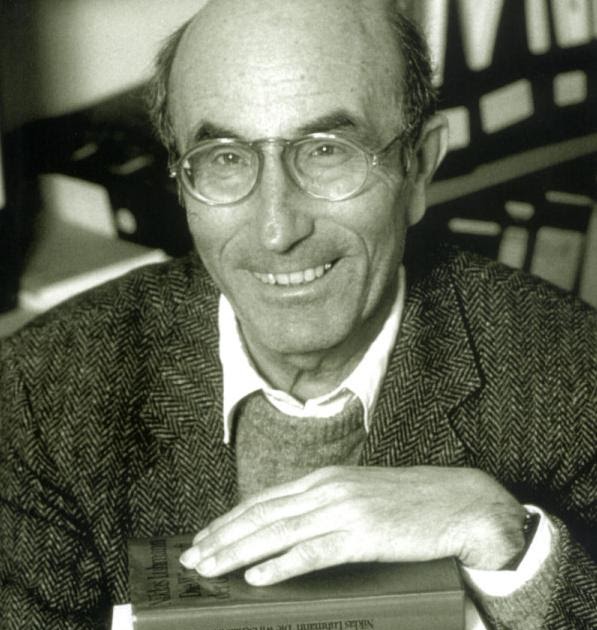
A Critical Dialogue with Niklas Luhmann
I aim to offer a compelling and nuanced intervention in the discourse of systems sociology by reintroducing phenomenology—particularly through the embodied perspective of Merleau-Ponty—and aligning it with ecological and epigenetic paradigms. In systems sociology, Edmund Husserl’s phenomenology has long played a foundational role in conceptualizing autopoiesis and communication. The phenomenological structure of meaning, articulated through the noesis–noema correlation, is frequently reinterpreted within cybernetic frameworks, most notably in the work of Niklas Luhmann.
However, I contend that a more comprehensive understanding of communication systems requires engagement with the ecology of collective behavior and the critical neuroscience of lifelines—dimensions that are largely absent from Luhmann’s theory.
Where Luhmann’s systems theory abstracts communication into a recursive, self-referential process, my approach insists on grounding systemic communication in the embodied and material dimensions of life processes. Ecological and epigenetic factors—central to the regulation of behavior and the shaping of lifelines—emerge as vital mediators in the co-constitution of meaning and the formation of social stratification. These dimensions resonate more closely with the phenomenology of perception and embodiment articulated by Maurice Merleau-Ponty, whose emphasis on the lived body situates cognition and meaning within an ecological and relational milieu.
This ecological-epigenetic reframing of systems sociology opens a path toward integrating scientific and philosophical discourses through a materialist phenomenology—one that acknowledges the elective affinities among lifeline plasticity, environmental constraints, and the reproduction of social power structures. By foregrounding embodiment, perception, and the biological embedding of experience, this perspective reorients systems theory toward a more critically grounded account of communication—one attuned to both stratified material interests and the lived dynamics of social life.
Communication Systems and Cybernetics
Neurobiological research finds a conceptual apex in Niklas Luhmann’s systems theory of communication, which integrates key elements of Husserl’s phenomenology. Luhmann adapts the Husserlian correlation between the intentionality of consciousness (noesis) and its regime of meaning (noema) within the framework of social systems theory. In his interpretation, Husserl can be seen as anticipating central insights of second-order cybernetics, such as operationally closed, autopoietic systems and radical constructivism.
For Luhmann, first-order observation involves making a direct distinction (e.g., “this is legal”), whereas second-order observation reflects on how an observer arrives at that distinction—why the court decided “this is legal,” and what the implications of that decision are. In this way, communication becomes a recursive, self-observing process embedded in the structures of social meaning.
Luhmann’s sociology is fundamentally concerned with how society observes itself. In a functionally differentiated society, various subsystems—such as law, politics, economy, and science—observe one another without a unified center of meaning or control. This recursive processing of meaning parallels the feedback loops found in cybernetic systems. It gives rise to contextuality and constructivism, where multiple, often incommensurable ways of observing and interpreting the world coexist.
Husserl’s emphasis on the constituting subject mirrors the cybernetic focus on the observer’s role within systems. In second-order cybernetics, the observer is not external to the system but an integral part of it—both shaping and being shaped by the system they observe.
This resonates with Husserl’s notion of intentionality, which affirms that we are not neutral spectators of reality but active participants in its constitution. We cannot step outside our own descriptions of the world. For Husserl, meaning arises in the act of consciousness; reality is constituted through intentional acts rather than passively received.
Merleau-Ponty builds on this by emphasizing the embodied subject, anticipating developments in enactivist and embodied cognitive science—fields that also incorporate cybernetic principles. In this view, mind and world co-emerge through active coupling rather than passive perception, linking phenomenology with cybernetic dynamics. The model of co-emergence and coupling describes systems—such as living organisms—as self-producing and self-maintaining: operationally closed in organization yet open to energy and information from their environment.
In defining the boundaries of a system, what is considered “inside” and “outside” depends on the observer’s perspective—paralleling Husserl’s idea that objects are constituted within consciousness. The Santiago School, particularly through the work of Humberto Maturana and Francisco Varela, emphasizes autopoiesis and cognition as features of self-organizing systems. Their work is deeply informed by both cybernetics and phenomenology.
In The Embodied Mind, Varela, Thompson, and Rosch extend this synthesis, bridging phenomenology and cognitive science with cybernetic principles. They argue that cognition arises through embodied action, and that mind and world emerge together through dynamic interaction.
Drawing on the biological theory of autopoiesis, Niklas Luhmann conceptualizes systems theory around three primary types: communication systems (social systems), living systems (such as bodies, brains, and cells), and consciousness systems (minds). Each system maintains operational closure while remaining structurally coupled with the others through its environment. This framework illustrates Luhmann’s innovative synthesis of biological principles with social theory.
In this context, communication is not limited to interpersonal dialogue; rather, following the linguistic turn, it encompasses the complex processes of meaning-making that occur within each functionally differentiated social system. Like autopoietic cells, social systems produce and maintain their own boundaries through their own internal operations. For example, the legal system observes the world through the binary code legal/illegal, while the scientific system operates through the binary true/false.
Technological Intentionality
Husserl’s concept of intentionality offers a potential point of convergence with cybernetics and systems of control and communication in both biological and artificial domains. The boundary between the human brain and machines becomes increasingly blurred, suggesting that the mind may operate according to cybernetic principles—capable, in theory, of being reprogrammed to achieve specific outcomes.
Within this framework, technological intentionality refers to the dynamic interplay between human consciousness and the technological environment. Technology is not neutral; it possesses inherent affordances and constraints that actively shape how we perceive, engage with, and make decisions in the world. Human perception and cognition are thus embodied not only in the physical world but also through our embedded interactions with technological systems and the broader lifeworld in which they are situated.
Husserl’s articulation of conscious experience, intentionality, and the lived body remains crucial for addressing the limitations of artificial intelligence systems that rely exclusively on coded instructions and disembodied logic. By extending the concept of intentionality into the technological realm, we come to view technological objects not as passive instruments but as active mediators of experience. These objects shape how we engage with our environment, influence our intentions, and structure our decisions.
Ultimately, Husserl’s emphasis on embodied experience offers critical insight into human-technology interaction. It underscores that our bodily perception, sensorimotor skills, and affective orientation play a foundational role in how we relate to technology—and, in turn, how technology participates in shaping human experience.
Moreover, I relocate the intentionality of life within the ecological system, juxtaposing the life-world with the ecological web of life. Husserl’s concept of the lifeworld is not the objective, scientific, or theoretical world, but rather the pre-theoretical world as it is lived—rich with meaning, emotions, perceptions, and intersubjectivity, preceding abstract models such as mathematics or formal logic. I extend the idea of the lifeworld to encompass the phenomena of biological life within ecological networks and feedback loops.
Ecological-Systemic Constellation
In engaging with Luhmann’s systems sociology, it becomes essential to extend the ecological horizon of collective behavior into the domain of communication systems. Deborah Gordon, Professor of Biology at Stanford University, offers an ecological-systemic framework to understand how collective behavior operates through dynamic interactions both within and beyond a system. For example, neural activity in the brain responds to a world filled with shifting patterns, environmental stimuli, and the presence of other beings. Connections among neurons emerge through a dynamic, dialectical relationship that drives individual neuronal actions. Gordon refers to this perspective as ecological oikos, highlighting the interdependent interactions that regulate systemic organization.[1]
If biology is understood as a system of relations, then a cell’s function depends on its interactions with other cells. This ecological perspective highlights how autopoietic networks operate without centralized control. In sociological terms, it suggests an epistemic constellation that emphasizes the evolution and plasticity of collective behavior—its capacity for self-regulation and adaptation in response to changing social environments.[2]
In a similar vein, Luhmann classifies all societies—past, present, and future—as systems in which social evolution advances through increasing complexity, multiplicity, and plasticity, alongside processes of functional differentiation. His systems theory makes a universal claim, grounded in cybernetics and centered on the concept of meaning (Sinn). By generalizing key cybernetic concepts, Luhmann reinterprets biological notions—such as the system/environment distinction and the management of complexity—to emphasize the sociological primacy of meaning. In doing so, he situates meaning within a model of cybernetic circularity, integrating feedback mechanisms into the structure of social systems.[3]
Thus, Luhmann situates society within communication systems, wherein humans engage with multiple, overlapping realities. Human action occurs exclusively within these networks of communication. From this perspective, observation becomes a fundamental component of systems, simultaneously distinguishing and constructing reality through their own operational autopoiesis. If reality is conceived as a cognitive construct—that is, as an effect or correlate of observation—then any description of reality is, ultimately, a description of an observation.
Second-order observation, or second-order cybernetics, becomes particularly significant in modern society, as it addresses how observing systems construct their own realities. This recursive feedback is especially evident in domains such as politics and mass media, where systems not only observe themselves but also influence and observe one another.
Second-order observation involves reflecting on first-order observation: not merely stating, for example, “this book is green,” but questioning why it is perceived as green. Every act of observation entails a blind spot; no perception is entirely free from bias or presupposition. Thus, our access to “truth” is always mediated by cognitive limitations. In this framework, reality is not a neutral given but a construct shaped by the capacities and constraints of observation.
The second aspect of general second-order cybernetics is not aimed at eliminating or unmasking all blind spots. Instead, systems theory of society recognizes second-order observation as a structural condition of systemic reality—one that acknowledges multiplicity and complexity. Accordingly, all modern function systems engage in the observation of their own operations, effectively operating at the level of second-order observation.[4]
Life-world Construction: Critique and Emancipation
Given the relationship between first-order and second-order observation, there appears to be a lack of immanent critique in addressing the disparity between system and operation—and, consequently, the potential for distortion. Immanent critique, grounded in intentionality and inspired by Husserl’s theory of the lifeworld, seeks to interrogate what is culturally sedimented and structurally stratified—such as prejudice, opacity, and hierarchical domination.
We are embodied beings, rooted in bodily experience and perception, and situated within specific historical and cultural contexts. This embodied condition is fixed in one sense, yet it is also constitutive of a broader spectrum of horizons, as it interacts with the lifeworld through intersubjectivity and an ethical orientation grounded in empathy. This ethical position is anchored in the ideal structure of consciousness and lived experience, articulated through the lens of a priori practical reason—duty, value, morality, and responsible action. These are, in turn, objectively grounded in the structure of practical intentionality—acting, willing, and valuing—drawing upon the essence of moral experience in pursuit of an idea of true and genuine humanity.
Ethics grounded in practical intentionality becomes a task for humanity: to live responsibly, to immanently critique what has been culturally sedimented in regimes of obscurity, prejudice, and stratification, and to orient science and culture toward meaningful human ends—rather than mere efficiency or control.
This ideological-critical dimension of communicative theory is central to Habermas’s critique of Luhmann. It challenges the limitations of a social-technological analysis constrained by a functionalist orientation toward rationalization and a reductive interpretation of social phenomena. According to Habermas, Luhmann’s sociology tends to marginalize practical moral reasoning and political agency, instead reinforcing technocratic functionality and legitimizing science-driven political decisionism.
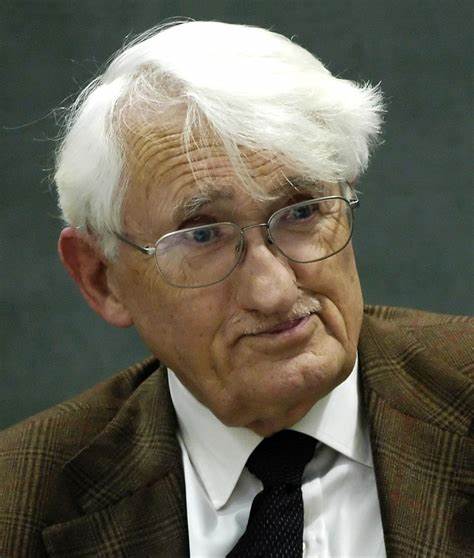
Despite his well-founded critique of its limitations, Habermas acknowledges that Luhmann’s theory transcends a simplistic model of social cybernetics. Luhmann develops a systems theory grounded in empirical observation and influenced by biological models—particularly those concerning the life processes of organisms. In this context, the biological organism is conceptualized as a self-regulating system, a model Luhmann extrapolates to society and culture as frameworks for meaningful action and rationality. This points to a systems model that integrates organism and environment in terms of complexity, adaptation, and self-regulation.[5]
With that said, I propose an integration of Habermas’s theory of communicative action with Luhmann’s theory of system communication, framed through a theory of social stratification that remains anchored in the concept of the lifeworld. Husserl’s conception of the lifeworld as the foundational source of meaning and rationality cannot be fully grasped without acknowledging its role in the critical interrogation of cultural sedimentation and hierarchical obscurities. This critical function is essential to unlocking its emancipatory potential.
Moreover, the lifeworld is not confined to language, culture, or society; it also encompasses structural and systemic dimensions essential for understanding the phenomena of biological life and emergence. In this sense, the lifeworld entails an ecological-systemic perspective—an interconnected web of life in which organism and environment co-emerge through dynamic coupling. It should be conceived as a general ecological structure, not merely as the counterpart to system structures (e.g., politics, economy, mass media) within the conventional system/lifeworld dichotomy (e.g., civil society and deliberative democracy).
We should not separate cultural history from natural history. Rather, we must work toward unifying these domains by viewing the lifeworld as both structure and system—a dynamic interface between the human world of meaning and the ecological web of life in continuous emergence.
This critical-emancipatory stance is essential for advancing systems sociology, especially in dialogue with a critical neuroscience of lifelines and the emerging field of social epigenetics. Ecological and epigenetic factors must be recognized as integral to the understanding of collective behavior in organisms, offering a richer and more holistic framework for systemic inquiry.
Autopoiesis and the Theory of Lifelines
To deepen the connection between autopoiesis and social epigenetic factors, I reinterpret Varela’s concept of autopoiesis through the lens of the phenomenology of lifelines. Varela frames autopoiesis as the integration of biological cellular networks with neuroscientific theories of lifelines, notably those advanced by Steven Rose, a prominent British neuroscientist, biologist, and public intellectual.
According to Steven Rose, the biological study of Lifelines: Life Beyond the Gene seeks to articulate what it means to “think like a biologist” about the nature of living processes. This approach critically examines both the strengths and limitations of the reductionist tradition that has long dominated modern biology, offering an alternative framework that moves beyond genetic reductionism and sociobiology. Rose’s critical theory of lifelines challenges the ultra-Darwinian assumption that places the gene at the center of life, instead advancing a perspective known as homeodynamics.
This homeodynamic view offers an alternative vision of living systems—one that recognizes the role and influence of genes without subscribing to genetic determinism. It reorients our understanding of living organisms and their developmental trajectories across time and space, situating them at the center of a dynamic, relational, and context-sensitive model of biological life: the biological homeodynamic lifeline.[6]
Organisms—and indeed ecosystems—develop, mature, and age through the arrow of time and the variability of space, in constant interaction with their own developmental trajectories. The central property of all life is autopoiesis: the capacity and necessity of a system to build, maintain, and preserve itself. This principle aligns philosophically with the notion of life intentionality, or conatus—the innate striving of a living being to persist in its existence and to enhance itself—as articulated by Spinoza and later elaborated by Hans Jonas.

At this point, I engage with key concepts such as homeodynamics, autopoiesis, life intentionality, and complexity. I argue for centering cells and organisms within networks as the fundamental units of living processes, situated within an ecological-systemic framework. This stance challenges the gene-centered view of life, which narrowly focuses on chemical compounds like nucleic acids—DNA and RNA.
Indeed, metabolic complexity serves as a heuristic device, demonstrating that gene function and activity can only be fully understood within the broader context of metabolic processes and networks operating across multiple organizational levels.
By synthesizing autopoiesis with a theory of lifelines, I aim to strengthen the socio-critical dimensions of the phenomenology of the lifeworld, emphasizing intentionality, agency, and multiplicity. This synthesis is further mediated by epigenetic social factors, highlighting the dynamic interplay between biological and social realms.
A phenomenological discourse of multiplicity within the horizon of the lifeworld calls for a deeper understanding of how meanings and intentions are shaped and negotiated through language and embodied practice in intersubjectivity, as well as within epigenetic environments. While these concepts can be translated into neurodynamic or biological-computational frameworks, I find it difficult to fully embrace the metaphorical language often used in these domains—particularly when it draws on colonialist or reductive tropes, such as the notion of “selfish genes” or the idealized portrayals of self-sacrificing loyalty among social insects, as exemplified in Edward Wilson’s Anthill.
Varela, along with Thomson, aligns with a critical theory of lifelines that serves as a corrective to “ultra-Darwinism” and sociobiology. Steven Rose revitalizes Dobzhansky’s famous assertion—“nothing in biology makes sense except in the light of evolution”—by arguing that, more precisely, nothing in biology makes sense except in the light of history. As Rose states, “the past is the key to the present,” positioning history as a fundamental subject of biological inquiry.[7]
Life–world and Prolepsis
A genealogy of the past is necessary to rewrite our present history and to explore the socio-cultural dimensions of collective behavior. Immanent critique is required to emancipate us from entrenched prejudices and obscurities embedded within the current realities of meta-progress, which often obscure the effective histories of innocent victims and marginalized groups.
This historical-social spectrum helps elucidate the horizon of evolution in terms of organismal development. As Merleau-Ponty argues, history does not walk on its head, nor on its feet—but with its body. Bodily intentionality serves as the site for the genesis of meaning, opening us to the lifeworld.[8]
At this juncture, I argue that nothing in biology makes sense except in the light of ecological embodiment. Similarly, Varela reinforces a systemic conception of autopoiesis that highlights the significance of history and the embodied nature of cognition. Living systems continuously produce themselves through their own activity within the course of evolutionary history; this autopoietic stance forms the backbone of lifelines, situating the embodied organism at the core of biological life.
Likewise, Steven Rose integrates the notion of autopoiesis into his science of lifelines. He seeks to transcend traditional dichotomies—such as nature versus nurture, gene versus environment, and determinism versus freedom—by emphasizing the plasticity of living organisms. This self-construction, referring to autopoiesis, is a defining characteristic of all life, reflecting the organism’s autonomous capacity to create, sustain, and evolve itself.[9]
Given this, I propose a phenomenology of lifelines situated within an ecological-systemic framework, challenging the reductionism inherent in DNA-centered conceptions of living systems. This approach resonates deeply with the lifeworld understood not only as a cultural-linguistic horizon but also as an embodied, ecological structure of meaning. Within this framework, a phenomenological “thick description” of prolepsis—a forward-leaning intentionality or propension—is developed through the narrative genre, encompassing past, present, and future.
Such a proleptic suite is vital for advancing a public theology of science and lifelines—one that anticipates the eschatological reality of a “new heaven and new earth” already breaking into our midst. This vision is grounded in God’s reconciliation with the world through the death and resurrection of Christ. God, as the God of life, moves in concursus with living creatures—bestowing freedom, autonomy, and creativity as gracious gifts given in love and accompaniment.
This theological imagination articulates a vision of creatio continua in resonance with the concept of autopoiesis, interpreted through a phenomenological lens. It offers a “thick description” of prolepsis, understanding life as both biologically self-organizing and eschatologically oriented—embedded within the temporal, embodied, and narrative structures of the life-world. The future exerts a retroactive effect on the problematic regime of our present constellation through proleptic intentionality—an expectation of the new heavens and the new earth that breaks into our midst partially and fragmentarily, yet with transformative consequence.
[1] Gordon, The Ecology of Collective Behavior, 2.
[2] Ibid., 7.
[3] Habermas, Zur Logik der Sozialwissenschaften, 369-73.
[4] Moeller, Luhmann Explained From Souls to Systems, 75.
[5] Habermas, Zur Logik der Sozialwissenschaften, pp. 369–501.
[6] Rose, Lifelines: Life Beyond The Gene, 2003.
[7] Thompson and Varela, “Autopoiesis and Lifelines,” Behavioral and Brain Sciences (1999) 22:5. 900.
[8] Ponty, Phenomenology of Perception, XIX.
[9] Rose, “Précis of Lifelines: Biology, freedom, determinism,” Behavioral and Brain Sciences (1999) 22, 871–921.