Public Theology and Right-Wing Nationalism in the Korean Church
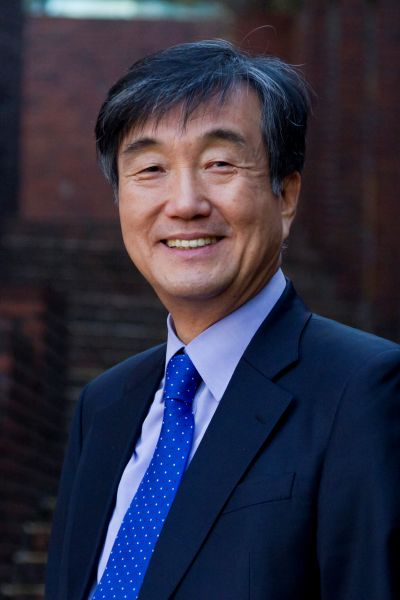
Chai Soo-il
Abstract
Public theology has become an urgent and contested field in the Korean context, particularly in response to the rise of right‑wing nationalism and its extremist expressions. This paper analyzes the historical background of right‑wing extremism and its political entanglement with Korean Protestantism. Building on a socio‑historical approach, it also introduces two distinct trajectories of public theology within the Korean academic landscape: an evangelical‑conservative strand and an ecumenical‑progressive one.
The Historical Outlook: Right-Wing Extremism in South Korea
In March 2017, a large-scale rally opposing the impeachment of former President Park Geun-hye was held in front of Seoul City Hall. The organizer of this demonstration, widely known as the “Taegukgi Rally,” was Pastor Jeon Kwang-hoon (born 1956). Jeon claimed that Park’s impeachment was the result of a political conspiracy orchestrated by “pro–North Korean forces” and “leftists” seeking to achieve federal unification. He urged his followers to be prepared for martyrdom and to launch a “revolution” to defend the former president.
In response to the Candlelight Rallies that supported impeachment, he mobilized counter-protests under the banners of “Taegukgi Rallies” and “Patriotic Rallies.” Once again, the far-right sector of the South Korean Protestant church took to the streets, waving both the South Korean flag (Taegukgi) and the American flag (Stars and Stripes).
Jeon’s rhetoric grew increasingly hostile and incendiary. He rejected the Constitutional Court’s ruling, incited social unrest, demonized former President Moon Jae-in as a communist, and declared that Moon “must be eliminated”—a statement met with loud cries of “Amen!” from the crowd. According to a report in The Korea Herald (Feb. 6, 2025), Jeon was identified as a possible mastermind behind the mob attack on the Seoul Western District Court on January 19, 2025, following the court’s decision to issue an arrest warrant for suspended President Yoon Suk Yeol.[1]
These developments raise serious questions: Is it justifiable for a pastor to publicly incite hatred and violence? Can Christian faith be reconciled with labeling political opponents as “communists” and treating them as enemies to be destroyed?
The theological framework underpinning Jeon Kwang-hoon and other far-right Christian leaders in South Korea is often described as a fusion of Prosperity Theology, Dispensationalist Eschatology, and the New Apostolic Reformation. These ideological currents function as powerful engines that sacralize capitalism, demonize political adversaries, and frame social dominance as a divine mandate. Jeon emerged as a central figure in the far-right Christian movement, amplifying extreme political slogans—especially during the COVID‑19 pandemic.
He portrayed government quarantine measures as persecution of the church and a violation of religious freedom, casting himself as a martyr resisting a “communist regime.” Through a narrative of persecution, martyrdom, and patriotism, he mobilized a loyal base for his political maneuvers. He even founded a political party—the Christian Liberty Party (2016)—and fielded presidential and parliamentary candidates in 2020, later declaring his own presidential candidacy in 2025. Whereas earlier far-right Christian leaders primarily engaged in lobbying and transactional cooperation with authoritarian regimes, Jeon’s ambition extended to seizing state power.
The “Taegukgi rallies” in front of Seoul City Hall derive their name from the flags carried by participants: the South Korean flag, the American flag, and later the Israeli flag. These far-right groups vehemently oppose the proposed Anti-Discrimination Act, which has repeatedly stalled in the National Assembly. They promote intense hostility toward LGBTQ+ individuals, Muslims, Chinese people, and refugees. They identify North Korea, Islam, and homosexuality as the three primary enemies in a “spiritual war,” framing progressive social movements and minority rights advocacy as “pro–North Korean.” The proliferation of fake news by far-right YouTubers further radicalizes followers. A symbiotic relationship has formed between far-right churches, which supply ideological content and audiences, and media outlets, which provide platforms and revenue—together sustaining and amplifying far-right ideology.
Yet this far-right turn within the Korean church is not a recent development emerging after democratization in the 2000s. Its roots extend back to 1945, the year of liberation from Japanese colonial rule. A brief historical review is therefore essential for understanding such phenomena of Christian nationalism.
The Liberation Period (1945–1961)
After liberation, North Korea came under Soviet military administration, while South Korea was governed by the United States Army Military Government. Many Christians, equating communism with atheism, opposed the North Korean government’s land reforms and organized the “Christian Social Party” to resist communist influence.
Facing persecution under the Soviet‑backed North Korean authorities, large numbers of Christians fled to the South. Their strong anti‑communist sentiment—shaped by personal loss, displacement, and ideological conflict—became a defining feature of South Korean conservative Christianity. The Korean War (1950–1953) further intensified hostility toward communists and solidified anti‑communism as a dominant ideological force. Powerful anti‑communist organizations emerged, and many of which were composed of Christians who had fled from the North.
The most representative of these far‑right groups was the Northwest Youth Association (Seobuk Cheongnyeonhoe), in which Reverend Han Kyung‑jik played a central role in supporting this direction. Founded in November 1946, the association consisted largely of young people from Pyeongan and Hwanghae Provinces. Driven by extreme hostility toward communism, they justified their activities as “hunting communists,” carrying out ruthless acts of terror and violence against left‑wing individuals and organizations.
Their actions were conducted with the tacit approval or protection of both the U.S. military government (1945–1948) and the Syngman Rhee regime (1948–1960), which sought to establish a Christian‑influenced anti‑communist state. Composed of Christian youths who had lost families and property to communists in the North, the Northwest Youth Association played a brutal role in suppressing the armed uprising of the South Korean Workers’ Party on Jeju Island beginning on April 3, 1948 (4.3).[2]
The government placed the Northwest Youth Association at the forefront of the suppression campaign in the Jeju massacre, through “communist‑hunting,” brutal torture, looting, and collective punishment. The estimated number of victims ranges from 25,000 to 30,000—more than one‑tenth of Jeju Island’s population at the time.
Paul S. Chung, a leading public theologian, examines 4.3 by situating it within its historical context and exploring its biopolitical dimensions and the genealogy of effective history surrounding the innocent victims. Through a public‑theological lens, he interrogates postwar colonial politics and the role of American intervention in the division of Korea, drawing on a comparative study of American colonialism in the Philippines (1898–1946). In this framework, public theology assumes a distinctly postcolonial character as it engages questions of biopolitics, state violence, and the mass killing of civilians.[3]
Han Kang’s novel I Do Not Say Goodbye, which received the 2024 Nobel Prize in Literature, portrays the tragedy of 4.3 through the perspectives of three women, offering a delicate yet piercing depiction of historical trauma and personal suffering.
Other far‑right groups active during the post‑liberation period included the Korean Democratic Youth Alliance (founded in 1945, disbanded in 1947) and the White Clothes Society (organized in 1945, disbanded in 1948). – The Korean Democratic Youth Alliance emerged from the consolidation of several right‑wing youth organizations and engaged in radical activities, including white terror against left‑wing figures.
It was ultimately disbanded in 1947 after involvement in a murder case and violations of decrees issued by the U.S. military government. The White Clothes Society, composed largely of young people who had fled from North Korea, carried out anti‑communist operations, opposed trusteeship, and engaged in clandestine activities such as targeted assassinations.
From Park Chung-hee’s Military Dictatorship (1961–1979) to the New Military Regime
On May 16, 1961, Park Chung-hee seized power through a military coup and established a regime that adopted anti‑communism as its central national ideology. Park had previously served as an officer in the Japanese army during the colonial period and, after liberation, briefly joined the South Korean Workers’ Party. Once in power, however, he suppressed dissent through the Anti‑Communist Law and the National Security Act, and shaped public consciousness by intensifying anti‑communist education. His rule was maintained through strict media control, the repression of democratic movements, widespread human rights abuses, illegal arrests, and torture. Park was eventually assassinated by the director of the Korean Central Intelligence Agency in 1979.
Military dictatorship continued with the coup led by Chun Doo-hwan (1931–2021), whose regime violently suppressed the 1980 Gwangju Democracy Movement. During these years, repressive state apparatuses operated in tandem with an expansive bureaucracy and an anti‑communist governing ideology that sought to regulate virtually every sphere of life. In response, human rights organizations and ecumenical social movements mounted critical resistance on behalf of democratization, working alongside the student movement and the labor movement.
Large‑scale citizen protests in 1987—the June Democratic Uprising—preceded the 1988 Seoul Olympics and succeeded in securing direct presidential elections, marking a significant step toward procedural democracy. Nevertheless, anti‑communism persisted as a powerful ideological tool and repressive instrument of governance. Critics of conservative administrations, including progressive Christian leaders, were frequently labeled “communists,” fueling social polarization and inciting public hostility.
The 2000s (Era of Procedural Democratization)
In the 2000s, South Korea entered a period of civilian government and the consolidation of procedural democratization. During this time, however, a new form of right‑wing movement, the “New Right,” emerged. While criticizing the “Old Right” as authoritarian, the “New Right” emphasized liberalism and a market‑driven economy. Yet it generated significant social controversy by offering positive reinterpretations of South Korea’s founding and industrialization, glorifying the regimes of Syngman Rhee and Park Chung‑hee, and advancing the “colonial modernization theory,” which claimed that Japanese colonial rule contributed to Korea’s modernization.
The “New Right” also led aggressive ideological campaigns, labeling democratization and unification movements as “pro‑North Korean” or “left‑leaning,” and attacking them accordingly. These groups supported the far‑right administrations of Lee Myung‑bak (2008–2013), Park Geun‑hye (impeached in 2017), and Yoon Suk‑yeol (impeached in 2025 after a failed coup attempt in 2024), while simultaneously inciting hostility toward opposition politicians, critical media, labor unions, and progressive Christian communities. Such actors were frequently branded as “communists” or “anti‑state forces” to be eliminated.
What has been outlined helps us see how the historical social background shaped political divisions within party politics—divisions that ultimately contributed to the impeachment of two former presidents—while the far‑right movement became increasingly entangled with Christian right‑wing nationalism and anti‑communist ideology. This perspective also clarifies what remains crucial in characterizing contemporary Christian right‑wing ideology.
Characteristics of Christian Far‑Right Groups
A defining characteristic of South Korean Christian far‑right groups during this period was that they did not merely support particular conservative parties; rather, they actively recruited church members as party members, thereby exerting significant influence over the selection of presidential candidates. Pastor Jeon Kwang‑hoon exemplifies this trend. Beginning in 2016, he entered the political arena by participating in the founding of the Christian Liberty Party. In 2021, he established the National Revolution Party and served as its leader. In 2022, he reverted to the name Liberty Unification Party, fielding candidates in presidential, general, and local elections.
Far‑right Christian groups mobilized large‑scale rallies in front of Seoul City Hall, using inflammatory rhetoric to denounce democratic governments, labeling critics of authoritarian regimes as communists, inciting hostility, and at times encouraging confrontational actions. Their slogans—“Communists are threatening us,” “Homosexuality is communism,” “Refugees are communists”—reduced complex social issues to a simplistic good‑versus‑evil dichotomy, reinforcing group identity and cohesion through fear and exclusion. This Manichean rhetoric contributed to forms of activism that disregarded lawful democratic processes, as seen in the violent occupation of the Seoul Western District Court in the early morning of January 19, 2025, following the issuance of an arrest warrant for former President Yoon Seok‑yeol.
Alongside Jeon Kwang‑hoon of Sarang Jeil Church, Pastor Son Hyun‑bo (born 1962) of Busan Segyero Church is another prominent figure associated with the far‑right Christian movement. In addition, several pseudo‑Christian sects share similar ideological orientations while being even more deeply entangled in political and economic interests. These groups have exerted direct influence on party politics by registering their followers as party members, openly supporting authoritarian‑leaning political actors, and seeking institutional advantages through various forms of lobbying and transactional engagement.
Beyond his ministry at Sarang Jeil Church, Jeon Kwang‑hoon is involved in numerous profit‑generating ventures, including the YouTube channel You Know TV, the media company Jayu Ilbo (where his daughter Jeon Hanna serves as CEO), Puritan Publishing, and First Mobile, a budget mobile phone service in which his daughter holds a majority stake.
This entrepreneurial fusion of religion and business has roots in various Protestant sects, some of which are widely regarded as heretical. The Unification Church, for example, has grown into a vast conglomerate with interests in leisure, construction, defense industries, food and beverage, pharmaceuticals, media, and extensive global enterprises.
As a result, the public image of Protestant churches becomes increasingly associated with money, power, and anti‑communist ideology within the civil sphere, leaving them socially vulnerable and morally compromised.
In addition to extreme anti‑communism and hostility toward LGBTQ+ individuals, Chinese people, Muslims, and refugees, a distinctive feature of the South Korean far‑right Christian movement is its deep and enduring relationship with American right‑wing evangelical and political networks. The pro‑American and conservative orientation of the Korean Christian elite was significantly shaped by ties forged with American missionaries after liberation, and these connections remain influential today. Theological frameworks such as the New Apostolic Reformation, political strategies associated with Trumpism, and agendas including anti‑LGBTQ+ and anti‑Islam campaigns are being directly imported from the United States.
This social‑critical analysis provides a rationale for why public theology initially emerged even within conservative and anti‑ecumenical circles, while liberal and progressive forms of public theology have focused on addressing socio‑political problems, economic inequality, the life sciences, and ecological issues.
The Development of Public Theology in Korea
Discussions on public theology in Korea began in 2007 with a series of expert symposiums organized by the Christian Ethics Movement of Korea (CEMK), founded in 1987, to commemorate its 20th anniversary. The aim was to establish a theological foundation for the church’s social role and responsibilities. CEMK emerged as a Christian civil society movement within the evangelical‑conservative Protestant camp, and it appears that the organization sought to explore “public theology” in line with the so‑called “prophetic pessimism” advocated by Professor Son Bong‑ho (1938–), a leading figure in evangelical conservative Christian civic activism. Yet this framework proved insufficient for guiding Christian civil society in a rapidly changing era.
CEMK’s understanding of “public theology” seems to have been shaped by a desire to overcome the “ghettoization” of Korean Protestantism—a tendency that became especially visible after the kidnapping of a Korean short‑term missionary team in Afghanistan in July 2007—and to support the church’s social role through renewed communication with the wider world. Although ecumenical Protestant circles in Korea had long engaged in theological discussions about the church’s social responsibility, the evangelical conservative search for a new discourse appears to have been motivated by its relationship to Christian civil society theory.
In other words, “public theology” was perceived as a less radical and more socially acceptable alternative for articulating the church’s public nature within civil society, especially when compared with discourses such as the “theology of revolution,” Missio Dei theology, liberation theology, or minjung theology.
The New Generation Church Ethics Research Institute, which maintains a similar evangelical conservative orientation, published “What Is Public Theology?” and “How to Practice Public Theology?” According to Moon Si‑young, the institute’s director, the emergence of this public theology discourse stems from tensions between civil society’s “criticism of the church” and the church’s so‑called “ethics of grace.” Moon argues that civil society should not merely criticize or condemn the church but should help it establish a constructive public role. However, he does not explain how civil society might offer alternatives beyond critique or how such alternatives could be implemented.
Moon does, however, identify several issues raised by civil society concerning the church’s public role, including clergy taxation, parking conflicts between churches and local communities, copyright disputes, and questions of financial transparency. Contributors to the institute’s publications approach these concerns from varying perspectives: some adopt a macro‑level view, addressing globalization and Christian economic ethics, while others focus on micro‑level or individual ethical issues such as taxation and local conflicts.
Although terms such as “public theology,” “theology of the public sphere,” and “theology of publicness” are used across these discussions, their content and orientation differ. For the evangelical conservative camp, “public theology” represented a relatively progressive discourse within its own internal context. For the ecumenical movement, however, public theology had already been explored through various strands of socially engaged theology, making the concept of theology’s public role neither new nor unfamiliar.
Ecumenical Church, Human Rights and Prophetic Public Theology
The ecumenical movement in Korea, understood as a socially engaged expression of faith committed to human rights and the public role of theology, can be traced to the early history of the Korean church. Although shaped in part by the fundamentalist theology of American missionaries, Korean Christianity also served as a foundation for patriotic enlightenment movements and the independence struggle during the Japanese colonial period. The Christian nationalism of that era must be clearly distinguished from the contemporary far‑right Christian movement led by figures such as Pastor Jeon.
Across the periods of liberation and division, the Korean War, and the era of developmental dictatorship, the Korean church participated in urban industrial missions, rural and fishing‑village missions, human rights advocacy, and democratization movements—efforts carried out in close exchange and solidarity with the global ecumenical community.
The 1970s opened with extraordinary technological and scientific achievements, including the first human landing on the moon in 1969. Yet on the ground, the Vietnam War intensified, and in Korea, Park Chung‑hee entrenched his dictatorship through the Yushin Constitution (1973), suppressing political opponents, expelling students, dismissing professors, and arresting dissidents. The decisive turning point of the decade was the self‑immolation of Chun Tae‑il on November 13, 1970. His cry—“Observe the Labor Standards Act! We are not machines!”—shocked the conscience of the Korean church. The labor movement and urban poor missions took on a new direction: no longer limited to charitable aid, they now focused on transforming unjust social structures. “Humanization” and “democratization” became the dominant theological and ethical discourses.
Under the developmental dictatorship, Korean Christians drew inspiration from the Confessing Church of Nazi Germany, from Dietrich Bonhoeffer, and from global movements such as the theology of revolution, liberation theology, and the theology of hope. Influential figures—including Asian liberation theologian C. S. Song (who visited Korea in 1972), Jürgen Moltmann (1975), and Black liberation theologian James H. Cone (1979)—visited Korea in succession. Through the World Council of Churches and the Christian Conference of Asia, Korean Christians explored new forms of solidarity and resistance.
Despite this ferment, many books central to liberationist thought—such as Gustavo Gutiérrez’s A Theology of Liberation and Paulo Freire’s Pedagogy of the Oppressed—were banned, and those who possessed them were arrested. Nevertheless, a new theological movement emerged among dismissed seminary professors, culminating in the birth of Minjung Theology (People’s Theology) in 1975. Jürgen Moltmann later edited and published Minjung Theology in German, helping to internationalize and deepen the discourse.
In more recent decades, some of the theologians have brought public theology to new prominence through dialogue with critical theory and postcolonial thought; one of them is Paul S. Chung, who is inspired by Karl Barth, Helmut Gollwitzer and F. W. Marquardt. He places great importance on the concept of the critical analysis of the politics of the body for a prophetic public theology. Chung states that public theology includes the critical analysis of the state’s politics of the body that dominates civil society as a whole, including racism, economic inequality, educational stratification, gender and sexuality, and the mass media simulations revealed in the era of public health and pandemics.[4]
According to Chung, the public role of Christians, including theologians, is concretized through “parrhesia” (speaking the truth boldly). Prophetic public theology is grounded in the gospel of God’s justice and reconciliation, while fully incorporating social‑scientific methods and biopolitical analyses of state power to promote the common good, a politics of recognition, and solidarity with those afflicted by the repressive apparatuses used by government and scapegoating mechanisms.
This stance becomes explicit in Chung’s heuristic reading of Bonhoeffer’s discourse on parrhesia and prudence, particularly in his sociological analysis of fascism and its biopolitics, where theological reflection is brought into dialogue with political theorists and social scientists such as Hannah Arendt and Michel Foucault. This is already evident in Chung’s refinement of public theology with postcolonial implications, especially in his engagement with the 4.3 Massacre through the lens of transitional justice and state violence, informed by a comparative study of American colonialism in the Philippines. In doing so, he transcends the limitations of evangelical conservative versions of public theology and situates the social‑scientific method and orientation of public theology in constructive dialogue with liberation theology and minjung theology.
Responding to Christian Right-Wing Extremism
The National Council of Churches in Korea (KNCC)’s “Ecumenical Theology and Education Committee,” “Church Unity and Interreligious Dialogue Committee,” and the “Korea Christian Social Issues Research Institute” held an international ecumenical conference from June 30 to July 1, 2025, at the Anglican Church in Daehak-ro. More than 80 theologians, youth leaders, and women’s movement activists from Asia, North America, and Europe—each with long experience in justice, peace, and ecumenical movements—gathered to share historical analyses and case studies of how churches across regions have responded to right‑wing extremism.
The theme was “Right‑Wing Extremism and the Joint Response of the Global Church.” [5] Joerg Rieger (1963–), Professor Emeritus at Vanderbilt University, delivered an online lecture titled “Christian Nationalism in the United States: History, Power, and Alternatives.” In his presentation, Rieger distinguished between privilege and power, proposing that meaningful resistance to dominant power structures emerges through the formation of deep solidarity between privileged groups and the vast majority of people worldwide who lack power. He emphasized that recognizing “we need each other for change” is what makes such deep solidarity possible. Rieger concluded by noting that genuine transformation occurs when people grasp the significance of the Apostle Paul’s teaching: “If one part suffers, every part suffers with it” (1 Corinthians 12:26)
Following this, Minnie Anne Mata-Calub, Chairperson of the Northeast Asia Church Forum, presented on the topic of “Right-Wing Extremism in Asia and the Church’s Response,” diagnosing that “right-wing extremism in various Asian countries is combining nationalism and religious fundamentalism to threaten human rights and democracy.”
As alternatives, they suggest “promoting religious literacy and critical thinking through education,” “advocating for human rights and social justice, and resisting poverty, discrimination, injustice, and lack of opportunity—the driving forces of extremism—within local communities,” and “expanding ecumenical networks and movements for peacebuilding and resistance.”
Dr. Kayama Hiroto (Tomisaka Christian Center, Japan) analyzed how the “anti-intellectualism of hatred” has infiltrated Christianity in Japan, emphasizing that “the church must regain its discernment.” Dr. Kim Min-ah (KNCC Ecumenical Theology and Education Committee, South Korea) explained the rise of the Protestant far-right movement in South Korea and its political background, raising the need for theological reflection. However, she points out that “official sanctions or responses from the Korean church against the far-right Protestants, who are damaging the image and public standing of the entire Protestant community through political intervention, hate speech, and the instigation of social conflict, remain limited.” She argues that this is related to “the fact that the activities of the far-right Protestants overlap to some extent with the political and religious identity of mainstream Protestantism, and that many churches are avoiding conflict with them.” Dr. Kim Min-ah emphasizes that the urgent and essential task for the Korean church now is “not only to analyze the identity and behavior of the far-right Protestants, but also to resolutely confront the hatred and violence they are perpetrating.”
Representing Europe, Peter Prove, Director of the World Council of Churches’ International Affairs Commission, in his presentation on “Far-Right Extremism in Europe and North America and the Church’s Response,” expressed deep concern about the fact that “some churches and Christian communities are actively aligning themselves with the far-right movement,” while also expressing encouragement at “the increasing number of Christian influencers challenging Christian extremism on social media channels based on the Bible and the Gospel of Christ.” He also emphasized that the church should “strengthen its ministry to young people and focus on including them,” because “young people are most vulnerable to the temptations and allure of extremist movements in online spaces.”
A Korean minjung theologian, Kim Jin-ho, cites the so‑called “BTS phenomenon” as an illustrative example. He notes that this young idol group “actively utilized the opportunities of the capital‑intensive cultural industry, while simultaneously cultivating a reciprocal and mutually beneficial relationship with popular music in online spaces. Their fans did not direct hatred toward others; rather, they empathized with those who suffer and participated in sharing their hearts and resources.”
The participants issued a joint statement, noting that they could not ignore the reality that far-right extremism is gaining ground not only in Korea but also globally. The statement pointed out the reality of this extremism in several examples: the military junta regime in Myanmar, the Philippines, Turkey, and the Middle East, the racist colonization/segregation policies of Israel and the suffering of the Palestinian people. In addition, the statement highlighted the rapid growth of far-right political forces in Japan, Germany, Austria, Italy, and Hungary, where far-right forces are threatening the peace constitution and promoting hatred and discrimination.
Overcoming the Right‑Wing Reality of Christian Nationalism
How, then, can right‑wing extremism—particularly in its expression as Christian nationalism—be overcome? Journalist Joo Jin‑woo, known for his incisive reporting and sharp political analysis, often interviews Pastor Jeon Kwang‑hoon. He begins each interview with a cheerful “Hallelujah!” but concludes with a pointed remark: “Pastor, please believe in Jesus.”
Whether Joo Jin‑woo is a Christian is unclear. What is clear is that Jeon Kwang‑hoon seems not to grasp the deeper meaning of the remark—or perhaps dismisses it as a joke. Yet for many Koreans, the statement carries a clear implication: “Jeon Kwang‑hoon, you are not living as a true pastor. Understand and believe in the Jesus you claim to preach. If you truly believed in Jesus, your life and actions would reflect his teachings.”
One essential way to counter Protestant far‑right extremism is precisely this: to live according to the teachings of Jesus. The problem lies in the distortion of Scripture into an ideological tool that legitimizes extremism. This is why sound biblical education is indispensable.
The fusion of far‑right ideology and Christianity arises not only from unequal social conditions but also from internal dynamics within the church that tolerate and reproduce the logic of hostility. Overcoming this requires theological responses and ecclesial reform. It involves recovering the gospel of love and reconciliation in a world marked by conflict and cultivating the church as a community of hospitality that welcomes all.
In July 2025, the World Political Science Congress convened in Seoul under the theme “Resisting Authoritarianism in Polarized Societies,” drawing more than 3,500 scholars from 103 countries. On December 3, 2024, President Lee Jae‑myung—who assumed office after resisting a self‑coup attempt by the Yoon Seok‑yeol administration and advocating a government grounded in popular sovereignty—delivered the keynote address. He argued that Korea’s struggle against the self‑coup revealed the true power and hope of democracy. Citizens surrounded the National Assembly, confronting armored vehicles and armed soldiers with their bare hands, while legislators climbed over the walls of the Assembly building to vote for the lifting of martial law.
President Lee Jae‑myung emphasized that the only way to overcome threats to democracy is through more democracy, grounded in the restoration of freedom, equality, and solidarity. Yet the “freedom” he invoked was not merely freedom from interference or restraint. As he explained:
Democracy and the economy are inextricably linked. In this era of crisis where inequality, polarization, and poverty hinder growth, freedom is synonymous with the economy. Freedom is a warm meal to satisfy hunger, a decent job to make a living, and a social safety net to rescue me from the quagmire of debt… Beyond the freedom to choose, it is the freedom to be equal, the freedom to discuss and participate in the direction of the community, the freedom not to give up on dreams for the future, the freedom to change one’s living conditions through one’s own efforts, and the freedom to be self-reliant as a member of society—these are the driving forces that will protect our democracy.[6]
There’s an old saying, “Does democracy feed you?” But we must prove that democracy does feed us. Since the rise of right‑wing extremism often begins with socioeconomic crises within nation‑states and with instability in international relations, the most reliable way to prevent the resurgence of far‑right political forces is to build a democracy grounded in social and economic equality and to cultivate peace‑oriented international relations. Jürgen Habermas has proposed the “constitutionalization of international law” and the creation of a “world social constitution” as pathways toward such a global democratic order.[7]
Suggestions for the Ecumenical Community
In response to these global challenges, the National Council of Churches in Korea (NCCK) and the Korea Christian Institute for Social Issues convened an international ecumenical conference in Seoul from June 30 to July 1, 2025, under the theme “Right‑Wing Extremism and the Response of the World Church.” The participants adopted a joint statement outlining several key strategies for confronting this global threat.
First, the crisis of fascism has historically emerged from socio‑economic crises. Economic inequality, social exclusion, and the sense of loss and alienation they produce form the breeding ground for far‑right mobilization. Therefore, building democracies rooted in social and economic equality and cultivating peace‑oriented international relations remain the most reliable means of preventing the rise of far‑right political forces.
Second, the response to right‑wing extremism must be global. National governments must develop democratic systems that genuinely reflect the political will of their citizens and create socio‑economic alternatives capable of overcoming inequality. The international community—including the United Nations—must pay closer attention to widespread human rights violations and intensify efforts to build a world in which all people enjoy dignity and fundamental rights.
The fusion of far‑right extremism and Christian nationalism arises not only from unequal social conditions but also from internal dynamics within churches that tolerate or reproduce a logic of extreme hostility. This makes theological reflection and ecclesial reform indispensable. The ecumenical community should therefore establish an Ecumenical Network for Responding to Far‑Right Extremism to develop theological resources and context‑specific alternatives.
Third, particular attention must be given to the convergence of far‑right extremism and Christianity, which is especially pronounced in the United States—visible in MAGA politics—and in South Korea. The global church, including Korean and American churches, must work together to restore the church’s catholicity and to exert a constructive influence on governments and societies worldwide.
Far‑right extremism is now a global problem. We must examine the relationship between far‑right movements within nation‑states and the broader global context. We must work to build global citizen solidarity with the victims of far‑right violence and discrimination. This symposium itself represents one concrete expression of that solidarity.
Prospects
In the current reality of the Korean church, faith and theology have become increasingly separated, creating an environment in which anti‑intellectualism prevails. The public nature of faith—its orientation toward justice, community, and the common good—stands in sharp contrast to the ghettoization of theology, which remains confined within insular ecclesial circles.
The task of public theology is to discern the underlying forces at work in the behavior of fundamentalists who claim that a strict separation between faith and public responsibility is a mark of piety. In practice, this stance often masks an adherence to anti‑communist ideology, predatory capitalist values, and the habitual denunciation of opponents as “communists,” especially when those opponents engage in political action that is critical of entrenched power. At the same time, public theology must confront the challenge of demonstrating, in concrete and practicable terms, how restorative justice can be implemented in matters that are sharply contested at both individual and collective levels.
As reported, in his later years Arthur Schopenhauer (1788-1860) said the following to a conversation partner:
“In true philosophy, one must be able to feel the tears and cries between the lines. If you cannot hear the grinding of teeth and the terrible clamor of people dying and killing one another, then it is not philosophy.”[8]
Schopenhauer’s significance is highlighted in the work of Max Horkheimer, the prominent social philosopher of the Frankfurt Institute for Social Research. In his essay “The Actuality of Schopenhauer,” Horkheimer argues that Schopenhauer perceptively grasped the problems of capitalist society, including the burdens of hard physical labor. Even when acknowledging technical, economic, and social advances, Schopenhauer recognized from the outset their contradictory consequences—that is, the dialectic of progress. He decisively rejected any notion of the state’s divine character. For Schopenhauer, the state is not a moral institution; even a “good” state is merely the epitome of well‑calculated egoism, in which individuals protect one another through sanctions while simultaneously needing protection from a state ultimately grounded in violence.[9]
To borrow the language of Schopenhauer and Horkheimer, public theology is a theology that listens to the cries of those marginalized and victimized by state violence, interrogating the realities of oppressive power and advocating for human dignity and rights. To this end, public theology must critique the individualization, internalization, and ghettoization of the church—patterns shaped by a Platonic idealism that dichotomizes reality and appearance, and the subsequent Hellenistic cultural impositions that have exercised power and oppression throughout the development of Western, Eurocentric theology. Public theology is also tasked with engaging other disciplines, especially the social sciences, to understand the world more fully and to open the church’s engagement with society as a field of public theological practice.
References
Chung, Paul S. Public Theology and Ethics of Life‑World: Biopolitical Formation. Columbia, SC: EBL, 2023.
Cumings, Bruce. Korea’s Place in the Sun: A Modern History. Updated edition. New York: W. W. Norton & Company, 2005.
Habermas, Jürgen. The Divided West, ed. and trans. Ciaran Cronin. Maiden, MA: Polity Press, 2006.
Horkheimer, Max. Zur Kritik der instrumentalen Vernunft. Frankfurt am Main: Fischer Verlag, 1990.
Safranski, Rüdiger. Schopenhauer und die wilden Jahre der Philosophie. München: KG, 1987. Korean translation: Ewha Books, 2020.
Online Resources
“Who is controversial far‑right pastor Jeon Kwang‑hoon?”
https://www.koreaherald.com/article/10413809
“President Lee Jae‑myung Blue House Report.”
https://www.president.go.kr/
“Right‑Wing Extremism and the Joint Response of the Global Church.”
http://www.kncc.or.kr/
[1] Who is controversial far right pastor Jeon Kwang-hoon? https://www.koreaherald.com/ article/10413809
[2] Bruce Cumings, Korea’s Place in the Sun: A Modern History, updated edition (New York, N.Y.: W. W. Norton & Company, 2005), chapter 5. 5. Collision, 1948–1953.
[3] Paul S. Chung, Public Theology and Ethics of Life-World: Biopolitical Formation (Columbia, SC: EBL. 2023), See “Afterword: Genealogy of Jeju 4.3 Massacre and Biopolitics.”368.
[4] Chung, Public Theology and Ethics of Life-World, 13-14.
[5] “Right-Wing Extremism and the Joint Response of the Global Church” http://www.kncc.or.kr/
[6] https://www.president.go.kr/
[7] Jürgen Habermas, The Divided West, ed. and trans. Ciaran Cronin (Maiden, MA: Polity Press, 2006), 115-193.
[8] Rüdiger Safranski, Schopenhauer und die wilden Jahre der Philosophie (KG München, 1987), Korean translation (Ewha Books, 2020), 9.
[9] “Die Aktualitȁt Schopenhauers (1961),” Max Horkheimer, Zur Kritik der insrumentalen Vernunft (Frankfurt am main: Fischer Verlag, 1990), 250.
rginalized.