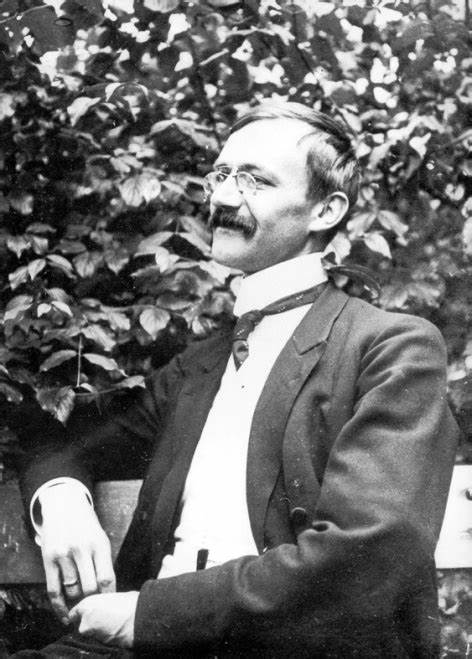
Karl Barth, Ted Peters, and Sociobiology:
A Cultural Narrative Approach[1]
Paul S. Chung
Abstract. This paper explores public theology and scientific reasoning through the lens of cultural narrative. I seek to synthesize narrative theology and the intelligible universe (Karl Barth) with the theology of prolepsis (Ted Peters). A constructive interpretation of the relationship between religion and science is presented within a phenomenological framework, synthesizing Barth’s theory of concursus with postmodern holism. Thus, I aim to elaborate on the doublet between reconciliationand prolepsis in addressing epigenetic ontology and dissipative structures in relation to the luminosity of the creaturely world. This approach challenges sociobiology and its genetic determinism.
Introduction
Public theology is a form of public discourse grounded in a theological understanding of reality. Theology provides the ontology upon which the public theologian addresses the wider culture ethically, politically, and prophetically. In this paper, I outline a proleptic ontology that justifies lifting up a positive vision of our society’s future based upon God’s promise for a redeemed creation.
In the biblical context, prolepsis is connected to the drama of narrative and centers on Jesus Christ as the fulfillment of God’s promise and future. The proleptic nature of God’s kingdom is evident in Jesus’s use of secular parables, which reflect a similarity-in-difference in his witness to the coming Kingdom of God. These parables characterize analogical narrative within cultural life settings and serve to express the multiple meanings of words or ideas across different contexts. Therefore, in this essay, I argue for the role of narrative and prolepsis with regard to the doublet of reconciliation and eschatology.
To accomplish this, I first undertake a thick description of proleptic hope within a phenomenological framework that I deploy for a biblical concept of prolepsis. Such conceptual clarity engages with a sociology of narrative identity and integrates an intentional arc into the discourse on religion and science.
Second, I compare Barth’s narrative theology of creation, science, and divine concursus with Ted Peters’s theology of prolepsis, divine action, and postmodern holism. I seek discourse clarification by exploring the concepts of dissipative structures and autopoiesisat the cellular level, incorporating epigenetic constellations into a theology of the lifeworld. This epistemic position breaks with process thought, emphasizing creativityand opennesswhile offering a contrast to genetic determinism.
Third, I examine Peters’s critique of sociobiology alongside the work of Deborah Gordon, a systems biologist at Stanford University. Gordon challenges E.O. Wilson’s ant research and its genetic determinism, arguing that it is imbued with a politically charged version of social Darwinism and its attendant power absolutism.
I conclude with a reflection on a public theology of science grounded in an organismic view of life, which undergirds a cultural evolution of religion shaped by narrative and theoretical reasoning. This becomes particularly necessary to affirm the biblical narrative as a resource for advocating on behalf of subaltern publics within social stratification.
Prolepsis within Narrative
Prolepsis plays a crucial role in Aristotle’s rhetoric, where it is used to anticipate and address potential critiques or counterarguments. The concept of prolepsis was further developed in post-Aristotelian Greek philosophy, particularly by the Stoics. Prolepsis, understood as a preconception or innate inclination, includes fundamental ideas (such as the concepts of God or the Good) that shape human ethical reasoning and rational action.
However, as a rhetorical concept, prolepsis functions as an anticipatory and eschatological term that represents the future within the present. In essence, prolepsis activates rhetorical knowledge and reflects a human cognitive response to an unknown future event.[2]
The proleptic structure can be reinterpreted through the lens of phenomenology, particularly in the work of Edmund Husserl, where prolepsis signifies an intentionality of protension. Husserl articulates a radical synthesis of past and present, in which retention (as re-remembrance) gains vividness through anticipation. Every act of memory inherently contains expectation-intentions, animated by protensions—anticipatory movements—shaped by the influence of the lifeworld.[3]
Against the technization of the world, Husserl defends the intuited, prescientific nature of our surrounding world—our everyday lifeworld—in which horizons can only be opened through reflection on this lifeworld and humanity as its subject. Thus, the scientist must develop the ability to inquire back into the original intention of all the meaning structures and methods.
If this is achieved, then scientific reflection opens the gates to a new dimension in advance through proleptic intentionality based on immanent critique, horizon intentionalities, and emancipation.
When thrown into alien social and cultural spheres—such as in Africa, China, or India—it is discovered that their truths are by no means the same as those of Europe. Yet, despite all relativity, it is crucial to begin with what makes the objects of the lifeworld common and identifiable in any context. This general structure, in its concrete universality, is not itself relative: Everything that exists relatively is bound to the general structure of the lifeworld.
Fundamentally, this attitude of self-reflection and inquiry toward the world’s horizon moves thought away from the sedimented conceptual systems of tradition, which are rooted in prejudices, obscurities, and hierarchy.[4]
A questioning back to the lifeworld is not merely archonic in character. This is undertaken through epistemological procedures such as the adumbration of the first naiveté, thefusion of intentionalities, and the synthesis of diverse horizons of meaning within the lifeworld. The future of the lifeworld exerts a retroactive effect upon the present reality in connection with the past.
In the biblical narrative, prolepsis functions as a rhetorical mechanism and argumentative strategy—what may be called a proleptic suite—used to embed future events within the framework of the vivid present (E.g., Ps 22:18; 87:1; Ezek 1:1). A striking example appears in Matthew 27:52, where the resurrection of the dead is narrated in an anticipatory and apocalyptic manner. This narrative use of prolepsis transforms the reality of Jesus’s death and resurrection into the fulfillment of Jewish messianic expectations as a present, lived reality.
Meaning and Narrative Creature
The term ‘symbol’ accentuates the public character of any meaningful expression. In Clifford Geertz’s words, “culture is public because meaning is.”[5] A paradigm of meaning implies that sacred symbols function to synthesize the ethos of a people, as religious symbols formulate a basic congruence between a particular style of life and a specific metaphysic. This meaning paradigm turns human actions into an envisaged cosmic order.[6]
Furthermore, meaning is incorporated into action and cultural practice as an ensemble of texts, serving as a means of saying something about something. It aims at initial readability and social semantics in the social and cultural interplay, beyond mere psychological operations.[7]
Cultural practice as meaningful action is not separate from a narrative structure, in which an ordinary way of talking about stories constitutes a form of life that functions as a cultural world. According to Robert Bellah, a leading sociologist in the US, narrative is part of poetic symbolization emerging from the coherence of a story as a whole. Human beings are narrative creatures, with the telling self at the heart of human identity.[8] Narrative is the way humans understand their lives–both personal and collective identities. Therefore, narrative is also the source of ethics, politics, and religion.[9]
I find the significance of embodied perception to be crucial in the genesis of the objective world and its experience of perspective understanding, which interacts dynamically with the horizon of meaning and the practice of narrative to produce synthesis.[10]
The life of consciousness—cognitive, desirous, and perceptual—is underpinned by the intentional arc, which refers to the dynamic relationship between the body, the world, and the understanding of it. In the context of narrative, the understanding of stories is shaped by the body as it interacts with others in society and culture. Narrative is no longer an abstract structure but entails embodied experience and the meaning paradigm.
The intentional arc or spectrum, shaped by the influence of the lifeworld, lends narrative coherence to the skill of interpretation. It projects the past, the future, the human setting, and the physical, ideological, and moral situation, all while situating life within all these aspects.[11]
Therefore, scientific epistemology, the perception of God, and linguistic expression do not unfold in a vacuum or within timeless abstractions. Rather, these constellations are context-dependent and embodied within the historical and social realities. This approach offers a constructive tool for bridging Barth’s theology of natural science with Peters’s proleptic theology of nature.
Karl Barth: Narrative and Natural Science
Barth’s model of the relationship between theology and science is often identified as the Independence Model within discussions of creation and scientific inquiry. While he draws on the narrative form of the Hebrew saga in his doctrine of creation, Barth also acknowledges that natural science operates with a legitimate autonomy beyond the theological account of God’s creative work (CD III/1: ix–x).[12]
In the narrative form of the Hebrew saga, sagas often embody a divinatory and poetic historical narrative, offering an intuitive and imaginative portrayal of the primal, pre-historical reality of the people of Israel, while still containing the events of history.
Thus, the narrative saga within divination and poetry arises as distinct from history, yet maintains a critical connection to the Babylonian myth. The biblical belief in creation, as expressed in tohu wa-bohu in Gen 1:2 (also Jer 4:23;Isa 34:11), originates from Israel’s experience of Yahweh’s acts in history. This refers to tohu(waste, void, and emptiness in connection with the Babylonian Tiamat) and bohu (vacuum or emptiness in connection with the Phoenician and Babylonian goddess Bau) (CD 3/1: 104).
Fundamentally, the action of God in creation is deeply intertwined with the course of history. For example, creation, as symbolized by the separation of light from darkness, signifies God’s grace and emancipation. This is reflected in the historical actions of the God of Israel during the Babylonian captivity and points forward to the death and resurrection of Jesus Christ in 2 Cor 5:17 (CD 3/1: 110).
Barth’s ‘Christological concentration’ reinforces the saga narratives, which offer rich material for the human imagination to draw analogies, make comparisons, and provide clarifications within the narratives. Through their explanatory and semantic effects, these sagas transcend the epistemological divide between the divinatory and poetic activities of the biblical tradition, history, and scientific reasoning.
According to Paul Ricoeur, an analogical continuity exists between narrative events and historical intentionality against the epistemological break between sagas and history. In a narrative of events, human thought and action are the predominant forces.[13]
In his analogical narrative, Barth distinguishes saga narrative from archonic myth, employing the analogy of operation to address the relationship between primary and secondary causes within the double agency of concursus.
Barth gives to creaturely life, as secondary cause, its own autonomous activity through God’s gracious love, goodness, and freedom. This implies God’s cooperation (concursus) with the creature, allowing it to act freely.
Barth critically engages with Thomas Aquinas, who followed in the footsteps of Aristotle. Aquinas emphasizes an ontological similarity with God, without enough consideration of God’s sovereignty and freedom. That is why Barth argues that Aquinas places the creature alongside God (CD III/1: 102, 133).
Barth upholds the Lutheran legitimacy of “the relative autonomy of creaturely activity” within the framework of double agency between the primary cause (God) and the secondary cause (creatures) (CD III/3: 92, 97).
God does not deprive the creature of its freedom and autonomous activity within creation. Instead, God accompanies, collaborates with, and completes it through eternal love, embracing it in accepting solidarity. Therefore, there is no need to separate world history and natural history from salvation history.
Barth’s use of analogical reasoning becomes crucial in affirming the significance of natural science and technological achievement. He argues that scientific discovery—particularly the recognition of an intelligible cosmos—is indispensable, since human life depends on science and technology. These fields operate with working hypotheses and valid formulas, which remain a necessity, even if they are only provisional (CD IV/3.1:166).
Continuatio creationis and World logoi
According to Barth, there are world logoi, along with many other creaturely truths and intelligibilities. These are integrated and ordered to serve God, who fundamentally transforms and renews the world. They shine forth as expressions of God’s one truth (CD IV/3.1:157).
The present reality within the theatre of creation serves God’s future, illuminating the process of ongoing creation within the dynamic complexity of living systems. From this perspective, a theological concept of continuing creation—within the theatrum gloriae Dei—can be understood as God continually creating the universe through the emergent creativity and novelty of self-organizing life.
Therefore, Barth understands God’s providence not as continuata creatio (continued creation, which suggests an ongoing act of creation with God’s direct creative interventionat every moment), but as continuatio creationis (the continuation of original creation, which implies the unfolding or development of what God has already created) (CD III/3:8. 60).
As continuatio creationis, the created world functions both as a text to be deciphered and as its own reader and expositor, encompassing the evolutionary and ecological web of life. The intelligibility and intelligence of the divinely created universe and cosmos are manifest in myriad forms within this symbiotic network, embracing multiplicity, particularity, change, alteration, and diversity. Fundamentally, this complexity of life cannot be fully reduced to mathematical or other purely rational patterns of law.
According to Barth, God does not negate freedom, movement, process, or new beginnings within the evolutionary-ecological system, even though this system is marked by trial and error, extinction, and suffering. This perspective moves beyond scientific deism or the notion of God as a deliberate, intelligent designer. Instead, Barth emphasizes God’s presence in the simultaneous activity of grace and love, engaged in the perpetual cycle of coming and going. As he puts it, it is “not becoming without perishing, but not perishing without new beginning” (CD IV/3.1:144).
Ted Peters on Proleptic Ontology
Let us now turn to Ted Peters, who has developed a proleptic theology centered on God’s future. Peters begins with Easter, when the end of time appears ahead of time—proleptically—in the resurrection of Jesus Christ. This resurrection forms the foundation for Peters’s constructive reflections on the future and the advent.
The advent of God’s kingdom, already manifested in the person of Jesus of Nazareth, signifies the future renewal of all things. In this regard, Peters highlights the proleptic nature of the ultimate reign of God.[14]
Peters’s constructive method draws on Wolfhart Pannenberg, Jürgen Moltmann, Carl Bratten, and Karl Rahner to develop his notion of a cosmic proleptic eschatology. The cosmos, once created, is not left to unfold on its own. Rather, the original creation is related to ongoing creation under the guidance of God, who freely intervenes in natural and historical processes, bringing forth new realities in the future.[15]
Peters links futurum (the future) and adventus (the coming) for his concept of prolepsis, highlighting God’s arrival as an advent; it signals that something entirely new will emerge.
As a result, Peters understands futurum (often paired with venturum) as change, growth, progress, and newness that builds upon the past. The future of a seed growing in the garden is futurum or even venturum. Paradoxically, the future as growth is complemented and even made possible by adventus, “the invasion of the present by the power of what is yet to come.”[16] This is the radical dimension of futurity, the possibility of something new that is unprecedented and transformative.
Futurum and adventus complement one another every moment. The power of God’s adventus liberates the present moment from total determination by past causes. In ordinary time, God’s adventus offers to the present moment an array of possible, probable, and preferred futures to be actualized. This is the divine origin of contingency in nature and what we humans experience as libertarian free will. It is the divine enlistment of the creation into the task of co-creation. Here is the central ontological point: it is adventus that makes futurum possible through limited liberation from past causal determinism.
The term, adventus, also refers to God’s eschatological transformation of all things, resulting in the consummation of redemptive history. Adventus is symbolized in the New Testament by new creation, the kingdom of God, and the New Jerusalem. At the advent of the New Jerusalem, God can say what is already recorded in Genesis 1:1-2:4a, “behold, it is very good.” Until the advent of the eschatological fulfillment, one can only say proleptically that the creation “is very good.”
The two uses of adventus together constitute Ted Peters’s proleptic ontology. Each moment, it is the eschatological New Jerusalem that liberates us from total past causation and opens us to an array of transformative futures. The eschatological consummation is as close to us as the next moment. God’s final future is at work right now, contributing to our future as futurum. The fullness of God’s kingdom is nigh, proleptically nigh.
Ted Peters and Thermodynamics
Peters’s proleptic theology also incorporates Ilya Prigogine’s concept of dissipative structures and the arrow of time into his eschatological panentheism. God’s creatio ex nihilo anticipates God’s novum—the ultimate indwelling and rest (1 Cor. 15:28).
Prigogine’s research on the thermodynamics of nonequilibrium systems reveals that the arrow of time is irreversible on the macro scale, moving from the past through the present and into the future. This signifies that the universe is finite in time, possessing both a beginning and an end. However, this end does not necessarily imply a frozen or static death of the universe.
Rather, the increase in entropy in an open system far from equilibrium is connected to the ongoing creativity of the dynamic world, arising from the interplay of randomness and chance. When such a system reaches a bifurcation point, it becomes indeterminate regarding its future direction—whether it will descend into further chaos or leap forward to a new and higher level of order.[17]
The arrow of time is linked to the emergence of higher orders of life in states “far from equilibrium.” This view highlights the organism’s ongoing relationship with its environment as a complex, evolving system. For Peters, thermodynamics provides scientific evidence for understanding cosmic time as linear in its overall direction. The future will differ from the past. The future will differ from the past because God is drawing all things toward their eschatological fulfillment.
Postmodern Holism, Epigenetic Constellation, and Autopoiesis
Many theological scholars in the kenotic school—Evangelical open theists and Whiteheadian process theologians—offer a variant of the free-will defense to explain theodicy. Accordingly, God withdraws divine power and allows creatures to fill the gap with human power; they replace divine activity with freely elected creaturely activity that contributes to either suffering or healing. The self-limitation of God corresponds to creaturely freedom to influence the course of events. For example, kenotic theologians can therefore ascribe responsibility to natural selection in evolution for speciation and for survival-of-the-fittest. God is thereby relieved of the responsibility of creaturely suffering because God is absent. In short, kenotic theorists count on God’s withdrawal to account for contingency in nature and libertarian free will at the human level.
In contrast to the kenotic theologians, Peters declares that it is God’s power – not God’s absence – that gives freedom to human history. Ontologically, it is the exertion of divine power in the form of adventus that counters the deterministic forces of past causation at every level of reality. Human free will is but one of the many gifts of freedom enjoyed by a natural world that takes on the quality of unpredictable historicity.
Peters endorses Barth’s theology of concursus and the model of double agency, where God’s power—expressed as grace—enables rather than overrides human freedom. Within this theology of concursus, divine causation operates upon secondary causes not to dominate them, but to continually sustain and liberate their freedom.
Beyond this, Peters advances a theology of prolepsis grounded in a postmodern notion of holism: The whole of creation is greater than the sum of its parts. In this view, divine action, rooted in God’s creation from the future, is exercised through top-down causation, shaping the evolutionary and ecological process from the eschatological horizon.[18]
Postmodern holism embraces a systemic view of life, emphasizing the interrelatedness of living organisms within networks of interaction between wholes and parts. Rooted in the organismic view of life, holism underscores the dynamic interplay of components within a living system.
If holism is described as the operative force in the evolution of organic life interacting with the natural environment, then all organisms are characterized by their strivingtoward a lifeof increasing complexity.
At this point, I take a step further in addressing postmodern holism by examining an aspect of an organism’s life through dialectical interaction within a historical and social context. The historical-social spectrum allows me to pursue conceptual clarity regarding the horizon of evolution as co-emergence—understood in terms of organismal development and its epigenetic dimensions—leading to emergent holism in networks and dissipative structures. To be is to be embodied, and thus, to be is to construct the life-world, which carries with it its future.
For example, biological systems such as cells are autopoietic as dissipative structures. They are self-producing and maintain their structure through circular processes. Such systems underscore the autonomy and coherence of living systems while remaining open to external influence.[19]
Therefore, I suggest autopoiesis is a dissipative structure within the cellular network, which challenges reductionist notions of genetic determinism. For instance, histones, basic cell proteins, further illustrate this. Each of the eight core histones possesses a short tail that can undergo chemical modification by histone-modifying enzymes within the nucleus. Within chromatin-remodeling complexes, DNA methylation functions as a central epigenetic mechanism, modulating gene activity and expression in diverse and dynamic ways.
Fundamentally, these epigenetic modifications are not fixed; they are responsive to environmental influences such as diet, exposure to pollutants, and psychological stress. Accordingly, the concept of the social construction of the epigenome can be made within a broader framework of biological and cultural stratification. This approach reinforces the connection between biology and society, recognizing the layered and interactive nature of genetic expression, which is embedded within sociocultural contexts.[20]
New Vistas: Life-word, Dissipative Structures, and Process Metaphysics
The epigenetic constellation is not merely grounded in process thinking but is also future-oriented, involving a proleptic transformation of reality through retroactive impact, as seen in the vision of the new heavens and new earth.
In Whitehead’s framework, actual occasions refer to the fundamental building blocks of reality—events that unfold through time as a creative act or self-organizing process. Occasions of experience are influenced by both their past and their future, as articulated in the central concept of prehension. This affirms that an occasion grasps or incorporates past events through a process of creative advance—the unfolding of time and events in a non-linear fashion.
The flow of time is more akin to a creative process where the future and the past are dynamically interwoven in an ongoing, interactive way. This allows a future event to alter or redefine the way past events are experienced. A process-oriented form of retroactive ontological influence can be seen in how the significance of past events is shaped by the way future occasions prehend them.[21]
However, if present and future experiences alter the significance of past events, the concept of retroactive causality is not necessarily confined to process metaphysics. In Barth’s view, God’s eternity refers to the source of time—the unity of past, present, and future—rather than the negation of time. God condescends to the creature through the utterance of the Word, accomplishing divine work in time (CD III/1:69). The concept of creation, as seen in divine ongoing creative action, makes possible the emergence and persistence of creaturely reality.
In his doctrine of the light of life (IV 3/1: §69), Barth addresses the relationship between God, the luminosity of the creaturely world, and the ecological web of life, without recourse to the Word of reconciliation (CD IV 3/1: 142).
I place the entirety of cosmic existence and the life of nature within the regime of God and the lifeworld, as part of the science and religion dialogue. Christological concentration, in this regard, affirms that the world is radically transformed and renewed by the eternal Word of God, for the integration, institution, and conscription to serve in view of the gloria Dei and its theatrum (CD IV/3.1: 157).
Dissipative structures coexist in all living systems, implying the coexistence of structure, process, and change in a state of nonequilibriumand nonlinearitythrough multiple, catalytic feedback loops in interaction with and openness to the lifeworld.[22]
Living structure is not a record of previous development and that which has accumulated and gradually evolved. New structures and forms of order can emerge through the process of irreversibility and the passage of time. The evolutionary-ecological system is framed in terms of intentionality, evolvability, embodiment, and the unfolding of the world in openness to what is to come.
The Problematic Regime: Barth and Whole-Part System
The God of life moves in concursus with all living creatures, bestowing freedom, autonomy, and creativity as gracious gifts. These gifts are offered in love and accompany through trials, extinction, death, and even recurrence. To be human is to have a future.
Proleptic holism remains both critical and central to Barth’s insight into the natural and cosmic interrelationship of all things within a whole–part system. As he writes: “The general divides off into the particular and the particular is subordinated to the general. The whole is only in the part, yet the part, too, is only in the whole” (CD IV/3.1, p. 144).
This two-way interaction between whole and part reveals patterns within creaturely existence. It discerns recurrence within alteration, identity within difference, and ordered qualities, diversities, and relationships within the ongoing, unbroken rhythm of creation (cf. Gen 8:22).
The intelligibility and intelligence of the cosmos point to something lasting, persistent, and constant. Yet, this constancy does not exclude the many, the particular, the changing, or the diverse. Rather, it includes continual beginnings, cessations, and new beginnings. It is a perpetual coming and going marked by discovery, concealment, and rediscovery.
Such a narrative vision of complexity and emergence suggests an analogy of correlation—a divinely ordained concordat with the world (CD IV/3.1. 142–44)—in which creation reflects both God’s dynamic action and the patterned coherence of the created order.
In the two-way interaction between wholes and parts, God acts through the matrix of secondary causes—the theatrum mundi (world theatre). Here, the truth of the cosmos is discerned in the coincidence and interplay between the objectively intelligible being and the subjectively intelligible perception. Human techniques operate through the application of natural laws, understood in the modern, narrower sense. However, these laws do not encompass the totality of cosmic existence. Rather, they reflect partial truths and relative necessities (CD IV/4.1: 146).
I refine Barth’s concept of double agency—particularly his understanding of the relationship between primary and secondary causes—in light of God’s action and the luminosity of the cosmos. Such a relation can be explored through the analogy of correlation, which provides a constructive bridge between divine initiative, creaturely response, and the reality of dissipative structures shaped by environmental factors.
This analogy of correlation allows me to address the whole-part system in terms of epigenetic ontology and its aspect of embodied cognition from God’s future. However, this conceptual constellation remains underdeveloped in Barth’s narrative and lacks clarity, thus inviting further theological elaboration.
God and Luminosity of the Cosmos
In the context of God’s goodness in creation, Barth expresses the analogy of operation within double agency. I extend this into an analogy of correlation between God and the luminosity of the cosmos and the natural world.
The existence of the created world discloses a reality marked by rhythm, contrariety, and regularity. This invites human beings into the active ordering and shaping of things—and thus into participation in freedom and its unfathomable mystery (CD IV/3.1. 110, 147).
This intelligible universe is not static but marked by the emergence of new forms of order, each possessing its own rhythm and internal coherence. It is a creation “bound by law yet also freely active,” revealing a cosmos in which divine order and creaturely dynamism coexist in meaningful, responsive interplay (CD IV/3.1: 149).
It is essential to bring Barth’s concept of double agency into conversation with the luminosity of the cosmos for a constructive synthesis. This approach offers a critical renewal of American neo-orthodox interpretations of Barth—such as Ian Barbour’s abstract formulation of divine sovereignty and creaturely autonomy—by grounding them more concretely in a narrative and theological context.[23]
Barth argues that the divine work of reconciliation does not negate or diminish the divine work of creation. Barth affirms that even contested modern expressions, such as the “revelation of creation” or “primal revelation,” can be given clear and unequivocal theological meaning (CD IV/3.1. 140).
There is an inner peace within creation despite the interplay of light and shadow. Its continual development is accompanied by persistent distress and lamentation. However, this contrariety is intraterrestrial and, therefore, relative within the evolutionary-ecological web of life because it has no relation to the fundamental antithesis between Creator and creature (CD IV/3.1:145).
The creaturely world—the intelligible and intelligent cosmos—and nature itself testify to the theatrum gloriae Dei, shining forth in God’s creation as both reader and expositor of itself, revealing its own lights, truths, speech, and words. It possesses its own existence, rhythm, contrariety, regularity, freedom, and mystery. The world logoi are neither extinguished nor negated. Rather, they are integrated, relativized, and ordered in service to the ministerium Verbi Divini.
Barth’s narrative approach to creation and the luminosity of the cosmos preserves theological depth while maintaining resonance with scientific inquiry. This belongs within a new regime or framework for studying Barth and the natural sciences.
Prolepsis, Systems Biology, and Sociobiology
In Evolution from Creation to New Creation (co-authored with Martinez Hewlett, 59–69), Ted Peters undertakes a genealogical analysis of Edward O. Wilson’s Sociobiology: The New Synthesis (1975), tracing its intellectual lineage back to social Darwinism and the eugenics movement in the American context. Peters argues that this legacy—though largely unacknowledged—remains embedded in the subconscious of the biologists within the academy.
Drawing on the neo-Darwinian emphasis on population genetics, Wilson proposes a strong genetic basis for the behavior of social insects. His position undermines the dynamic interplay between an organism and its phenotypic variation within its ecological context. It overlooks how organisms adapt and respond to environmental influences in ways that cannot be fully explained by genetics alone.
Furthermore, in Consilience: The Unity of Knowledge, Wilson attempts to subsume all aspects of human behavior—including culture, ethics, morality, and religion—under the framework of biological reductionism and genetic determinism. He famously asserts that “genes hold culture on a very long leash,” suggesting that genetic structures ultimately shape and constrain the human gene pool and, by extension, human cultural development.
Against Wilson’s sociobiology, Richard Lewontin writes convincingly in The Triple Helix: “Just as there can be no organism without an environment, so there can be no environment without an organism… The environment of an organism is the penumbra of external conditions that are relevant to it because it has effective interactions with those aspects of the outer world.”[24]
Likewise, Deborah Gordon, a systems biologist at Stanford University, extends beyond the gene myth of sociobiology. Her ecological approach to the collective behavior of ants is carried out in the dynamic interaction regulating system. It became an alternative to E. O. Wilson’s novel Anthill (2010) through an American academic study.
Wilson depicts the ants as having agency. However, they are compelled to sacrifice in military strategy for the queen, who is the fountainhead of the colony. On the contrary, Deborah Gordon contends that a real ant colony lacks a primary goal and functions as a complex system without central control. No ant cares about the queen’s death.[25]
Wilson’s portrayal of an ant colony (Anthill Ch. 22)[26] makes me uneasy (and even disturbed) because his assessment of the ant colony contains a metaphorical political overtone that is ideologically harmful. A vanquished ant colony’s queen is not allowed to live and is immediately destroyed. The conqueror is determined by its desire for absolute sovereignty, which cannot tolerate an alien queen.
Epilogue
As I mentioned in the introduction, public theology is a public discourse grounded in theology. Theology provides the ontology upon which the public theologian addresses the wider culture ethically, politically, and prophetically. How might an eschatological grasp of reality provide a foundation for a proleptic thrust in public theology?
In this paper, I sought to bridge Barth’s principle of Christological concentration with Peters’s prolepsis and postmodern holism through the lens of the lifeworld and the meaning horizon of proleptic intentionality. I identify a regime of encounter in Peters’s appreciation of Barth’s concursus, which can be further developed in terms of the sociological study of autopoiesis and epigenetics.
The Christological concentration and prolepsis, in conjunction with postmodern holism, remain an undercurrent that informs my development of public theology and postcolonial implications, challenging genetic reductionism and determinism.
For a public theology of science, I suggest an organismic view of life that emphasizes the control of variation and the development of life from within. This organismic perspective is grounded in conserved core processes at the cellular level that not only sustain life but also facilitate phenotypic variation and evolvability: This is the capacity of organisms to evolve. I interpret evolvability through the lens of life-intentionality, a phenomenon that reflects the organism’s dynamic interaction with its epigenetic environment.
This scientific model allows me to break through the achronic fallacyof genetic determinism, which is framed within a two-factor determinism: genes plus environment.
As prominent biologists Marc Kirschner and John Gerhart observe, “History is also about the deep structure and history of societies. It includes their organizations, their capacity to adapt, their capacity to innovate, perhaps even their capacity to harbor cryptic variation and diversity.”[27]
Given this, cultural evolution operates through deep structures, developing the capacity for innovation and enabling the explanation of life’s intentionality and complexity through narrative, critical reasoning, and empathy.
Cultural narrative allows me to engage with the conceptual clarity of structure and history as essential to the life of an organism in epigenetic ontology. This drives the push of the past toward new wholes through its capacity for innovation. It also enables the explanation of life’s intentionality, complexity, and epigenetic holism, which underlie narrative, critical reasoning, and empathy.
Barth’s understanding of creation is structured within an evolutionary and ecological context. The created universe is both a text to be deciphered and its own reader and expositor. This theological vision of creation invites further development through a constructive dialogue with Peters’s proleptic theology, which envisions creation from the perspective of God’s future.
God is the all in all (1 Cor. 15:28), and God’s being is the principle of truly transforming reality through reconciliation and proleptic practice.
In the interactions between science and religion, it is essential to emphasize theological anthropology, wherein humans are collaborators with God. This aligns with Paul’s theology of grace and solidarity with the subaltern (1 Cor 1:28, “God chose the lowly things of this world and the despised things… to nullify the things that are”).
[1] This paper will be presented at the Academic Foundation of the Forum Between East and West (October 22, 2025) and should not be used without the author’s permission. I appreciate Prof. Ted Peters’s comments, which have been instrumental in strengthening my argument.
[2] Prolepsis in Ancient Greek Narrative: Definitions, Forms and Effects, eds. Saskia Schomber and Aldo Tagliabue (Berlin, Germany: De Gruyter Brill, 2024).
[3] Husserl, “A Phenomenology of the Consciousness of Internal Time.” in The Essential Husserl: Basic Writings in Transcendental Phenomenology, ed. Donn Welton (Bloomington and Indianapolis: Indiana University Press, 1999), 199.
[4] The Mathematization of Nature, ibid., 362-373.
[5] Clifford Geertz, The Interpretation of Cultures (New York: Basic Books, 1973), 12.
[6] Ibid., 90.
[7] Ibid., 448.
[8] Robert Bellah, Religion in Human Evolution: From the Paleolithic to the Axial Age (Cambridge: Belknap Press of Harvard University Press, 2012), 34.
[9] Ibid., 280.
[10] M. Merleau-Ponty, Perception of the World (London: Routledge, 1962), 72.
[11] Ibid., 136.
[12] Karl Barth, Church Dogmatics III/1: The Doctrine of Creation (=CD) (London: T. & T. Clark, 2004), ix-x..
[13] Paul Ricoeur, Time and Narrative vol.1. Trans. K. McLaughlin and D. Pellauer (Chicago and London: The University of Chicago Press, 1984), 151.
[14] Ted Peters, God—The World’s Future: Systematic Theology for a New Era. 3rd ed.(Minnesota: Fortress Press, 2015), 321.
[15] Ibid., 320.
[16] Ibid., 321.
[17] Ibid., 132.
[18] Ibid., 142. 146.
[19] H. Maturana, “Autopoiesis.” in Autopoiesis: A Theory of Living Organization, ed. M. Zeleny (New York: Elsevier North Holland Inc., 1981), 21-32.
[20] Maurizio Melonia and Giuseppe Testa, “Scrutinizing the Epigenetics Revolution.”BioSocieties (2014) 9, 431–456 doi:10.1057/biosoc.2014.22.
[21] An excellent analysis of Whitehead’s process philosophy see Ted Peters (2022), ‘Can we locate our origin in the future? Archonic versus epigenetic creation accounts’, HTS Teologiese Studies/ Theological Studies 78(2), a7656. https://doi.org/ 10.4102/hts.v78i2.7656.1-8, especially footnote 4.
[22] Ilya Prigogine and Isabelle Stengers, Order out of Chaos (New York: Bantam, 1984), 153.
[23] I. Barbour, Religion and Science: Historical and Contemporary Issues. Rev. and exp. ed. (San Francisco: HarperSanFrancisco, 2000), 311.
[24] R. Lewontin, The Triple Helix: Gene, Organism, and Environment (Harvard University Press, 2002), 48-9.
[25] Gordon, “Colonial Studies” BOSTONREVIEW.NET, Sep/Oct. 2010.
[26] Wilson, Anthill: A Novel. (W.W. Norton & Company, 2010).
[27] Marc W, Kirschner and John C. Gerhart, The Plausibility of Life: Resolving Darwin’s Dilemma (New Haven: Yale University Press, 2005), 264.