Public Theology of Science and the Semantic Theory of Individuality
Paul S. Chung
Abstract
This essay evaluates Ian Barbour’s critical realism and process philosophy through the lens of semantic realism, a framework in which meaning and individuality emerge from autopoietic and epigenetic dynamics. Semantic realism holds that emergent patterns of agency and meaning possess ontological significance across biological, cultural, and theological domains. Drawing on theories of intentionality, embodiment, and the lifeworld, the essay analyzes how science and religion co‑constitute one another through narrative and symbolic mediation. The central thesis is that semantic realism offers a more adequate account of divine–world interaction than critical realism or process metaphysics because it grounds emergence, individuality, and meaning in the dynamics of living systems.
Introduction
Ian Barbour is widely recognized as a pioneer in establishing the modern dialogue between science and religion. His work has been central in demonstrating how scientific knowledge can be meaningfully correlated with religious beliefs, practices, and experiences. Barbour introduced critical realism as a mediating position between classical realism, instrumentalism, cultural relativism, and idealism. Building on critical realism, he identified three primary approaches to integrating science and religion: (1) natural theology—using scientific insights to support arguments for God’s existence; (2) theology of nature—reinterpreting religious doctrines in light of scientific discoveries; and (3) systematic synthesis—constructing a unified worldview that weaves scientific and theological insights together.[1]
This chapter examines the contributions of critical realism to scientific method and to the ongoing effort to integrate scientific and theological inquiry. Barbour’s engagement with cultural narrative and systems biology is further refined through the lenses of paradigm theory and research‑program analysis. The chapter then explores a constructive encounter between critical realism and semantic realism grounded in autopoietic phenomenology, particularly in relation to embodied cognition, cultural narrative, punctuated theories of evolvability, and proleptic eschatology.
In this light, the essay argues that Barbour’s critical realism requires a deeper account of meaning, individuality, and emergence. I re‑ground critical realism within a semantic theory of individuality, showing that scientific construction is shaped not only by imagination but by the narrative, linguistic, and embodied structures of the lifeworld. This semantic‑emergent framework expands Barbour’s model into a public theology of living systems capable of addressing emergence, meaning, and proleptic transformation.
This essay expands Barbour’s critical realism by grounding scientific construction in the semantic structures of the lifeworld—narrative, embodiment, and emergent individuality—while affirming that plurality of lifeworlds does not entail relativism but reveals the concrete sites where universal scientific patterns become enacted and interpreted. This expansion of critical realism clarifies how universal scientific claims are enacted, interpreted, and tested within culturally inflected lifeworlds without surrendering their realist scope.
Placed adjacent to the four methodological guidelines of critical realism, semantic realism redefines the model of the science–religion interface by offering an embodied episteme, an epipoietic configuration of the research program, and a renewed account of meaningful life.
The emphasis on semantic individuality does not weaken the universality of scientific claims; rather, it identifies the concrete units through which universality becomes operative. In contemporary systems biology and neuroscience, individuality is not merely a biological boundary but an emergent informational structure—an autopoietic and epigenetic locus where meaning, agency, and constraint formation arise. Far from castrating science, semantic individuality provides the ontological site where universal patterns become enacted, interpreted, and transformed.
Scientific Models and Truth
Barbour identifies natural theology—especially in its intelligent design forms—as the most limited of his three approaches. Because it relies on pseudo‑scientific arguments and cannot sustain a robust science–religion interface, this essay moves quickly beyond natural theology toward a theology of nature and research‑program analysis, where critical realism and semantic realism can be positioned more constructively.
According to Ian Barbour, scientific models are not simply built step‑by‑step from data. Instead, they arise through creative imagination and analogy, since there is no direct logical path from raw data to full theory. These models and concepts are always tentative—open to revision as new evidence emerges—but they must still be taken seriously as ways of referring to the real world, even if they are not literal descriptions of it.
Barbour identifies four main criteria that guide scientific research: (1) Agreement with data – the theory must fit observed evidence. (2) Coherence with other theories – it should connect with and support a wider network of accepted ideas. (3) Scope – it possesses the ability to explain a broad range of phenomena, not just isolated cases. (4) Fruitful fertility – it contains the capacity to generate new insights, predictions, or discoveries.[2]
In critical realism, models are understood as tentative, partial, open‑ended, and paradigm‑dependent, especially when addressing the complex intersection of science and religion.[3]
In what follows, I propose a semantic realism that relocates Barbour’s critical realism from a representational and biologically reductionist framework into an autopoietic, epigenetic, and evolvability-based account of meaningful life.
Critical realism incorporates a theory of research programs to clarify how models relate to paradigms. Within this framework, Barbour introduces cultural‑linguistic theology as a model of independence between science and religion, drawing on postliberal emphases on narrative coherence and communal grammar. Yet Barbour resists the fragmentation that often accompanies postliberal particularism; instead, he seeks a coherent interpretation of experience that contributes to his broader pursuit of a unified worldview.[4]
Theory of Models and Paradigms
Barbour highlights both the similarities and differences in the role of paradigms within science and religion, while situating his critical realism in dialogue with Kuhn’s theory of paradigms.
For Thomas Kuhn, paradigms function as shared frameworks that guide normal science, and scientific revolutions occur when accumulated anomalies force a reconfiguration of fundamental assumptions. Paradigms shape what counts as data, resist falsification, and remain incommensurable insofar as they embody distinct constellations of beliefs, values, and heuristic models. [5] Barbour adapts Kuhn’s insights within critical realism by emphasizing that, despite paradigm‑dependence, rival programs still share data, cumulative evidence influences paradigm choice, and scientific judgment operates through commonly recognized criteria even without fixed rules.[6]
Kuhn’s Limitations and Paradigms in Science
In Kuhn’s view of science, incommensurability—the idea that different paradigms represent fundamentally different ways of seeing the world—tends to undermine the possibility of gradual, cumulative development in science.
For the taxonomy of semantic realism, I situate paradigm theory within the broader horizon of the lifeworld, where scientific paradigms depend on ongoing interaction and mutual understanding among adherents of rival research programs. The lifeworld—the background of shared meanings, practices, and cultural significance—functions as the implicit foundation of any scientific community. Scientific inquiry never operates in a vacuum; its concepts, methods, and research programs are shaped by the social relations, cultural norms, and semantic frameworks that scientists inhabit.
The lifeworld influences scientific understanding, while scientific understanding, in turn, reshapes the lifeworld. This interaction involves a continual search for anomalies—puzzles that challenge existing frameworks and provoke renewal. Through this intentional cycle, rival research programs compare, contest, and engage with one another in the effort to find workable solutions. Such inquiry is autopoieticin its self‑referential renewal, yet remains structurally coupled with neighboring programs as well as the epigenetically stratified lifelines that shape scientific practice.
Epigenetic Configuration and Scientific Guideline
If the lifeworld is the pre‑theoretical horizon of everyday understanding as the general and relational structure of experience—then the lifeworld constellation is the structured, multi‑dimensional configuration of biological, historical, cultural, social, symbolic, and semantic elements that compose and organize the lifeworld as a coherent reality through its interaction with epigenetically stratified lifelines. The latter provide the biological and ecological strata—the concrete and developmental conditions—that make such meaning possible and intelligible, forming the basis of embodied resilience.
Therefore, epigenetic lifelines, beyond mechanisms of DNA methylation and histone modification, refer to themulti‑level architecture of life conditions—biological (neurobiological plasticity and perceptual attunement), social (education, norms, power relations, and race/gender/class stratification), cultural (narratives, symbols, and epistemic traditions), and ecological (material conditions and environmental pressures). Scientific inquiry is therefore generated in interaction with and within lifeworld conditions, not outside them.
This epigenetic architecture resonates with evolvability as articulated by Kirschner and Gerhart, where core conserved processes and facilitated variation provide the biological substrate for semantic resilience.[7]
This epistemic registry refines active biological adaptation and the organism’s plasticity as epigenetic resilience—including mechanisms such as DNA methylation and histone modification—which enable individuals to adapt to stress, trauma, or adversity in ways that preserve functional integrity rather than producing disorder. Scope in scientific guidelines refers to the epi‑poietic resilience of a scientific community, defined by its capacity to engage perturbation, irritation, and innovation. Such resilience reconfigures explanatory scope as the ability to undergo rupture at higher levels of organization and to bring forth meaningful forms of life through embodied, ecological, and developmental processes.
Scope cannot dispense with coherence which refers to the semantic‑discursive integrity of a research program, sustained through a dual analytical grid of proleptic adjacency and elective affinity. This grid enables patterned translation, genealogical resonance, and structural interaction, allowing research programs to maintain coherence. The explanatory framework can fill gaps through a regime of puzzles or anomalies by drawing on its epigenetic resilience—its capacity to remain open, adaptive, and responsive to perturbations across biological, social, cultural, and ecological lifelines.
According to Barbour, within his science–religion guidelines, coherence is associated with a Lakatosian theory of research programs in which a tradition remains committed to its central core while modifying auxiliary hypotheses as needed. Scope, by contrast, correlates diverse types of phenomena across domains different from those in which the theory originally arose. A satisfactory theory should therefore be comprehensive, offering a coherent account of diverse forms of experience through an overarching metaphysical framework.[8]
Barbour’s critical realism provides an important transitional framework, yet its reliance on the classic modern synthesis of evolution and a metaphysical notion of scope limits its capacity to engage contemporary systems biology and evolvability.
Where Barbour separates individual model‑building—grounded in representational correspondence—from the communal dynamics of research programs, semantic realism offers a single generative structure: semantic individuation. Through this structure, meaning arises across neural, personal, and cultural scales as a continuous process of emergence rather than as two separate epistemic acts.
Against a metaphysical strategy, a semantic‑critical orientation shows that research‑program coherence is inseparable from epipoietic scope within a hermeneutics of life. Epipoiesis configures the core not as a fixed nucleus but as a semantic center open to perturbation, relational renewal, and proleptic reconfiguration—thereby enabling identity‑preserving transformation and higher‑order innovation. This hermeneutic scope marks a conceptual breakthrough beyond metaphysical scope and into an embodied critical realism, where meaning arises through the body’s intentional engagement with a mind‑independent world.
Systemic Construction of Research Programs
Lakatos positions himself between Popper’s scientific positivism and Kuhn’s paradigm theory, proposing an intermediate framework. However, Lakatos argues that a scientific research program contains a hard core of central ideas that remain preserved and exempt from falsification, surrounded by a protective belt of more tentative auxiliary hypotheses.
For Lakatos, scientific truth is not relative or incommensurable but relational to a research program, advancing through the gradual replacement of a degenerating program by a progressive one.
Scientific rationality, in this view, is characterized by gradual progression within a shared framework of inquiry. When a promising alternative emerges to resolve anomalies—through evaluation, comparison, and new discoveries—adjustments are made within auxiliary hypotheses rather than altering the hard core of scientific truth. Ultimately, a research program may be displaced as a strategy if it ceases to withstand empirical and theoretical challenges.[9]
Barbour employs a theory of research programs for his process theology by treating the hard core of the Christian tradition—belief in God as creative love revealed in Christ—as its central, non‑negotiable commitment. Divine omnipotence, by contrast, functions as an auxiliary hypothesis that can be modified in order to accommodate the data of human freedom, evil and suffering, and the evolutionary history of life.[10]
According to Lakatos, the protective belt in its interplay with rival research programs must withstand significant challenges, often undergoing modification or even complete replacement in order to safeguard the integrity of the hard core.[11] Yet this raises a critical question: Should a research program be preserved even when it becomes increasingly degenerate?
Epipoiesis names the identity‑preserving transformation through which research programs, traditions, and lifeworlds reorganize themselves in response to perturbation, generating new meaning without abandoning their semantic core. Against Lakatos’s untouchable hard core, epipoiesis treats the core as a semantic center open to relational renewal, enabling cooperative evolution through dialogue, shared intentionality, bilingual translation, and the creative resolution of anomalies.
The Two‑Language Model: A Mismatched Discourse
Critical realism rejects the notion of a plurality of unrelated languages, thereby challenging the limitations of Wittgenstein’s theory of language games when applied too rigidly to the science–religion dialogue. George Lindbeck’s cultural‑linguistic model exemplifies this distinction. For Lindbeck, doctrines function as rules of discourse embedded within communal forms of life. According to Barbour, however, Lindbeck’s postliberal theology tends toward a non‑realist or instrumentalist position, emphasizing the particularity of each religious tradition as a self‑contained cultural system.[12]
Unlike the cultural‑linguistic model, Wittgenstein does not dismiss the importance of context‑sensitive translation or the family resemblances that shape language games. Rather, he highlights how words function as tools within particular activities and forms of life. His approach resists erecting rigid barriers between distinct domains and instead illuminates the fluid, practice‑embedded ways in which meaning is generated. Meaning is determined by use within a language game, following rules and purposes internal to that context; yet these games are always embedded within broader forms of life—the cultural, social, and embodied practices that make language possible.[13]
However, Wittgenstein tends to focus on discrete language games without articulating their structural coupling or adjacent relationality within the lifeworld. He does not account for the stratified inheritance of meaning across social, linguistic, cultural, and ecological layers that shapes how meaning is inherited, transformed, and transmitted.
Habermas extends Wittgenstein’s insight by emphasizing that language games and family resemblances are embedded within cultural forms of life governed by shared assumptions, norms, and communicative rationality. This implies a public discourse grounded in intersubjective relationships and ethical significance. The concept of rule‑following thus carries intersubjective validity for communicative symbols, rationality, and action.[14]
If language connects through a network of overlapping similarities rather than a single essence, then within the science–religion dialogue semantic realism can affirm that both theological and scientific claims aim at truth through analogical discourse, intertextual transposition, and the cultivation of meaningful forms of life. Language follows activity as the house of the lifeworld, situated adjacent to broader linguistic networks and embedded within wider cultural narratives. Science, likewise, is not isolated from its socio‑cultural environment but exists in an intertextual relationship—orstructural coupling—with religion, which functions as one of the primary cultural systems shaping human understanding and world‑construction.
Within this intertextual horizon, science and religion emerge as interconnected systems that co‑create meaningwithin the semantic register and its wider cultural field.
Language, Living Systems, and Autopoietic Self
Language is not a representational mirror of the world but the shared narrative space in which a lifeworld becomes intelligible, inhabitable, and meaningful. Shared narrative functions as the connective tissue of adjacency within a networked pattern of life. It is open to translation, shaped by its living environment, and forms a semantic horizon that determines how the world appears, rather than operating as a mere story. In this sense, language is the relational architecture through which a lifeworld becomes intelligible. Both science and religion are narrative‑constituted forms of life, each generating meaning through its own patterns of practice, symbolic grammars, and intertextual connections.
A theory of tessellating adjacency thus places distinct domains of narrative in patterned proximity, enabling transposition and illumination between scientific and religious communities without collapsing their particular identities. When each tile—each finite province of meaning—is placed adjacent to broader linguistic networks, new patterns emerge as ensembles of meaning, forming a structural whole of recognition and collaboration within an epi‑poietic configuration.
All living systems are autopoietic and embodied, defined by networks of dynamic processes that continually regenerate their own components and maintain operational closure in their organization. This biological insight—first articulated by Humberto Maturana and Francisco Varela—describes how a living system constitutes itself through recursive processes that sustain its identity while remaining structurally coupled to its environment.
Francisco Varela argues that minds awaken in a world not of our own design; we simply find ourselves already within it. We project ourselves from the lifeworld, and this embodiment situates cognitive science within a broader social‑ecological context. A new science of the lifeworld underscores the bodily dimension of intersubjectivity and links scientific inquiry with religious experience, particularly in traditions such as Buddhist meditation.[15]
Thus, embodiment becomes the junction point where autopoietic systems biology, phenomenological experience, and cultural meaning converge within an epi‑poietic structure. Here, science and religion are not rival explanatory systems but intertextual lifelines within a shared semantic ecology—each contributing to the ongoing formation of meaning within the relational architecture of the lifeworld.
However, Barbour argues that, “systems theory has had only limited success in representing the personal characteristics of human life.”[16]Yet he also recognizes the importance of complexity theory and is clearly open to insights from Stuart Kauffman and Ilya Prigogine, both of whom challenge the linear, gene-centered assumptions of neo-Darwinism. As he notes, the transmission of information in human societies occurs through memory, language, tradition, education, and social institutions, rather than through genes alone.[17]
While Barbour rejects sociobiology’s genetic determinism and emphasizes the creative, imaginative dimensions of cultural evolution, his framework remains tied to a representational and linear model of meaning.
Francisco Ayala, a prominent biologist engaged in the science–religion dialogue, interprets evolutionary discontinuity through the lens of population genetics. [18] His account does not address the non‑equilibrium cellular mechanisms through which discontinuity actually arises. In this broader trajectory, the cellular and developmental insights of Kirschner and Gerhart—coarse‑graining, facilitated variation, developmental plasticity, boundary identity, and conserved core processes—articulate a systems‑theoretical understanding of emergent biological meaning.
Contemporary systems biology further deepens this trajectory by focusing on semantic information—particularly in chromatin remodeling, epigenetics, and cybernetic network dynamics. Concepts such as coarse‑graining, structural coupling, the bringing‑forth of meaningful forms of life, and the Markov blanket illustrate how biological systems generate, process, and enact meaning beyond gene‑centered or equilibrium‑based accounts.
Building on the punctuated theory of evolvability, a concept of semantic individuality refers to the relatively stable form and boundary of a meaning‑bearing entity—an emergent identity produced through structural coupling within a network—then semantic individuation designates the generative process by which such identities arise, transform, and dissolve through shifting patterns of adjacency and structural interaction.
This semantic theory of individuality should not be confused with postmodern notions of narrative self‑construction; rather, it specifies the neurodynamic and epigenetic conditions under which meaning and agency emerge within a shared lifeworld. It does not impose a theological framework onto neuroscience; rather, it interprets established neurodynamic accounts of prediction, intentionality, and population‑level coordination as specifying the embodied conditions under which meaning and agency emerge within a mind‑independent world. According to Walter J. Freeman, a theoretical neuroscientist, neurons acting individually upon one another (microscopic) and masses of interacting neurons forming neuronal populations (mesoscopic) together enable us to engage with macroscopic phenomena such as our brains, our bodies, and the external world. Since our brain and mind are fundamentally committed to projecting ourselves corporeally into the world, our intentionality—or evolvability—is directed toward an end and cannot be restricted to the limbic system alone. Rather, the neuronal populations that compose the limbic system may be understood as key to grasping the biology of intentionality. [19]
My semantic theory of individuality incorporates prediction, anticipation, and intentionality as treated in neurodynamic theory, emphasizing that the brain is always an open structure oriented toward the future—toward a proleptic horizon. The brain’s intentional activity generates and assimilates meaning through learning and memory. In fact, perception is the organization of sensations and the construction of meanings—precisely what neuronal populations do, and this is central to understanding brain function.[20]
Evolvability, Semantic Realism, and Meaning‑Truth
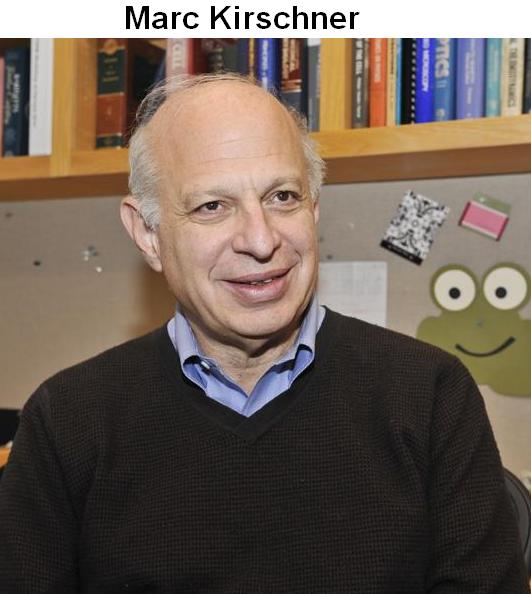
Following the work of Marc Kirschner and John Gerhart, a biological discourse of core conserved processes and facilitated variation at the organismic level provides a powerful explanatory framework for the variation side of evolvability. The organism’s intrinsic striving for life against death is expressed in bursts of innovation, plasticity, and the emergence of new forms of life.
History and society, likewise, cannot be reduced to natural selection driven by competition and struggle. They are shaped by the deep structures and histories of communities that generate meaning, rationality, and validity through religion, narrative, ethics, and ritual. Societal organizations and symbolic systems thus possess the capacity to adapt, reinterpret, and bring forth new worlds of possibility.[21]
This systems‑biological approach highlights evolvability as life‑intentionality, expressed through a non‑reductionist understanding of human personal identity—one that is dynamically embedded within a shared lifeworld and situated within the broader web of life.
Punctuated theory of evolvability provides a crucial explanatory framework for understanding how autopoietic living systems generate meaningful forms of life. Evolvability clarifies how life‑intentionality emerges through facilitated variation, modular architectures that produce surplus meaning, organismic plasticity, and the structural coupling between organism and environment that enables co‑constitution.
The biological theory of evolvability—grounded in the constellation between the deep structure of core conserved processes and the dynamics of facilitated variation—functions as a cardinal concept for shaping a semantic theory of individuality and its realism.
Moreover, this framework extends beyond individual organisms. It provides a powerful lens for understanding collective behavior in ecology, exemplified by Deborah Gordon’s work on ant encounters and the ecology of collective behavior, where coarse‑grained signals and local interactions generate emergent order without centralized control.[22]
Gordon’s ecological theory of distributed collective behavior provides a crucial axis for opening the semantic modernity that a theory of individuality seeks to articulate. Her analysis of ant encounters and coarse‑grained signaling exemplifies how meaning emerges without central control, thereby offering an empirical analogue to neurodynamic intentionality and the punctuated theory of evolvability.
Taken together, these insights demonstrate that the meaning‑making capacities of living systems cannot be adequately explained by representational models. Instead, they call for a semantic realism grounded in autopoiesis, evolvability, and the geometry of life.
Geometry of life is introduced as a term analogous to Husserl’s phenomenology of geometry, developed in critical dialogue with Galileo’s mathematization of the world—a mathematization that, in Husserl’s view, gradually fell into technization and thereby lost contact with the meaning‑giving ground of the lifeworld.[23] Whereas Galileo’s idealization transformed the world into a realm of abstract, quantifiable structures, the geometry of life seeks to recover the generative, embodied, and relational conditions under which meaning, form, and world emerge. It reinterprets geometry not as a detached mathematical formalism but as the dynamic patterning of life itself—an ontogenetic geometry constituted through structural coupling, epigenetic plasticity, and the shifting adjacencies that give rise to semantic individuation.
Such an epistemic stance illuminates the interface between self, other, and ecology, offering a constructive framework for dialogue between science and religion. The lifeworld becomes the semantic field in which these processes unfold, linking living systems, ecological networks, and cultural meaning into a coherent ensemble.
This interface model breaks through the postmodern stronghold of incommensurability and redefines semantic realism by incorporating AI‑generated information into a cybernetic ethical framework of second‑order observation. It highlights modernity, democracy, and ecology in terms of organic solidarity, the common good, and the co-constitution of science, religion, and society across stratified epigenetic lifelines.
In contrast, platform capitalism deploys an informational mode driven by data extraction, algorithmic optimization, and monopolistic profit motives[24]—constituting a distorted form of structural coupling that undermines the social‑ecological constellation.
However, economic life and its sustainability cannot be separated from the broader social‑ecological constellation, nor from scientific reflexive deliberation (phronesis) that orients technological and informational development toward the common good.
Accordingly, narrative, as a cultural form of life, is not an abstract construct but a world‑constituting practice that actively shapes our embodied identities and social imaginaries. Ian Barbour rightly underscores the centrality of narrative in religion, noting that narrative carries a deeper formative significance in religious traditions than in the scientific community.
Yet despite the recognition of narrative theology, Barbour argues that beginning with story and moving toward history, philosophy, and theology risks falling intocultural relativism. For him, narrative alone cannot secure the epistemic grounding needed for truth‑claims, since stories vary across cultures and may lack criteria for adjudicating meaning‑truth.[25]
However, Paul Ricoeur—whose work decisively shaped narrative theology—argues that narrative becomes intelligible through the plot (muthos), which configures disparate events into a meaningful whole, following Aristotle’s insight that a story is more than a sequence of episodes. Narrative understanding unfolds through a dialectic between the meaning of the part and the meaning of the whole, a hermeneutical circle in which each event gains significance only within the evolving configuration of the story.[26]
A concept of narrative identity within the semantic theory of individuality therefore stands in contrast to cultural relativism. Narrative identity is not an isolated cultural construct but is integrated into the lifeworld, which functions as a general‑relative structure: historically variable yet universally operative in preserving the continuity and boundary of identity. As an expression of semantic individuality, narrative identity reflects the stabilized patterns of meaning that emerge through structural coupling within a network of relations. It is precisely this emergent stability—rather than any fixed essence—that enables narrative identity to remain intelligible across diverse cultural contexts without collapsing into radical relativism.
When one is thrown into alien social and cultural spheres—whether in Africa, China, or India—their truths are disclosed within their own cultural contexts, which are not identical to Western forms of life. The lifeworld thus provides a shared, though culturally inflected, semantic field in which meaning‑truth can be discerned.[27]
Following Husserl, the lifeworld functions not as a relativistic plurality of worlds but as the universal, pretheoretical structure that makes cultural variations of meaning possible and comparable. Within this horizon, semantic realism clarifies how culturally inflected forms of life provide the situated conditions under which universal scientific patterns become intelligible, testable, and communicable without compromising their realist validity. For scientific truth, Ian Barbour identifies four criteria within critical realism— (1) agreement with data, (2) coherence with other theories, (3) scope, and (4) fruitful fertility. These criteria together shape how science defines truth within a representational and model‑based epistemology.
Semantic realism reframes Barbour’s criteria by grounding truth in emergent meaning rather than in a restricted representational model of truth. It clarifies how meaning emerges through patterned adjacency within the lifeworld. Thus, truth is not reduced to logical positivism in the representational mode of correspondence but is understood as arising from embodied, relational, and network-based interactions. In this sense, semantic realism integrates the Kantian mode of representation into an embodied form of critical realism by showing how correspondence becomes meaningful within the lifeworld.
The four criteria of semantic realism are: (1)Embodied Episteme: Truth emerges from embodied interaction with neighbor and environment within a shared lifeworld, not from detached representation. Here, representation is Kantian in the sense that it is grounded in embodied experience and the limits of human cognition, not in Barbour’s logical‑positivist model of individualistic representation and correspondence. Barbour’s critical realism uses analogy as structural similarity. My semantic realism uses analogy as adjacency—cross‑illumination between neighboring domains. Barbour maps; I tessellate. Barbour compares; I generate meaning through synaptic crossings.
(2) Research Program Coherence through a Dual Analytical Grid:Truth arises in self‑referential communication and is further articulated through research‑program coherence generated by a dual analytical grid of proleptic adjacency and elective affinity. This grid enables patterned translation, genealogical resonance, and structural interaction, allowing research programs to fill explanatory gaps and sustain coherence while undergoing adaptive semantic plasticity.
(3) Epipoietic Scope: The scope of scientific inquiry is defined by its epipoietic capacity to engage perturbation, irritation, and innovation, preparing for innovation of life at higher levels of organization and for bringing forth meaningful life. Semantic realism identifies the lifeworld and semantic individuality as the preconditions under which representational mode becomes possible at all. The hermeneutic scope discloses the embodied and relational structures through which critical realism’s correspondence with a mind‑independent world is enacted.
(4) Configuration of a Form of Life (Fruitful Fertility): Truth is disclosed in the configuration of a form of life—the generativity of meaning, the emergence of semantic ensembles, and the formation of communities capable of sustaining flourishing. Scientific narrative functions as the articulation of enactedlife (lingua sequitur operari): it expresses what the lifeworld has already enacted, amplifying meaning through relational and ecological coupling.
In a semantic realist approach to science and religion, the interface model designates the field in which life‑based meaning is generated, and science and religion appear as two meaning‑modes that are mutually illuminating, co‑constituted, and shared within this lifeworld.
Epilogue: Process and Prolepsis
Ian Barbour has made a substantial contribution to defining the relationship between science and religion through his creative method of critical realism and process philosophy. In a systemic synthesis, Barbour develops an inclusive and coherent metaphysics—or worldview—by integrating insights from both science and religion, particularly through the lens of process thought.[28]
Process theology grounds coherence in metaphysical synthesis; semantic realism grounds coherence in epigenetic adjacency and lifeworld coupling. Whitehead locates the “future” in the prehensive (responsive) phase of an actual occasion, where the event’s relation to its inherited world is first constituted. At this stage, the occasion inherits the entire past actual world and receives the initial aim from God, establishing a fully past‑conditioned horizon for its becoming. It surveys a range of eternal objects—pure potentials—deemed relevant to its situation through this inherited past and divine valuation.
These potentials constitute what Whitehead designates as the open future. In the concrescent (self‑determining) phase, the event integrates these potentials and selects one pattern of definiteness, becoming a determinate actual occasion. Yet if the event surveys future possibilities only in relation to the past and the divine lure, then the future is already structurally past‑conditioned. Although self‑determination occurs in the concrescent present, the concrescent phase merely actualizes one of these pre‑given, already delimited potentials.[29]
Thus, the so‑called open future is not an operative horizon of novelty. Whitehead’s future is not proleptic but a structured set of potentials whose scope is determined by the past.[30]
Semantic realism—grounded in autopoietic and epigenetic emergence—provides a more adequate framework for divine–world interaction than critical realism or process metaphysics, because it accounts for emergent individuality, narrative meaning, and proleptic transformation.
In light of this, Bonhoeffer’s account of divine concursus, analogia relationis, and eschatology becomes central for a public theology of living systems shaped by semantic realism. “I am about to do a new thing” (Isa. 43:19) signifies that speaking of the beginning already implies an eschatological horizon grounded in the resurrection of Jesus Christ. [31]
The human being created in God’s image affirms that humanity is created in freedom, formed from the earth. The body belongs to the essence of the person—body and soul[32]—standing in contrast to genetic‑central or reductionist accounts of human life. God’s given grace stands at the center of life and orients creaturely existence toward the living God.
Along this line, public theology engages contemporary theories of life and meaning with full bodily significance, drawing on: the neurobiology of intentionality and embodied cognition; evolutionary developmental plasticity; punctuated and modular theories of conserved core processes; facilitated variation and evolvability; epigenetic autopoiesis and regulatory plasticity; decentralized and collective behavior in living systems
As Ted Peters suggests, “God creates from the future, not the past,” [33] indicating that divine creativity is not exhausted in an initial act but unfolds through emergent processes within the evolving cosmos.
Expressed in a Christological sense, God creates through divine concursus and from God’s recapitulating future (Eph 1:10), in which all things are gathered into Christ. Creation thus unfolds within the horizon of recapitulation, where God’s future draws creaturely life through the Spirit’s attractor into emergence, transformation, and participation in God’s final Rest.
The biblical God is not an actual entity among others but the One who goes ahead of us—the God who opens the future. Through divine concursus within the relational, emergent field of life, God continually inaugurates possibilities that no metaphysical system of world‑organism can contain, revealing the future as an open horizon rather than a predetermined structure.
God’s future breaks into the present as new creation, disclosed through the Spirit’s transformative power. In this way, the resurrection is both a past event and an eschatological emergence, drawing creaturely life into the horizon of God’s coming fullness.
Bibliography
Ayala, Francisco J. “Punctuated Equilibrium and Species Selection,” Back To Darwin: A Richer Account of Evolution. Ed. John B. Cobb, Jr. Grand Rapids, Michigan: Wm. B. Eerdmans, 2008.
Barbour, Ian. Religion and Science: Historical and Contemporary Issues. Rev. exp. New York: HarperSanFrancisco, 1990.
Bonhoeffer, Dietrich. Creation and Fall: A Theological Exposition of Genesis 1–3. DBW 3. Edited by John W. de Gruchy. Translated by Douglas Stephen Bax. Minneapolis: Fortress Press, 1997.
Freeman, Walter J. How Brains Make up Their Minds. New York: Columbia University Press, 2000.
Gordon, Deborah M. The Ecology of Collective Behavior. Princeton and Oxford: Princeton University Press, 2023.
Habermas, Jürgen. The Theory of Communicative Action, Volume 2: Lifeworld and System: A Critique of Functionalist Reason. Translated by Thomas McCarthy. Boston: Beacon Press, 2005.
Husserl, Edmund. The Essential Husserl: Basic Writings in Transcendental Phenomenology. Edited by Donn Welton. Bloomington and Indianapolis: Indiana University Press, 1999.
Kirschner, Marc W., and John C. Gerhart. The Plausibility of Life: Resolving Darwin’s Dilemma. New Haven: Yale University Press, 2006.
Kuhn, Thomas S. The Structure of Scientific Revolutions. 2nd ed. Chicago: The University of Chicago Press, 1962.
Lakatos, Imre. “Criticism and the Methodology of Scientific Research Programmes.” Proceedings of the Aristotelian Society, New Series, Vol. 69 (1968–1969): 149–186.
Peters, Ted. God—The World’s Future: Systematic Theology for a New Era. 2nd ed. Minneapolis: Fortress, 2000.
Ricoeur, Paul. Time and Narrative, Volume 1. Translated by Kathleen McLaughlin and David Pellauer. Chicago and London: The University of Chicago Press, 1984.
Srnicek, Nick. Platform Capitalism. Cambridge: Polity Press, 2016.
Valera, Francisco J., Evan Thompson, and Eleanor Rosch. The Embodied Mind: Cognitive Science and Human Experience. Cambridge, MA: MIT Press, 1992.
Whitehead, Alfred North. Process and Reality. Corrected edition. Edited by David Ray Griffin and Donald W. Sherburne. New York: Free Press, 1978.
Wittgenstein, Ludwig. Philosophical Investigations. Translated by G. E. M. Anscombe et al. 4th ed. Revised. West Sussex: Wiley‑Blackwell, 2009.
[1] Ian Barbour, Religion and Science: Historical and Contemporary Issues, rev. exp. (New York: HarperSanFrancisco, 1990), 98-105.
[2] Ibid.,110.
[3] Ibid., 123.
[4] Ibid., 88.
[5] “Postscript-1969,” in Thomas S. Kuhn, The Structure of Scientific Revolutions, 2nd ed. (Chicago: The University of Chicago Press, 1962), 175.
[6] Barbour, Science and Religion, 127.
[7] Marc W. Kirschner and John C. Gerhart, The Plausibility of Life: Resolving Darwin’s Dilemma (New Haven: Yale University Press, 2006).
[8] Barbour, Religion and Science, 159.
[9] Ibid., 132-4.
[10] Ibid., 134.
[11] Imre Lakatos, “Criticism and the Methodology of Scientific Research Programmes,” Proceedings of the Aristotelian Society, New Series, Vol. 69 (1968 – 1969), 169 [pp. 149-186]
[12] Barbour, Religion and Science, 88.
[13] Ludwig Wittgenstein, Philosophical Investigations Translated by G. E. M. Anscombe, et al. 4th Edition (Revised) (West Sussex: Wiley‑Blackwell, 2009), §§1–23, 65–71, 198–202, 241–242.
[14] Jűrgen Habermas, The Theory of Communicative Action 2: Lifeworld and System: A Critique pf Functionalist Reason, trans. Thomas McCarthy (Boston: Beacon Press, 2005), 19-20.
[15] Francisco J. Valera et al. The Embodied Mind: Cognitive Science and Human Experience (Cambridge, MA: MIT Press, 1992), 3-14.
[16] Barbour, Religion and Science, 292.
[17] Ibid., 257.
[18] Francisco J. Ayala, “Punctuated Equilibrium and Species Selection,” Back To Darwin: A Richer Account of Evolution. Ed. John B. Cobb, Jr. (Grand Rapids, Michigan: Wm. B. Eerdmans, 2008), 185-192.
[19] Walter J. Freeman, How Brains Make up Their Minds (New York: Columbia University Press, 2000), 35.
[20] Ibid., 18, 21.
[21] Kirschner and Gerhart, The Plausibility of Life, 264.
[22] Deborah M. Gordon, The Ecology of Collective Behavior (Princeton and Oxford: Princeton University Press, 2023),76.
[23] Husserl, “The Mathematization of Nature,” in The Essential Husserl: Basic Writings in Transcendental Phenomenology, ed. Donn Welton (Bloomington and Indianapolis: Indiana University Press, 1999), 337-363.
[24] NickSrnicek, Platform Capitalism (Cambridge: Polity Press, 2016).
[25] Barbour, Religion and Science, 144.
[26] Paul Ricoeur, Time and Narrative vol.1. Trans. K. McLaughlin and David Pellauer (Chicago and London: The University of Chicago Press, 1984), 84.
[27] “Elements of a Science of the Life-World,” in The Essential Husserl, 373.
[28] Barbour, Religion and Science, 292.
[29] Alfred North Whitehead, Process and Reality, corrected edition, ed. David Ray Griffin and Donald W. Sherburne (New York: Free Press, 1978), 23–28, 40–43.
[30] Ibid., 46–47, 65–66.
[31] Bonhoeffer, Creation and Fall, 157-158.
[32] Ibid., 77.
[33] Ted Peters, God—The World’s Future: Systematic Theology for a New Era, 2nd ed. (Minneapolis: Fortress, 2000), 142.