I am interested in contributing a series of articles to the sociological study of Islam, public theology, and modernity in their alternative forms. Through this study, I aim to explore the significance of comparative religion for public theology and its practice in multicultural, pluralistic societies.
Abstract
In defining Islam as a religious and cultural system of meaning, it is crucial to move beyond Western scholarship and the Eurocentric discourse of Orientalism. A sociological approach facilitates Islamic public theology by highlighting the Meccan model and the cultural Renaissance as sources of immanent critique, solidarity, and emancipation. Rather than focusing on political extremism, I find it more meaningful to emphasize intellectual achievement and its legacy of enlightenment, particularly in relation to Islam’s path to civil society, the politics of recognition, and alternative modernity.
Keywords. Eurocentrism, Meccan Model, Islamdom, Nahda, Islam Protestantism, Politics of Recognition
Introduction
In recent years, there has been considerable debate about Orientalism, largely fueled by Edward Said’s provocative book of the same title (1978). Was the Orientalist portrayal of the East, particularly Muslim countries, essentially designed to facilitate the domination of those regions? In hindsight, it’s easy to see how Orientalist assumptions about Islam could have been used to justify European colonialism. Much of this nineteenth-century scholarship continues to be recycled and still impacts our world today.
When author Salman Rushdie published The Satanic Verses in 1988, the novel parodied the Prophet Muhammad and his family in extremely insulting ways. It was hailed as a masterpiece in Evangelical Christian circles in England and America, and it serves as evidence of the West’s lack of respect for Islam.
Against the stereotype of Islam, I present a theory of the religious construction of reality within a historical sociological framework, as evidenced in various forms of Muslim practice. As a system of meaning and social formation, religion can be shaped and organized in culturally variable ways across different regions of the world.
Each distinct life-world offers its own creative construction of religious discourse, forging unique paths to social cohesion, moral solidarity, and cultural modernity. Islam’s narratives can be articulated within a social scientific framework, where a historical-critical study of Islam is synthesized with the social phenomena of involvement, compromise, and change within the broader context of the universal history of religion.
At the dawn of the sixteenth century, Islam—represented by the Ottoman Empire in Anatolia, the Near and Middle East, North Africa, the Balkans, and other European regions; the Safavid Empire in Iran; and the Mughal Empire in South Asia—was the most vital civilization in the world, holding hegemonic potential over both the East and West.
“In the sixteenth century of our era, a visitor from Mars might well have supposed that the human world was on the verge of becoming Muslim.”[1]
At the onset of the modern era, Islamic civilization reached its zenith, both in terms of political power and cultural creativity. According to Marshall Hodgson, the term Islamdom in analogy to Christendom is in one sense “the society in which the Muslims and their faith are recognized as prevalent and socially dominant.” In other words, it implies “a society in which non-Muslims have always formed an integral, if subordinate, element.”[2]
In fact, until 1869, the Islamic world could hardly be considered to occupy a subordinate role when compared to Europe. However, after the opening of the Suez Canal in that year, European politicians, journalists, and scientists began to frame their power in terms of a radical divide, positioning Europe as the bulwark of modern civilization in opposition to the rest of the world, including Islamic countries. As 1869 marked a turning point in Europe-Islam relations, Oriental countries were increasingly judged from a Eurocentric perspective, situated within the structure of imperial power and colonial discourse.[3]
This comparative critical perspective is crucial for undertaking the religious construction of reality. I begin with a social scientific analysis of the elective affinity between religious discourse and both material and ideal interests among religious carriers, as they are invested in civilization, religious ethics, and power relations. This approach is essential for addressing a method of public theology and its semantic spectrum in a critically constructive manner.
Second, I will examine the two different models of Mecca and Medina in historical development, particularly with regard to religious scholars and political progress.
Third, I will explore Islam’s contribution to the European Renaissance, focusing on the cultural aspects of the Renaissance and Islam’s role in civil society. The intellectual landscapes of Baghdad during the Abbasid Caliphate and Córdoba in Spain during the tenth and eleventh centuries formed an intellectual constellation through which Islam could pursue an alternative path to modernity.
Fourth, the Islamic concept of philosophical enlightenment can be examined within its own context, particularly in the debate between theology and philosophy. This intellectual legacy can be meaningfully compared with Kant’s notion of Enlightenment.
Fifth, I will reframe the concept of public theology from a Christian perspective, encountering two narratives of Enlightenment within the Islamic tradition. However, I do not ignore the problematic political regimes that contribute to conflicts and Islamic extremism.
More crucially, I present an affirmative view of Islam’s contribution to civil society and democratic aspirations, offering an epistemological foundation for Islamic public theology within a philosophical frame of reference. This is especially meaningful when viewed alongside a critical strand of Protestantism that emphasizes the connection between the prophetic message and the people.
Finally, from a Christian standpoint, I aim to appraise Islam’s contribution to alternative modernity, Islamic public theology, the politics of recognition, and postcolonial civil society, all in critical and constructive formation.
Sociology of Islam, Modernity, and Elective Affinities
The sociology of Islam examines the historical development of Islamic civilization in relation to European civilization. This includes the translation of Greek classics, the transculturation of Islamic creativity, and the processes of adaptation and semantic innovation. Armando Salvatore, a renowned scholar in the field, underscores that Weber’s theory offers a crucial framework for applying sociological categories to understand the connection between Islam and modernity.[4]
The religious-secular domain undergoes rationalization, segmentation, and specialization within the broader context of historical social evolution and its scientific and technical paradigms. However, the religious sphere is not simply reduced or diminished through the process of modernization.
A theory of the religious construction of reality does not align with the secularization thesis, which posits that the differentiation between secular and religious realms inevitably leads to the gradual erosion, decline, and eventual disappearance of religion.[5]
Rather, I argue that Islam manifests in diverse forms of Muslim practice worldwide and serves as a powerful undercurrent in the politics of meaning, particularly in anti-colonial struggles, often operating outside established governmental structures. The politics of meaning unfolds in informal domains of communal awareness and cultural vibrancy, driven by sudden disruptions that stem from inherent energies and suppressed political trajectories.[6]
When analyzing the sociological significance of cultural themes, material interests, and political development, it is essential to assess how the agency of influential social groups or statuses shapes their impact on various ideas—whether religious, moral, practical, pedagogical, aesthetic, or otherwise.
For conceptual clarity, I distinguish narrative from discourse, imbuing the narrative horizon with the life-world, as it incorporates a critical perspective—encompassing immanent critique and emancipation—that challenges assumptions which have been taken for granted. Narrative is connected to moral solidarity, individual authenticity, and a cultural system of meaning. In contrast, discourse that represents or authorizes is constructed within a social episteme shaped by dominance, power relations, discipline, and exclusion. To understand the general or cosmic order of existence within the religious construction of reality, I consider two distinct forms: narrative semantics and discourse power.[7]
Public Theology: Method and Interpretation
The social scientific approach to religion, in terms of cultural systems of meaning, does not necessarily contradict a genealogical, critical position of religion in terms of power and discourse. The former characterizes religious tradition as an ensemble of practices and symbols—in other words, the semantic realm of the text influencing people’s moods and motivations.
Cultural systems of meaning can also be seen as the historical product of discursive formations and power relations, articulating the significance of historical and social contexts through power discourse in tandem. Religious practices and beliefs unfold within these contexts, where the role of power and discourse remains crucial in shaping what is considered “religious.”
To advance a theory of the religious construction of reality, I require a social scientific analysis of elective affinity in the daily practices of religious carriers, while considering the relationship between religious discourse, material interests, social formations, and institutional power. This analysis does not separate cultural practices and agencies from the institutional types of bureaucracy and power relations.[8]
Therefore, I do not find it contradictory to synthesize the cultural system approach to religion (meaning) with the genealogical approach to religion (power/discourse), because both meaning and power are integral to the religious construction of reality—particularly in relation to the life-world.
Accordingly, the hermeneutical retrieval of a viable concept of the life-world and its cultural practices provides a necessary background for public theology to explore the extent to which moral practice and the politics of piety in the Muslim women’s movement as a regime of effective history can serve as a source for immanent critique and emancipation on the Islamic path to modernity.[9]
It does not necessarily subordinate to a masculine system of domination, which must be problematized in the patriarchal regime of tradition, as sedimented and habitualized in the layer of obscurities and blind submission to unqualified despotic authority.
According to Fazlur Rahman, a hermeneutic of effective-historical consciousness fails to recognize the distinct epistemes of different historical periods—each marked by breaks, ruptures, differences, and transformations.
There are several distinct models or paradigms within the intellectual history of Islam: the eighth-century Mu’tazilite tradition, the tenth-century al-Ash’ari, the eleventh-century al-Ghazali, the philosophical enlightenment of eleventh-century Córdoba (including Avicenna and Averroes), and the fourteenth-century Ibn Taymiyyah.
Indeed, the Islamic intellectual tradition is far from monolithic. In every critique, modification, or revolution of a tradition, human consciousness is guided by critical rational thinking in engaging with history, tradition, and systems of knowledge, rather than being driven by effective-historical consciousness in a generic sense.[10]
Unlike Fazlur Rahman, however, I emphasize the significance of a moment of critical distance within his concept of effective-historical consciousness, synthesizing a horizon of diverse meanings within a critical view of power relations. Moreover, I propose an understanding of “effective history” (wirkliche Historie according to Foucault) alongside “history of effect” (Wirkungsgeschichte according to Gadamer), focusing more on analyzing the problematic regimes that marginalize those affected by the dominant history of religion and culture.
In fact, effective historical consciousness can be cultivated through a hermeneutical reading of sacred texts, treating them as sources of immanent critique, moral solidarity, and emancipation. This consciousness—or intentionality toward narrative—can then be explicated through a critical method that involves problematizing specific systems of knowledge, paradigms (episteme), discourse formations, institutional ratifications, and power relations within society and culture.
Public theology, when approached through this critical method of interpretation, takes on an archaeological character in both its textual reading and religious narrative. The archaeological theory of clarification supports public theology by enabling a genealogical analysis of the interconnections between religious discourse, sociocultural formation, institutional support, bureaucratic rule, and political governance.
Archaeological clarification characterizes public theology in its comparative study of religion, alongside a theory of the religious construction of sociocultural reality. This is achieved through the interplay of narrative/meaning and discourse/power, while questioning back to the life-world and its problematic regime of effective history. This critical and constructive clarification remains crucial, as it operates within the universal history of religion in its correlation.
This social scientific approach to religion enables Islamic scholars to conceptualize Islamic public theology, aiming to actualize Islam as a living religion by emphasizing its cultural vitality and social ethical integrity in response to contemporary challenges and public debates within civil society.[11]
Islam, Eurocentrism, and the European Renaissance
The term Renaissance (covering the period between the fourteenth and seventeenth centuries) stems from an intellectual framework that emphasizes a connection to Greco-Roman antiquity—an era perceived as foundational to the principles of modernity. Its earliest traces can be found in Italy, but the movement quickly spread across much of Europe, marking the transition from the Middle Ages to the modern age. [12]
European thinkers, grounded in humanism and the ideals of modernity, advocated a return to the classical past in order to rediscover the philosophical legacy of ancient Greece, famously captured in the works of figures like Lorenzo Valla and Desiderius Erasmus.
However, the term Renaissance itself is the product of an ideological construct, one that elevates Greco-Roman antiquity while aligning with the principles of modernity.
In the sixteenth century, the Islamic empires dominated sea trade in both the Mediterranean and the Indian Ocean, flourishing culturally. In 1453, Islam brought about the fall of Christian Constantinople, while Spain’s Reconquista, which began in 718, was completed with the capture of Muslim Granada in 1492. That same year, Christopher Columbus (1451-1506) made his ‘discovery’ of the New World in the Americas.
It is arbitrary to draw a strict opposition between Greek thought and Oriental thought without further examination, as the latter does not exclude Greece. In fact, Greece had a long-standing cultural and scholarly presence in Alexandria, Egypt. There is no inherent opposition between Greece and the East, since Egypt, Mesopotamia, and Persia interacted extensively with Greek civilization. The notion of these regions as “the East” is a later, artificial construct stemming from a Eurocentric worldview.
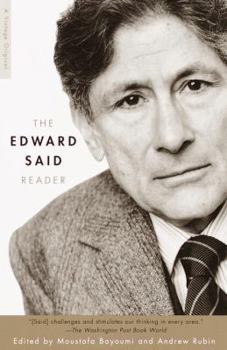
According to Edward Said, the social discourse of representation is shaped by power relations, creating an epistemological distinction between the Orient and the Occident. This distinction is embedded within a network of power, domination, and the complex reality of hegemony.[13]
The linguistic form of representation, especially in relation to the non-West, religion, race, culture, and gender, is produced and reproduced through socially constituted dispositions—what could be described as a linguistic habitus and authority that underpins the reality of Orientalism.
In his concept of Orientalism, Said posits a binary opposition between the West and the East. However, I argue that this dichotomy is inadequate. Said remains confined to a provincial perspective, framing the opposition between the West and the East as it is represented in European scholarship. He overlooks the extent to which the East and West have influenced each other in complex and mutual ways throughout the universal history of religion, cross-cultural exchange, and the world economy system since the Crusades.
Without acknowledging the historical correlation between the East and the West, an excessive critique of Orientalism as a Western hegemonic form of representation risks adopting a passive stance toward assumptions which have been taken for granted. Moreover, it could lead to an analysis that inverts the issue by constructing a fixed, imaginary concept of Orientalism as an independent entity, rather than recognizing the dynamic and interdependent relationship between the two.[14]
Within a few decades of the Renaissance, European powers came to dominate science, technology, commerce, and culture, leading to Europe’s claim to a monopoly on modernity. However, Eurocentrism is a multifaceted phenomenon that cannot be reduced solely to the Renaissance.
Following the fall of Constantinople in 1453 to the Ottomans, many Eastern scholars fled to Italy, bringing important books, manuscripts, and a rich tradition of Greek scholarship with them. It is no coincidence that 1492 saw both the discovery of the New World and the flourishing of the Renaissance.
Eastern influences are evident in the Western Renaissance and Christian development. The Renaissance sparked a twofold radical transformation that underpinned the modern world. The first transformation was the crystallization of capitalist society in Europe; the second was the European conquest of the world. [15] Major milestones in this history include the Reformation, the Enlightenment, the French Revolution, and the Industrial Revolution.
Major milestones in the history of the rupture with the past include the Renaissance, the Reformation, the Enlightenment, the French Revolution, and the Industrial Revolution.
The Renaissance was sparked by a retrospective pursuit of a return to the Greek classics. This movement, rooted in humanism, also played a significant role in shaping the emergence of the Reformation. While European modernism was forward-looking, the Renaissance itself was defined by a backward gaze, drawing inspiration from the cultural and intellectual achievements of Greco-Roman antiquity.[16]
Nonetheless, the Islamic contributions to the European Renaissance should not be underestimated, as they can be traced back to the translation of Greek philosophical works in Baghdad between 750 and 850 during the Abbasid Caliphate. Córdoba, the seat of the caliphate in Spain, was a hub of economic prosperity, as well as cultural and intellectual advancement, during the tenth and eleventh centuries. One of the caliph’s libraries—among seventy—was said to contain 400,000 volumes.[17]
In 1143, the Quran was finally translated into a Western language. Roger Bacon (1219/20–1292) took an interest in living Oriental languages, and Thomas Aquinas (1225–1274) was deeply indebted to Arabic translations of Aristotle’s works. A small group of translators in Toledo during the twelfth century was dedicated to the writings of Islamic philosophers such as Al-Farabi, Avicenna, and others.
This cultural narrative provides a historical framework for the politics of meaning that underscores a symbiosis and collaboration between cultures within a systemic whole. The dynamic interplay between religious vision and its associated practices shapes the sociocultural foundations of life, ethics, and global politics, thereby enriching the unique fabric of civilization. The cultural renaissance in Islam and its philosophical tradition stands in stark contrast to the views of the prominent French Orientalist Ernest Renan (1823–1892), who portrayed Islam as synonymous with extremism that is hostile to science and detrimental to human reason.[18]
In contrast, Hodgson argues that the carriers of religious vision occupy a pivotal position within the exceptional integrality of Islam. They shaped their lifestyle within the broader civilization, particularly in the realm of high culture. A civilization, in this context, is articulated and delineated in the most profound sense of the term.[19]
Nearly all aspects of daily life governed by Islamic law were defined and enforced by legal scholars, who largely operated independently from the central government. This system was sustained by charitable foundations (waqf), which helped preserve its autonomy. At its core, the system lies in the interplay between charismatic authority and legal authority, a dynamic that is central to the Islamic form of civil society.[20]
The Islamic system of charity funds and taxes (zakat) emphasizes effective governance within the framework of civil society, grounded in a public sphere with fluid communication rights and responsibilities. In the Muslim polity, the interdependence of civil society and official power is a shared reality, compelling both the state and its citizens to act with moral responsibility to advance the collective welfare. This civil society model holds relevance across national boundaries and variations in the modern Muslim world.[21]
Continued
Notes
[1] Marshall G. S. Hodgson (1993), Rethinking World History: Essays on Europe, Islam and World History (Cambridge: Cambridge University Press, 1993), 97.
[2] Marshall G. S. Hodgson, The Venture of Islam: Conscience and History in a World Civilization, vol.1:The Classical Age of Islam (Chicago and London: The University of Chicago Press, 1974), 58.
[3] Reinhard Schulze, A Modern History of the Islamic World, trans. Azizeh Azod (London and New York: I.B. Tauris Publishers, 2000),15.
[4] Armando Salvatore, “Beyond Orientalism? Max Weber and the Displacements of “Essentialism” in the Study of Islam”, in Andrew Rippin (ed.), Defining Islam: A Reader (London: Equinox, 1995), pp. 148–72.
[5] José Casanova, Public Religions in the Modern World (Chicago: University of Chicago Press, 1994), ch.1.
[6] Clifford Geertz, The Interpretation of Cultures (New York: Basic Books, 1973), 316.
[7] Talal Asad, Genealogies of Religion: Discipline and Reasons of Powers in Christianity and Islam (Baltimore and London: The John Hopkins University Press, 1993), 34-5.
[8] Ibid., 29.
[9] Saba Mahmood, Politics of Piety: The Islamic Revival and the Feminist Subject (Princeton: Princeton University Press, 2005).
[10] Fazlur Rahman, Islam and Modernity: Transformation of an Intellectual Tradition (Chicago: The University of Chicago, 1982), 10.
[11] Nadirsyah Hosen (2012), “Public Theology in Islam: A New Approach,” 14 (1 and 2) Interface: A Forum for Theology in the World, 59-72.
[12] Samir Amin, Eurocentrism: Modernity, Religion, and Democracy, trans. R. Moore and J. Membrez (New York: Monthly Review Press, 2009), 152.
[13] “Orientalism” (1978), in The Edward Said Reader, eds. M. Bayoumi and A. Rubin (New York: Vintage Books, 2000), 69.
[14] Ibid., 176.
[15] Amin, Eurocentrism, 151.
[16] Hans Küng, Islam: Past, Present and Future, trans. John Bowden (Oxford: Oneworld, 2007), 406, 408.
[17] Ibid., 376.
[18] Tariq Ramadan, Islam and the Arab Awakening (Oxford: Oxford University Press, 2012), 17.
[19] Hodgson, The Venture of Islam, 90.
[20] Tamara Sonn, A Brief History of Islam (New Jersey: Wiley-Blackwell, 2009), 51.
[21] Civil Society in the Muslim World: Contemporary Perspectives, ed. A. B. Sajoo (London and New York: I.B. Tauris, 2004), X.