Pacific Coast Theological Society, May 1, 2026
Public Theology and the Crisis of American Democracy
Paul S. Chung
Abstract. This paper explores the diverse expressions of public theology, with particular attention to its postcolonial formation. Through its critical‑analytical epistemology, Dietrich Bonhoeffer remains a central figure for public theology as it engages the democratic crisis and its intersection with religious phenomena, including forms of Christian nationalism shaped by Carl Schmitt’s theory of fascist sovereignty. In distinction from liberation theology, public theology emphasizes the church’s responsibility, the unfinished project of modernity, and the role of civil society in light of the gospel of reconciliation and the politics of recognition. In the American context, it seeks to confront the prevailing political reality—symbolized by a Leviathan clothed in religiously sanctioned garb.
Key Terms. Public theology, liberation theology, America, fascism, Dietrich Bonhoeffer, Karl Barth, Paul Tillich, Jürgen Moltmann, Carl Schmitt, Reinhold Niebuhr, Ron Thiemann, Max Stackhouse, David Tracy, Ted Peters, Jason Stanley
Public Theology Across Diverse Trajectories
Jürgen Moltmann is renowned for his significant contributions to political theology and the theology of hope, both of which are foundational to the development of public theology. His work situates public theology within the broader framework of modernity, critically engaging its colonial legacies while advocating for social justice and the rights of the earth.[1]
Together with Johann Baptist Metz, Moltmann confronts the tragic legacy of German fascism. At the center of their critique is Carl Schmitt’s political theology, which they identify as emblematic of the theological legitimation of authoritarian power. Schmitt, a legal theorist, notoriously appropriated Thomas Hobbes’s concept of the Leviathan to justify the totalitarian structure of the Nazi regime. Moltmann and Metz articulate a theology of resistance to authoritarianism, offering a counter-narrative to the legitimations of power that shaped Germany’s fascist past.[2]
In the German context, public theology emerges as a dynamic and constructive extension of political theology, shaped decisively by the contributions of Dietrich Bonhoeffer and Karl Barth. Barth’s influential essay, “The Christian Community and the Civil Community” (1946), provides the foundation for understanding public theology’s “bilingual” character—its ability to translate theological discourse into the idioms of civil society and democratic debate, particularly in matters of social economic justice. Likewise, Bonhoeffer offers a penetrating engagement with modernity that informs public theology’s reflection on civil solidarity and democratic responsibility.[3]
In the American context, however, I will focus on several public theologians who work to refine the significance of public theology through narrative, theories of justice, and comparative religion.
Influenced by Reinhold Niebuhr, Max L. Stackhouse advances a public theology grounded in the Christian notion of stewardship—a rendering of oikonomia understood in relation to the whole inhabited world—within the broader dynamics of globalization. He interprets public discourse and socioeconomic life as essential arenas for pursuing the common good, while attending to the political and economic structures that shape modern society. In this trajectory, Stackhouse argues that social democracy aligns closely with Christian conceptions of political and economic responsibility.[4]
Ronald Thiemann approaches public theology through the lens of the Christian narrative, grounding its public relevance in the formative power of theological storytelling and ecclesial identity within a pluralistic culture. His position engages extensively with the political philosophy of John Rawls—particularly the conception of justice as fairness—to explore the role of religion in public life and liberal democracy.[5]
Katie Day also deserves mention for her influential work on public theology: “Public theology is thus theologically informed public discourse about public issues, addressed to the church, synagogue, mosque, temple or other religious body, as well as the larger public or publics, argued in ways that can be evaluated and judged by publicly available warrants and criteria.”[6]
On the other hand, David Tracy reworks Paul Tillich’s method of correlation through the lenses of analogical imagination and negative dialectics. At the center of Tracy’s framework is engagement with three distinct publics: the church, the academy, and the broader society or culture.[7]
Along with Tracy and beyond him, Ted Peters makes significant contributions to the dialogue between religion and science, particularly through his articulation of proleptic eschatology, which opens new horizons for public theology. Peters affirms Tracy’s triadic model of publics—church, academy, and culture—and expands upon it by shaping a constructive profile of public theology: articulated within the church, critically examined in the academy, and meaningfully integrated into the broader culture.[8]
In so doing, he reinterprets classical Christian doctrine in a post-secular, pluralistic context, emphasizing pastoral illumination (public ministry and mission) and apologetic reason—understood not as defensive theology, but as communicative freedom and rational witness to the meaning of the Gospel. In Peters’s account, public theology seeks to foster healing within the broader public sphere through discourse clarification and world‑construction, upholding a vision of a just, sustainable, participatory, and global society oriented toward the common good.
Public Theology: Comparative Religion and Postcolonial Implication
Given the diverse streams of public theology, I cultivate a distinctive vision of the field through a social‑scientific lens, foregrounding comparative religion and the postcolonial condition as critical coordinates. Tracy’s contribution to public theology becomes evident in his treatment of “theology, critical social theory, and the public realm” in the edited volume Habermas, Modernity, and Public Theology.[9]
Critical social theory—particularly the work of Jürgen Habermas—remains crucial to Tracy’s revisionist model of critical correlation. Drawing on his well‑known model of the “three publics” of theology—the academy, the church, and the wider society, Tracy brings his distinctive hermeneutical approach into conversation with Habermas’s account of modernity, communicative rationality, and the post-secular public sphere in late modernity. The critical‑theoretical dimension of this constructive model, including its critique of ideology, is synthesized by Tracy with the hermeneutical dimension of the societal and projective (into the future) limit‑possibilities disclosed by Christian symbols.[10]
However, a limitation of Tracy’s analysis of Enlightenment and modernity emerges in the way his hermeneutical framework tends to underplay the problematic relation between interpretation and the critique of ideology. His postmodern hermeneutical orientation softens the sharper edges of critical theory, limiting its engagement with the structural, systemic, and power‑laden dynamics that Habermas identifies as central to modernity’s ambivalence.
On the other hand, Thiemann’s theology of Christian narrative gains new depth when situated within a genuinely pluralistic culture marked by social stratification and postcolonial realities. Contemporary contexts shaped by immigration, racial justice struggles, and debates over distributive and reparative justice—as articulated, for example, in John Rawls’s political philosophy—create a critical horizon for rethinking how Christian narratives function publicly.
Accordingly, one can develop a model of cultural narrative that integrates analogical discourse with dialectical reasoning through sociological and hermeneutical inquiry. Such a synthesis offers a fruitful approach to exploring the public significance of Jesus’s parables for narrative public theology, fostering solidarity with those on the margins and illuminating the inbreaking of God’s reign.
The parable narrative discloses the good news of the kingdom of God in ways that address contemporary concerns within ordinary, realistic life settings, provoking listeners toward transformative commitments to justice, solidarity, and communal flourishing in light of the proleptic horizon. Jesus Christ employed the socio‑cultural discourse of the massa perditionis—public sinners, tax collectors, the ochlos or minjung—as secular parabolic narrative and as analectic reasoning to deepen and strengthen the proleptic horizon of the gospel concerning God’s reign. These parabolic narratives bear witness to the coming kingdom of God while simultaneously articulating its present reality in the proclamation of the gospel to those on the periphery and to the poor, who remain stratified within society and culture
This critical mode of public theology repositions the theory–praxis relationship within a sociological framework of multiple, intersecting realities. Rather than privileging class struggle as the primary analytic lens, it focuses on clarifying discourse and interrogating the problematic regimes of power embedded in socio‑cultural stratification. Accordingly, St. Paul continues the synoptic tradition by emphasizing God’s choice of those of low social status (agene, cf. 1 Cor 1:28).
In this regard narrative public theology remains grounded in exegetical and hermeneutical engagement with the Word of God, articulated through a bilingual register that opens theological reflection to the public spheres of a pluralistic, democratic civil society. God identifies with Jesus and his Church not by sanctioning injustice or violence, but by bringing an end to every mechanism of scapegoating and oppression. Jesus emerges as the Lamb of God—the scapegoated victim within religious systems of self‑justification, the collective mimetic desires that fuel rivalry and conflict, and the structural violence inflicted upon the innocent.[11]
This mechanism is reinterpreted within the socio‑political arena through a politics of recognition, situated in Hegel’s dialectic of desire and fulfillment. It becomes essential for articulating an interpretive dialectic of master and slave, one imbued with the imputed drive for recognition expressed through struggle and labor.[12]
Public theology, through its reorientation of recognition, emerges as a bold and incisive strategy for confronting the lingering shadows of colonial modernity. It engages the archaeology of silenced histories, clarifies distorted discourses, and interrogates the genealogy of power relations. Public theology thereby becomes a counter-memory, exposing the religious construction of socio-cultural realities and unveiling the stratified structures that mediate between dominant publics and resistant counter-publics.
As Esther McIntosh argues in her provocative article, “I Met God, She’s Black: Racial, Gender, and Sexual Equalities in Public Theology,” public theology may need to grapple with forms of theological reflection that take place outside official church documents and academic publications.[13]
Accordingly, comparative public theology emerges as an innovative extension of public theology, advancing the sociological study of comparative religion and fostering a critical‑constructive dialogue among religious traditions. It equips interreligious engagement with analytical tools to interrogate historical regimes of power and violence—those silenced or distorted within dominant religious narratives.
Public theology reframes Paul Tillich’s insight—“religion as the substance of culture and culture as the form of religion”—within the universal history of religion and a critical theory of social stratification, explicating how religion constructs socio-cultural reality and its multiplicity through stratification and hierarchy in pluralistic society.
In the discussion of religion and culture, Tillich’s critique of idolatry becomes crucial even to the point of treating humanly constructed symbols or institutions as if they were holy in themselves. As Tillich argues, “They [holy objects] are holy only by negating themselves in pointing to the divine of which they are the medium. If they establish themselves as holy, they become demonic … but the nation is incorrect in so far as it considers itself to be inherently holy. But, if their holiness comes to be considered inherent, it becomes demonic … Holiness provokes idolatry.”[14]
This perspective helps shape public theology by characterizing human existence as homo lector—the being of reading—embedded within the socio-cultural lifeworld. It explicates how religious discourse forms elective affinities with material interests, while highlighting the role of agency and power relations in addressing the human being as a social and ethical subject in challenging a demonized aspect of religious texts. Reading, in this sense, carries public weight: it shapes how individuals relate to others, assume ethical responsibility, and engage in the common pursuit of justice.
In this way, public theology confronts enduring realities of racial injustice, gender inequality, and cultural sedimentation—forces often masked by hierarchical dogma or religious zealotry that erode democratic values. It challenges triumphalist narratives that reduce “history’s countless victims as nothing more than stepping stones along the path of development.”[15]
Religion is not merely a mirror of cultural flaws; it is also a generative force—a wellspring of creative storytelling, ethical critique, recognition, and emancipation. Rooted in the ethics of recognition and conviction, religion becomes a dynamic space for moral formation, especially when approached through the lens of intertextuality and its semantic effect within the universal history of religions.
Consider, for instance, how Gandhi’s ethical imagination was shaped not only by his Hindu heritage but also by Leo Tolstoy’s Christian reflections on the Sermon on the Mount. In turn, Martin Luther King Jr. drew deeply from Gandhi’s interpretation of the Bhagavad Gita to shape his own vision of nonviolent resistance. This lineage of influence exemplifies a cultural-narrative approach that encourages traverse into the religious and cultural worlds of others—an act of deep empathy and transformation made possible through God’s reconciling presence in the world. Such encounters do not dilute identity; they enrich it with renewed insight and moral depth.[16]
Dietrich Bonhoeffer in the American Crisis of Democracy
In order to present Dietrich Bonhoeffer as a central figure for public theology, I am rereading his work with renewed attention to his engagement with comparative religion and the postcolonial implications that emerge from it.
Bonhoeffer’s non-religious interpretation does not signify an anti-religious stance; rather, it reflects his profound engagement with Gandhi’s pacifist method of struggle and his openness to the world of Buddhism. Gandhi’s example prompted Bonhoeffer, in February 1928, to ask why Christianity had its origin in the East. In a later letter, dated May 22, 1934, he provocatively asserted that more authentic Christianity could be found among the so-called heathens than within the entire state church of Germany.[17]
In his critical analysis of technology as mastery over nature in the West, Bonhoeffer also attends to technological development within the Islamic world, where such advancement serves both faith in God and its constructive furtherance. He cites Ibn Saud (1876–1953), the founder of modern Saudi Arabia, who emphasized that technological progress should not be divorced from religious faith but integrated into a vision of cultural and spiritual renewal—consistent with Arabia, the Arab soul, and the will of God.
For Muslim nations, the most powerful weapon is faith in God and humble obedience to divine law. Hatred does not come from God; rather, it is Europe that is consumed by hatred and risks destroying itself with its own weapons. This Muslim perspective can be integrated into Bonhoeffer’s self-critique of the West, where technological mastery over nature is pursued as an end in itself, detached from faith and ethical responsibility.[18]
Since 1492, European powers have imposed dehumanizing images of colonized peoples as inferior and “uncivilized,” embedding these portrayals into the fabric of global history. Such misrecognition is not merely a failure of respect; it inflicts lasting harm, instilling self-doubt and internalized oppression. As Taylor powerfully states, “Due recognition is not just a courtesy we owe people. It is a vital human need.”[19]
In this light, Bonhoeffer enables us to perceive the profound entanglement of European modernity with the colonial system, highlighting the necessity of a politics of recognition.
Bonhoeffer and Modernity
Bonhoeffer’s view of modernity stands out for its nuanced depth. He saw modernity as Janus-faced—bearing both liberating promise and dangerous potential. Rather than rejecting modernity outright, as some strands of liberation theology do under the banner of “under-modernity.”
Liberation theologians such as Gustavo Gutiérrez and Franz Hinkelammert have offered pointed critiques of Bonhoeffer, arguing that he did not fully foreground the insight of liberation in his theological project, largely due to the absence of a sustained social‑critical analysis.[20]
Yet public theology takes more seriously Bonhoeffer’s sociological account of the church and its ethical responsibility within a world come of age, marked by civil society and democratic commitments to the common good. These concerns are framed by God’s reconciliation of the world in Christ, which provides the theological basis for a politics of recognition and for engaging the reality of comparative religion.
Bonhoeffer acknowledged that modernity had freed humanity from oppressive structures, granting unprecedented power and autonomy. Yet this emancipation came with a cost—what might be called modernity’s two faces in terms of looking both forward and backward.
Key features of Western modernity—technology, mass mobilization, and nationalism—reshaped the political landscape. The rise of reason and the empowerment of the masses gave birth to a new political unit: the sovereign nation. Sovereignty shifted from monarchs to the people, marking a break from authoritarian statism.
In this shift, modern nationalism emerged—not merely as a political ideology, but as a defining force in shaping collective identity and power. As Bonhoeffer argues, however, “behind the bourgeoisie rose, dark and threatening, the masses—the fourth estate—with no other name than simply the mass and its misery.”[21]
Already in his sociological analysis of church and society in Sanctorum Communio, Bonhoeffer envisions a form of “Church and Proletariat” that breaks through the limitations of the classic church types—church as institution, sect, and mysticism—as outlined by Max Weber and Ernst Troeltsch. His definition of “Christ existing as church‑community” articulates a church shaped by ethical personalism, without any apotheosis of the proletariat. Bonhoeffer was deeply concerned with the church’s significance for addressing the social problems of his day: the capitalist economic order and the industrial proletariat, the rise of militaristic and bureaucratic giant states, and their consequences for colonial and global policy, as well as for the accelerating advance of mechanical technique.[22]
Bonhoeffer acknowledged that the rise of National Socialism and Fascism marked a dark turning point in modern history, as the mobilized masses—especially the working class—were absorbed into the machinery of political propaganda and transformed into instruments of ideological control. In its most extreme form, nationalism loses its grounding in civic values and inevitably drives societies toward conflict and war.[23]
Bonhoeffer shows a clear parallel with Tillich, who articulated a social‑democratic stance against Fascist politics in his 1932 work The Socialist Decision. Tillich anticipated the emergence of barbarism and recognized the looming possibility of war. He offered a theological interpretation of the prophetic‑eschatological symbol of the kingdom of God as a resource for resisting the demonized social order of National Socialism.[24]
Diverse realms of civil society are colonized to establish total control under a single party and its authoritarian leader, while liberal democratic and pluralist institutions are dismantled to unify the nation through the politics of synchronization (Gleichschaltung), legitimized by Carl Schmitt.
In this turbulent context, Bonhoeffer offers a powerful perspective from below—speaking on behalf of innocent victims trapped in the machinery of biopolitical Fascism. His prison writings provide a deeply reflective lens, urging us to view the great events of world history not from the vantage point of power, but through the lives of innocent victims—that is, “from the perspective of the outcast, the suspects, the maltreated, the powerless, the oppressed, the reviled—in short, from the perspective of those who suffer.”[25]
Here Bonhoeffer’s theology from the periphery helps us recognize how deeply public theology must engage the dangerous realities emerging from the current crises of American democracy. His political theology continues to inspire the shaping of public theology as prophetic theology, situating it within the prophetic tradition of Christian political realism, religious socialism, and the theology of the cross.
Public theology seeks to orient civil associations and institutions toward governance for the common good and justice in light of a proleptic vision of God’s future, resisting the authoritarian domination of the state and the privileged strata of economic society, along with entrenched bourgeois power and bureaucratic systems. Social‑scientific analysis of sociocultural stratification and power relations reinvigorates public theology with a prophetic profile, enabling it to engage the postcolonial realities of late capitalism through discourse clarification and constructive world‑making grounded in hope for a transformed future.[26]
Given the gravity of the present moment, public theology (theologia publica) must be understood as theological engagement with res publica—the public affairs and institutions that shape society according to the democracy of the common good and politics of recognition. Public theology defends the sphere of civil associations against the encroachment of political society (the state) and the privileged strata of economic society (bourgeois dominion). [27]
The Discourse Ethics of Parrhesia and American Democracy
Dietrich Bonhoeffer brings the gospel of reconciliation and the theology of the cross into critical dialogue with the unfinished legacy of modernity. His theology displays notable affinities with the Frankfurt school of critical theory, particularly in its shared critique of state‑sanctioned evil and the totalitarian forms of governance that sustain it. In this sense, Bonhoeffer’s stance remains timely and relevant amid the current crises confronting American democracy.
Since the beginning of the second presidency, the Donald J. Trump administration has framed its agenda within the broader rhetoric of “Make America Great Again.” MAGA has evolved into a dominant political discourse, marked by controversial weapons policies and humanitarian crises—such as the mass starvation in Gaza—that have raised significant legal and ethical concerns.
In March and April 2025, the administration deported hundreds of Venezuelan migrants to El Salvador, where they were imprisoned in the notorious CECOT mega‑prison, prompting widespread outrage. At last, Trump’s strategy led to the capture of Venezuelan leader Nicolás Maduro, following a successful overnight joint U.S. military extraction operation in Caracas, the capital of Venezuela (Jan. 3, 2026).
On September 2, 2025, the U.S. military conducted a disputed strike on an alleged drug‑smuggling vessel in the Caribbean, resulting in the deaths of all 11 people aboard. Meanwhile, the “One Big Beautiful Bill Act,” signed in July 2025, is projected to remove health‑care coverage from nearly 11.8 million Americans. Trump’s dismissal of Somali Americans as “garbage” targeted the Minnesota community and suggested a broader discriminatory posture toward other immigrant groups. Ilhan Omar, the Somali‑born congresswoman from Minnesota, condemned the administration’s immigration‑enforcement raids, challenging what she described as dehumanizing and dangerous attacks on minority immigrant communities (The Guardian, Fri 5 Dec 2025).[28]
Philosopher Jason Stanley, former professor of philosophy at Yale University, identifies fascist politics as a pattern of strategies: invoking a mythic past, spreading propaganda, promoting anti-intellectualism, constructing unreality, enforcing hierarchy, exploiting victimhood narratives, appealing to law and order, and stirring sexual anxiety. Together, these tactics erode public welfare and fracture democratic unity.[29]
Fascism emerged in the early twentieth century as a radical reaction to the perceived failures and crises of liberal democracy, establishing a Leviathan-like state, racial exclusionary politics, and national self-sufficiency through reduced dependence on foreign trade. It mobilized nationalism and the working class for the sake of national prestige, employing demonizing propaganda against enemies through the friend–enemy distinction, scapegoating mechanisms, and contempt for democratic institutions.
Fascism championed the sovereign’s power to decide in emergencies (decisionism) through extra-legal actions—“sovereign is he who decides on the exception” [30]—subordinating religion to the state as the ultimate authority and promoting extreme ethnocentric nationalism cloaked in religious garb.
Biopolitical power operating solely on the friend-enemy distinction enters as the total state, deciding who is an enemy, defining the political intervention in all aspects of life and determining who is a friend or enemy according to biological or cultural criteria. “The specific political distinction to which political actions and motives can be reduced is that between friend and enemy.”[31]
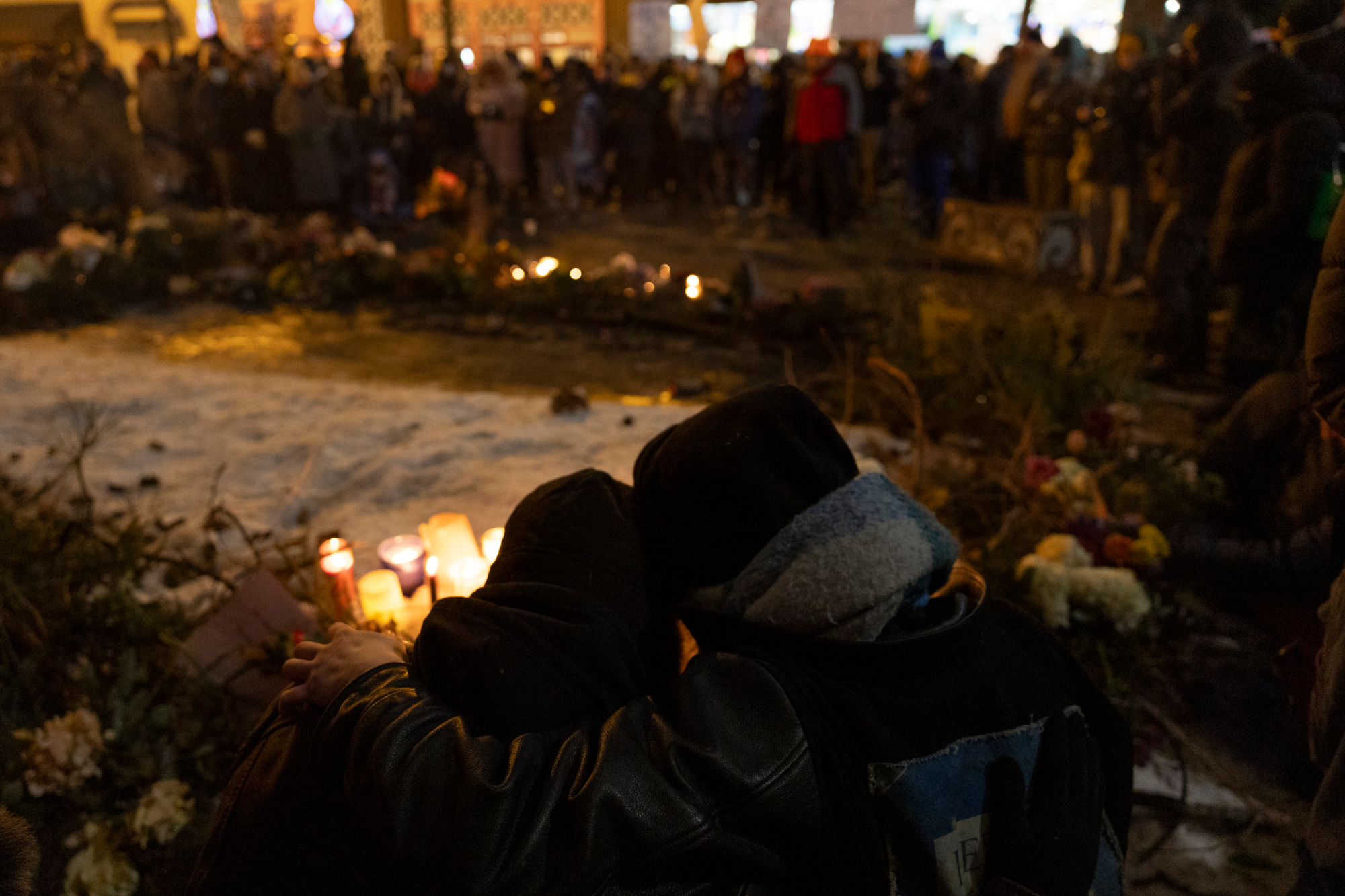
The tyrant’s unrestrained power to determine life and death puts those designated as enemies to death without due process, or suspends the law in order to execute political rivals then blame the victim. Unfortunately, this biopolitical power based on the binary opposition of friend and enemy may be seen in American society in the death of Renée Nicole Good, a 37-year-old American poet, mother of three children, fatally shot multiple times by ICE agent, Jonathan Ross (January 7, 2026). Then again, in the killing of Alex Jeffrey Pretti, an ICU nurse, who was beaten and fatally shot by ICE agents (January 24, 2026), in the same operation by that agency.
According to Brazilian theologian Rudolf von Sinner, public theology in Brazil centers on a theology of citizenship, recognizing that citizenship is never confined to a single nation‑state. The public theologian draws on Scripture, its interpretive traditions, and interdisciplinary analyses of contemporary society within a global context. When citizens are aware of their rights and duties—and have effective access to recognition, protection, health, education, and other fundamental rights—citizenship becomes an inclusive reality, even on a cosmopolitan scale. From within civil society, the public theologian offers constructive guidance to both churches and state authorities on the significance of citizenship and solidarity with immigrants, while remaining in ongoing dialogue with other religions, civic associations, and the academy.[32]
Given this moment, Bonhoeffer’s discourse on truth‑telling is both profound and timely, offering conceptual clarity and ethical responsibility capable of breaking through the fog of silence to confront evil and injustice.
The act of telling the truth is grounded in, and indebted to, the living God who entered history through Jesus Christ. God’s truth has become flesh and is alive in the real—embedded within the concrete realities of human existence. A discourse ethics of parrhesia is therefore required, especially when truth is manipulated or relativized to fit particular contexts, collapsing the distinction between truth and falsehood.[33]
Bonhoeffer’s idea of reconciliation acknowledges no abyss of evil hidden from God, for the world has been reconciled with God. It embraces even the most abysmal secularism. Following in the footsteps of Luther, he maintains: “The curses of the godless sometimes sound better in God’s ear than the hallelujahs of the pious.”[34]
Bonhoeffer shows how sovereign power, under the guise of religious sanction, reduces its victims to an unlivable bare life—an existence stripped of political rights. This exposes the danger of exceptional biopower, evident in social experiences of abjection in the brutal reality of the concentration camps.
For the biopolitical state of exception as well as the emerging condition of global civil war, the Nazi regime enacted the Reichstag Fire Decree (officially titled the Decree for the Protection of People and State, February 28, 1933), which suspended the fundamental civil liberties guaranteed by the Weimar Constitution and provided the legal basis for mass arrests and the persecution of political opponents.[35]
In response to this dangerous situation, Bonhoeffer argued for “putting a spoke into the wheel itself,” [36] as he expressed in “The Church and the Jewish Question” (1933), in opposition to the “Aryan Paragraph” introduced in April 1933. The church has three responsibilities: (1) admonishing and questioning the state, (2) binding up the wounds of the victims, and (3) obstructing the wheel of injustice by throwing itself between the spokes.
In fact, Bonhoeffer identifies two forces capable of averting the final plunge into the abyss: the miracle of a renewed awakening of faith and the restraining power of the katechon (2 Thess. 2:7). The latter serves to block the path of those rushing toward the abyss through God’s governance of the world. God employs it to preserve creation from destruction, establishing proper limits to the advance of evil.[37]
Bonhoeffer offers an innovative interpretation of the Lutheran teaching on the twofold strategy of God’s rule, emphasizing God’s universal reign as revealed and reconciled in Jesus Christ—a reign that does not abandon the world to its own devices under the reality of restraining power. His position stands in sharp contrast to Carl Schmitt’s claim that the katechon represents the Christian empire or sovereign state.
Epilogue
In discussing Bonhoeffer and the crisis of American democracy, I situate his legacy within the framework of public theology as a critical response to totalitarian governance and collective egotism. This approach resonates with other strands of public theology, particularly the prophetic critiques of political idolatry articulated by the Confessing Church, as well as by Reinhold Niebuhr and Paul Tillich.
A critical analysis of Christian nationalism through the lens of Bonhoeffer underscores the church’s prophetic role in clarifying public discourse and envisioning a just and peaceful American society. It rejects the nationalist ideology that conflates Christian faith with MAGA politics. Such an alignment fosters a perilous fusion of religious fervor and political power, often rationalized through “vessel theology,” which portrays flawed leaders as divinely appointed. These developments recall Carl Schmitt’s political theology of sovereignty and exception, eroding democratic norms and legitimizing authoritarian tendencies.
In response to the resulting confusion between church and state, public theology emerges as a counterforce to supremacist narratives, supporting a multicultural nationalism rooted in democratic civil society and the politics of recognition. It defends civil society and the lifeworld by advocating shared cultural values and promoting divine action in reconciliation and a democracy of common good—anticipating the inbreaking of God’s reign on earth.
[1] Jűrgen Moltmann, God for a Secular Society: The Public Relevance of Theology (Minneapolis: Fortress, 1999),
[2] Ibid., 24-42.
[3] Heinrich Bedford-Strohm, Liberation Theology for a Democratic Society: Essays in Public Theology (Zurich: LIT Verlag, 2018).
[4] Max L. Stackhouse, Public Theology and Political Economy: Christian Stewardship in Modern Society (Grand Rapids: Eerdmans, 1987), xii.
[5] Ronald F. Thiemann, Constructing a Public Theology: The Church in a Pluralistic Culture (Louisville, Kentucky: Westminster John Knox Press, 1991), 19.
[6] Katie Day and Sebastian Kim, “Introduction,” A Companion to Public Theology, eds. Sebastian Kim and Katie Day (Leiden and Boston: Brill, 2017), 1-21, at 4.
[7] David Tracy, The Analogical Imagination: Christian Theology and the Culture of Pluralism (New York: Crossroad, 1998), 7.
[8] Ted Peters, “Public Theology: Its Pastoral, Apologetic, Scientific, Political, and Prophetic Tasks”, International Journal of Public Theology 12 (2018).155 [153-177].
[9] Habermas, Modernity, and Public Theology, eds. Don S. Browning and Francis S. Fiorenza (New York: Crossroad, 1992).
[10] See Tracy, Blessed Rage for Order: The New Pluralism in Theology with a new preface of 1996 (Chicago and London: The University of Chicago Press, 1996), 247.
[11] René Girard, Things Hidden Since the Foundation of the World (Stanford: Stanford University Press, 2002), 159-64.
[12] Charles Taylor, Hegel (Cambridge: Cambridge University Press, 175), 217.
[13] Esther McIntosh, “I Met God, She’s Black: Racial, Gender, and Sexual Equalities in Public Theology,” A Companion to Public Theology, eds., Sebastian Kim and Katie Day, 298-324, at 304.
[14] Paul Tillich, Systematic Theology, vol.1 (Chicago: The University of Chicago Press, 1951), 216.
[15] Thomas McCarthy, Race, Empire, and the Idea of Human Development (Cambridge: Cambridge University Press, 2012), 153.
[16] Paul S. Chung, Postcolonial Public Theology: Faith, Scientific Rationality, and Prophetic Dialogue (Eugene, OR: Cascade, 2016), 1.
[17] Eberhard Bethge, Dietrich Bonhoeffer, Theologe, Christ, Zeitgenosse (Munich; Chr. Kaiser Verlag, 1967), 138, 184, 379.
[18] Bonhoeffer, Ethics, ed. Clifford J. Green, trans. Reinhard Krauss, et al DBW, vol. 6 (Minneapolis: Fortress, 2005), 98-99.
[19] Charles Taylor, “The Politics of Recognition,” in Multiculturalism: Examining the Politics of Recognition, ed. Amy Gutmann (New Jersey: Princeton University Press, 1994), 26.
[20] Altmann Walter, “Bonhoeffer in Latin American perceptions: An inspiration to overcome structures of injustice?,” STJ vol.2 n.1 Stellenbosch 2016.
[21] Bonhoeffer, Ethics, 118-9.
[22] Bonhoeffer, Sanctorum Communio: A Theological Study of the Sociology of the Church, trans. R. Krauss and N. Lukens (Minneapolis: Fortress, 1988), 271.
[23] Ibid., 120-2.
[24] Paul Tillich, The Socialist Decision, trans. Franklin Sherman (Oregon, Eugene: Wipf & Stock, 1977), 50, 161.
[25] Bonhoeffer, Letters & Papers from Prison, ed. Eberhard Bethge (New York: The Macmillan, 1971),17.
[26] Ted Peters, “Public Theology: Its Mission, Methodology, and Tasks,” Pacific Coast Theological Society, May 1, 2026.
[27] Paul S. Chung, Public Theology and Civil Society: Constructive Formation (Columbia, SC: EBL, 2022), 11.
[28] https://www.theguardian.com/us-news/2025/dec/05/trump-ilhan-omar-somalia
[29] Jason Stanley, How Fascism Works, The Politics of Us and Them (New York: Random House, 2018), 6-8.
[30] Carl Schmitt, Political Theology, trans. George Schwab (Chicago and London: The University of Chicago Press 2005), 5.
[31] Carl Schmitt, The Concept of the Political, trans. George Schwab (Chicago and London: The University of Chicago Press 2005), 26.
[32] The Public Theology of Rudolf von Sinner Ted Peters, July 4, 2023 https://www.patheos.com/blogs/publictheology/2022/01/a-progressive-race-narrative-part-2/
[33] Bonhoeffer, Ethics (1995), 359.
[34] Bonhoeffer, Act and Being: Transcendental Philosophy and Ontology in Systematic Theology, vol.2. Trans. H. Martin Rumscheidt (Minneapolis: Fortress, 1996), 160. Endnote 59.
[35] Agamben, State of Exception, trans. Kevin Attell (Chicago and London: The University of Chicago Press, 2005), 2.
[36] Renate Wind, Dietrich Bonhoeffer: A Spoke in the Wheel (Grand Rapids, Michigan: Wm. B. Eerdmans, 1992).
[37] Bonhoeffer, Ethics (2005), 108.