Faith and Deification within a Comparative Framework:
An East Asian Theological Contribution
Paul S. Chung
Distinguished Professor of Public Theology
Director, Forum Center, Berkeley, CA
Abstract
This paper examines how the Reformation teaching of justification and “Christ’s presence in faith” is further refined through its ecumenical relationship to deification as participation in the divine nature (2 Pet 1:4). It explores these possibilities by engaging Luther’s doctrine of justification and the happy exchange in both their forensic and transformative dimensions, and by placing these insights in dialogue with Buddhist conceptions of salvation and justification, with particular attention to Shin Buddhist thought. The legacy of Watchman Nee also deserves recognition for his contribution to the cross‑cultural and global exchange of themes related to justification and deification, offering conceptual resources for developing a bilingual theological grammar capable of articulating shared soteriological intuitions across Christian and Buddhist traditions.
Keywords. Happy Exchange; Deification; God or Mammon; Shinran; Amida’s Grace and Light, Watchman Lee
Introduction
Since the Second Vatican Council (1962–1965), ecumenical efforts have sought to bring together the Protestant forensic understanding of justification and the Catholic emphasis on its transformative character. The Joint Declaration on the Doctrine of Justification (October 31, 2000) reframes earlier doctrinal controversies and condemnations in a new, ecumenical light. Lutherans and Catholics now affirm together the confession of Jesus Christ as the one Mediator (1 Tim 2:5), through whom God, in the Holy Spirit, gives the divine self and pours out renewing gifts.
This reflection on deification offers an opportunity to reconsider how Luther’s understanding of the grace of justification is already imbued with deifying dimensions, particularly when considered within ecumenical exchange. First, I will address the significance of Luther’s doctrine of justification in conversation with Roman Catholic theology (articulated by Aquinas) and trace how it has further developed in the Lutheran–Orthodox dialogue on theosis. Second, I will examine how the grace of justification is embedded in Luther’s spiritual model of the happy exchange, which integrates forensic and transformative elements by joining faith, imputation, and union with Christ in the power of the Holy Spirit. Third, drawing on this model of “joining together,” I will highlight the importance of refining biblical insights into faith and the visio Dei through a critical engagement with Osiander’s essentialist approach.
Finally, I will reposition the discussion of justification and deification within a comparative study of Shin Buddhist understandings of faith, religious experience, and Amida’s grace in a global context. In this interreligious setting, I retrieve the spiritual legacy of Watchman Nee, particularly his reflections on universal grace, infusa Christi, and deification for further consideration in this dialogical endeavor.
Through this multilayered dialogue, the possibility for a constructive and robust global Christian theology emerges in which one may begin to name the way God’s reconciling work in Christ generates intelligible signs of grace beyond Christian boundaries as it opens space for a bilingual theological grammar in which Luther’s participatory justification can enter into constructive resonance with deification and Shin Buddhist soteriology.
Discourse Clarification on Justification and Deification
Lutheran–Orthodox dialogue has made significant progress in clarifying the relationship between justification and deification. This conversation highlights Luther’s understanding of Christ’s real presence in faith—an ontological presence grounded in God’s indwelling gift to the believer. Christ “outside us,” “for us,” and “in us” is understood in a real, true, and personal sense.
In the Orthodox tradition, theosis is understood as participation in the divine life, becoming a “partaker of the divine nature” (2 Pet 1:4). This means that deification involves participation in God’s energies—the divine operations in the world—not in the divine essence, which remains inaccessible to creatures.
In ecumenical dialogue, the forensic aspect of justification and its effective, participatory dimension can be held together within a single theological vision, allowing justification and deification to be understood not as competing models but as complementary dimensions of salvation in Christ.[1]
Tuomo Mannermaa and the Finnish school argue that the favor of God (the forgiveness of sins) and the donum of God (God’s essential indwelling in the believer) are inseparably united in the person of Christ, who is really and truly present in faith itself. Justification is therefore not only a declarative act but also a participatory reality grounded in Christ’s ontological presence—an understanding that opens a constructive bridge between justification and deification.[2]
Theosis, in Orthodox soteriology, maintains that as Christ remained fully God while becoming fully human, so we remain fully creatures even as we are deified by grace. According to Vladimir Lossky, the deification of the creature will be fully realized only in an eschatological sense—after the resurrection of the dead. Nevertheless, the deifying union must be increasingly fulfilled in this present life, implying the transformation of our corruptible and fallen nature in preparation for eternal life. The believer must also cultivate the corresponding subjective conditions in cooperation with God.[3]
Along with this position, according to John Meyendorff’s definition of mystical theology, such knowledge entails a continuous communion with the Spirit who dwells in the whole Church. It also requires a constant recognition of the inadequacy of the human intellect and of human language to express the fullness of truth, even as we struggle with the mystery of God.[4]
Joining Together: Justification and the Happy Exchange in Christ
Without appealing to a metaphysics of the essence–energies distinction, Luther introduced the notion of peccatum radicale, which stands in sharp contrast to the scholastic view of original sin as merely the loss of original righteousness. For Luther, the Christian life unfolds as a dynamic movement between sin and justifying faith—a life lived as simul iustus et peccator. This insight emerges from Luther’s own profound spiritual struggle (Anfechtung) to encounter the gracious God revealed in Jesus Christ and underscores the centrality of justifying grace in his theology. Disputing scholastic theology (art. 56), Luther states: “It is not true that God can accept man without his justifying grace.”[5]
Yet, Thomas Aquinas emphasized that God pours sanctifying grace (gratia gratum faciens) into the soul. Once infused, grace becomes a spiritual quality or disposition (habitus) that inheres to the human soul and cooperates with the human will. As an infused habitus, grace functions as the principle of meritorious action, making human deeds worthy of God’s reward. From this habitual grace arise the theological virtues of faith, hope, and charity.[6]
Habitual (sanctifying) grace is the operating grace that serves as the formal principle of justification. As cooperating grace, it is the formal principle of merit, requiring the freely given response of the human will. Four elements are involved in justification: the infusion of grace; a movement of free choice toward God by faith; a movement of free choice away from sin (contrition and moral reorientation); and the forgiveness of sin.[7]
Therefore, if justification is both the remission of sin and the infusion of grace as one unified act, the Thomistic model risks undermining the sheer, external, and unconditioned grace of God in Christ, who forgives sinners “while we were still enemies” (Rom 5:10).
Consequently, Luther reorients the entire structure of salvation around Christ’s active presence in faith. In The Freedom of a Christian (1520), he brings this insight to expression by integrating Christian freedom with genuine transformation.
“As our heavenly Father has in Christ freely come to our aid, we also ought freely to help our neighbor through our body and its works, and each should become as it were a Christ to the other that we may be Christ to one another and Christ may be the same in all.”[8]
It is God’s grace in Jesus Christ that fully restores humanity’s lost freedom by incorporating human beings into Christ, uniting them with him as one body and one flesh. In following Ephesians (5:31-32) and Bernard of Clairvaux, Luther takes benefit of faith to mean “unit[ing] the soul with Christ as a bride is united with her bridegroom. By this mystery… Christ and the soul become one flesh [Eph. 5:31-32]. And if they are one flesh and there is between them a true marriage—indeed the most perfect of all marriages…—it follows that everything they have, they hold in common, the good as well as the evil.”[9]
Given this mystery of faith, Karl Barth reflects on Luther’s striking statement in The Freedom of a Christian: “As is the Word, so the soul becomes by it—just as iron, united with fire, glows red like fire.” On the basis of this certainty of faith, Luther could even say in his Galatians commentary that fide homo fit Deus—“by faith the human becomes divine.”
Augustine already insisted that God wishes to make you “god” (Deus enim deum te vult facere) through gift and adoption. Accordingly, for Luther, it is in faith that the human being truly honors God, and only in this faith does deification occur—through apprehensio Christi (“taking hold” of Christ through faith), the indwelling of Christ (habitatio Christi in nobis), or the union of the human with Christ (unio hominis cum Christo) as expressed in Galatians 2:20. “Without this principle,” Barth insists, “the Reformation doctrine of justification and faith cannot be understood.”[10]
Interrogation: The Indwelling of Christ and the Alien Righteousness
Faith is apprehended in—and formed by—Christ’s self‑giving presence, a reality expressed in Luther’s Antinomian Disputations (1537–1540) with the formulation Christus est forma fidei (later summarized as fides Christo formata).[11]
As Veli‑Matti Kärkkäinen aptly observes,
“Luther’s understanding of salvation can be expressed not only in terms of the doctrine of justification, but also as theosis. Thus, while there are differences between the Eastern and Lutheran understandings of soteriology, over questions such as free will and understandings of the effects of the Fall, Luther’s own theology should not be set in opposition to the ancient Eastern idea of deification.”[12]
If for Luther salvation is articulated as the joining of justification and deification, the Orthodox tradition understands this in terms of a cooperation—a synergy—between the divine and human wills, since grace is the very presence of God that calls forth continual human effort.
Here, deification is conceptualized within the distinction between the incommunicable divine essence and the uncreated, approachable divine energies. Deification by grace—union with God in the divine energies—enables human beings to participate in the divine nature. If believers are truly “partakers of the divine nature,” an ineffable distinction must be maintained between the divine essence and the divine persons under different aspects.
Yet this distinction introduces a persistent regime of problematics. If the divine nature is communicable only through the divine energies or operations, which are ontologically distinct from the divine essence, does this not risk suggesting a metaphysics of Neoplatonic emanationism or a bifurcation within God—an incomprehensible divine essence (a “greater” divinity) and a communicable grace of divine energies (a “lesser” divinity)?[13]
Luther, by contrast, rejects speculative metaphysics and locates God’s self‑communication entirely in the concrete, historical self‑giving of Christ and in the promises of the gospel. Moreover, Luther is convinced that fallen humanity is curvatus in se—curved in on itself—and that Christ alone is the true Image of God (Col 1:15). Consequently, he locates the restoration of the image of God entirely and exclusively in Christ Himself.
This epistemic stance becomes crucial in dealing with two kinds of righteousness for Luther: “Just as a bridegroom possesses all that is his bride’s and she all that is his—for the two have all things in common because they are one flesh (Gen 2:24).”[14]
In the discussion of two kinds of righteousness, Luther writes: “The righteousness follows the example of Christ in this respect [1Pet 2:21] and is transformed into his likeness (2 Cor 3:18). It is precisely this that Christ requires.”[15]
For Luther the alien righteousness of Christ is “instilled in us without our works by grace alone…For alien righteousness is not instilled all at one, but it begins, makes progress, and is finally perfected at the end through death.”[16]
In this way, faith, Christ, and imputation (or acceptation) must be held together. Faith takes hold of Christ, and whoever trusts in Christ apprehended in the heart is accounted righteous. This reflects a model in which faith, Christ, and imputation are inseparably joined.
Christian Freedom: Collaboration in the Holy Spirit
Luther’s model of “joining together” remains crucial for his understanding of the freedom of a Christian, where faith and love are united through the work of the Holy Spirit: “A Christian is perfectly free, lord of all, subject to none. A Christian is a perfectly dutiful servant of all, subject of all.”[17]
When the first half is overemphasized while the second is forgotten, the result is a tendency to set aside God’s commandments altogether. Conversely, when the second half is stressed at the expense of the first, a notorious form of Lutheran submission to all manner of political authorities emerges.
Luther’s teaching on justification, grounded in a life of union with Christ through the happy exchange, expresses the dynamic relationship between faith and love—faith active in love. The Christological hymn of Philippians 2:4–11 provides the foundation for Luther’s conviction. In Christ’s self‑emptying, Luther sees the embodiment of divine freedom expressed in humility. Jesus Christ in the form of God does not mean the essence of God, because Christ never emptied himself of this.[18]
Jesus Christ, the mirror of the Father’s heart, assumed human nature (enhypostasis) while affirming that this human nature has no independent hypostasis of its own (anhypostasis), existing only in the person of the divine Logos. This Christological position cannot, however, be invoked to privilege one deification motif over others; rather, it serves to guard against overestimating that particular cluster of ancient tradition.[19]
The Holy Spirit remains essential for characterizing the grace of justification, which unfolds both as an event—the grounding act of God—and as an ongoing process through the indwelling of Christ in us. In the Small Catechism, Luther describes the Holy Spirit as the one who calls through the gospel, enlightens the whole Christian church with spiritual gifts, and sanctifies and preserves it in union with Jesus Christ in the one true faith.[20]
Spiritus Sanctus non est scepticus—the Holy Spirit is not a skeptic—but acts decisively, creating faith, illuminating the believer, and grounding the certainty of God’s promise.[21] In the debate with Erasmus in 1525, Luther argues: “[God] does not work in us without us, because it is for this he has created and preserved us, that he might work in us and we might cooperate with him, whether outside his Kingdom through his general omnipotence, or inside his Kingdom by the special virtue of his Spirit.”[22]
Karl Barth underscores the central role of the Holy Spirit in Luther’s theology. Like Calvin, Luther—especially in his Galatians commentary—articulates the testimonium Spiritus Sancti internum, the inward testimony of the Holy Spirit in the believer’s experience. For Barth, this emphasis reveals how deeply Luther grounds the certainty of faith not in human reflection but in the Spirit’s active witness, which unites believers to Christ and assures them of God’s gracious promise.[23]As Bernhard Lohse notes, Luther can speak of justification occurring solo Spiritu Sancto—through the Holy Spirit alone—inseparably coupled with solus Christus.[24]
Luther also resonates with the Orthodox understanding of the Spirit as the divine Person, the Giver of Grace, who dwells within believers and unites their souls to Christ. In Meyendorff’s account, the Spirit reveals the Father’s good will toward the Son, underscoring the Spirit as the image of the Son just as the Son is the image of the Father. The Spirit makes the risen Christ present in the Church. This unfolds within a dynamic and soteriological context, culminating in our incorporation into the new Adam—the glorified humanity of the risen Christ.[25]
For Luther, the Spirit’s purpose is to bring to human beings the great treasure—Christ Himself and all that He has accomplished—so as to conform them to Christ, especially to His death and resurrection. This conformity illuminates the Spirit’s vivifying work—the vivification by which believers are raised into new life. Luther expresses this vividly in his 1524 Pentecost hymn.
Come, Holy Ghost, God and Lord!
Be all Thy graces now outpoured
On each believer’s mind and heart;
Thy fervent love to them impart.
Lord, by the brightness of thy light,
Thou in the faith does men unite…[26]
Luther demonstrates openness to charismatic experience and spiritual renewal, as seen in “A Simple Way to Pray,” where Luther himself describes an experience that bears the marks of a prayer prompted and sustained by the Spirit. “The Holy Spirit himself preaches here, and one word of his sermon is far better than a thousand of our prayers. Many times, I have learned more from one prayer than I might have learned from much reading and speculation.”[27]
Lutheran charismatic theology cannot understand God’s external means apart from experiencing, testing, and feeling them; rather, it draws the external means into the living union with Christ. In this dynamic, the forgiveness of sin is never separated from our participation in God’s grace, for the Holy Spirit reinvigorates the experiential dimension of faith and unites believers to the life‑giving presence of Christ.
As Kärkkäinen, argues, “justification for Luther means primarily participation in God through the indwelling of Christ in the heart through the Spirit.”[28] This approach aligns with Jürgen Moltmann’s critical expansion of the Reformation doctrine of justification, which emphasizes: 1) the justice of God on behalf of victims, 2) the regeneration and renewal of life, 3) the experience of the Spirit within the charismatic powers of life, and 4) an eschatological orientation that opens the believer to God’s future.[29]
Conceptual Clarity: The Beatific Vision, Faith, and the Critique of Osiander
Given the critical expansion of the Reformation teaching on justification, I now examine a theology of union with Christ within the context of spiritual formation and the beatific vision. According to 1 John 3:2, we are already God’s children; yet “when Christ appears, we shall be like him, for we will see him as he is.”
The uncreated divine light, manifested at the Transfiguration of Christ on Mount Tabor, appears in the Orthodox tradition as the beatific vision of the divine energies—a foretaste of the final vision of God. This divine light is the very source of deification associated with gnosis, a mystical experience of uncreated lights.[30]
In my view, the experience of the beatific vision is closely linked to the Hebrew notion of yada, a form of knowing that signifies a personal, holistic encounter in which God and the human being meet within the dynamic interplay of faith, hope, and love. In eschatological hope, the faithful will retain their participation in grace within the glorious, imperishable, and spiritual body, and will finally behold God “face to face” (1 Cor 13:12).
This biblical perspective on union with Christ undergirds a Lutheran understanding of deification in an adopted, personal, and relational sense. It also frames the experience of the Transfiguration as preparation for the scandal of the cross. Believers are “transfigured” through faith, [31] not through a mystical ontology.
However, justification does not rest on an essential indwelling of the divine nature, as exemplified in Andreas Osiander (1498–1552). Osiander argued that the essential righteousness of Christ’s divine nature becomes inherently ours as a quality within the soul through an ontological absorption or deification—such that this essentialist union becomes the cause of justification.
In the essentialist model of deification, the true humanity of Christ is effectively suppressed, particularly with respect to his saving work and the forgiveness of sins. The distinction between Christ’s righteousness and the believer is thereby collapsed. Sin itself is trivialized, reduced to a mere drop of water in comparison with the ocean of divine righteousness. Here, we observe a dangerous tendency toward the pagan notion of henosis, a mystical merging with the divine.
Osiander’s position must not be confused with that of Gregory Palamas (1296–1359). Palamas distinguishes three aspects of God’s being: the divine essence (ousia, utterly unknowable), the divine energies (uncreated modalities of God’s action in the world, in which creatures may truly participate), and the three divine hypostases (Father, Son, and Spirit). Union with God according to hypostasis occurs only in Christ. Any union of the creature with God according to essence (henōsis kat’ ousian) is excluded.[32]
According to John Meyendorff, the uncreated light is the manifestation of Christ’s glorified humanity in the experience of the Transfiguration—the humanity of the new Adam. Being in Christ therefore has nothing to do with any hypostatic identification with the Logos. Deification is a free gift from God, grounded in the humanity of Christ so that people of the
Body of Christ have access to “deification” by grace through the operation of the Spirit in Christ’s Church.[33]
In fact, Luther does not use the term visio beatifica, but he speaks of the believer being “one spirit with Christ” (1 Cor 6:17) and ultimately “seeing Him as He is.” In the model of the happy exchange, Christ shares his attributes and grace with believers without collapsing the ontological distinction between the divine nature and human participation.[34]
For Paul, the word of the cross (1 Cor 1:18) is not merely a reference to a past historical event; it already contains within itself the implication of God’s future. It is the manifestation of divine power whose fullness belongs to the eschatological horizon (1 Cor 2:9). In the beatific vision, however, we no longer seek the knowledge of God for our own sake, but solely for God’s own sake—in the openness of God revealed on Sinai.
Accompanying this, the confession of God in the First Commandment has social‑political significance, which remains essential in Luther’s exposition in the Large Catechism (1529), where trust in God alone stands at the center of true worship. At the same time, it exposes Luther’s sharp critique of economic injustice—embodied in his treatment of the Seventh Commandment—as a concrete manifestation of the false god of mammon. As Luther argues, “There are some who think that they have God and everything they need when they have money and property… They, too, have a god—mammon by name, that is, money and property.”[35]
Thus, critical reflection and discernment participate in the eschatological vision which accentuates human participation in God’s salvific‑missional history on behalf of those who suffer on the underside of history.
Faith and Deification: An Asian Cultural Matrix
Given our discussion of faith and deification, I now turn to an intercultural reading of Luther by placing his teaching in conversation with Shin Buddhist thought. Shin Buddhism—Japan’s most widely practiced Buddhist tradition and deeply influential across East Asia—offers a rich comparative horizon for exploring how faith, grace, and transformative participation in divine life are understood within a multireligious cultural matrix.
In the Japanese context, Hōnen (1133–1212) drew deeply on the teachings of Shan‑tao (613–681), the Chinese Pure Land master who understood nembutsu as a meditative recollection of the Buddha. Additionally, he identified the vocal invocation of Amida’s name as the true act of enlightenment, setting it apart from the other auxiliary practices.
For Hōnen, the recitation of Amida’s name alone was the act chosen in the Primal Vow as the path of salvation—an “easy” and accessible way for ordinary people living in the troubled Kamakura era (1185–1333) to experience salvation. As a result, nembutsu marked a decisive shift away from traditional Buddhist disciplines such as precepts, meditation, ritual worship, and other meritorious deeds.
In the Larger Sutra of Immeasurable Life, the Eighteenth Vow expresses Amida’s promise, “If, when I attain Buddhahood, the sentient beings of the ten quarters, with sincere mind entrusting themselves, aspiring to be born in my land, and saying my Name perhaps even ten times, should not be born there, may I not attain the supreme enlightenment. Excluded are those who commit the five grave offenses and those who slander the right dharma.”[36]
Notably, Shinran (1173–1262), the disciple of Hōnen, underwent profound Anfechtungen—a relentless inner struggle with the inexhaustible reality of sin and evil he perceived within himself, even while devoted to the message of nembutsu. According to Shinran, “Even a good person attains birth in the Pure Land, so it goes without saying that an evil person will.” This position runs counter to the common saying: “Even an evil person attains birth, so it goes without saying that a good person will.”[37]
Through his profound awareness of human sinfulness, Shinran exposed the karmic depth of sin and evil in a profoundly religious sense, recognizing himself as a radical sinner defiled by ignorance and passions. Yet Amida Buddha, in the form of the bodhisattva Dharmākara, has already fulfilled all requisite practices with a true, real, and sincere mind. Both faith and nembutsu are grounded in the Primal Vow, yet Shinran gives priority to faith as the primary manifestation of the Vow.
The phrase “with sincere mind entrusting themselves,” as expressed in the Eighteenth Vow, signifies for Shinran a mind that is true, real, and sincere because it arises from the Tathāgata’s own Vow, which is itself true and real. For Shinran, the sincere mind qualifies and grounds the act of entrusting, implying the “deep mind” as the deeply entrusting heart that believes in Amida Buddha’s Forty‑eight Vows without hesitation or wavering.
Thus, the mind of faith (shinjin) is the true and real mind—yet it is entirely a gift from Amida. It entails a complete letting go, a release from ego‑centered striving, even as it shines forth from within. For this reason, Shinran insists that faith is exceedingly difficult—indeed, the most difficult of all difficult things—because it is nothing less than the radiance of Amida working within the believer.[38]
A Comparative Inquiry: Watchman Nee
Pure Land narratives express universal truth through mythic and symbolic language which contrasts with the Christian narrative of salvation rooted in the historical reality of Christ’s death and resurrection. Yet, this difference does not preclude the possibility of recognizing a shared experiential depth—particularly in the understanding of salvation as a gift of grace, received in faith, and involving participation in a mysterious and transformative benefit.
Given the dynamics of faith, a comparative inquiry into Watchman Nee’s theology opens a fruitful space for examining how salvation, transformation, and moral agency are connected across traditions. For example, Nee articulates a profoundly Christ-centered understanding of faith. According to Nee, God’s salvation must be universal for everyone through faith: “There is only one condition for salvation — faith.”[39]
For Nee, faith is not merely intellectual assent or moral striving but a Spirit‑given participation in, or communication of, the redemptive work of Christ through his death and resurrection. This emphasis on divine initiative and human incapacity places Nee’s local theology remarkably close to Luther’s insight that faith is created by the Spirit and grounded in Christ’s promise. Likewise, Nee’s teaching on the assurance of salvation (Jn 3:16; Rom 8:16) parallels Luther’s conviction that the certainty of faith rests on the divine promise. For both Nee and Luther, saving faith is fundamentally fiducia—a confident entrusting of the self to God. This is because faith rests directly in God and the Word, expressed as fiducia promissionis, in which God is gracious to us through Christ.
Jacob Feng, a Chinese systematic theologian, retrieves Nee’s discourse of Christian faith and deification, demonstrating that Nee regards the teaching of deification as the diamond in the Bible.[40] Commenting on Galatians 2:20, Nee insists that genuine faith is both the faith of Christ and the faith in Christ,[41] for Christ infuses himself into believers so that they may believe in him. Thus, to say that Christ lives “in me” is to affirm his continual infusing presence, drawing the believer into union with him.
In this sense, infusa Christi emphasizes Christ’s active indwelling and transformative agency, not merely the believer’s subjective disposition. It highlights a participatory soteriology in which Christ’s own life is poured into the believer, generating faith, renewal, and communion. Nee’s mode of infusa Christi thus resonates with the meaning of deification and aligns, in its own way, with the Meyendorff–Lutheran motif within an ecumenical and global framework. This comparative angle helps us understand how Christian faith would be reshaped through the dynamics of grace across traditions.
Accordingly, Fuller Seminary’s 2006 statement on Watchman Nee and his teachings includes the following affirmation: “We consistently discovered that when examined fairly in the light of Scripture and church history, the actual teachings in question have significant biblical and historical credence. Therefore, we believe that they deserve the attention and consideration of the entire Body of Christ.”[42]
This statement is significant because it reflects a careful institutional evaluation of Nee’s theology in the context of World Christianity, particularly in East Asia, and acknowledges both the biblical grounding and the historical resonance of Nee’s core teachings.
This is congruent with a public theology of spirituality which recognizes that the spiritual experience of the living Christ, embodied within faith communities, warrants serious engagement across denominational and cultural boundaries. Within the East Asian cultural matrix, this living Christ is encountered, not as an abstract doctrine, but as a transformative presence shaping communal life, ethical discernment, and intercultural dialogue.
In the East Asian cultural matrix, Buddhist teaching plays a significant role in illuminating the doctrine of the living Christ through its deep compassion for all beings, the practice of the six pāramitās, and other meritorious deeds that cultivate the disposition to treat others as one’s own self, all oriented toward a universal salvation of humankind in the age to come.
In my view, Shinran’s model of shinjin and Amida’s Other‑Power does not exclude the dynamic of gradual cultivation. Rather, it stands in a meaningful parallel with the Awakening of Faith in the Mahāyāna, which emphasizes Suchness (tathāgatagarbha) as the ground of awakening within the ālaya storehouse consciousness, even as this Suchness remains obscured by the perfuming of ignorance.[43]
I highlight Shinran’s position alongside the Awakening of Faith because, in both traditions, the Mahāyāna vision affirms that faith arises within us through the gracious working of Amida—or Suchness—rather than through any autonomous human capacity. Thus, Shinran’s shinjin can be understood as a form of sudden awakening that nevertheless unfolds into a lifelong process of cultivation, grounded entirely in Other‑Power.
Alongside this, Watchman Nee’s spirituality offers a distinctive contribution to the theology of universal grace and ecclesial mission, particularly when viewed through an intercultural lens. Nee’s account of infusa Christi and the Spirit’s liberating work becomes a Christian analogue to this East Asian grammar of grace, opening space for intercultural conversation on divine compassion, human transformation, and the possibility of salvation beyond the limits of self‑power.
This interfaith exchange demonstrates how a local theology may become a global interlocutor when it articulates experiences of universal grace, communal belonging, and transformative salvation that resonate across religious traditions. These are “deep structures” of religious experience that enable a theology born in one context to speak meaningfully in another, thereby contributing to the constructive project of world Christianity theology.
Phenomenological Analysis: Faith Formed by Christ or by Amida
Shinran discerned a deep spiritual significance in the Seventeenth Vow, which speaks of Amida’s Name being proclaimed by countless Buddhas throughout the worlds. This vow reveals the vital link between the fulfillment of Amida’s Vows in the ideal, transcendent realm and the historical emergence of Pure Land teaching. The hearing of the Name—rooted in Amida’s eternal compassion—is mediated through concrete historical communities, teachers, and practices.[44]
Amida Buddha functions as the mediating presence through which practitioners awaken to the supreme, formless Buddha. The supreme, formless Buddha (dharmakāya‑śūnyatā), uncreated and beyond conceptual grasp, appears in the wondrous form of Amida Buddha (dharmakāya‑as‑compassionate‑means).
This Buddhist distinction bears a certain affinity to the Orthodox differentiation between the incommunicable divine essence and the uncreated divine energies operative in the world. As Vladimir Lossky notes, St. Paul’s reference to “the invisible things of God—His eternal power and divinity—made visible since the creation of the world” (Rom1:20) may be understood as pointing toward the meaning of the divine energies in a more precise theological sense.[45]
As Shinran writes in his True Teaching, “The Tathagata, turning with compassion toward the ocean of living beings in pain and affliction, has given unhindered and vast pure faith to the ocean of sentient beings. This is called the true and real faith that is [Amida’s] benefiting of others.”[46]
At a phenomenological level, faith may be understood as the self‑revelation—aletheia—of Amida’s grace and truth. This resonates with Luther’s account of the grace of justification, where the promise and faith are dynamically united through the presence of the Holy Spirit, overcoming the vast distance between Jesus Christ and the believer. Christ, as Other Power, is both the transcendent ground of faith and the One who becomes present in faith itself.
Similarly, for Shinran, the initiative always comes from the Buddha’s side, through the Name and the Light infused with compassion, power, and grace. The religious experience of the Name—often described in familial terms as the compassion of a father and mother—expresses the mystery of faith awakened through hearing Amida’s Name.
“When sentient beings hear the Name, say it even once in trust and joy, sincerely turn over their merits [toward the attainment of birth], and aspire to be born in that land, then they shall attain birth and dwell in the stage of non-retrogression.”[47]
Shinran teaches that all sentient beings hear the Name and awaken to a single thought‑moment of faith and joy—an event that occurs abruptly and decisively. In this moment, faith is identified with hearing the Primal Vow itself. It marks the opening of entrusting and the entry into the stage of non‑retrogression, an experience that carries the character of sudden enlightenment.
Shinran’s own experience of salvation reflects a similar paradox: he found himself utterly saved by Amida’s compassion and yet utterly lost in his own karmic evil—simultaneously and continually. Faith as entrusting, therefore, signifies a conversion of mind—a turning from self‑power to the Other Power of the Primal Vow. Shinran rejects the notion that an innate Buddha‑nature within us can generate a true aspiration for enlightenment. Rather, he identifies the diamond‑like mind of faith—suffused with the personal and cosmic reality of the Name—as the very form of Buddha‑nature.
From a phenomenological perspective, if this diamond‑like mind of faith is the only true form of Buddha‑nature, then Shinran experiences a kind of union with Amida at the decisive moment of the opening of faith. Here, I propose the term fides Amida formata—faith “formed” or shaped by Amida’s boundless compassion. This is because, in Shinran’s thought, faith is wholly awakened, sustained, and completed by Amida’s Name (Namu‑Amida‑Butsu) and Light.
Yet, our subjective faith remains fragile—always vulnerable to blind passions and the impermanence that marks human life. Faith is therefore a dynamic becoming: an ongoing union with the Name and the grace of Amida that leads one into the stage of non‑retrogression, where sudden enlightenment unfolds into gradual cultivation. Amida Buddha’s Light, ineffable and inconceivable, is realized through shinjin (true entrusting), filling the practitioner with joy and fostering a life of deep gratitude.
When faith, firm and diamondlike, becomes settled:
In that instant Amida’s compassionate light grasps and protects us,
So that we part forever from birth-and-death.[48]
Therefore, assurance of salvation functions as a kind of promise—not identical with enlightenment itself, yet pointing to a real, present experience. In this sense, the future is already anticipated in the present through faith shaped by Amida. Both are thus a process of becoming.
At this point, Luther’s emphasis on faith as trust (fiducia) parallels this dynamic. Faith, created solely by the Holy Spirit, looks to the promises of God and is thereby inseparably linked with hope through the Spirit, who is the arrabōn—the first installment of salvation (2 Cor 1:22; 5:5). Divine grace is received directly through a confident entrusting of the self to the word of promise, so that the salvation of the world becomes proleptically present as a foretaste of what is to come.
In Shinran’s thought, Amida’s grace becomes operative through union with the Name and the Light, experienced as compassionate father and mother. Thus, through this union, we become partakers of the infinite reality of Buddhahood. This participation unfolds within the mystery of faith, where the transcendent compassion of Amida is made present in the believer’s life. Such faith means that every moment becomes an eschatological moment: the believer already lives in an ecstatic mode of existence, grasped by Amida and never to be abandoned.
In hearing Amida’s universal Vow, we discern a providential meaning of faith and salvation manifested in a distinctive mode of God’s communication beyond the bounds of Christian civilization. The gospel—God’s living voice—summons believers to openness toward those outside the church, fostering spiritual humility and a readiness to learn from the mystery of the triune God who reconciles the world through the grace of Jesus Christ.
Epilogue
As the Christian gospel has taken root in East Asia, it has been received, interpreted, and reshaped through the lived experience of communities formed within multireligious cultural settings. A posture of recognition offers a responsible and ethical way of engaging other religious traditions without collapsing them into crude syncretism.
The Name Amida cannot be simply identified with the Name of Jesus Christ, yet it is striking to discern a shared depth of religious experience across traditions: faith as entrusting, a mystical mode of life, and salvation understood as divine initiative received in trust. A sustained dialogue on justification and deification therefore remains essential in interreligious engagement with Buddhist communities—especially through Shin Buddhist insight—which can enrich comparative public theology and foster bilingual, cross‑cultural communication in the East Asian context.
The legacy of Watchman Nee is significant here, for his cross‑cultural contribution to faith and deification centers on God’s grace in Jesus Christ through the power of the Holy Spirit. His emphasis on infusa Christi—Christ infusing his own life, faith, and power into the believer—opens a rich comparative horizon across Christian and Asian traditions. His account of Christ’s indwelling presence resonates with Luther’s understanding of justifying faith as Christ’s own work in the believer (fides Christi), even as it parallels Shinran’s insistence that true entrusting (shinjin) arises from Amida’s compassionate initiative. Nee’s infusa Christi and spirituality stands closer to the Meyendorff–Lutheran motif, which contains a genuine—though non‑metaphysical—form of deification.
Taken together, these convergences reveal a shared soteriological intuition across traditions: salvation is understood as transformative participation in divine life, grounded in a grace that precedes and enables human response.
Within this, a public theology of spirituality investigates how lived spiritual experience—personal, communal, and embodied—becomes a resource for the common good, for intercultural understanding, and for ethical transformation in society. Viewed through this lens, Watchman Nee’s spirituality assumes public, communal, and intercultural significance, especially as it takes shape within the East Asian cultural matrix.
Within this broader horizon, comparative reflection on faith and deification not only deepens interreligious engagement but also advances the significance of mutual recognition—acknowledging dignity, difference, and shared experience—in creating the relational space through which a global theological discourse can travel across traditions on deification, grace, and the Spirit’s liberating agency, without collapsing into sameness or retreating into exclusivism.
In this way, an ecumenical-global dialogue shaped by cross‑cultural innovation and a bilingual theological grammar can articulate a shared syntax of grace—one that honors doctrinal distinctiveness while illuminating the resonant patterns of divine initiative and human transformation present across diverse religious worlds.
Bibliography
Aquinas, Thomas. Summa Theologica, trans. The English Dominican Fathers. New Work, NY: Benzinger, 1947.
Asvaghosa, The Awakening of Faith: The Classic Exposition of Mahayana Buddhism, trans. Teitaro Suzuki. Mineola, New York: Dover, 2003.
Barth, Karl. Church Dogmatics 1/1. Trans. G.W. Bromiley and eds. G. W. Bromiley and T. F. Torrance. London and New York: T&T Clark International, 2004.
Bloom, Alfred. Shinran’s Gospel of Pure Grace. Tucson, Arizona: The University of Arizona, 1965.
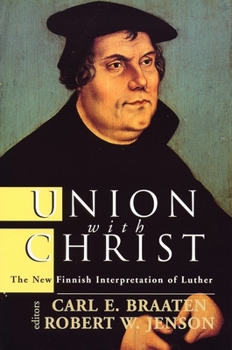
Braaten, Carl E. and Robert W. Jenson. Eds. Union with Christ: The New Finnish Interpretation of Luther. Grand Rapids, Michigan/Cambridge, U.K.: Wm. B. Eerdmans, 1998.
Feng, Jacob Chengwei, “Deification Seen from Three Biblical Metaphors in Watchman Lee and Witness Lee with a Cognitive-Linguistic Interpretive Approach to Metaphors,” in Transformed into the Same Image: Constructive Investigations into the Doctrine of Deification. Eds. Paul Copan and Michael M.C. Reardon. Downers Grove: IVP Academic, 2024. Pp. 38-62.
Hirota, Dennis. Trans. Tannishō: A Primer. Kyoto: Ryukoku University Translation Center, 1982.
Kärkkäinen, Veli-Matti. One with God: Salvation as Deification and Justification. Collegeville, MN: Liturgical Press, 2004.
_______. Spirit and Salvation. Grand Rapids, MI/Cambridge, U.K.: Wm. B. Eerdmans, 2016.
Keel, Hee-Sung. Understanding Shinran: A Dialogical Approach. Fremont, CA: Asian Humanities Press,1995.
Kolb, Robert and Timothy J. Wengert. Eds. The Book of Concord: The Confessions of the Evangelical Lutheran Church. Minneapolis: Fortress, 2000.
Lambert, James F. Luther’s Hymns. Philadelphia: General Council Publication House, 1917.
LaCugna, Catherine M. God for Us: The Trinity and Christian Life. New York: HarperSanFrancisco, 1991.
Lohse, Bernhard. Martin Luther’s Theology: Its Historical and Systematic Development. Trans. Roy A. Harrisville. Minneapolis: Fortress, 1999.
Lossky, Vladimir. The Mystical Theology of the Eastern Church. Crestwood, New York: St Vladimir’s Seminary Press, 1998.
Lull, Timothy F. and William R. Russel. Eds. Martin Luther’s Basic Theological Writings, 2nd ed. Minneapolis: Fortress, 2005.
Luther, Martin. Luther’s Works. American Edition. 55 vols. Edited by Jaroslav Pelikan and Helmut T. Lehmann. Philadelphia: Fortress Press; St. Louis: Concordia Publishing House, 1955–1986.
______. Luther’s Works, vol. 31, Career of the Reformer I. Edited by Harold J. Grimm. Philadelphia: Fortress Press, 1957.
Mannermaa, Tuomo. Christ Present In Faith: Luther’s View of Justification. Minneapolis: Fortress, 2005.
Meyendorff, John. Byzantine Theology: Historical Trends and Doctrinal Themes. New York: Fordham University Press, 1987.
Moltmann, Jürgen. The Spirit of Life: A Universal Affirmation. Minneapolis: Fortress, 1993.
Shinran. The Collected Works of Shinran, vol. I—The Writings. Jodo Shinsu Hongwanji-Ha, 1997.
Rupp, E. Gordon and Philip S. Watson. Eds. Luther and Erasmus: Free Will and Salvation. Philadelphia: The Westminster Press, 1969.
Williams, Paul. Mahayana Buddhism: The Doctrinal Foundations. London and New York: Routledge, 1999.
Online Sources
Collected Works of Watchman Nee, The (Set 2) Vol. 28: The Gospel of God (1).
Life‑study of Galatians, Message 10: https://bibleread.online/life-study-of-the-bible/life-study-of-galatians/10/#cont95
[1] Union with Christ: The New Finnish Interpretation of Luther, eds. Carl E. Braaten and Robert W. Jenson (Grand Rapids, Michigan/Cambridge, U.K.: Wm. B. Eerdmans, 1998), 68.
[2] Tuomo Mannermaa, Christ Present In Faith: Luther’s View of Justification (Minneapolis: Fortress, 2005), 4-5.
[3] Vladimir Lossky, The Mystical Theology of the Eastern Church (Crestwood, New York: St Vladimir’s Seminary Press, 1998), 196.
[4] John Meyendorff, Byzantine Theology: Historical Trends and Doctrinal Themes (New York: Fordham University Press, 1987),14.
[5] Martin Luther’s Basic Theological Writings, 2nd ed. Eds. Timothy F. Lull and William R. Russel (=MLBTW) (Minneapolis: Fortress, 2005), 37.
[6] Thomas Aquinas, Summa Theologica (=ST), trans. The English Dominican Fathers (New Work, NY: Benzinger, 1947), I–II, q110. a.2–4.
[7] ST I–II, q.113, a.6.
[9] MLBTW 397.
[10] Karl Barth, Church Dogmatics 1/1 (=CD), trans. G.W. Bromiley and eds. G. W. Bromiley and T. F. Torrance (London and New York: T&T Clark International, 2004), 240.
[11] LW 26:130.
[12] Kärkkäinen, Spirit and Salvation (Grand Rapids, MI/Cambridge, U.K.: Wm. B. Eerdmans, 2016), 339.
[13] Lossky, The Mystical Theology of the Eastern Church, 70, 81.
[14] MLBTW 397.
[15] Ibid., 136.
[16] Ibid.
[17] Ibid., 393.
[18] Ibid., 137.
[19] Bernhard Lohse, Martin Luther’s Theology: Its Historical and Systematic Development, trans. Roy A. Harrisville (Minneapolis: Fortress, 1999), 221, 229.
[20] The Book of Concord: The Confessions of the Evangelical Lutheran Church (=BC), eds. Robert Kolb and Timothy J. Wengert (Minneapolis: Fortress, 2000), 345.
[21] Luther and Erasmus: Free Will and Salvation, eds. E. Gordon Rupp and Philip S. Watson (Philadelphia: The Westminster Press, 1969), 105-112.
[22] Ibid., 289.
[23] CD 526.
[24] Lohse, Martin Luther’s Theology, 237.
[25] Meyendorff, Byzantine Theology, 160-62, 171.
[26] James F. Lambert, Luther’s Hymns (Philadelphia: General Council Publication House, 1917), 72.
[27] LW 43:198.
[28] Veli-Matti Kärkkäinen, One with God: Salvation as Deification and Justification (Collegeville, MN: Liturgical Press, 2004), 59.
[29] Jürgen Moltmann, The Spirit of Life: A Universal Affirmation (Minneapolis: Fortress, 1993), 129, 147, 180-195.
[30] Lossky, The Mystical Theology of the Eastern Church, 220.
[31] LW 76: 341–356.
[32] Catherine M. LaCugna, God for Us: The Trinity and Christian Life (New York: HarperSanFrancisco, 1991), 184.
[33] Meyendorff, Byzantine Theology, 39.
[34] LW 31:351–52.
[35] BC 387.
[36] Cited in Hee-Sung Keel, Understanding Shinran: A Dialogical Approach (Fremont, CA: Asian Humanities Press,1995), 86.
[37] The Collected Works of Shinran, vol. I—The Writings. See “A Record in Lament of Divergences.” Art. 3. (Jodo Shinsu Hongwanji-Ha, 1997).
[38] Paul Williams, Mahayana Buddhism: The Doctrinal Foundations (London and New York: Routledge, 1999), 272.
[39] Collected Works of Watchman Nee, The (Set2) Vol. 28: The Gospel of God (1), ch.15.
[40] Feng Jacob Chengwei, “Deification Seen from Three Biblical Metaphors in Watchman Lee and Witness Lee with a Cognitive-Linguistic Interpretive Approach to Metaphors,” in Transformed into the Same Image: Constructive Investigations into the Doctrine of Deification, eds. Paul Copan and Michael M.C. Reardon (Downers Grove: IVP Academic, 2024), 43. [38-62]
[41] https://bibleread.online/life-study-of-the-bible/life-study-of-galatians/10/#cont95
[42] https://witnessleelehren.org/en/fuller-statement-en/
[43] Asvaghosa, The Awakening of Faith: The Classic Exposition of Mahayana Buddhism, trans. Teitaro Suzuki. (Mineola, New York: Dover, 2003), 85, 92.
[44] Alfred Bloom, Shinran’s Gospel of Pure Grace (Tucson, Arizona: The University of Arizona, 1965), 52.
[45] Lossky, The Mystical Theology of the Eastern Church, 71.
[46] Cited in Keel, Understanding Shinran, 93.
[47] Cited in ibid., 98.
[48] Tannishō: A Primer. Trans. Dennis Hirota (Kyoto: Ryukoku University Translation Center, 1982), 38.