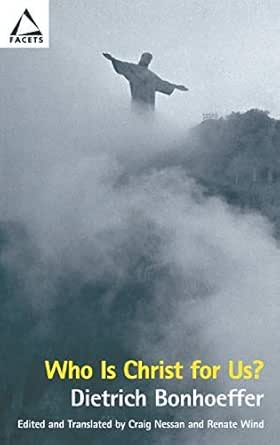
Bonhoeffer, Moltmann, and Confessing Church
Craig L. Nessan, Wartburg Theological Seminary
Dubuque, Iowa, USA
Abstract: This chapter describes challenges to the right remembering of US history that include two American genocides and now mass deportations. The witness of Dietrich Bonhoeffer—as interpreted by Jürgen Moltmann—and the Confessing Church in Nazi Germany provide a case study for interpreting the heresy of Christian Nationalism in the US. Three movements call for Confessing Church today: Eco-Reformation, The Forgotten Luther, and Radicalizing Reformation. These movements constitute forms of public theology, described by Heinrich Bedford-Strohm as “liberation theology for a global civil society.” The method of public theology has five elements that originate with experiences of human suffering (han) and the suffering of creation.
In the United States (US), we are called to rightly remember American history. We are haunted by reminders of the indigenous people: place names, historical sites, mounds, and reservations. We have never confessed the sin of white supremacy that began with the enslavement of African people.[1] Research and teaching about the Church Struggle in Germany—a history that culminated in the Holocaust—compelled me to recognize how the characteristics that define the Shoah as genocide apply to the experiences of both indigenous and African American people in the US, our nation’s minjung. To explore this history, I teach two seminars each year, one on American Genocide 1: Native American History and Theology and the second on American Genocide 2: African American History and Theology.
Article II of the Convention on the Prevention and Punishment of the Crime of Genocide states that “genocide means any of the following acts committed with intent to destroy, in whole or in part, a national, ethnical, racial or religious group, as such: (a) Killing members of the group; (b) Causing serious bodily or mental harm to members of the group; (c) Deliberately inflicting on the group conditions of life calculated to bring about its physical destruction in whole or in part; (d) Imposing measures intended to prevent births within the group; (e) Forcibly transferring children of the group to another group.”[2] “Eliminationism” is another term to name these beliefs, ideologies, acts, and policies.[3]
Roxanne Dunbar-Ortiz documents how eliminationism against the indigenous people of North America qualifies as genocide.
From the colonial period through the founding of the United States and continuing in the twenty-first century, this has entailed torture, terror, sexual abuse, massacres, systematic military occupations, removals of Indigenous peoples from their ancestral territories, and removals of Indigenous children to military-like boarding schools.[4]
Intergenerational trauma was imposed on indigenous and enslaved people through foundational events that gave enduring privileges to Euro-Americans: the conquest and occupation of indigenous land and the systemic exploitation of slave labor for economic gain.[5] The conventional narrative about American privilege and progress is gravely flawed. The genocides against indigenous and enslaved peoples are subsumed and disregarded in telling a story about American accomplishments.
The United States is haunted by the history of white supremacy.
White supremacy could not justify the enslavement of an entire people through violence alone. It needed to create a variety of narratives that reinforced the inferiority of the slave and the superiority of the slave master.[6]
The Equal Justice Initiative sites founded by Bryan Stevenson at Montgomery, Alabama unmask white supremacy and memorialize the struggle of African American people against white authoritarianism manifest in a history of enslavement, terror, segregation, and mass incarceration.[7] Now in the US, we are facing a new expression of white supremacy: mass deportations of immigrants and refugees, especially “brown people” from Central and South America.
Whereas the Civil Rights Movement of the 1950s and 60s attained historic achievements for voting rights, access to public accommodations, and equality under the law[8], we have seen the revival of white authoritarianism supported by the heretical theology of Christian Nationalism. The present situation for “brown” people—indigenous, African American, Asian, Middle Eastern, and Latine people—has become even more precarious, especially for those whose immigration status is insecure. Mass arrests have been indiscriminate regarding one’s legal status with imprisonment and deportation taking place without due process. Children have become especially vulnerable victims.
This chapter examines how distortions of Christian theology support and justify authoritarianism. We look first at the manipulation of Christian theology during the Nazi reign of terror against the Jewish people and other targeted minorities as the backdrop for understanding White Christian Nationalism in the US. Can theological calls for confessing church awaken resistance to racial hate, scapegoating, and eliminationism?
Dietrich Bonhoeffer and Confessing Church in Germany
The political and economic situation at the end of the Weimar Republic was in acute crisis and hastened the ascent to power of the National Socialists. The Weimar Republic was a fledgling attempt at democracy that was undermined from the beginning by the punitive terms of the Versailles Treaty; its fate was sealed by the economic emergency onset by the Great Depression. Democracy was previously unknown to Germany and was contested by political parties on both the left and right. Influential pastors and theologians from the educated class gave intellectual and religious backing to the Nazi movement.[9] Robert P. Ericksen has documented the collaboration of the well-known theologians Gerhard Kittel, Paul Althaus, and Emanuel Hirsch.[10]
Religious justification of authoritarianism was widely propagated by theologians and church literature. The Godesberg Declaration gives evidence how church support for National Socialism had advanced by March 1939.
National Socialism attacks any claim to political power by the churches, and makes the native National Socialist ideology prerequisite for all. In doing this it is carrying on Martin Luther’s work in the ideological-political field and helps us thereby to a true understanding of the Christian faith in all religious aspects.[11]
Signed by a third of the Protestant bishops, the Godesberg Declaration endorsed the Nazi restrictions on churches and the arrest of Confessing Church leader, Martin Niemőller. The response by the Confessing Church was tepid and unable to counter the dejudaization of the church and secessionist claim of German Christians: “Christian faith stands in unsurmountable religious opposition to Judaism.”[12]
The “Institute for the Study and Eradication of Jewish Influence on German Church Life,” founded at the Wartburg Castle on May 6, 1939, provides a case study for the cooptation of the Protestant Church by the Nazis. Under the direction of Professor Walter Grundmann, a student of Gerhard Kittel, the Institute pursued an active antisemitic agenda until the defeat of Nazi Germany in 1945. Dozens of theology professors contributed to its teaching and publications, hundreds of pastors attended conferences, and thousands of church members were influenced by its publications and events. Grundman’s ambitious goal was the complete dejudaization of German Christianity. He wrote: “We approached the work of the Institute with the conviction that Jewish influence on all areas of German life has to be exposed and broken, indeed also in the religious-ecclesiastical realm.”[13] The most influential impacts were through the publication not only of scholarly books but popular literature, including materials for congregational use: a dejudaized New Testament, hymnal, and catechism.[14]
Luther was portrayed as an heroic figure for authorizing the anti-Semitic propaganda and policies of the Nazis. Kristallnacht was seen as the fulfillment of Luther’s prophecy. Anti-Jewish views were shared broadly among Christians, even in the Confessing Church. Resistance to Nazism was undermined by the anti-Semitic interpretations shared by most Christians in Germany with race as the organizing principle.[15] Thomas Kaufmann comments:
The appropriation of Luther for eliminationist Anti-Semitism in National Socialism is an extreme consequence in the history of his interpretation. It was made possible insofar as Protestants had overestimated the worth of their icon—a treacherous constellation.[16]
The Topography of Terror Museum in Berlin documented the influence of Luther’s writings against the Jews under the title: “Luther’s words are everywhere…”[17] Luther’s anti-Jewish works were used to justify anti-Semitic policies and the persecution of the Jews leading to the Holocaust.
Throughout church history, Christology has provided the impetus for Christian efforts at social justice.[18] Bonhoeffer’s Christ-centered theology was the foundation for his early, persistent, and lasting resistance against authoritarianism. This began with his construal of church as “Christ existing as community” in Sanctorum Communio.[19] His social conscience sharpened during his year of study in New York by his conversion to Christian nonviolence and his immersion in the worship, teaching, and social activism of Abyssinian Baptist Church in Harlem.[20] His Christology lectures at the University of Berlin in 1933 made clear that the church is called to pay attention to the “Who” of Jesus Christ as a living person pro me and not only to the “How” of doctrinal formulations. Jesus Christ centers human existence, history, and nature.[21]
Already in 1933, the time was ripe for the composition and publication of theological responses to National Socialism and its expanding influence over the church.[22] On August 15, together with Hermann Sasse, Bonhoeffer began working on a theological declaration that would become the Bethel Confession in preparation for a national synod meeting scheduled for September.[23] The purpose was twofold: 1) to confess what the church believes in opposition to German Christian teachings and 2) to make explicit how confessing Christ means rejecting German Christian interpretations. The central focus was the anti-Jewish theology being used to support the church’s implementation of the Aryan paragraph and the growing influence of German mythologies.[24]
These were among the strong affirmations and rejections affirmed in the first draft of the Bethel Confession[25]:
Concerning Holy Scripture:
- We reject the false teaching which tears the unity of the Holy Scriptures by rejecting the Old Testament or even replacing it with non-Christian doctrines of some early period of a different people because the unity of all the Holy Scriptures and their unity alone is Jesus Christ.
II. What Is the Reformation?
- Martin Luther is the teacher of the Holy Scriptures who was obedient to the word. To understand his contribution as a breakthrough of the German spirit, the origin of the modern sentiment of freedom, or the establishment of a new religion is an offense to his own words.
Of Christ
- We reject the false teaching that we confess Jesus as our Lord for the sake of his heroic piety.
- We reject the false doctrine that the Crucifixion of Christ is the sole fault of the Jewish people as if other peoples and races had not crucified him.
- rightly only in that she carries her sword rightly and remains within her boundaries.
The Church and the Jews
- The church teaches that of all the people of the earth God chose Israel as his people. Only in the power of his Word and from his merciful will, without any reason of natural preference.
- We reject every attempt to liken and confuse the historical program of any people with the historical saving commission of Israel. It can never be the commission of a people to take revenge on the Jews for the murder at Golgotha. “Revenge is mine, says the Lord” (Deut. 32:35; Heb. 10:30).
- We turn against the enterprise of the German Evangelical Church to rob it of its promise by trying to turn itself into an imperial church of Christians of the Aryan race. Because thereby, a racial law for entrance into the church would be enacted, and such a church itself would become a Jewish/Christian legal community. We, therefore, reject the formation of Jewish Christian congregations.
We can hear Bonhoeffer’s strong confession of Jesus Christ and rejection of the German Christian program.
The August draft was then handed over to additional theologians for editing. The revised text was not ready for the September synod meeting and appeared only in November. Bonhoeffer was so dissatisfied with the “watered down” version that he refused to sign and “declared himself wholly dissatisfied with the new version and opposed to its publication in its present form.”[26] One can only imagine the enduring value that the original formulation of the Bethel Confession might have had for the Confessing Church alongside the Barmen Declaration.
The Barmen Declaration of May 1934 remains the definitive confession of theological resistance to the Nazi machinations against the Protestant Church in Germany.[27] In six bold theses, Barmen affirmed core commitments of Christian faith in statements of confession and rejection.
Jesus Christ, as he is attested for us in Holy Scripture, is the one Word of God which we have to hear and which we have to trust and obey in life and in death.
We reject the false doctrine, as though the church could and would have to acknowledge as a source of its proclamation, apart from and besides this one Word of God, still other events and powers, figures and truths, as God’s revelation.
The central focus of Barmen was on the Lordship of Jesus Christ to safeguard all attempts at distorting Christian confession through a turn to authoritarianism. Although Bonhoeffer had taken a pastoral position in London, he found in Barmen solid validation for the Christ-centered theology he shared with Karl Barth.[28]
Bonhoeffer returned to Germany in 1935 to become director of the underground seminary preparing candidates for pastoral ministry. Bonhoeffer formed students in the way of Jesus Christ through individual and communal practices he hoped could sustain them as pastors of the Confessing Church.[29] From his immersion in Harlem, Bonhoeffer brought theology shaped by the black church and the Negro spirituals to their life together. Discipleship drew upon the Sermon on the Mount to teach the costly grace of following Jesus Christ.[30] Ethics called the church to be “conformed” to the crucified and risen Christ.[31] Finally, Bonhoeffer’s fragments about worldly theology in the Letters and Papers from Prison not only kept Christology central but forged a yet deeper connection between Jesus Christ and the world’s suffering.
Jürgen Moltmann’s constructive reading of Bonhoeffer decisively shaped his own theology and contributes to our understanding of public theology.[32] Moltmann comments on the significance of Bonhoeffer’s “authentic worldliness” for a secular world:
The “worldly life” means not merely glossing over reality “with a veneer of religion,” but a life of discipleship, following Christ and participating in the suffering of God in the world, “sharing in the life of Christ.”[33]
Freedom for “authentic worldliness” originates from “the dominion of Christ in cross and passion.”
In The Crucified God,Moltmann again references the prison letters: “our joy is hidden in suffering, and our life in death.”[34] Aligning with Luther’s theology of the cross, Moltmann, like Bonhoeffer, affirms that it is suffering that reveals God’s heart.
God let’s himself be pushed out of the world on to the cross. He is weak and powerless in the world, and that is precisely the way, the only way, in which he is with us and helps us…Only a suffering God can help…[35]
Moltmann underscores how the suffering, abandonment, and rejection of Jesus are necessary to reveal God’s participation in the suffering of all those who experience suffering, abandonment, and rejection in the world.[36]
Seen in this light, the cross of Christ comes to have a significance for the testimony of faith, of perseverance when there is no support at all, and of fellowship with Christ in abandonment, which goes beyond the sufferings of love.[37]
Moltmann’s interpretation intensifies this pivotal insight from Bonhoeffer: the centrality of suffering as the starting point for public theology.
Bonhoeffer’s decision to join the conspiracy marks the ultimate failure of the Confessing Church to resist Nazism. During his imprisonment, he became very precise about the character of Christian existence in a “world come of age”: “…we can be Christians today in only two ways, through prayer and in doing justice among human beings.”[38] Christology gave Bonhoeffer ground under his feet to distinguish between false gods and the way of Jesus Christ, while suffering gave him the impetus for action. Bonhoeffer and the Barmen Declaration provide direction for Christian resistance to authoritarianism that has striking parallels to our crisis.
Calls for Confessing Church against Christian Nationalism
While manipulation of the established Protestant State Church by the Nazi regime in Germany has no parallel in the American context, the influence of authoritarian religion on the MAGA political movement has been extensive. While the Nazi administration was able to coopt the church’s regional synods from above through a national state-church system, the influence of Christian Nationalism in the US occurs from below through appeals to this religious movement by the ruling party, the Office of the President, and his advisors. In both cases, however, the symbiosis between political power and religious ideology has exerted inordinate impact. Those identified with the Christian Nationalism movement include J. D. Vance, Russel Vought, Pete Hegseth, Mike Johnson, Lauren Boebert, Michael Flynn, and Paula White-Cain.
Christian Nationalists in the US, like the German Christians in Germany, represent a heretical expression of Christian beliefs and practices. Both are characterized by commitments to white supremacy, anti-Semitism, xenophobia, scapegoating foreigners, and intense nationalism—blood and soil Aryanism in Germany and exclusivist civil religion in the US. Christian Nationalism as a distinctly American heresy distorts four core beliefs of historic Christian faith:
- God created all people in the image of God, who are therefore worthy of intrinsic respect and dignity.
- Jesus Christ died and was resurrected to bring God’s forgiveness and love to all people.
- Jesus Christ taught the Great Commandment—love of God and love for the neighbor as oneself.
- The core practices of Christian faith embodied by Jesus Christ include hospitality, generosity, feeding the hungry, healing the sick, and peacemaking.
As an American heresy, Christian Nationalism contradicts an ecumenical consensus about normative Christian teachings based on Scripture, creeds, and doctrines.[39]
In responding to authoritarianism, one often hears calls for a return to the Barmen Declaration as a foundation for Confessing Church.
One of the acute and enduring failures of the church in the exercise of its teaching office has been the inability to make clear the distinction between the worship of God in Jesus Christ as our ultimate loyalty and the service of one’s nation as a penultimate loyalty. For example, we in the United States have failed miserably in differentiating between following Jesus Christ as a way of life and the requisites of American civil religion. This is so much the case that many church members continue to conflate Christian faith with nationalistic patriotism. This leaves them subject to being misled by those religious leaders who confuse their nationalistic political agenda with faithfulness to the God of the Bible.[40]
The relevance of Barmen for opposing Christian Nationalism is clear.
Drawing on the spirit of Barmen, we examine three efforts to oppose authoritarianism on theological grounds. The first focuses on ecojustice for a planet in peril. The second awakens churches to “the forgotten Luther.” And the third issues an international call to action, Radicalizing Reformation.
- Eco-Reformation: Grace and Hope for a Planet in Peril. This volume, edited by Lisa E. Dahill and James B. Martin-Schramm, joins the voices of 17 eco-theologians to inaugurate an eco-reformation.
Recent reports by the world’s leading scientists make it clear that the twenty-first century will be increasingly marked by unprecedented climate change. The collective impact of human production, consumption, and reproduction is undermining the ecological systems that support human life on Earth.[41]
In the geological era now named Anthropocene, the emergencies facing the earth require immediate and sustained alteration of human impacts on creation. The banner for eco-reformation reads: “Salvation: Not for sale. Human beings: Not for sale. Creation: Not for sale.”[42] The authors call for ecological justice to reorient Christian practice at the Reformation anniversary.
David M. Rhoads describes the foundations of eco-reformation in his programmatic chapter. We must join the “great work” of our age of transforming human planetary impacts to renew and restore the earth, waters, sky, and all their creatures. This requires a paradigm shift comparable to the focus on Christ-centered theology during the Reformation: the turn from a human-centered to a creation-centered worldview. Luther valued the Book of Nature alongside the Book of Scripture as sources of knowledge about God’s ways. This entails rereading the Bible to recognize nature as the setting for the arrival of God’s kingdom. This means thinking differently about God as the One who meets us “in, with, and under” the entire creation.[43] The incarnation of God in Jesus embodies not only our humanity but reveals the “imminent presence of God in all things.”[44] In this paradigm shift, the re-enchantment of creation expands sacramental understanding of the means of grace to make reverence the fundamental human attitude toward all creation.
A changed role for the human relationship with creation becomes the basis for a transformed anthropology. We are justified by grace through faith to serve all our created neighbors. Justification liberates us for the vocation of earth keeping, according to God’s original commission (Gen 2:15), and invites us to imagine the new creation God promises to bring forth. When we worship, we worship with creation. When we are sent to serve our neighbors, we employ eco-justice ethics.
Now we are also challenged to widen the circle of our neighbors to encompass our vulnerable kin in creation—including endangered species, distressed ecosystems, polluted air, land, and water. The crises we face are about humans, but they are also about other living animals and plants created by God as good and loved by God.[45]
The Spirit of God lends the church spiritual resources and spiritual energy fit for the dawning of an Ecozoic age, as we launch an eco-justice reformation.
- The Forgotten Luther. Organized by Paul Wee and Conrad Braaten, and sustained by the contributions of Ryan P. Cumming, the “Forgotten Luther” movement has worked to revive the spirit of the Reformation to address the world’s urgent social needs. The heritage of Luther has many resources to address justice issues, but the church has neglected and forgotten this legacy. This movement seeks to awaken the laity by gathering church people at symposiums and publishing the proceedings of those meetings. Three volumes aim to: 1) reclaim the social-economic dimension of the Reformation, 2) reclaim the church’s public witness, and 3) reclaim a sense of global community. Eighteen theologians have chapters in these volumes. This movement seeks to educate and organize church members in Luther’s foundational teachings and practices, thereby equipping the church as a universal priesthood for social justice.
The first volume highlights the Reformation practice of the “common chest” as a means for distributing funds to the hungry and poor and providing for social welfare (Carter Lindberg).[46] This economic measure needs to be located within Luther’s critique of the late medieval banking system and his condemnation of usuary (Samuel Torvend). Economic justice was an urgent priority for Luther, whose theology challenges the prevailing economic system (Cynthia Moe-Lobeda). Luther’s explanation of the Seventh Commandment sought to protect the most vulnerable members of society (Jon Pahl) and his theology resonates with liberation theologies, especially in Latin America, through a “the preferential option for the poor” (Tim Huffman). The church needs to reclaim Luther’s perspectives by uniting justification and justice to overcome wealth disparity and feed the world’s hungry people (Ryan P. Cumming).
The second volume challenges the church to engage in public witness. “What might happen if our congregations became settings where people together wrestle with Scripture, our theological heritage, and Christian ethics to shape our witness in the world?” [47] Luther exercised public speech to address the rulers of his time, giving counsel on matters of war and peace, and providing theological justification for political resistance (Carter Lindberg). The 95 Theses provided guidance for the practice of confessing church and political engagement, even as Luther’s writings against the Jews need to be repudiated (Kirsi I. Stjerna). Luther had deep respect for ordinary people, providing catechesis for those of every age and promoting education for all; his translation of the Bible and worship materials into the vernacular made these widely accessible (Mary Jane Haemig). Luther’s sacramental theology and ethics affirm the goodness of embodiment (Wanda Deifelt). His ethical commitment names racism as sin and overcomes hierarchies by centering in baptismal identity to reorient our lives through the practice of confession and absolution (Anthony Bateza). Community reading of the Bible, interpreted through a catechetical process, provides material for moral deliberation as manifested today in social statements (Amy Reumann).
The third volume embraces a global horizon. Luther’s theology of radical grace should not be domesticated; his ethical practice, in partnership with political leaders, shaped the economy, health care, and social security (Carter Lindberg). Through the Lutheran World Federation, the legacy of Luther has been enacted in the Global South to promote social welfare (Ismael Noko and Paul Wee).
Based on the manner in which Luther not only preached God’s free and unmerited grace but also drew its concrete implications for daily lives of the people, he would…wholeheartedly welcome the shift that has taken place in the understanding of the global mission of the church.[48]
Through his existential theology of Scripture and grace, Luther’s witness reaches into desperate spaces to lend hope in Christ (Mitri Raheb). Overcoming the lure of identity politics, Luther criticized greed and the profit economy, and leads us to the imperative of social justice (Karen L. Bloomquist). Justification by grace through faith awakens a new consciousness for resisting eliminationist policies, such as the “disappearance” of 30,000 persons in Argentina (Guillermo Hansen). Crossing global boundaries helps the church revitalize global mission beyond national self-interest (Rafael Malpica Padilla). The forgotten Luther project calls upon all the baptized to love their neighbors by working for global justice.
- Radicalizing Reformation: An International, Ecclesiastical-Theological Project Group. This global movement began in anticipation of the Reformation anniversary in 2017. It gathered theologians across the world in a “critical research and action project to address the global crisis of survival from the sources of the Reformation.”[49] For the Reformation observance the movement published the Wittenberg Declaration of 2017[50], based on research that had earlier formulated 94 theses for study and debate.[51] The research program included the publication of 8 volumes on critical themes.[52] More recently, a central theme has been: “The Cry for a Life-Sustaining Economy.”[53]
The Declaration “Democracy at Risk” (2025) addresses “today’s threats to our democracy.”[54] Organized as a commentary on biblical texts, the text expresses urgent concern for the rise of authoritarianism:
Throughout today’s world the institution of democracy is under serious threat. The rise of authoritarianism, accompanied by economic imperialism and enforced by military power, is taking away the ability of large numbers of people to determine how they desire to live together. Writing under the imperial, nationalistic, property-driven, patriarchal Roman Empire, the Apostle Paul tells the Galatians that Christ is able to set them free from such oppression. He says that Christ is able to liberate them from patriarchal domination and free them to form relational, participatory and just structures of the common life.[55]
The authors substantiate this concern with commentary on key biblical passages: Genesis 1:26, Galatians 3:28, Genesis 12:1, Galatians 24:15 5:14, 1 Peter 4:17, and 2 Corinthians 4:7, concluding with Joshua 24:15 that reads: “Now if you are unwilling to serve the Lord, choose this day whom you will serve, whether the gods your ancestors served in the region beyond the River or the gods of the Amorites in whose land you are living, but as for me and my household, we will serve the Lord.” Each Scripture text is accompanied by four sets of statements: affirmation, confession, gratitude, and commitment. The confessions include:
- We confess that we continually, through our attitudes, speech and actions individually and as a group, favor some and denigrate others. We have been silent in the face of injustice, the abuse of people and desecration of God’s natural creation.
- We confess that, by seeking wealth, status and power for ourselves at the expense of others, we worship the false gods of nation, blood, sex and race. We have cloaked our nations and our ideologies with symbols of our faith in an illicit attempt to give them ultimate value. We have put flags in our chancels, sung nationalistic hymns, preached and prayed in ways that confer value on one nation above all others.
- We confess that some among us who claim to follow Christ have made derogatory statements against both Jews and Muslims, fueling the fires of antisemitism and Islamophobia. The ideology of Christian Zionism in particular is a heresy, a false narrative that distorts Jewish, Muslim and Christian teachings. In seeking to hasten the coming of Armageddon by destroying Islam’s third most holy site, the Al Aqsa Mosque in Jerusalem’s Old City, and to replace it by building the Third Temple, Christian Zionism is creating fear and causing violence throughout the Holy Land. By transforming the Israeli–Palestinian conflict into a religious conflict, Christian Zionism is distorting all three Abrahamic faith traditions while creating widespread hostility and alienation.
- We confess that we have not followed this central precept. Driven by our greed, our drive to have more things, more wealth and more power, we have become trapped in a prison of our own making. We have favored ourselves and those within our own family and social group. We confess the fact that the hard realities of gross inequality constitute the daily condition of masses of poor and marginalized people in numerous countries. It is they who are the victims not only of our personal greed, but also of the economic and trade policies that the western capitalistic nations have put in place. In the face of the growing economic divide and the degradation of nature caused by the systemic demand for compulsory growth (“growth imperative”), we acknowledge that the system on which it is built needs to be radically restructured
- We confess that we have frequently tended to absolutize the structures of the church over the message of the church. We have put our ecclesial life ahead of our calling to feed the hungry and bring freedom to those who are oppressed. We have not felt free enough to abandon the structures that have made us comfortable and that have removed us from the pain of the hungry, the poor and the disabled.
In conclusion, this declaration calls:
…the ecumenical church, through the instrumentation of the World Council of Churches (WCC), to give serious consideration to the development of a process of confession (processus confessionis) with the goal of declaring the present situation to be a time of special confession, a status confessionis, to counter a direct threat to the gospel. Rooted in the Reformation’s commitment to safeguard the centrality of the gospel and inspired by the courageous action of the Confessing Church of Germany as expressed in the Barmen Declaration of 1934, we request the WCC to call on its members to categorically reject the toxic ideological blend of imperial capitalism and White Christian nationalism.[56]
The Radicalizing Reformation movement provided extensive research to support its call for confessing church today.[57] Ulrich Duchrow narrates the processus confessionis within the global ecumenical movement from 1990-2013 that sought to actualize the Barmen Declaration to repudiate the damage done by exploitative imperial capitalism that preceded the work of Radicalizing Reformation.[58]
Method in Public Theology
The spirit of confessing church continues to inspire theological resistance to authoritarianism. These three movements demonstrate how contemporary theologians engage in the of work of public theology. Heinrich Bedford-Strohm has interpreted “Public Theology as Liberation Theology for a Global Civil Society.”[59]
With reference to these calls for confessing church, I propose that the method of public theology, like that of liberation theology, consists of five elements.[60]
- Calling attention to suffering (han) in society.
- Prophetic protest against that suffering.
- Social analysis of the causes of suffering.
- Biblical and theological resources for responding to suffering.
- Engaging in action (praxis) to remediate suffering.
By focusing on the suffering of human beings and of creation—earth, sky, waters, and all their creatures—public theology patterns itself after minjung theology “in solidarity with poor people’s attempts to overcome their suffering and in responsibility to their liberating history and culture.”[61]
The first element in this method involves the identification of specific experiences of suffering and oppression. Suffering takes many forms, resulting from violence, economic injustice, ecological devastation, and human rights abuses.[62] The second element of method involves prophetic critique against causes of structural suffering. Here the method of public theology focuses on how injustice is embedded in social structures, also called “structural sin.” The prophetic impulse agitates dissatisfaction with the status quo and generates energy for social change. The third element of method involves interdisciplinary social analysis to examine the root causes of suffering, drawing upon economics, political science, sociology, psychology, medicine, business, communication, law, ethics, climate science, biology, and history. Social analysis aims at understanding how to address and alleviate suffering. The fourth element of method draws upon biblical and theological resources to recognize how God is involved in suffering and overcoming oppression, including Bible, church history, theology, ethics, and the pastoral arts. The fifth element of method involves advocacy for structural change toward a greater approximation of justice. Praxis takes different forms according to the political context of a given country and culture.
The heart of theology, according to Bonhoeffer and Moltmann, engages the reality of this world and remains true to the earth.[63] As with the Hebrew Bible, the arena for God’s activity is the earth that God loves. The kingdom of God for Jesus was not about escaping from this world but becoming more deeply embedded in worldly events. A nonreligious interpretation of Christian faith requires full investment and involvement in the world’s problems. That means entering as deeply into the world’s suffering as did God in the incarnation and crucifixion. The church seeks to participate in “the messianic suffering of God in Jesus Christ” who meets us there, wherever people and creation experience suffering.[64] As Bonhoeffer wrote and Moltmann underscored: “only a suffering God can help.”[65] Suffering is the starting point for public theology.
[1] Jim Wallis, The False White Gospel: Rejecting Christian Nationalism, Reclaiming True Faith, and Refounding Democracy (New York: St. Martin’s Essentials, 2024).
[2] United Nations, Convention on the Prevention and Punishment of the Crime of Genocide. https://www.un.org/en/genocideprevention/documents/atrocity-crimes/Doc.1_Convention%20on%20the%20Prevention%20and%20Punishment%20of%20the%20Crime%20of%20Genocide.pdf.
[3] Daniel Jonah Goldhagen, Worse Than War: Genocide, Eliminationism, and the Ongoing Assault on Humanity (New York: PublicAffairs, 2008), 14-18.
[4] Roxanne Dunbar-Ortiz, An Indigenous People’s History of the United States (Boston: Beacon Press, 2014), 9.
[5] Cf. Joy DeGruy, Post Traumatic Slave Syndrome: America’s Legacy of Enduring Injury and Healing (Portland: Joy DeGruy Publications, 2017).
[6] Roberto Sirvent and Danny Haiphong, American Exceptionalism and American Innocence: A People’s History of Fake News–From the Revolutionary War to the War on Terror (New York: Skyhorse, 2019), 102.
[7] Equal Justice Initiative, The Legacy Sites: A History of Racial Injustice (New York: Monacelli Press, 2026) and
“The Legacy Sites: The Power of History is in Telling the Truth.” https://legacysites.eji.org/. These sites include the Legacy Museum, National Memorial for Peace and Justice, and Freedom Monument Sculpture Park.
[8] Thomas C. Holt. The Movement: The African American Struggle for Civil Rights (New York: Oxford University Press, 2021).
[9] Mary M. Solberg, A Church Undone: Documents from the German Christian Faith Movement, 1932-1940 (Minneapolis: Fortress, 2015) provides comprehensive documentation from this period.
[10] Robert P. Ericksen, Theologians Under Hitler (New Haven: Yale University Press, 1985).
[11] The Godesberg Declaration,” cited by Ericksen, Complicity in the Holocaust: Churches and Universities in Nazi Germany (Cambridge: Cambridge University Press, 2012), 121.
[12] Cited by Gelach, And the Witnesses Were Silent: The Confessing Church and the Persecution of the Jews, ed. and trans. Victoria J. Barnett (Lincoln, NE: University of Nebraska Press, 2000), 179.
[13] Susannah Heschel, The Aryan Jesus: Christian Theologians and the Bible in Nazi Germany (Princeton: Princeton University Press, 2008), 92.
[14] The New Testament was published as Die Botshaft Gottes (Leipzig: Otto Wigand, 1940).See Heschel, The Aryan Jesus, 106-113.
[15] Doris Bergen, Twisted Cross: The German Christian Movement in the Third Reich (Chapel Hill, NC: University of North Carolina Press, 1996). 21-43.
[16] Thomas Kaufmann, Luthers Juden (Stuttgart: Reclam, 2014),175.
[17] Ulrich Prehn, “Luther’s Words are everywhere… “: Martin Luther in Nazi Germany (Berlin: Gedenkstätte Deutscher Widerstand, 2017).
[18] Craig L. Nessan, “Practicing Jesus Christ in Public, Embodying Resistance,” in Christine Helmer, ed., Truth Telling and Other Ecclesial Practices of Resistance (Lanham, MD: Lexington Books, 2021), 129-30.
[19] Dietrich Bonhoeffer, Sanctorum Communio: A Theological Study of the Sociology of the Church, ed. Clifford J. Green, trans. Reinhard Krauss and Nancy Lukens (Minneapolis: Augsburg Fortress, 1998), 141.
[20] See Reggie L. Williams, Bonhoeffer’s Black Jesus: Harlem Renaissance Theology and an Ethic of Resistance (Waco, TX: Baylor University Press, 2014).
[21] Cf. Dietrich Bonhoeffer, “Lectures on Christology,” in Berlin: 1932-1933, ed. Larry L. Rasmussen, trans. Isabel Best and David Higgins (Minneapolis: Augsburg Fortress, 2009), 308-315 and 324-327.
[22] See Kurt Dietrich Schmidt, Die Bekennnisse und grundsätzlichen Äusserungen zur Kirchenfrage des Jahres 1933 (Gőttingen: Vandenhoeck & Ruprecht, 1934).
[23] Cf. Bonhoeffer, “The Bethel Confession,” in Berlin, 374-424.
[24] Bethge, Dietrich Bonhoffer, 302.
[25] The citations from the Bethel Confession are from Torbjörn Johannson, Faith in the Face of Tyranny: An Examination of the Proposed Bethel Confession, trans. Bror Erickson (Irvine, CA: 1517 Publishing, 2023),30, 31, 35, 41, 50, and 51.
[26] Bethge, Dietrich Bonhoffer, 303.
[27] The Theological Declaration of Barmen is included in Constitution of the Presbyterian Church USA, Part I: Book of Confessions (Louisville: Office of the General Assembly, 2016), 279-284. The following citation is on 283 (8.11 and 8.12)
[28] Bethge, Dietrich Bonhoffer, 371-72.
[29] Dietrich Bonhoeffer, Life Together/Prayerbook of the Bible, ed. Geffrey B. Kelly, trans. Daniel W. Bloesch and James H. Burtness (Minneapolis: Augsburg Fortress, 1996), 30-35.
[30] Dietrich Bonhoeffer, Discipleship, ed. Geffrey B. Kelly and John D. Godsey, trans. Barbara Green and Reinhard Krauss (Minneapolis: Augsburg Fortress, 2001), 43-56.
[31] Dietrich Bonhoeffer, Ethics, ed. Clifford J. Green, trans. Reinhard Krauss, Charles C. West, and Douglas W. Stott (Minneapolis: Augsburg Fortress, 2005), 93-102. See also the interpretation of Bonhoeffer’s Ethics by Jürgen Moltmann, “The Lordship of Christ and Human Society,” in Jürgen Moltmann and Jürgen Weissbach, Two Studies in the Theology of Bonhoeffer, trans. Reginald H. Fuller and Ilse Fuller (New York: Charles Scribner’s Sons, 1967),71-94.
[32] G. Clarke Chapman, Jr., “Hope and the Ethics of Formation: Moltmann as an Interpreter of Bonhoeffer,” Studies in Religion/Sciences religieuses 12 (1983), 449–60. Christine Schliesser, “The Impact and Influence of Dietrich Bonhoeffer’s Life and Thought on Jürgen Moltmann” is based on an interview with Moltmann on February 8, 2013 in Tübingen.
[33] Moltmann, “The Lordship of Christ and Human Society,” 66, cites Bonhoeffer in this and the following.
[34] Jürgen Moltmann, The Crucified God: The Cross of Christ as the Foundation and Criticism of Christian Theology, trans. R. A. Wilson and John Bowden (New York: Harper & Row, 1974), 146.
[35] Moltmann, The Crucified God, 47.
[36] Moltmann, The Crucified God, 55-56.
[37] Moltmann, The Crucified God, 64.
[38] Dietrich Bonhoeffer, Letters and Papers from Prison, ed. John W. DeGruchy, trans. Isabel Best, Lisa E. Dahill, Reinhard Krauss, and Nancy Lukens (Minneapolis: Augsburg Fortress, 2009), 389.
[39] See Craig L. Nessan, “Christian Nationalism: An American Heresy,” Currents in Theology and Mission 53 (July 2026: pp?.
[40] Craig L. Nessan, “Learning from the Barmen Declaration of 1934: Theological-Ethical-Political Commentary,” Journal of Lutheran Ethics 19 (Dec 2019/Jan 2020): #4. https://learn.elca.org/jle/learning-from-the-barmen-declaration-of-1934-theological-ethical-political-commentary/.
[41] Lisa E. Dahill and James B. Martin-Schramm, eds., Eco-Reformation: Grace and Hope for a Planet in Peril (Eugene, OR: Cascade, 2016), xii.
[42] Dahill and Martin-Schramm, eds., Eco-Reformation, xiii.
[43] Dahill and Martin-Schramm, eds., Eco-Reformation, 8.
[44] Dahill and Martin-Schramm, eds., Eco-Reformation, 9.
[45] Dahill and Martin-Schramm, eds., Eco-Reformation, 16.
[46] Carter Lindberg and Paul Wee, eds., The Forgotten Luther: Reclaiming the Social-Economic Dimension of the Reformation (Minneapolis: Lutheran University Press, 2016).
[47] Ryan P. Cumming, ed., The Forgotten Luther II: Reclaiming the Church’s Public Witness (Minneapolis: Fortress, 2019), 5.
[48] Conrad A. Braaten and Ryan P. Cumming, eds., The Forgotten Luther III: Reclaiming a Vision of Global Community (Minneapolis: Fortress, 2021).
[49] “Radicalizing Reformation – Provoked by the Bible and Today’s Crises.” https://www.radicalizing-reformation.com/.
[50] “Wittenberg Declaration,” https://www.radicalizing-reformation.com/wittenberg-declaration/.
[51] “94 Theses,” https://www.radicalizing-reformation.com/94-theses/.
[52] “Publication series: Radicalizing Reformation.” https://www.radicalizing-reformation.com/publication-series/. Topics include justification and justice, liberation from mammon, politics and economics, liberation from violence for life in peace, liberation of the church for resistance and transformation, North American perspectives, and 2 volumes on Israel-Palestine
[53] “The Cry for a Life-Sustaining Economy.” https://www.radicalizing-reformation.com/declaration-of-economy/.
[54] “Democracy at Risk.” https://www.radicalizing-reformation.com/democracy-at-risk/. Readers may add their signatures to this declaration at www.ReclaimingTheHeritage.US.
[55] “Democracy at Risk,” 1.
[56] “Democracy at Risk,” 8.
[57] Ulrich Duchrow, Gerechtigkeit, Frieden, (Über)Leben: Erfahrungen, Kämpfe und Visionen in der weltweiten Ökumene (Hamburg: VSA, 2025),195-201, provides a narrative of the origin, proceedings, and outcomes of the Radicalizing Reformation movement.
[58] Duchrow, Gerechtigkeit, Frieden, (Über)Leben, 125-56.
[59] Heinrich Bedford-Strom, “Liberation Theology for Global Civil Society. Ecumenical Public Theology for Troubled Times,” Conference paper, 4.
[60] Craig L. Nessan, Liberation Theologies in America,” Oxford Research Encyclopedia: Religion (2017). https://oxfordre.com/religion/display/10.1093/acrefore/9780199340378.001.0001/acrefore-9780199340378-e-493.
[61] Paul S. Chung, “Introduction: Asian Contextual Theology of Minjung and Beyond,” in Paul S. Chung, Veli-Matti Kärkkäinen, and Kim Kyoung-Jae, eds., Asian Contextual Theology for the Third Millenium: Theology of Minjung in Fourth-Eye Formation (Eugene, OR: Pickwick Publications, 2007), 1.
[62] See Craig L. Nessan, Shalom, Church: The Body of Christ as Ministering Community (Minneapolis: Fortress, 2010), chap. 4-7.
[63] Jürgen Moltmann, “Theologie mit Dietrich Bonhoeffer: Die Gefängnisbriefe,” in John W. de Gruchy, Stephen Plant, and Christiane Tietz, eds., Dietrich Bonhoeffers Theologie heute: Ein Weg zwischen Fundamentalismus and Säkularismus?/Dietrich Bonhoeffer’s Theology Today: A Way between Fundamentalism and Secularism? (Munich: Gütersloher Verlagshaus, 2009), 17-31.
[64] Bonhoeffer, Letters and Papers from Prison, 481.
[65] Bonhoeffer, Letters and Papers from Prison, 479. The full citation reads: “The Bible directs people toward the powerlessness and the suffering of God; only the suffering God can help.”