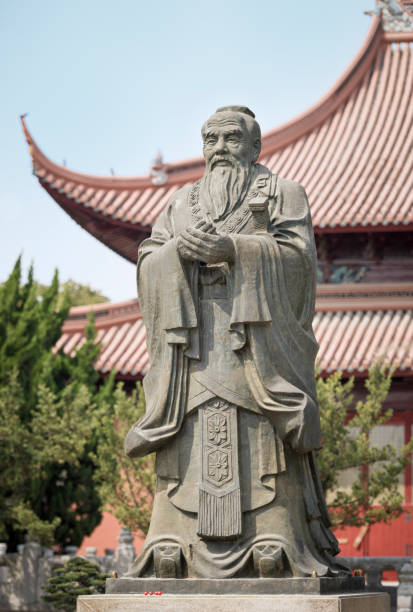
Confucian Rationality, Political Legitimacy, and Modernity:
Reconstructing Confucian Resources for Intercultural Public Theology
Paul S. Chung
Abstract
This paper appropriates Weberian categories alongside Confucian modes of charismatic rectification, moral cultivation, and political legitimacy. It articulates a hermeneutics of emergence and social engagement within the Neo‑Confucian context by employing a relational‑emergent episteme to rethink intercultural public theology and Neo‑Confucian qi theory in East Asia.
In doing so, it advances Veli‑Matti Kärkkäinen’s universal pneumatology as public theology, particularly by offering an East Asian contribution to its ongoing development.
Keywords. Confucian Rationality; Hermeneutics of Linguistic Pluralism; Ecological Anthropology; Rectifying Ethics; Intercultural Public Theology; Qi‑Pneumatology
Introduction
Veli‑Matti Kärkkäinen has significantly contributed to a universal understanding of the Spirit’s work in the world, seeking a world‑embracing pneumatological vision within ecumenical and international contexts. His work engages deeply with Chinese contributions to qi‑tological theology, natural science, and the dialogue between Chinese qi thought and the Christian doctrine of the Trinity, among other intercultural engagements.[1]
Confucianism—often described as an ethical or humanistic religion—has long been debated regarding its capacity to contribute to environmental ethics, democratic values, public morality, and modernity. Critics have accused the Confucian tradition of legitimizing authoritarian rule, reinforcing hierarchical pedagogy, fostering nationalistic parochialism, and sustaining patriarchal structures. Yet, New‑Confucian scholars counter these claims by identifying within Confucianism the seeds of democratic sensibility, scientific reasoning, and ecological thinking.[2] Ultimately, the Confucian system has proven itself to be remarkably adaptable across various cultural and historical settings.
Therefore, this paper scrutinizes a charismatic mode of Confucian rectification, drawing especially upon Mencius and tracing his historical influence on Zhu Xi and Wang Yangming within the Neo‑Confucian tradition. Such an approach addresses Neo‑Confucian insights into relational‑emergent ontology and scientific thinking, especially qi theory and ecological anthropology as articulated by Zhang Zai. [3]
This perspective remains vital for advancing an intercultural public theology, particularly in view of Veli‑Matti Kärkkäinen’s efforts to appropriate Confucian vocabularies for understanding qi‑pneumatology and Trinitarian thinking. Thus, engaging the Confucian notion of qi as an analogical, relational field that illuminates the Spirit’s dynamic presence—without collapsing pneuma into a physical biofield—contributes significantly to theological innovation within an East Asian public theology.
Confucian Moral and Religious Symbolism
In its historical unfolding, Confucianism has proven remarkably translatable and contextually adaptable across different languages and cultures, generating new forms of understanding through interaction, adaptation, and difference—processes that may be described as transculturation. In traditional discourse, Confucianism is referred to as ru jia, ru jiao, and ru xue. The core of its teachings centers on the self‑cultivation of li (propriety), xiao (filiality), yi (appropriateness), and ren (humanness). This framework characterizes the Confucian vision of society as a fiduciary and harmonious community shaped by moral persuasion and sustained through social institutions. Thus, the Confucian concept of politics as rectification embraces critical, humanistic, and religious dimensions.[4]
Confucius (551–479 B.C.E.) was “a transmitter, teacher, and creative interpreter of the ancient culture and literature,”[5] shaping the Chinese mind and character. In dialogue with a close disciple, he defines the meaning of ren through the phrase keji fuli in Analects 12:1. Keji refers to self‑subduing, while fuli denotes the restoration of ritual propriety—recovering the normative patterns of li that ground moral life.
The two terms ren (goodness) and li (ritual) are pivotal for understanding Confucian teaching. Ren is the highest virtue because it encompasses all other virtues. Religious symbolism embedded within Confucian ritual functions as a stabilizing force, sustaining family life and social relations amid moral fragmentation. Li refers to conventional morality grounded in propriety, encompassing the ritual practices that shape filial piety within ancestral rites and sustain organic solidarity across family, kinship networks, and community life.
In the manner of Émile Durkheim, we may observe that the individual in ritual life feels overpowered by a force arising from collective effervescence. In such moments of heightened communal intensity, new ideals can emerge and fresh symbolic formulations may arise to guide humanity toward greater solidarity and justice.[6]
Confucian Type of Charismatic Rule and Rectification
A Confucian type of charismatic rule emerges not through prophetic rupture but through the moral force of rectification. Along with ren and li, the term yi (righteousness/appropriateness) signifies doing what is proper and fitting. For Mencius, yi is the right path to ren, the secure abode of human flourishing. Ren is the human heart, while yi is the human way. [7]
Axial China, like other axial civilizations, experienced rapid demographic, economic, and military expansion amid deep political turmoil. The political situation in Confucius’s native state of Lu was especially unstable, marked by factionalism, declining ritual authority, and the erosion of moral order. Confucius understood his task as setting the names right—rectifying reality in accordance with its proper designation. For him, the rectification of names (zhengming) was not a mere linguistic exercise but a moral‑political imperative: names must correspond to the actual conduct and responsibilities of persons for social life to flourish.[8]
Mencius (traditionally dated 390–310 BCE, or more precisely 372–289 BCE)—Mengzi in Chinese—took Confucius as his ideal, developing Confucian doctrine in a religious‑ethical direction with an idealistic orientation. His context in the Warring States period (475–221 BCE) deeply shaped his reflections on social and political life. Mencius articulated his theory of the four germinations or beginnings through four basic human dispositions: commiseration, shame and dislike, deference and compliance, and the sense of right and wrong. The cardinal virtue (humanness), the two primary virtues (humanness‑wisdom), the three universal virtues (humanness‑wisdom‑courage), the four primordial virtues (the Beginnings), and the five constant virtues together express a vision of progressive humanness.[9]
Central to Mencius’s political philosophy is the conviction that all economic and political measures must be established on behalf of the people. In his vision of benevolent government, the state bears responsibility for ensuring a stable livelihood, economic security, and sound social institutions. This orientation entails a proto‑democratic social ethos and grounds political legitimacy in the sovereignty of the people. [10]
The Mencian version of vox populi, vox Dei, affirms that the people possess the right to resist and even depose despotic rulers, extending to a qualified notion of tyrannicide. This stance stands in sharp contrast to the doctrine of the three bonds—ruler‑minister, father‑son, husband‑wife—which was codified only later as imperial ideology during the Han dynasty in the first century C.E. [11]
Charismatic Authority, Rationality, and Accommodation
In Weber’s analysis of Confucianism, literary education serves as the key through which he interprets the function of the literati and the formation of Confucian orthodoxy. Chinese education prescribed rules for self‑cultivation and ritually correct conduct, and its pedagogy was oriented toward practical governance, status interests, and internal administration.[12]
Economic life was regulated by norms of propriety in consumption, with concern for avoiding both lavish expenditure and excessive thrift. Although educated merchants acquired skills of calculation in the business office, Confucius maintained that acquisitiveness generates social and personal unrest.
In Weber’s account, charismatic leadership plays a significant role in Mencius, for whom the voice of the people is the voice of God. For Weber, this is the only way in which God speaks, and he detects an unmistakably revolutionary resonance in Mencius’s political ethics. A charismatic dominion in the Confucian context may, he argues, “lead to a revolutionary reevaluation of everything and a sovereign break with all traditional or rational norms.”[13]
Yet, Weber also maintains that Confucianism reduces tension with the world to an absolute minimum. Confucianism, he contends, is fundamentally accommodative to the world and affirms existing social structures, in contrast to the Puritan ethic, which sustains a tremendous tension with the world. Even so, Weber does not entirely dismiss the prophetic dimension of solidarity ethics in Confucianism, which stands in tension with mundane political realities.
Weber’s enigmatic evaluation has naturally provoked debate and controversy. Critics argue that the Confucian personality is better characterized by a moral tension between virtue and political reality than by harmonious adjustment.[14]
Interpretation, Logos, and Social Critique
For Weber, “Chinese thought has remained rather stuck in the pictorial and the descriptive,” such that “the power of logos, of defining and reasoning, has not been accessible to the Chinese.”[15] However, Weber’s evaluation, while historically influential, requires significant nuance in light of the Neo‑Confucian rationality.
Neo‑Confucian thinkers of the Song–Ming dynasties demonstrate that Confucian concepts such as Tian (Heaven), li (ritual‑propriety/pattern), and ren (humaneness) articulate moral meaning, rational reflection, and human flourishing. Thus, the Neo‑Confucian revolution can be seen in its rational reinterpretation of the Book of Changes, in contrast to Daoist uses of the text for divination and other practices often dismissed as superstitious. [16]
In fact, throughout the development of Confucian thought, reasoning and interpretation played a substantial role across the various schools, exemplified most clearly in Zhu Xi (1130–1200). Zhu Xi integrates the Confucian teaching of “subduing the self and returning to propriety” (ke ji fu li, Analects 12:1) into his hermeneutical program of investigating material things, cultivating reverence, and extending knowledge—an interpretive framework grounded in The Great Learning. “Subduing the self and returning to decorum” thus encompasses a horizon ranging from enlightened self‑discipline to a religious experience of self‑transcendence. [17]
In Zhu Xi’s account, every person is born with psychophysical limitations rooted in qi, such that the self inevitably falls short of moral perfection. As Philip Ivanhoe observes, Zhu Xi’s goal is to protect the mind‑heart from the obscuring effects of selfish, agitated, and disturbed emotions and desires. This moral cultivation unfolds through a dialectical process of investigating worldly affairs and extending knowledge in a reverential attitude.[18]
Following Mencius’s theory of discerning people’s feelings from their words (Mencius 2A:2), Zhu Xi writes: “I understand the principles of things as expressed in words.”[19]
By gradually investigating the principles of things—whether through reading, listening, or conversation—we deepen our understanding in increasingly refined and expansive ways.[20] From simple to complex matters, we must grasp one layer after another, reaching the fullest possible understanding through a process of adumbration, horizon‑synthesis, and meaning formation. This reflects a proto‑phenomenological attitude within Neo‑Confucian hermeneutics.
Although Zhu Xi does not use the term “logos,” his conception of li as the universal, intelligible, and normative structure of reality functions analogously to a Stoic logos. Despite the Stoic emphasis on fate and the cultivation of apatheia, the cosmos is structured by logos and animated by pneuma, forming a rationally ordered whole in which all beings participate as expressions of divine reason. In this sense, Stoic notions of cosmic logos and pneuma can be placed in analogical dialogue with the Confucian concepts of li and qi. Logos becomes a universally shared rational principle (comparable to the logos spermatikos), and pneuma becomes a morally neutral animating force.
Ecological Anthropology and Confucian Hermeneutics of Emergence
Zhu Xi integrates Zhang Zai’s (1020–1077) teaching on the unity of Heaven and Earth, in which humanity and the myriad things form a single cosmological family. For Zhu Xi, this perspective underscores the principle that “the principle is one, but its manifestations are many” (li yi fen shu).[21] Consequently, life emerges through processes of self‑differentiation and the establishment of boundaries in relation to the environment. All this is animated by the rhythmic pulsation of qi. In this horizon, the Confucian notion of ren extends outward to embrace the entire universe.
According to Zhang Zai, qi—the vital force or material‑energy from which the universe originates—initially exists in a formless state known as the Great Void, the fundamental nature of Heaven and Earth from which the goodness of human nature arises. Although li (principle) is real, it has no independent existence apart from qi. Rather, qi, in its dynamic activity, becomes the Supreme Ultimate and the driving force of endless transformations, generating Heaven (yang) and Earth (yin). Through the interaction of the qi of Heaven and the qi of Earth, the myriad things come into being—forms, creatures, and human beings alike.
Zhang Zai therefore foregrounds an ecological anthropology that places human beings within the web of life in the universe such that “…even such a small creature as I finds an intimate place in their midst. That which fills the universe I regard as my body and that which directs the universe I consider as my nature.”[22]
His ecological anthropology provides a proto‑systemic, relational view of life grounded in qi‑circulation. He does not treat qi as inherently good. Rather, li is always good, while qi may be clear or turbid, harmonious or obstructed. Thus “the principle (li) is nevertheless manifest in its distinctions,”[23] capturing Zhang Zai’s conviction that li is inseparable from qi, yet not reducible to it.
Fundamentally, Zhang Zai articulates a relational network of li and qi—distinguished yet inseparable—anticipating a systemic, relational ontology in which all beings arise within the dynamic field of qi. Nothing exists independently; all things emerge through qi‑transformations informed by li.
Zhu Xi later rearticulated Zhang Zai’s position through the formula li yi fen shu (“one principle, many manifestations”), developing it into a framework of linguistic and ontological pluralism. In Zhu Xi’s reconstruction, li becomes a kind of cosmic logos that structures both the natural world and human nature, generating an emergent order that avoids a rigid li–qi dichotomy. Thus, li becomes accessible through linguistic clarification and hermeneutical practice, in which meaning is disclosed and we “achieve a thorough understanding like a sudden release.”[24]
Zhu Xi and Hans G. Gadamer in Encounter
In Zhu Xi’s account, the Heavenly Principle is like a pearl lying in muddy water—present, immanent, yet obscured. It is “like the moon reflecting itself in ten thousand streams.”[25] The moon remains one; yet, its image appears in many reflections. The reflected image is analogically connected to the real moon through the epistemic work of investigating material things and extending knowledge, a process mediated by language.
At this point, it is illuminating to compare Zhu Xi’s metaphor with Gadamer’s image of “the castle in the lake.”[26] For Gadamer, the reflection is not a second object but a duplication that remains one with the original. Its mystery lies in the intangibility of the image, which nevertheless allows the thing itself to appear. The reflective relation is bound to actual perception, enacting the dialectic between “it‑self” and “for‑me,” in which the object manifests itself through mediated emergence. This dynamic reaches its fullest expression in linguistic experience, where the world becomes intelligible through the unfolding of meaning—an event of speech in which understanding occurs.[27]
Whereas Gadamer locates the experience of truth in the linguistic event of aletheia, Zhu Xi grounds hermeneutical understanding in an epistemological‑ethical process through which li becomes manifest by phenomenological engagement with the world. “The sages established language in order to make principle manifest,”[28] so that principle is disclosed in and through language. Zhu Xi emphasizes the relational intelligibility of the world as the site where li becomes manifest. To understand principle in written texts, one must learn to doubt, discern, and identify the essentials that generate creative meaning within the intentional circle. As Zhu Xi notes, “In interpreting the Classics, there is no harm in differing from their original meaning, except for important points, on which we must not differ.”[29]
Bridging Gadamer and Zhu Xi’s perspectives provides an essential link to advance an intercultural public theology, particularly in line with Veli‑Matti Kärkkäinen’s efforts to appropriate Confucian vocabularies for understanding qi‑pneumatology and Trinitarian thinking.
Accordingly, I summarize this relational‑emergent inquiry in a concise methodological principle—attempting to take what is best and transform what is limited through the intentional arc of adumbration.
Language thus functions as a moral signifier in the rectification of names and as a critical lens for exposing distorted discourse. Zhu Xi’s commentary on Analects 12:1 (Sishu Zhangju Jizhu) frames governance as a moral task grounded in rectification of names, sincerity of intention, and responsibility toward the people. His unwavering moral stance even led to his impeachment for alleged violations of Confucian virtues such as loyalty, filial piety, humanity, righteousness, and justice. [30]
Confucian Resource, Scientific Rationality, and the Living System
In the sociological study of Confucian charismatic leadership, political legitimacy, and the hermeneutics of linguistic pluralism and social engagement, I argue that a public theology grounded in a phenomenological‑emergent model highlighting Confucianism as a cultural–spiritual matrix holds salient potential for an intercultural public theology. Confucian society is shaped by a fiduciary community grounded in mutual trust, enabling people to live in peace and to support one another through moral exhortation and self‑cultivation. Consensus formation emerges through broad communal participation and unfolds as a gradual process of mutual consultation, communication, and shared understanding.[31]
This perspective remains crucial for the project of multiple modernities in the Chinese context. Tu Weiming, the most influential figure in contemporary New Confucianism, argues that within the East Asian setting, Durkheimian “organic solidarity,” is enhanced by the role of the state in conjunction with a vibrant civil society. This provides mediating cultural institutions that articulate the relationship between family and state. The multiple‑modernities framework rests on three assumptions: 1) that traditions remain active agents in shaping modernity, 2) that non‑Western civilizations contribute decisively to the modern West’s self‑understanding, 3) and that local knowledge possesses global significance.[32]
Tu Weiming’s conception of Confucian humanism situates continuous self‑cultivation within a fourfold relational nexus of self, community, Earth, and Heaven. All are articulated through one anthropocosmic vision.[33]
Within this framework, Zhang Zai’s ecological anthropology becomes indispensable, grounding cosmology in the dynamic transformations of qi and yielding a systems‑oriented, emergent, and proto‑autopoietic account of life. Therefore, a robust interface between history and natural history presupposes a conception of emergence, structural coupling, and evolutionary novelty within the evolutionary‑ecological web of existence.
A relational‑emergent episteme repositions cosmoanthropocentrism—primarily moral‑spiritual in orientation—into a framework that fully engages the biological, ecological, and autopoietic dimensions of the human–nature relationship. Indeed, Joseph Needham breaks through Western prejudices about China, noting that between the first century BCE and the fifteenth century CE, Chinese civilization was far more efficient than the occidental world in applying scientific knowledge to yield technological advancements. Thus, Needham famously asks why modern science developed in Europe rather than in China, despite China’s long and distinguished history of scientific and technological achievements.[34]
However, even if European modern science is taken to begin with the Copernican revolution in the sixteenth century (marking the shift to a heliocentric system) and the rise of Newtonian physics and Cartesian philosophy in the seventeenth century, this does not diminish the profound contributions of the Chinese religious, philosophical, and cosmological traditions to science, technology, biology, and medicine.
Theological Innovation: Qi‑Pneumatology, Field, and Trinitarian Discourse
The Korean‑American theologian Koo Dong Yun is deeply inspired by Zhang Zai’s ecological anthropology. To date, he has made one of the most distinguished contributions to a qiological approach to pneumatology within a postcolonial and holistic framework. His work engages qi as the dynamic essence of all beings—encompassing Change, Dao, and the Great Ultimate (Taiji)—and explores how this cosmological vision can illuminate the presence and activity of the Holy Spirit within other religions and cultures as the Spirit is participating in their moral, spiritual, and cosmological transformations.[35]
In a related development, Jacob Feng, a Chinese American theologian, engages Jingjiao’s (the Church of the East in Tang China) qi‑tological theology of creation with a distinctive emphasis on the theology–science–religion interaction. Feng’s theory of embodied critical realism underscores the pervasive use of metaphor in theology, science, and religion, drawing on advances in cognitive linguistics to argue for a more adequate methodology for the theology–science–religion trialogue—namely, embodied critical realism (ECR).[36]
Feng’s approach highlights how qi functions as an embodied, experiential, and ecological metaphor for the manifestation of invisible realities, insisting that bodily experiences are processed as embodied metaphors within the mind–brain system through representational and symbolic mechanisms. This is what embodied cognitive science describes as reenacted or simulated meaning. As Lawrence Barsalou reinforces, “Embodied conceptual representations are the building blocks of thought and are involved in language processing.”[37]
All this demonstrates that the subject of the Holy Spirit has drawn sustained attention from East Asian theologians who discern its consonance with qi‑philosophy and embodied religious experience. Within this, the Holy Spirit may be understood as the creative ground that opens the emergence of new life through non‑equilibrium dynamism and embodied enactment. The Spirit “pours out upon all flesh” (Joel 2; Acts 2) within the living system. In scientific terms, this could be described as the generative source that animates an autopoietic, dissipative structure. In this sense, the Spirit’s presence is not reducible to a vital force but is the relational, life‑giving field in which living systems emerge, differentiate, and continually renew themselves.
In the same way, Veli‑Matti Kärkkäinen seeks to build bridges by affirming the Spirit of life as the healer of wounds between separated communities and as the one who cares for creation in the search for a world‑embracing spiritual experience (Psalm 139:7–12). His approach articulates a multilayered pneumatology capable of discerning the presence and work of the Spirit of God in creation, the cosmos, the sciences, and the religiously pluralistic and secular world.[38]
Field‑Force in the Network
In a relational‑emergent ontology, reality is not composed of isolated substances but of dynamic fields of interaction in which forces, patterns, and relations co‑constitute one another. In contemporary systems theory, autopoietic living systems enact their world through structural coupling within such relational fields, where meaning, form, and agency arise from networked interactions. Thus, “field‑force in the network” names the convergence between Neo‑Confucian li–qi cosmology and modern relational science.
Similarly, Wolfhart Pannenberg argues that the presence of God’s Spirit may be understood as a field of creative presence. A field is constituted by the force or energy that defines it. For the Stoics, pneuma permeates all things, holding the cosmos together while giving rise to the diverse qualities and movements of beings. Consequently, Pannenberg introduces the concept of a field into the traditional description of God as Spirit, envisioning a dynamic field structured in a trinitarian fashion. The Spirit’s work in creation thus exhibits the character of dynamic field operation.[39]
Although critical concerns have been raised about identifying the Spirit with a “field” in a classical physics sense, it remains important to engage the Confucian notion of qi as a mediating biofield in relation to the Spirit of God. This is particularly important within a systems view of life that is understood in terms of emergent autopoiesis and enactive performance. Confucian qi, as a cosmic‑biological‑moral field, provides a culturally resonant grammar for articulating such emergence. For example, Zhang Zai’s “Great Void” implies the fullness of dynamically active qi, the primordial substrate of the universe. This is more than a mere vital force. His conception of qi resembles a continuous, relational field and bears heuristic resonance with modern field theory.
In reconstructing Zhang Zai, his non-dual relation of li and qi within a relational-emergent framework proves to be invaluable in moving toward a proto‑systems view of life as a relationally-emergent network structured by a punctuated core process (li) at the cellular level that functions as a generative life‑field and facilitates variation in an organism’s development. In this sense, li is manifested in its distinctions—a formulation that can be interpreted analogically as an autopoietic boundary through which emergent forms of life are constituted.
Within this framework, the Spirit’s creative presence operates in, under, with, and through the relational fields of the web of life, without being reduced to them. The notion of a “relational field” does not posit a unified‑field metaphysics that subsumes the reality of powers, principalities, and creaturely agencies. Rather, divine concursus operates not as an overarching field that absorbs all forces into itself, but as a non‑competitive, co‑creative presence that accompanies and enables the self‑organizing vitality of social and ecological systems. In this sense, the Spirit of God resonates with a field‑like divine presence through which the Spirit preserves and cares for living creatures and fosters their collaboration in co‑creation.
Relational, Emergent Trinitarian Inquiry
The triune God is encountered through divine concursus—God’s ongoing, life‑giving involvement in creation—where relationality, differentiation, and communion emerge together as the grammar of divine action. When placed in dialogue with the Neo‑Confucian li–qi matrix, the Trinity can be understood analogically as a relational field in which patterned intelligibility (li) and generative vitality (qi) illuminate the dynamic interplay of Father, Son, and Spirit. Such an inquiry reframes Trinitarian theology as an intercultural, ecological, and constructive project, attentive to the emergent patterns of life, meaning, and moral agency within the web of creation.
Jürgen Moltmann undertakes an intercultural reading of the Wisdom traditions, interpreting Dao’s emergence and return in a self‑referential circle as analogous to the Christian metaphysical pattern from Thomas Aquinas to Hegel: “To the exitus of all things from God the reditus of all things to God corresponds.”[40]
Although Moltmann questions whether the Daoist world is a closed system insufficiently open to the future, he nevertheless highlights the universal, cosmic activity of qi as the power of life—the formative energy that animates the existence of all living systems.
If Moltmann interprets Dao solely through the yin–yang polarity, Dao appears as a closed, self‑balancing cosmology lacking openness to the future. However, if Dao is viewed through the dynamic activity of qi, then qi as the power of life works through human consciousness in its temporal depth—past, present, and future. In this perspective, Dao manifests not as a closed cycle but as an anticipatory, life‑generating horizon, a mode of embodied awareness attuned to emergent possibilities within the unfolding of life.
For Christians, the presence of the Holy Spirit in the reconciled world extends the Creator’s life‑giving activity throughout the whole of creation. Within this broader horizon, East Asian categories such as Dao (li), De (virtue/wisdom), and qi provide a culturally resonant grammar for discerning how God’s self‑communication and relational presence become intelligible through analogical reasoning—similarity within dissimilarity.
These categories function as hermeneutical resources that enable East Asian readers to perceive the generative source, manifesting virtue, and life‑giving presence of the triune God—three relational modes of one dynamic field of divine life (perichoresis as relational‑emergent fellowship) that permeates, sustains, collaborates with, and transforms the world toward its eschatological consummation. Such an episteme enables one to cut through the double problem: the modalist or Sabellian reduction of the persons to mere appearances on the one hand, and the tritheistic fragmentation of the Godhead into three independent beings on the other. Thus, these linguistic signifiers now become embodied in intersubjective communication, shaped by religious grammar, social rules, and cultural regulation—ultimately contributing to bringing forth new forms of life. In relation to the signified, this linguistic intentionality is descriptive, analogical‑metaphorical (in its mode of signification), prescriptive, and ethical as it participates in the religious construction of reality while generating new horizons of meaning in the East Asian context.
Meanwhile, the Trinitarian imagination of the biblical narrative is grounded in God’s economy of redemption—God’s personal, relational, and historical engagement with Israel, the church, and the world through the Holy Spirit. God is in all things, and all things are in God through God’s indwelling Sabbath presence, preservation, and concursus—yet without any ontological identification of evil with God. God remains more than the world by bringing creation to its eschatological consummation. This expresses a relational‑emergent (pan‑en) theism that affirms divine immanence without metaphysical collapse and sustains a proleptic vision of the new heaven and the new earth.
Within this, I refine the intercultural inquiry of the Trinity in a relational‑emergent framework by appropriating a theological discourse of divine concursus, in which the Spirit—as a divine relational field—acts as the proleptic pull drawing creaturely life within living systems toward God’s recapitulating future (Eph 1:10). This eschatological future, functioning as an attractor, exerts a retroactive effect that grants freedom, autonomy, creativity, and transformative capacity to autopoietic life.
This economic‑personalist horizon aligns naturally with a phenomenological and emergent approach that resonates with Confucian personalist cosmic ren, the freedom of li, and ecological relationality in world‑constitution. The economic Trinity thus provides the platform and horizon for honoring the mystery of God in se, even as it anticipates the eschatological unveiling of the triune life in the consummation of the world.
Epilogue
Having examined Confucian politics, legitimacy, and modernity, my relational‒ emergent approach reinterprets Confucianism not as a “static tradition” but as a generative field of thought. A relational‑emergent epistemology also reinterprets Zhang Zai’s concept of qi through the lenses of emergence, autopoiesis, and ecological anthropology, opening the possibility of rereading East Asian thought as a philosophy of life, systems, and ecology that undergirds an integral alternative modernity as well as intercultural public theology. Here, the methodological core is a hermeneutics of the “in‑between space,” moving toward a mode of translation, interpretation, and transculturation in which traditions mutually reshape their horizons of meaning.
Regarding this as a public theology, the “public” dimension of intercultural public theology is rooted in the recognition that social discourse itself is public—a shared space where communities renew identity, translate value, reinforce legitimacy, and pursue the common good that undergirds reparative justice.
Considering the repercussions of modernity while constructing this public theology, Charles Taylor succinctly captures the tension between the emancipatory promise of modernity and its simultaneous flattening of moral and spiritual horizons: “Modernity is like a wave, flowing over and engulfing one traditional culture after another… By definition, the creative adaptation using traditional resources has to be different from culture to culture… They have to invent their own.”[41]
Thus, Confucianism is here reinterpreted not as an “alternative to modernity” but as an intellectual resource for reconstructing modernity itself. I argue that Zhu Xi’s doctrine of “investigating things to the utmost” can be understood as a nascent scientific epistemology—a disciplined inquiry into the principles (li) embedded in the world, grounded in observation, conceptual clarity, and the conviction that nature is both intelligible and morally meaningful.
Joseph Needham recognized this resonance, noting that “there can at least be no doubt that the Neo‑Confucian view of the world was one extremely congruent with that of the natural sciences,” and that “Neo‑Confucian philosophy, essentially scientific in quality, was accompanied by a hitherto unparalleled flowering of all kinds of activities in the pure and applied sciences themselves.”[42]
Natural science itself cannot dispense with ethical meaning, for even the most rigorous empirical investigation presupposes moral commitments—honesty, transparency, and the pursuit of the common good—and its applications inevitably shape human and ecological futures.
Therefore, in a culturally enriched form of modernity, religion becomes instrumental in the social construction of reality. This opens a new path toward an integral and alternative modernity. Decentering Europe does not require abandoning Western thought or its knowledge systems. Rather, it calls for a new project of transculturation for public theology—one that rethinks and renews these traditions as seen “from and for the margins, which are plural and diverse.”[43]
Coda
Veli‑Matti Kärkkäinen pioneers a vision of Christian theology as public theology in search of a world‑embracing spiritual experience, in which public theology is reconfigured across cultures, sciences, and religions. Through a creative synthesis of Pannenberg’s divine‑field theory and Moltmann’s universal affirmation of the Spirit of life, Kärkkäinen develops a holistic pneumatology that becomes foundational for shaping public theology within the science‑and‑religion dialogue as well as in the context of religious pluralism. This holistic teaching provides an important stimulus for my own refinement of intercultural public theology, particularly in reinterpreting Confucian resources within a relational‑emergent framework. Because of his long‑term engagement in East Asia, Veli‑Matti Kärkkäinen has developed a distinctive sensitivity to the intercultural, ecological, and relational dimensions of public theology—dimensions that resonate deeply with my relational‑emergent approach.
If Kärkkäinen grounds his constructive pneumatology in the universal horizon shaped by Pannenberg and Moltmann as major teachers and interlocutors, my own trajectory is situated between Barth’s totaliter aliter and theology of divine concursus, Moltmann’s theologia crucis and Spirit of life, and Ted Peters’s proleptic holism—enriched by autopoiesis and the phenomenology of embodiment. Confucian li–qi metaphysics and the Daoist notion of dao–de–qi further provides a coherent and interdisciplinary framework capable of advancing a paradigm shift in divine–world relational ontology and intercultural constructive theology. This constructive synthesis offers a compelling foundation for a new chapter of public theology alongside Kärkkäinen’s holistic teaching of the Spirit. This is particularly important within the science‑and‑religion dialogue, for comparative religious efforts, and especially for discerning the future trajectory of public theology in East Asia.
References
Bellah, Robert. Religion in Human Evolution: From the Paleolithic to the Axial Age. Cambridge, MA: Belknap Press of Harvard University Press, 2011.
Chan, Wing‑tsit. Reflections on Things at Hand. New York: Columbia University Press, 1967.
Chan, Wing‑tsit, trans. Instructions for Practical Living and Other Neo‑Confucian Writings. By Wang Yang‑ming. New York: Columbia University Press, 1963.
Chan, Wing‑tsit, trans. Mencius. London: Penguin, 1970.
Chengwei Feng, Jacob. Science, Religion(s), and Spirit(s) in China: A Constructive Chinese Theology of Creation Based on Jingjiao’s Qi‑tological Theology, with a New English Translation of the Entire Tang Jingjiao Corpus. Leiden: Brill, 2026.
Confucius. The Analects. Translated by Arthur Waley. Changsha: Human People’s Publishing House, 1999.
De Bary, Wm. Theodore. The Liberal Tradition in China. Hong Kong: Chinese University Press; New York: Columbia University Press, 1983.
De Bary, Wm. Theodore, and Irene Bloom, eds. Sources of Chinese Tradition. 2nd ed. New York: Columbia University Press, 1999.
Durkheim, Emile. The Elementary Forms of Religious Life. Translated by Karen E. Fields. New York: Free Press, 1995.
Frank, Andre G. ReOrient: Global Economy in the Asian Age. Berkeley: University of California Press, 1998.
Fung, Yu‑lan. A History of Chinese Philosophy, Vol. 1: The Period of the Philosophers. Translated by Derk Bodde. Princeton: Princeton University Press, 1983.
Gadamer, Hans‑Georg. Truth and Method. Translated by J. Weinsheimer and D. G. Marshall. 2nd rev. ed. New York: Crossroad, 1989.
Ivanhoe, Philip J. Confucian Moral Self‑Cultivation. 2nd ed. Indianapolis: Hackett Publishing Company, 2000.
Jiang, Xinyan. “Confucianism, Women, and Social Contexts.” (library.pcw.gov.ph)
Kärkkäinen, Veli‑Matti. “Christian Pneumatology as Public Theology: The Work of the Spirit in the World,” 1–17. https://youngsung.devmisc.com/lifeworld-ecology/christian-pneumatology-as-public-theology/
Koo, Dong Yun. The Holy Spirit and Ch’i (Qi): A Chiological Approach to Pneumatology. Eugene, OR: Pickwick, 2012.
McCarthy, Thomas. Race, Empire, and the Idea of Human Development. Cambridge: Cambridge University Press, 2010.
Mencius. Translated by Zhao Zhentao et al. Hunan and Beijing: Hunan People’s Publishing House, 1999.
Metzger, Thomas A. Escape from Predicament: Neo‑Confucianism and China’s Evolving Political Culture. New York: Columbia University Press, 1977.
Moltmann, Jürgen. Science & Wisdom. Translated by Margaret Kohl. Minneapolis: Fortress, 2003.
Needham, Joseph. Science and Civilization in China, Vol. 2: History of Scientific Thought. Cambridge: Cambridge University Press, 1956.
Needham, Joseph. The Grand Titration: Science and Society in East and West. London: G. Allen and Unwin, 1969.
Pannenberg, Wolfhart. Systematic Theology, Vol. 2. Translated by Geoffrey W. Bromiley. Grand Rapids, MI: Eerdmans, 1994.
Rosenlee, Li‑hsian Lisa. Confucianism and Women: A Philosophical Interpretation. Albany, NY: SUNY Press, 2006.
Taylor, Charles. “Theories of Modernity.” In Alternative Modernities, edited by Dilip P. Gaonkar, 172–196. Durham and London: Duke University Press, 2001.
Tillman, Hoyt C. Zhu Xi’s Prudent Politics. Honolulu: University of Hawai‘i Press, 1982.
Tu, Wei‑ming. Confucian Ethics Today: The Singapore Challenge. Singapore: Federal Publications, 1984.
Tu, Weiming. Centrality and Commonality: An Essay on Confucian Religiousness. Rev. enl. ed. New York: SUNY Press, 1989.
Tu, Weiming. Confucian Traditions in East Asian Modernity. Cambridge, MA: Harvard University Press, 1996.
Tu, Weiming. “Multiple Modernities: A Preliminary Inquiry into the Implications of East Asian Modernity,” 104–111. https://paperzz.com/doc/8915165/multiple-modernities–a-preliminary-inquiry-into
Weber, Max. The Religion of China: Confucianism and Taoism. Translated and edited by H. H. Gerth. Glencoe, IL: Free Press, 1951.
Weber, Max. From Max Weber: Essays in Sociology. Translated and edited by H. H. Gerth and C. Wright Mills. New York: Oxford University Press, 1958.
Weber, Max. Weber: Selections in Translation. Edited by W. G. Runciman. Translated by Eric Matthews. Cambridge: Cambridge University Press, 1978.
Zhang Zai. Zhengmeng, “Qi zhi” (氣質篇).
Zhu Xi. Chuanxilu (傳習錄), I.25: 聖人之言不能盡意,執言者失之.
[1] Veli‑Matti Kärkkäinen, “Christian Pneumatology as Public Theology: The Work of the Spirit in the World.” 1-17. https://youngsung.devmisc.com/lifeworld-ecology/christian-pneumatology-as-public-theology/
[2] Tu Weiming, Confucian Traditions in East Asian Modernity (Cambridge, MA: Harvard University Press, 1996).
[3] Li-hsian Lisa Rosenlee, Confucianism and Women: A Philosophical Interpretation (Albany: NY: SUNY, 2006). Xinyan Jiang, “Confucianism, women, and Social Contexts.” http://library.pcw.gov.ph/ sites/ default/files/confucianism%20women%20and%20social%20contexts.pdf
[4] Tu Weiming, Centrality and Commonality: An Essay on Confucian Religiousness, rev. enl. ed. (New York: SUNY, 1989), 48-9.
[5] Wm. Theodore De Bary and Irene Bloom, eds., Sources of Chinese Tradition, 2nd ed. (New York: Columbia University Press, 1999), 15.
[6] Emile Durkheim, The Elementary Forms of Religious Life, trans. Karen E. Fields (New York: Free, 1995), 429 -30.
[7] Mencius, trans. Zhao Zhentao, et al. (Hunan and Beijing: Hunan People’s Publishing House, 1999), Bk.7.10. BK.11.11.
[8] Confucius, The Analects, trans. Arthur Waley (Changsha: Human People’s Publishing House, 1999), 13.3.
[9] Tu, Centrality and Commonality, 57.
[10] Mencius, 7; Fung, A History of Chinese Philosophy I, 118.
[11] Confucian Political Ethics, ed. Daniel A. Bell (Princeton and Oxford: Princeton University Press, 2008), 8, 143.
[12] Weber, “The Chinese Literati” in From Max Weber: Essays in Sociology, trans and eds. Gerth, H.H. and C. Wright Mills (New York: Oxford University Press, 1958),427.
[13] Weber, “The Nature of Charismatic Domination,” in Weber Sections in Translation, ed. W. G. Runciman, trans. Eric Matthews (Cambridge: Cambridge University Press, 1978), 230.
[14] Thomas A. Metzger, Escape from Predicament: Neo-Confucianism and China’s Evolving Political Culture (New York: Columbia University Press, 1977), 4.
[15] Weber, “The Nature of Charismatic Domination,” in Weber Sections in Translation, 125.
[16] Wing‑tsit Chan, Reflections on Things at Hand (New York: Columbia University Press, 1967), xviii,
[17] Wm. Theodore, De Bary, The Liberal Tradition in China (Hong Kong: The Chinese University Press; New York: Columbia University Press, 1983), 27.
[18] Philip J. Ivanhoe, Confucian Moral Self Cultivation, 2nd ed. (Indianapolis: Hackett Publishing Company, 2000), 59-60.
[19] Chan, Reflections on Things at Hand, 88.
[20] Ibid., 92.
[21] 朱熹:《朱子語類》卷一,理一分殊。Chan, A Source Book of Chinese Philosophy, 497.
[22] Cited in Chan, A Source Book of Chinese Philosophy, 497.
[23] Fung, A History of Chinese Philosophy, II, 495.
[24] Chan, Reflections on Things at Hand, 92.
[25] Cited in Fung, History of Chinese Philosophy II, 541.
[26] Hans G. Gadamer, Truth and Method, trans. J. Weinsheimer and D. G. Marshall, 2nd rev. Ed. (New York: Crossroad, 1989), 466.
[27] Ibid., 469.
[28] 聖人立言以明道 (Zhuzi Yulei, juan 1).
[29] Wang, Reflections on Things at Hand, 101.
[30] Hoyt C. Tillman, Zhu Xi’s Prudent Politics (University of Hawaii Press, 1982), 112–130.
[31] Tu Wei-ming, Confucian Ethics Today: The Singapore Challenge (Singapore: Federal Publications, 1984), 110-1.
[32] Tu Weiming, “Multiple Modernities: A Preliminary Inquiry into the Implications of the East Asian Modernity.” 104 [104-111] https://paperzz.com/doc/8915165/multiple-modernities–a-preliminary-inquiry-into.
[33] Tu Weiming, Centrality and Commonality, 102-7.
[34] Joseph Needham, The Grand Titration: Science and Society in East and West (London: G. Allen and Unwin, 1969), 16, 190.
[35] Koo Dong Yun, The Holy Spirit and Ch’I (Qi): A Chiological Approach to Pneumatology (Eugene, Oregon: Pickwick, 2012), 57.
[36] Jacob Chengwei Feng, Science, Religion(s), and Spirit(s) in China: A Constructive Chinese Theology of Creation Based on Jingjiao’s Qi-tological Theology, with a New English Translation of the Entire Tang Jingjiao Corpus Leiden: Brill, 2026), 168.
[37] Ibid., 170.
[38] Veli‑Matti Kärkkäinen, “Christian Pneumatology as Public Theology,” 1.
[39] Pannenberg, Systematic Theology, 2. Trans. Geoffrey W. Bromiley (Grand Rapids, Mi: Eerdmans, 1994), 81, 83.
[40] Jürgen Moltmann, Science & Wisdom. Trans. Margaret Kohl (Minneapolis: Fortress, 2003),
188.
[41] Charles Taylor, “The Theories of Modernity,” in Alternative Modernities, ed. Dilip P. Gaonkar (Durham & London: Duke University Press, 2001), 182-3.
[42] Joseph Needham, Science and Civilization in China. Vol. 2, History of Scientific Thought (Cambridge: Cambridge University Press, 1956), 493, 495.
[43] Thomas McCarthy, Race, Empire, and the Idea of Human Development (Cambridge: Cambridge University Press, 2010), 223.