Constellation is formed by connecting stars into a meaningful pattern. Similarly, historical events or truths can be grasped by forming constellations between the now-time and the past—a sudden flash of insight that challenges the idea of history as a straight line. This approach disrupts linear time through prolepsis, offering a way of thinking about history, religion, truth, and meaning. It is a method in which different ideas, images, or historical moments are brought together into a kind of cluster that reveals a deeper truth, implying a rupture in the continuum of history.
Editorial
Constellation is an ecumenical platform for sharing insights from public theology and political theology, with the goal of promoting civil society initiatives and inclusive democracy. We seek to foster solidarity and advocacy in navigating the balanced relationship between church, civil society, and the state.
We welcome submissions that contribute to the dialogue between public theology and political theology, particularly in the analysis of socio-cultural spheres and their formation within systems of stratification and power structures.
Submission Guidelines:
Articles should be between 3,000 and 3,500 words in length.
Editorial Team:
Paul S. Chung, Editor-in-Chief
Nick Huseby, Assistant Editor
Contact:
Please submit your paper for review to the editorial team at: publitheology@gmail.com
Volume 1 Issue 1 (Fall 2025)

Review and Shared Vision: Torsten Meireis
Review and Shared Vision Paul S. Chung, Director and Distinguished Full Professor, International Public Theology in Forum-Center, Berkeley In the

Public Theology of Media and the Korean Political Impeachment
Public Theology of Media and the Korean Political Impeachment: A Critique of a New Surge of Fascism Paul S. Chung
Volume 2 Issue 1
Public Theology and Comparative Religion
Historical Sociology and Comparative Religions: Life-World Approach Abstract This paper explores Ernst Troeltsch’s contribution to a public theory of
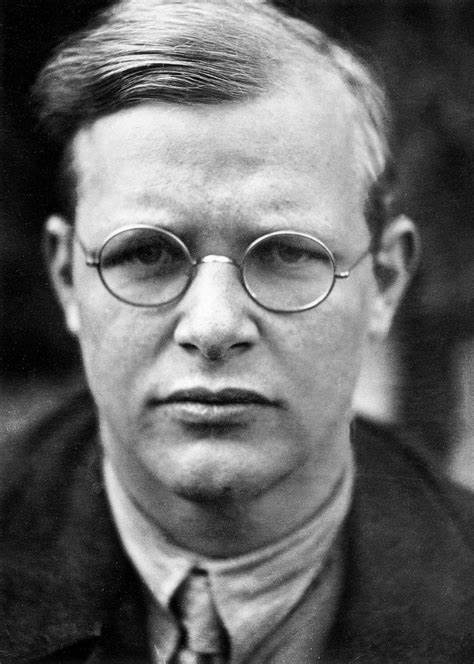
Dietrich Bonhoeffer and Public Theology
This essay examines Bonhoeffer’s insights into the legacy of European modernity with its Janus face. His theology of the cross is, at a methodological level, grounded in Christological collectivism and a biblical symbol of reconciliation.
Volume 3 Issue 1